US mortgage rates top 7%, highest in over two years, pressuring housing market
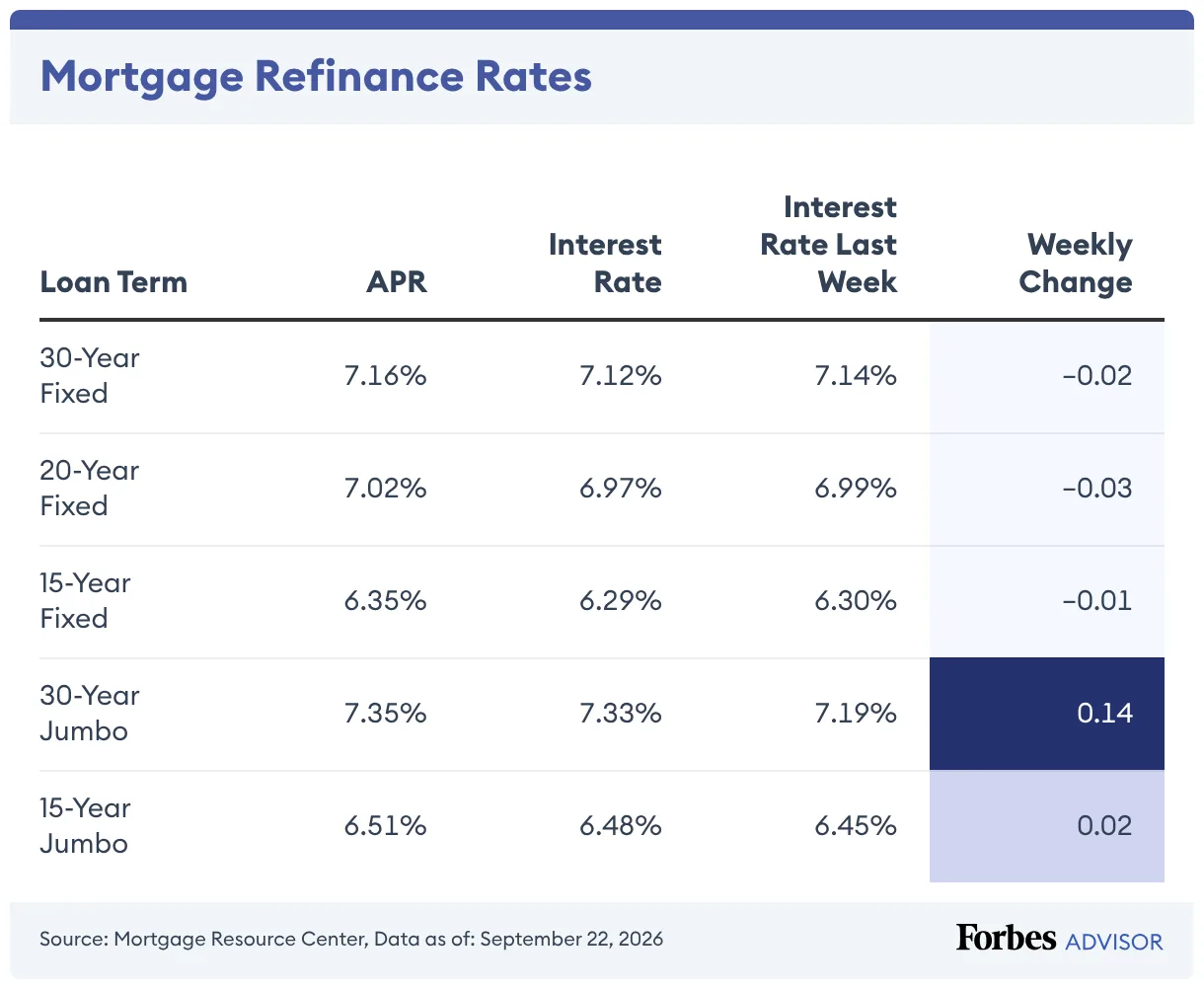
US mortgage rates have climbed to their highest level in over two years, with the 30-year fixed-rate mortgage contract rate reaching 7.12% for the week ending September 18, according to the Mortgage Bankers Association. The increase adds pressure to a housing market already strained by high prices and weak sales. The Federal Reserve raised its benchmark rate for the first time since 2023, and mortgage applications have declined.
 Reference image
Editorial responsibility
- No named human review is recorded for this page.
- Reports are grouped by semantic similarity and deterministic rules. Language models may assist titles, summaries, translation and cross-source analysis; the page reads the event directly, while its address stays stable when the title changes.
- Summary covers the current reports
Cross-source coverage
Common ground
- The housing crisis is real and brutal, with rising mortgage rates making homeownership unaffordable for many families.
- The 31% income-to-mortgage ratio for a median-priced home is alarming, and it masks worse conditions in cities like Miami, San Francisco, and Black neighborhoods in Chicago and Detroit.
- The racial homeownership gap—Black at 44% versus white at 74%—widens with every rate hike and is a structural problem, not just a market outcome.
- The global impact of Fed rate hikes, like crushing currencies in Egypt, Pakistan, and Nigeria, is a real consequence that deserves more attention.
Points of contention
- One side says the housing crisis is mainly a supply bottleneck from homeowners locked into low rates, while the other says it's a political failure of priorities, like choosing military spending over housing.
- They disagree on whether the shift to adjustable-rate mortgages (ARMs) is a rational bet on future rate cuts or a desperate trap that could lead to another foreclosure crisis like 2008.
- There's a split on whether defense spending drives inflation and competes with housing funding, with one side calling it a false trade-off and the other seeing it as a direct choice about whose suffering matters.
Blind spots
- Both sides initially overlooked the racial and geographic dimensions of the crisis, like how rate hikes widen the homeownership gap for Black and Latino families.
- The global dimension—how Fed policy crushes emerging economies through dollar-denominated debt—was missing from early discussions.
- The supply bottleneck from homeowners with 3% mortgages refusing to sell was underemphasized as a key structural problem that rate hikes alone can't fix.
WorldAttention’s read
The housing crisis is a brutal squeeze on American families, driven by rising mortgage rates and a supply bottleneck from homeowners locked into low rates. While the debate shows deep disagreements—whether the root cause is technical economics or political priorities, and whether ARMs are a rational hedge or a repeat of 2008—both sides agree the racial homeownership gap and global impacts are real and often ignored. The real solution isn't just about rates or blame; it's about building more housing, breaking the lock-in effect, and targeting help to the communities hit hardest, while acknowledging that the system's choices about spending and power shape who gets to live with dignity.
Reporting timeline
US Mortgage Rates Surge Past 7%, Hitting Highest Level in Over Two Years
According to a September 23 report from tradealpha, US mortgage rates have climbed to their highest level in over two years, intensifying pressure on a housing market already struggling with high prices and weak sales. Data from the Mortgage Bankers Association (MBA) for the week ending September 18 shows the contract rate on a 30-year fixed-rate mortgage rose 15 basis points to 7.12%, the highest since May 2024. In contrast, the 5-year adjustable-rate mortgage fell 13 basis points to 6.1%. The report attributes the upward trend in rates since February to the outbreak of the Iran conflict, which pushed up energy prices and reignited inflation concerns. To combat price pressures, the Federal Reserve last week implemented its first benchmark rate hike since 2023. The rising borrowing costs have reduced mortgage applications: the MBA's purchase index fell 0.8% to a four-week low, while the refinance index dropped 2.6% to its lowest since February 2025. The article notes that rates breaking above the 7% threshold could further dampen demand.
Read sourceUS mortgage rates rise above 7%, hitting highest level in over two years
According to data from the Mortgage Bankers Association (MBA) released on September 23, the average contract rate on a 30-year fixed-rate mortgage in the US rose 15 basis points to 7.12% for the week ending September 18, the highest level since May 2024. This increase adds further pressure to a housing market already strained by high prices and weak sales. The rate has been trending upward since February, when the Iran conflict drove up energy prices and reignited inflation concerns. The Federal Reserve responded last week with its first benchmark rate hike since 2023. As borrowing costs climb, mortgage applications have declined: the MBA's purchase index fell 0.8% to a four-week low, while the refinancing index dropped 2.6% to its lowest since February 2025. Analysts suggest the rate crossing the 7% threshold could further dampen demand.
Read sourceUS mortgage rates rise above 7%, highest in over two years, pressuring housing market
According to data from the Mortgage Bankers Association (MBA) released on Wednesday, September 23, the contract rate on a 30-year fixed-rate mortgage rose 15 basis points to 7.12% in the week ending September 18, the highest level since May 2024. The increase adds further pressure to a housing market already strained by high prices and weak sales. The five-year adjustable-rate mortgage fell 13 basis points to 6.1%. Rates have been trending upward since February, when the Iran conflict drove up energy prices and reignited inflation concerns. The Federal Reserve raised its benchmark interest rate for the first time since 2023 last week to curb price pressures. As borrowing costs climb, mortgage applications have declined: the MBA's purchase index fell 0.8% to a four-week low, and the refinance index dropped 2.6% to its lowest since February 2025. Analysts suggest the rate breaching 7% could further dampen demand.
Show 4 older updatesHide older updates
US 30-Year Mortgage Rate Rises to 6.95%, Nearing 7% for Fourth Straight Week
The average U.S. 30-year fixed mortgage rate rose to 6.95% in the week ending Thursday, up from 6.76% a week earlier, according to Fannie Mae. This marks the fourth consecutive weekly increase and the highest level since January 2025. One year ago, the rate stood at 6.26%. The rise follows the Federal Reserve's 25-basis-point rate hike on Wednesday, leading markets to conclude that borrowing costs may not decline significantly in the short term. For prospective homebuyers hoping for relief in 2026, the trend is a setback. Rising homeownership costs are becoming a central issue ahead of the November midterm elections. The Trump administration is attempting to boost the real estate market through bond purchases and regulatory easing, but analysts see a diminishing likelihood of a rapid recovery. Intercontinental Exchange estimates that purchasing an average-priced home costing $440,000 would result in mortgage payments consuming 31% of median household income, the highest level since July 2025. Additionally, the builder confidence index fell sharply this month to its lowest level in a year.
Read sourceU.S. 30-year mortgage rates rise for fourth week, approaching 7% threshold
According to Fannie Mae, the average U.S. 30-year fixed mortgage rate rose to 6.95% in the week ending Thursday, up from 6.76% a week earlier, marking the first time since January 2025 that the rate has reached this level. This is the fourth consecutive weekly increase, and the rate was 6.26% one year ago. The rise follows the Federal Reserve's 25-basis-point rate hike on Wednesday, leading markets to recognize that borrowing costs may not decline significantly in the short term. Rising homeownership costs are becoming a central issue ahead of the November midterm elections. The Trump administration is attempting to boost the real estate market through bond purchases and regulatory easing, but the likelihood of a rapid recovery is diminishing. Intercontinental Exchange estimates that purchasing a median-priced home of $440,000 at current loan costs would require a typical household to spend 31% of its median income on mortgage payments, the highest level since July 2025. The builder confidence index for residential construction fell sharply this month to its lowest level in a year.
Read sourceFannie Mae Reports US 30-Year Mortgage Rate Rises to 6.95%, Highest Since January 2025
According to a report from Fannie Mae cited by tradealpha, the average rate for a 30-year fixed-rate mortgage in the United States rose to 6.95% for the week ending September 17. This marks the highest level since January 30, 2025, representing an increase from the previous week's rate of 6.76%. The data point reflects a notable upward movement in borrowing costs for homebuyers in the U.S. housing market, continuing a trend of rising interest rates observed over recent weeks. The report provides a straightforward update on mortgage market conditions without offering additional analysis or forecasts.
Read sourceUS 30-Year Mortgage Rate Rises to 6.95%, Highest Since January 2025
According to data from Fannie Mae, the average rate for a U.S. 30-year fixed-rate mortgage rose to 6.95% in the week ending September 17. This marks the highest level since January 30, 2025, and represents an increase from the previous week's average of 6.76%. The data, reported by Cailian Press on September 18, indicates a continued upward trend in borrowing costs for homebuyers in the United States.
Read source