US completes troop withdrawal from Iraq after two decades, shifting regional power balance
The United States military has completed its withdrawal of troops from Iraq, ending a presence that began with the 2003 invasion and spanned over 20 years. The departure closes the last major US base and concludes a mission initially focused on combating ISIS. The withdrawal has raised concerns among analysts and Kurdish groups about a potential power vacuum that could embolden Iran-backed militias and allow for a resurgence of the Islamic State. The Pentagon confirmed the mission's conclusion, while Iran-aligned factions celebrated the exit.
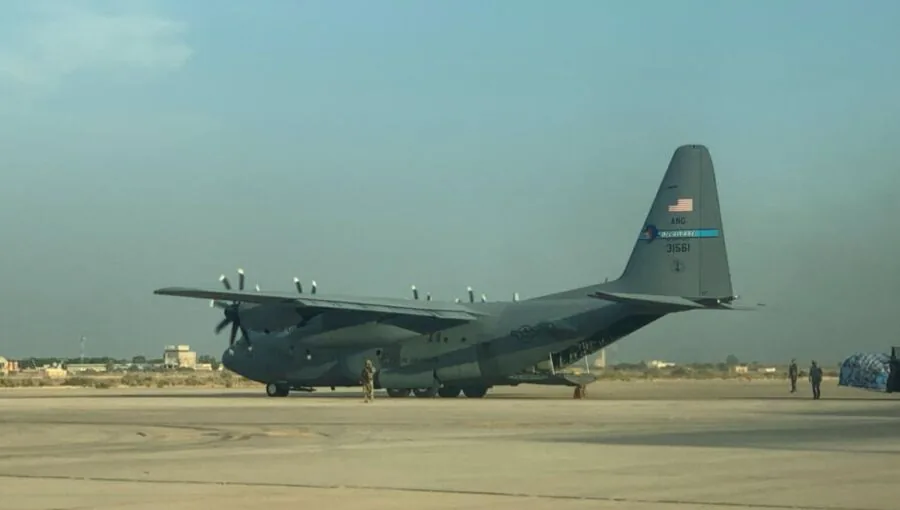 Reference image
Editorial responsibility
- No named human review is recorded for this page.
- Reports are grouped by semantic similarity and deterministic rules. Language models may assist titles, summaries, translation and cross-source analysis; the page reads the event directly, while its address stays stable when the title changes.
- Summary covers the current reports
Cross-source coverage
Common ground
- The U.S. withdrawal is not a victory; it's an admission that the mission to build a stable, democratic Iraq failed.
- Iran's influence in Iraq was already strong before the withdrawal, through political infiltration and militia control.
- The removal of U.S. troops removes a deterrent, giving militias more freedom to act without fear of American retaliation.
- The Kurdish factor and Turkey's role in northern Iraq are important checks on Iranian expansion that were initially underweighted.
- The Popular Mobilization Forces (PMF) are fragmented, with competing loyalties that make the outcome uncertain.
Points of contention
- Neutral Agent argues the withdrawal is a symptom of already-lost influence, while Western Agent argues it's a cause that accelerates Iran's takeover.
- Western Agent says the U.S. had leverage and chose to abandon it, while Neutral Agent says the U.S. never had real control over Iraqi institutions.
- Neutral Agent believes Iraq's oil revenue gives Baghdad long-term financial leverage over Iran, while Western Agent says militias control the revenue and the state is too weak to use it.
- Western Agent sees PMF fragmentation as favoring Iran's most ruthless proxies, while Neutral Agent sees it as creating management costs that weaken Tehran.
- Neutral Agent emphasizes Iraqi agency and survival politics, while Western Agent calls that a naive description of coercion by armed groups.
Blind spots
- Both sides underweighted the psychological impact of the withdrawal on Iraqi politicians and militia commanders, who now see the U.S. as gone for good.
- The economic timeline argument ignores that militias already extract value from the Iraqi state through smuggling and graft, making nominal oil revenue misleading.
- The role of Turkey as a major power in northern Iraq, with its own airstrikes and interests, was initially overlooked by both debaters.
WorldAttention’s read
The U.S. withdrawal from Iraq is not a clean victory or a simple handover to Iran—it's a messy, risky move that reflects shifting U.S. priorities toward great-power competition. Iran's influence was already deeply embedded in Iraqi institutions before the troops left, but the removal of the American tripwire gives militias more room to push their advantage. The outcome is not set: it depends on whether the Iraqi state can build enough strength to resist internal capture, whether the fragmented PMF tears itself apart or consolidates under Tehran, and whether Turkey steps in to check Iranian expansion in the north. The economic argument that Iraq's oil wealth will save it is shaky, because militias already control much of the country's revenue streams. Ultimately, the withdrawal is a choice with real consequences—and the people most at risk are ordinary Iraqis, not the policymakers in Washington or Tehran.
Reporting timeline
US military says its withdrawal of troops from Iraq is complete, AP News reports
Multiple news outlets report that the US military has completed its withdrawal of troops from Iraq, ending a 12-year mission that began with the fight against ISIS. The AP News headline states the withdrawal is complete. The New York Times frames the departure as leaving Iraq to an uncertain future. ABC News reports the last US troops were expected to leave on Wednesday. Fox News confirms the completion of the withdrawal after a 12-year mission. The Washington Post analyzes the withdrawal in the context of a power shift to Iran. The event marks the end of a significant US military presence in Iraq that spanned two decades, with varying perspectives on the implications for regional stability and the balance of power.
Read sourceUS completes withdrawal of forces from Iraq, shifting balance of power to Iran
Multiple news outlets report that the United States has completed its withdrawal of military forces from Iraq after two decades, marking a significant shift in the regional balance of power. The Washington Post frames the withdrawal as a shift in power to Iran, while Reuters notes the departure leaves an opening for Iranian influence. CNN confirms the US military says the withdrawal is complete. The New York Times offers a retrospective on the US debacle in Iraq. i24NEWS raises concerns that the withdrawal could create a vacuum for terror groups. The withdrawal ends a long-term US military presence that began with the 2003 invasion, and analysts and officials cited in the reports suggest this will alter the strategic landscape in the Middle East, potentially empowering Iran and non-state actors.
Read sourceUS closes last major military base in Iraq after 23 years, leaving militants and Iran tensions
The United States has closed its last major military base in Iraq, marking the end of a 23-year military presence in the country. The withdrawal leaves behind a nation described as engulfed in armed militants and further endangered by America's ongoing conflict with Iran. The closure, reported by the Wall Street Journal, highlights the complex security situation in Iraq as U.S. forces depart, with the country facing internal militant threats and external pressures from the U.S.-Iran confrontation. The base closure represents a significant milestone in the U.S. military drawdown from Iraq, though the broader implications for regional stability remain uncertain.
Show 2 older updatesHide older updates
US forces leave Iraq, raising fears of Iran-backed militias amid power vacuum
Multiple news outlets report that the last US troops have exited Iraq after 23 years, concluding the American military mission. The withdrawal has sparked fears of a power vacuum that could embolden Iran-backed militias and the Islamic State (ISIS) group. Kurdish groups have expressed rising concerns about their security, while Iran-aligned militias have celebrated the departure. The Pentagon issued an official statement confirming the conclusion of the U.S. military mission in Iraq. The Economist and other sources frame the event as the start of a new battle for Iraq's future, with the security landscape now uncertain.
Read sourceUS military presence in Iraq ending after 20 years, testing Iraqi forces on Iran and ISIS
The article reports that the United States' military presence in Iraq, which has lasted for over 20 years, is coming to an end. The withdrawal will place greater responsibility on Iraqi security forces. It will also test their ability to balance the influence of pro-Iran armed groups, navigate domestic political pressures, and counter the ongoing threat from the Islamic State (ISIS). The report is attributed to the source tradealpha.