U.S. completes withdrawal from Iraq after two decades, shifting power to Iran
The United States has completed its military withdrawal from Iraq, closing its last major base and ending a 23-year presence. The pullout, agreed in 2024 and executed under President Trump amid ongoing war with Iran, leaves Iraq facing an uncertain security future. Iran and its allies celebrate the exit as a victory, while Iraqi and U.S. analysts warn of a potential vacuum that could empower Iran-backed militias and allow Islamic State resurgence.
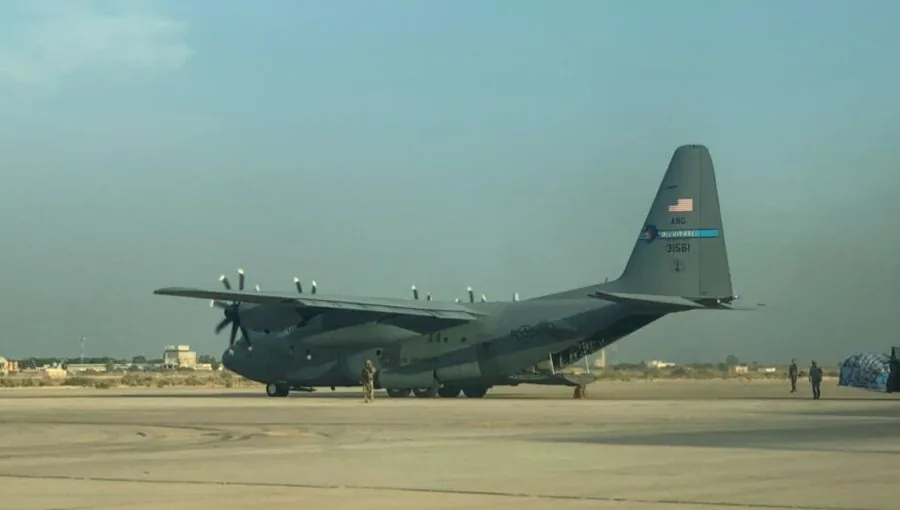 Reference image
Editorial responsibility
- No named human review is recorded for this page.
- Reports are grouped by semantic similarity and deterministic rules. Language models may assist titles, summaries, translation and cross-source analysis; the page reads the event directly, while its address stays stable when the title changes.
- Summary covers the current reports
Cross-source coverage
Common ground
- The 2003 U.S. invasion of Iraq was a catastrophic error built on lies.
- The U.S. withdrawal is driven by American political exhaustion and the pivot to China, not Iraqi readiness.
- Iraq's political class plays both the U.S. and Iran against each other for their own benefit.
- Iran-backed militias are deeply embedded in Iraq's security forces and government.
- The Iraqi public largely wants both U.S. and Iranian influence out of the country.
Points of contention
- Whether the U.S. withdrawal is a strategic repositioning or a retreat that cedes influence to Iran.
- Whether U.S. economic leverage through oil revenue control is effective or a bluff that can't be used without hurting civilians.
- Whether Iraq's security forces can hold against ISIS and militias without U.S. ground troops and air support.
- Whether Iran has the resources to fill the vacuum or is too economically weak to sustain control.
- Whether Iraqi nationalism can overcome corruption and militia power to create a stable state.
Blind spots
- Both sides underestimated the role of Iraqi agency—Iraqis are not just pawns but active arbitrageurs playing both superpowers.
- The debate ignored the long-term impact of the 2019 protests, which showed deep anti-system sentiment but were crushed by militias.
- Neither side fully addressed how the U.S. withdrawal might accelerate internal Iraqi reckoning by removing the 'American occupation' excuse.
- The discussion overlooked the Kurdish and Sunni Arab perspectives, who fear abandonment more than either superpower's influence.
WorldAttention’s read
The U.S. withdrawal from Iraq is a high-risk gamble, not a clean victory or a total surrender. The U.S. keeps economic leverage through oil revenue controls and over-the-horizon strike capability, but loses the immediate influence of boots on the ground. Iran gains symbolic momentum but lacks the economic strength to fully stabilize or control Iraq. The real wildcard is the Iraqi people—they want both superpowers out, but their political class is corrupt and their security forces are infiltrated by militias. The outcome will be decided in Baghdad, not Washington or Tehran, and depends on whether Iraqi nationalism can overcome internal divisions and Iranian penetration. History suggests this will be messy, but it's not a foregone collapse.
Reporting timeline
U.S. closes last major military base in Iraq after 23 years, leaving nation in peril
The United States is closing its last major military base in Iraq on Wednesday, ending a 23-year military presence in the country. The withdrawal leaves behind a nation described as engulfed by armed militants and pushed deeper into danger by America's ongoing, open-ended conflict with Iran. The post, attributed to the Wall Street Journal, frames the base closure as a significant milestone that does not signal an end to regional instability but rather a shift in the security landscape, with Iraq facing heightened threats from militant groups and the broader U.S.-Iran confrontation.
U.S. Forces Complete Iraq Exit After Two Decades, Leaving Uncertain Future
Multiple news outlets report that U.S. forces have completed their withdrawal from Iraq after a two-decade presence, marking the end of a 12-year mission against the Islamic State. The New York Times frames the departure as leaving Iraq to an uncertain future. CNN reports that Iran and its allies are celebrating the exit. i24NEWS raises fears that the withdrawal could create a vacuum for terror groups. Reuters provides an explainer on how the U.S. controls Iraq's oil revenues. AP News reports that former President Trump is hailing the military's exit. The withdrawal involves U.S. troops leaving bases in Iraq, with varying perspectives on the implications for regional stability and security.
Read sourceFormer diplomats assess U.S. withdrawal from Iraq and the region's future
A collection of news articles from major outlets covers the completion of the U.S. military withdrawal from Iraq. PBS features former diplomats assessing the withdrawal and its implications for the region's future. CNN reports that U.S. troops have completed their exit, a move celebrated by Iran and its allies. Yahoo notes that Iraq itself is celebrating the withdrawal of U.S.-led coalition forces. Al Jazeera analyzes how Iraq's security landscape may change following the departure of American troops. Additionally, Reuters provides an explainer on the mechanisms through which the U.S. maintains control over Iraq's oil revenues, highlighting ongoing economic influence despite the military pullout.
Read sourceShow 9 older updatesHide older updates
U.S. ends ISIS-fighting mission in Iraq as regional security fears mount
The United States has ended its 12-year military mission to fight ISIS in Iraq, withdrawing troops from bases in the country. The move has raised concerns about a potential security vacuum that could be exploited by terrorist groups. Iran and its allies have celebrated the withdrawal, while former President Donald Trump hailed the exit. The decision comes amid mounting regional security fears, with analysts warning that the departure could destabilize the area. Reuters also reported on how the U.S. controls Iraq's oil revenues, adding context to the ongoing economic and political dynamics. The withdrawal marks a significant shift in U.S. military posture in the Middle East.
Read sourceU.S. forces exit Iraq amid Iran war; SCOTUS revives Trump deportation policy
This Google News aggregation highlights two major stories. First, multiple reports confirm the complete withdrawal of U.S. forces from Iraq after two decades, occurring amid a war with Iran. The New York Times notes the withdrawal leaves Iraq to an uncertain future, while The Washington Post reports the balance of power shifts to Iran. Ret. Gen. David Petraeus comments on the withdrawal in a WBUR interview. Second, the Supreme Court has revived a Trump-era deportation policy, as reported by NPR. The AP News confirms the U.S. military's announcement that the troop withdrawal from Iraq is complete.
Retired general warns U.S. exit from Iraq may give Iran and ISIS an opening
A retired U.S. general who led troops in Iraq has warned that the American military withdrawal from Iraq could create opportunities for both Iran and ISIS to expand their influence. The warning comes as the U.S. completes its exit after a 12-year mission, a move hailed by former President Trump. Multiple news outlets report that the balance of power in Iraq is shifting toward Iran, and that Iran and its allies are celebrating the departure of U.S. forces. The Pentagon has issued a statement on the conclusion of the mission, while analysts and former commanders express concern about the security vacuum left behind.
Read sourceUS military says its withdrawal of troops from Iraq is complete, AP News reports
Multiple news outlets report that the US military has completed its withdrawal of troops from Iraq, ending a 12-year mission that began with the fight against ISIS. The AP News headline states the withdrawal is complete. The New York Times frames the departure as leaving Iraq to an uncertain future. ABC News reports the last US troops were expected to leave on Wednesday. Fox News confirms the completion of the withdrawal after a 12-year mission. The Washington Post analyzes the withdrawal in the context of a power shift to Iran. The event marks the end of a significant US military presence in Iraq that spanned two decades, with varying perspectives on the implications for regional stability and the balance of power.
Read sourceUS completes withdrawal of forces from Iraq, shifting balance of power to Iran
Multiple news outlets report that the United States has completed its withdrawal of military forces from Iraq after two decades, marking a significant shift in the regional balance of power. The Washington Post frames the withdrawal as a shift in power to Iran, while Reuters notes the departure leaves an opening for Iranian influence. CNN confirms the US military says the withdrawal is complete. The New York Times offers a retrospective on the US debacle in Iraq. i24NEWS raises concerns that the withdrawal could create a vacuum for terror groups. The withdrawal ends a long-term US military presence that began with the 2003 invasion, and analysts and officials cited in the reports suggest this will alter the strategic landscape in the Middle East, potentially empowering Iran and non-state actors.
Read sourceUS closes last major military base in Iraq after 23 years, leaving militants and Iran tensions
The United States has closed its last major military base in Iraq, marking the end of a 23-year military presence in the country. The withdrawal leaves behind a nation described as engulfed in armed militants and further endangered by America's ongoing conflict with Iran. The closure, reported by the Wall Street Journal, highlights the complex security situation in Iraq as U.S. forces depart, with the country facing internal militant threats and external pressures from the U.S.-Iran confrontation. The base closure represents a significant milestone in the U.S. military drawdown from Iraq, though the broader implications for regional stability remain uncertain.
US forces leave Iraq, raising fears of Iran-backed militias amid power vacuum
Multiple news outlets report that the last US troops have exited Iraq after 23 years, concluding the American military mission. The withdrawal has sparked fears of a power vacuum that could embolden Iran-backed militias and the Islamic State (ISIS) group. Kurdish groups have expressed rising concerns about their security, while Iran-aligned militias have celebrated the departure. The Pentagon issued an official statement confirming the conclusion of the U.S. military mission in Iraq. The Economist and other sources frame the event as the start of a new battle for Iraq's future, with the security landscape now uncertain.
Read sourceUS forces exit Iraq after two decades, leaving opening for Iran and allies
U.S. forces are set to depart from their last bases in Iraq by Wednesday, a move agreed to in 2024 under President Joe Biden and carried out by Donald Trump's administration even as it wages war against Iran. The withdrawal is celebrated as a victory by Iran and its allies, who now have deep influence in Iraq where 4,500 Americans died during more than two decades of war. Iraqi security experts warn the departure could give Tehran and its allies free rein and allow other U.S. enemies, including the Islamic State, to stage a comeback. Jasim al-Bahadli, an Iraqi security analyst, said Iran stands to benefit strategically as the removal of the U.S. military presence removes a counterweight to Tehran's influence. A commander in the Iran-backed Islamic Resistance in Iraq described the withdrawal as a historic victory. However, some Iraqis, including Sunni tribal leader Abdulrahman al-Zobaie, fear the withdrawal is premature and will create a security vacuum. Kurdish commander Sirwan Barzani noted increased Islamic State sleeper cell activity following the announced withdrawal, and Iraqi security forces said a suspected Islamic State cell was preparing suicide attacks to coincide with the pullout.
US military presence in Iraq ending after 20 years, testing Iraqi forces on Iran and ISIS
The article reports that the United States' military presence in Iraq, which has lasted for over 20 years, is coming to an end. The withdrawal will place greater responsibility on Iraqi security forces. It will also test their ability to balance the influence of pro-Iran armed groups, navigate domestic political pressures, and counter the ongoing threat from the Islamic State (ISIS). The report is attributed to the source tradealpha.