US strikes Iran's Qeshm Island air defenses before and after midterm elections
The US carried out limited strikes on Iran's Qeshm Island near the Strait of Hormuz, targeting an anti-aircraft facility that US officials said had fired on American aircraft. The strikes occurred on the eve of the US midterm elections and continued afterward, with President Trump describing them as "minor strikes" that destroyed an anti-aircraft device in about 15 minutes. Iranian media reported explosions and missiles hitting the island, while the IRGC claimed to have downed US drones, which US officials denied. The strikes came amid ongoing diplomatic efforts by Qatar and Pakistan to prevent a return to full-scale war.
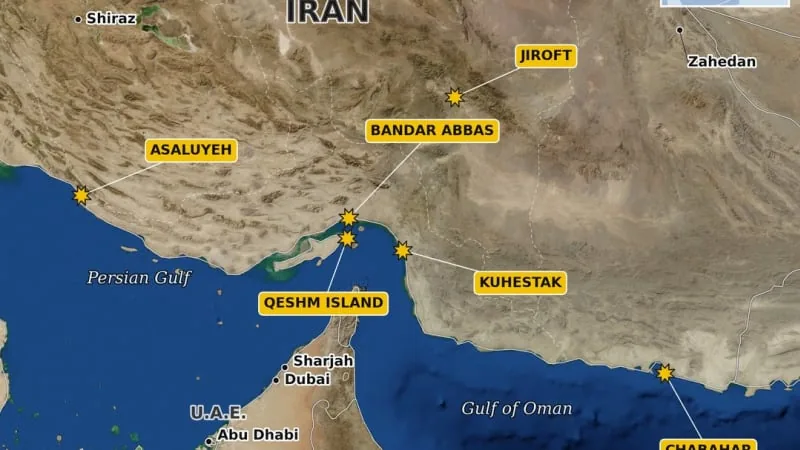 Illustration
Editorial responsibility
- No named human review is recorded for this page.
- Reports are grouped by semantic similarity and deterministic rules. Language models may assist titles, summaries, translation and cross-source analysis; the page reads the event directly, while its address stays stable when the title changes.
- Summary covers the current reports
Cross-source coverage
Common ground
- The 'minor strikes' language and the timing after the midterms are manipulative and wrong.
- Striking Qeshm Island without UN authorization violates Iranian sovereignty.
- The domestic accountability system in the US is broken or at least badly cracked.
- The press is doing important work by exposing the strike and asking who authorized it.
- Both sides agree that no neutral global enforcer exists to hold the strongest power accountable.
Points of contention
- The Western agent argues that domestic institutions like courts, elections, and a free press are the only real check on power, even if imperfect.
- The Eastern agent argues that these institutions only hold the aggressor accountable to its own citizens, not to the world, and that a multipolar balance of power is needed.
- They disagree on whether a balance of power (multiple poles) protects small states or just creates more backyards where small states get hurt.
- The Western agent sees law and institutions as the floor to build on, while the Eastern agent sees multipolarity as the only floor that gives sovereignty a chance.
Blind spots
- Neither agent seriously discusses what Iran should do or what a fair negotiation over the Strait of Hormuz would look like.
- Both agents ignore the role of other regional powers and how they might respond to the strike.
- The discussion never addresses the human cost or immediate security consequences for people living near the strike.
- Neither agent explores how international law could be reformed or enforced in practice, beyond saying it is broken or absent.
WorldAttention’s read
The roundtable agreed that the Qeshm Island strike was a serious violation of sovereignty, sold with misleading language and timed to avoid domestic accountability. Both agents also agreed that the US domestic system of checks failed and that the press is doing vital work exposing it. They split on the solution: the Western agent trusts domestic institutions and law to eventually hold power accountable, while the Eastern agent argues that only a multipolar world with real counterweights can give small states any standing. The debate ended without resolving that core disagreement, but both sides conceded the other's strongest point: institutions are always somebody's, and every pole has a backyard.
Reporting timeline
Trump says U.S. carried out 'minor strikes' on Iran as missiles hit Qeshm Island
President Donald Trump told reporters Friday that the U.S. carried out "minor strikes" on Iran, saying U.S. forces destroyed an anti-aircraft device in about 15 minutes. His comments came as Iranian news agency Tasnim reported that two missiles struck Qeshm Island near the Strait of Hormuz, with no official information on damage. Trump did not explicitly confirm the strikes were on Qeshm Island, saying "I don't want to talk about it." The strikes are the first since Tuesday's midterm elections, following debate over whether the vote would push Trump toward escalation or diplomacy. The U.S. had struck the same island on Monday in what an official called a "defensive measure."
Read sourceTrump Confirms Small-Scale US Strike on Iran's Qeshm Island
US President Donald Trump confirmed on the evening of November 6 that US forces carried out a small-scale strike on Iran, saying they "took out a small Iranian air defense installation" when asked whether the US military had attacked Qeshm Island in southern Iran. Trump also insisted that the military action against Iran "doesn't count as a war," and said the US should be considered an "occupier" because it controls the Strait of Hormuz. Iranian media reported that two missiles struck Qeshm Island in southern Iran in the early hours of November 7, with no official information yet available on the damage.
US Conducts Undisclosed Airstrikes on Iran Ahead of Midterm Elections
The U.S. conducted limited airstrikes against Iran on Nov. 2, the latest in a series of undisclosed attacks by the U.S. military in recent weeks. President Donald Trump acknowledged the strikes on Fox News, describing them as a "minor attack" targeting an anti-aircraft facility on Qeshm Island. Iranian forces fired at U.S. aircraft, and Iran's Islamic Revolutionary Guard Corps claimed to have shot down an MQ-9 Reaper, though U.S. officials said no aircraft were downed. The strikes occurred just before the U.S. midterm elections. The last publicly announced strikes were in early September, and since then the U.S. has conducted limited airstrikes on air defenses and other targets. Trump has signaled he may return to large-scale combat operations after the midterms, and CENTCOM commander Adm. Brad Cooper recently met with Trump and defense leaders. Iran's Deputy Foreign Minister Kazem Gharibabadi said Iran remains in a state of war and retains the right to self-defense.
Show 7 older updatesHide older updates
US Conducts Undisclosed Airstrikes on Iran Ahead of Midterm Elections
The U.S. conducted limited airstrikes against Iran on Nov. 2, the latest in a series of undisclosed attacks, just before the U.S. midterm elections. President Donald Trump acknowledged the strikes on Nov. 3, describing them as a 'minor attack' targeting an anti-aircraft facility on Qeshm Island. Iranian forces fired at U.S. aircraft, and Iran's Islamic Revolutionary Guard Corps claimed to have shot down an MQ-9 Reaper, though U.S. officials said no aircraft were downed. The strikes are part of ongoing military pressure after a ceasefire ended major operations in April. Trump has signaled he may return to large-scale combat after the midterms, and Iran's deputy foreign minister said Iran retains its right to self-defense as the war has not ended.
US Strikes Targets in Iran as Next Iran War Looms After Midterms
The US military fired multiple projectiles at Iran's Qeshm Island in the Strait of Hormuz overnight into Tuesday, the first confirmed US strike on Iran since early September. President Donald Trump said an air defense facility was hit, and the US military justified the attack by citing a prior Iranian strike on a US aircraft. The strike came just before US midterm elections. The Wall Street Journal reported this was not the first such incident in recent weeks, with explosions also reported on Qeshm on Monday and in Tehran and northern Iran in late October. Although a formal ceasefire holds, peace has not returned since war broke out in late February 2026. The US has blocked Iranian ship traffic through the Strait of Hormuz since mid-July, and the rial has hit an all-time low of 2.72 million per dollar. Analysts note neither Washington nor Tehran is willing to make concessions, while US military buildup in the region continues, including the USS Theodore Roosevelt carrier and an amphibious group expected by late November.
Read sourceUS strikes Iran's Qeshm Island ahead of midterm elections
The US carried out limited and defensive strikes on Iran's Qeshm Island in the Strait of Hormuz, US officials told CBS, in response to Iran's Islamic Revolutionary Guard Corps firing on a US aircraft. Iran's state news agency reported explosions on Qeshm, and the IRGC said it shot down two US MQM-170 drones and an MQ-9 drone. The strikes came as mediators intensified efforts to prevent a return to all-out war after Tuesday's US midterm elections. President Trump, facing falling polling numbers and party pressure to end the war that began in February, said he was in "no rush" to escalate but mentioned possibly targeting the Pickaxe Mountain nuclear site. Israeli PM Netanyahu reportedly urged Trump for another wave of strikes. Iran's negotiator said "the ball is now in America's court to prevent war," while Qatar said both sides were reviewing proposals.
Read sourceUS Reportedly Strikes Iran's Qeshm Island Ahead of Midterms
According to a government official cited by AP, the US carried out strikes on Iranian targets in the Strait of Hormuz shortly before the US midterm elections, targeting Iranian units that had used surface-to-air missiles against US facilities. Iranian state television reported explosions on Qeshm Island, the largest island in the strait. The UK Maritime Trade Operations had earlier reported a ship hit by an unknown projectile that punctured its hull, with crew safe. The strikes appeared limited and did not signal a full resumption of hostilities. President Donald Trump had previously said he would not order attacks on Iran before Tuesday's elections. Iran has effectively closed the strait since Israeli-American strikes began in late February, and has repeatedly warned ships against transiting without Tehran's permission. Iran says it has presented a plan to reopen the strait within two days if Washington meets its demands, and Vice President JD Vance expressed confidence about prospects for a negotiated solution.
Read sourceUS strikes Iran's Qeshm Island ahead of midterm elections
The US has launched limited strikes on Iran's Qeshm Island in the Strait of Hormuz, US officials told CBS, the BBC's US partner. Iranian state news agency IRNA reported several explosions on the island on Monday. US officials said the strikes were in response to Iran's Islamic Revolutionary Guard Corps firing upon a US aircraft. The BBC has contacted US Central Command for comment. The strikes come ahead of US midterm elections that will determine control of Congress. President Trump, facing falling polling numbers and pressure from within his party to end the war that began when the US and Israel attacked Iran in February, told reporters he was in "no rush" to ramp up strikes and said the US "might need to go after Pickaxe," a site linked to Iran's nuclear programme. Iran's foreign minister Abbas Araghchi said "very intensive" talks to end the war are under way via mediators and that Tehran is prepared for both diplomatic and military scenarios.
Read sourceUS Strikes Iranian Targets in Strait of Hormuz on Eve of Midterm Elections
On the eve of the US midterm elections, the United States carried out strikes on several Iranian targets in the Strait of Hormuz, according to a government official cited by AP. The official said Iranian units targeted had used surface-to-air missiles against US facilities. Iranian state television reported explosions on Qeshm Island. The strikes appeared limited and did not suggest a full resumption of hostilities. President Donald Trump had previously said he would not order attacks on Iran before the elections. Vice President JD Vance said Monday he had discussed Iran talks with Trump, expressing confidence about prospects for a negotiated solution. The unpopular Iran war and its effects on gasoline prices and other economic sectors are seen as a weak point for Republicans as they seek to defend their congressional majorities.
US Strikes Iranian Targets in Strait of Hormuz on Eve of Midterms
On the eve of the US midterm elections, the United States launched attacks on multiple Iranian targets in the Strait of Hormuz, according to a government official. The strikes targeted Iranian units that had used surface-to-air missiles against US facilities. Iranian state television reported explosions on Qeshm Island. Axios reporter Barak Ravid said on X that a US warplane attacked a Revolutionary Guard position on the island after a missile was fired at a US aircraft. CNN and CBS also reported the "limited" strikes. The attacks do not suggest a full resumption of hostilities. President Donald Trump had previously said he would not order attacks on Iran before the elections. Vice President J.D. Vance expressed confidence about prospects for a negotiated solution. The unpopular Iran war and its impact on gas prices are seen as a vulnerability for Republicans defending their congressional majorities.
Read source