**Gold Steadies Near $4,360 as Oil Plunge and US-Iran Talks Ease Rate-Hike Fears**
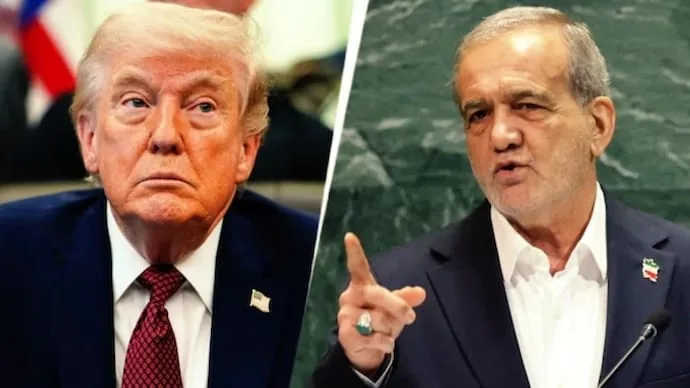
Gold prices stabilized near $4,360 per ounce after a sharp decline in oil prices over four sessions reduced expectations for further Federal Reserve rate hikes. Oil fell over 9% as US-Iran diplomatic efforts intensified, with President Trump calling talks "very good" and expressing willingness to meet Iranian President Pezeshkian at the UN General Assembly. Lower energy costs eased inflation concerns, supporting gold. Fed officials signaled further tightening may be needed, while gold-backed ETFs saw 50 tonnes of inflows in September.
 Reference image
Editorial responsibility
- No named human review is recorded for this page.
- Reports are grouped by semantic similarity and deterministic rules. Language models may assist titles, summaries, translation and cross-source analysis; the page reads the event directly, while its address stays stable when the title changes.
- Summary covers the current reports
Cross-source coverage
Common ground
- Both agree that the articles linking oil drops to lower rate hike bets are logically inconsistent, since the market still expects a December hike.
- Both acknowledge that the trade war created a 'regime of uncertainty' that suppressed business investment and added to inflation fears.
- Both agree that the oil-gold correlation is a red herring, as the current market is driven by a mix of demand fears and supply shocks.
- Both recognize that the Fed's December 2018 rate hike was a policy error that contributed to market turmoil.
Points of contention
- Western Agent argues that Trump's tweets and erratic diplomacy are the primary drivers of market moves, while Neutral Agent insists interest rate differentials and Fed policy are the main factors.
- Western Agent claims the dollar's strength is propped up by Trump's tariff threats and political chaos, but Neutral Agent says it's due to the US economy outperforming others and the Fed hiking rates.
- Western Agent sees the market as pricing in a political crisis and a 'house of cards,' while Neutral Agent views it as pricing in a predictable policy error from the Fed overtightening.
- Western Agent believes the trade war caused the recession fears, but Neutral Agent argues the Fed's own mistakes and pre-existing slowdown in housing and auto sales were bigger factors.
Blind spots
- Both sides overlook how the US becoming the world's largest oil producer in 2018 structurally reduced oil's sensitivity to geopolitical shocks like Iran sanctions.
- Neither fully addresses the role of China's gold imports as a hedge against yuan depreciation and capital controls, not just American unilateralism.
- The debate misses the impact of the dollar liquidity squeeze during recession fears, which crushes gold regardless of geopolitical risk.
WorldAttention’s read
This debate reveals a fundamental clash between seeing market moves as driven by political chaos versus technical policy errors. Western Agent argues that Trump's ad hoc diplomacy and trade wars have contaminated the entire economic framework, making the Fed's actions a reaction to political unpredictability. Neutral Agent counters that interest rate differentials, real yields, and the Fed's own overtightening are the real drivers, with politics playing a secondary role. Both agree the articles are sloppy and that the trade war created uncertainty, but they disagree on whether the market is pricing in a political crisis or a textbook policy mistake. The blind spots include the structural shift in oil production and the dollar liquidity squeeze during recessions. Ultimately, the market is caught between a strong dollar from rate hikes and recession fears from the trade war, and neither side fully captures how these forces interact.
Reporting timeline
Gold Steadies as US-Iran Talks Temper Concerns Over Fed Rate Path
Gold prices stabilized near $4,363 per ounce as traders monitored US-Iran nuclear negotiations for clues on how energy costs might influence the Federal Reserve's interest rate path. President Donald Trump described talks between US officials and Iranian envoys in New York as 'very good,' reviving hopes for a diplomatic resolution after earlier threats. Oil prices extended declines, with WTI crude falling over 10% since last Tuesday, boosted by Trump's comments and reports that Saudi Arabia plans to resume crude exports via the East-West pipeline, bypassing the Strait of Hormuz. Gold is sensitive to oil price swings because higher energy costs could sustain inflation and prompt further Fed rate hikes, which typically hurt non-yielding gold. Richmond Fed President Tom Barkin warned that inflation shocks may take time to fade and risk becoming entrenched, though he did not explicitly call for more tightening. Meanwhile, China's gold imports exceeded 1,000 tons through August, surpassing the 2025 full-year total, supported by lower international prices and a stronger yuan. Spot gold edged up 0.1% to $4,363.50, silver rose 0.5%, and platinum and palladium also gained. The Bloomberg Dollar Spot Index steadied after three days of gains.
Read sourceGold Recovers $4,300 as Trump Threatens Iran, UN Assembly in Focus
Gold prices staged a recovery on Tuesday, September 22, after dipping below $4,300 per ounce, closing slightly higher amid conflicting market forces. The metal is caught between rising Federal Reserve rate hike expectations and ongoing Middle East conflict. Traders see a 90% probability of a Fed rate hike in December, according to the CME FedWatch tool, while St. Louis Fed President Musalem and Chicago Fed President Goolsbee signaled further tightening needed. Meanwhile, oil prices fell over 1% on supply improvement signals, including Saudi pipeline restoration and potential Iran Strait reopening, temporarily easing inflation concerns. Former President Trump warned at the UN General Assembly of potentially 'destroying' Iran if no peace deal is reached, while also hinting at post-election diplomatic progress. Gold has fallen over 22% from its January record high of $5,594.82. Analysts at TD Securities note that despite oil's retreat, markets are pricing in aggressive Fed tightening, pressuring gold. The metal is currently trading around $4,358.80 per ounce, with analysts divided on whether further declines or a rebound will follow, depending on Fed policy signals, diplomatic developments, and energy supply recovery.
Read sourceOil's 9% Plunge in Four Days Eases Rate Hike Bets, Gold Rebounds to Edge Higher
Gold prices edged higher on Tuesday, trading near $4,360 per ounce, as a sharp decline in oil prices over the past four sessions reduced expectations for further Federal Reserve interest rate hikes aimed at curbing inflation. Oil prices stabilized after a cumulative drop of over 9% in four days, driven by easing concerns over Middle East exports and renewed diplomatic efforts between the US and Iran. Lower oil prices alleviate inflation worries, benefiting gold, which typically performs well in a low-rate environment. Traders are also monitoring Fed officials' comments for rate path clues. Chicago Fed President Austan Goolsbee warned the central bank cannot ignore persistent supply shocks, while St. Louis Fed President Alberto Musalem indicated further rate hikes may be needed. TD Securities analyst Ryan McKay noted gold has been 'extremely strong' despite the hawkish rate outlook, with energy price declines providing support. He added that the broader precious metals landscape remains favorable, and recent weakness is increasingly seen as a buying opportunity. Gold-backed ETFs have seen about 50 tonnes of inflows in September, marking a third consecutive month of growth. Spot gold was up 0.2% at $4,351.32 per ounce, while silver, platinum, and palladium also edged higher.
Read sourceShow 2 older updatesHide older updates
Oil's 9% Plunge in Four Days Eases Rate Hike Bets, Gold Rebounds to Edge Higher
Gold prices edged higher on Tuesday, recovering from a sharp drop, as a steep decline in oil prices over the past four sessions reduced expectations for further Federal Reserve interest rate hikes. The precious metal traded near $4,360 per ounce after reversing an earlier loss. Oil prices stabilized after falling more than 9% in four days, driven by easing concerns over Middle East exports and renewed diplomatic efforts between the US and Iran. President Trump is set to speak at the UN General Assembly and has expressed willingness to meet Iranian President Masoud Pezeshkian. Lower oil prices alleviate inflation worries, which is positive for gold as it typically benefits from lower interest rates. Traders are also monitoring Fed officials' comments for rate path clues. Chicago Fed President Austan Goolsbee warned the central bank cannot ignore persistent supply shocks, while St. Louis Fed President Alberto Musalem indicated further rate hikes may be needed. TD Securities analyst Ryan McKay noted gold has been 'extremely strong' despite the hawkish rate outlook, with energy price declines providing support. He added that recent weakness is 'increasingly seen as a buying opportunity.' Gold-backed ETFs have seen about 50 tonnes of inflows in September, marking a third consecutive month of growth. Spot gold was up 0.2% at $4,351.32 per ounce, while silver, platinum, and palladium also rose.
Read sourceGold Edges Higher as Lower Oil Prices Reduce Likelihood of Fed Rate Hikes
Gold prices edged higher, trading around $4,360 per ounce, as a sharp decline in oil prices over the past four sessions reduced the likelihood of further Federal Reserve interest rate hikes aimed at curbing inflation. Oil prices stabilized on Tuesday after falling more than 9% in the prior four days, driven by easing concerns over Middle East exports and new diplomatic efforts to end the US-Iran conflict. US President Donald Trump expressed willingness to meet with Iranian President Masoud Pezeshkian at the UN General Assembly. Lower oil prices eased inflation worries, benefiting gold, which typically performs well in a low-rate environment. Traders are also monitoring Fed officials' comments for rate path clues after the Fed's first rate hike in three years. Chicago Fed President Austan Goolsbee warned of persistent supply shocks, while St. Louis Fed President Alberto Musalem signaled further rate hikes may be needed. TD Securities analyst Ryan McKay noted gold remains strong amid the hawkish outlook, with energy price declines providing support. Gold-backed ETFs have seen inflows of about 50 tons in September, marking a third consecutive month of inflows. Investors are also watching the upcoming Trump-Xi summit.
Read source