US auto coalition urges Trump to block Chinese carmakers ahead of Xi summit
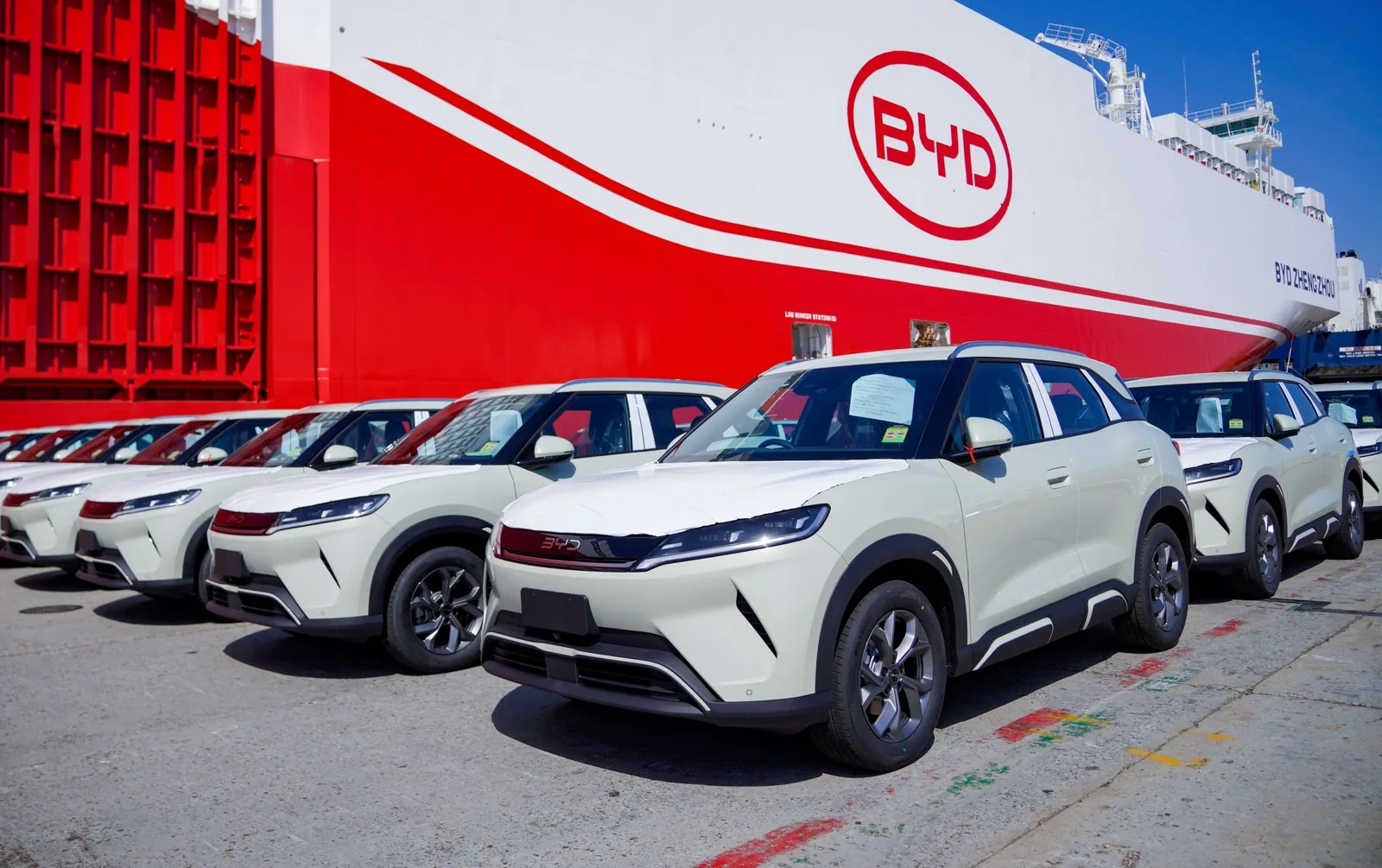
Six major US automotive industry associations sent a letter to President Trump urging him to maintain policies blocking Chinese automakers from selling, importing, or manufacturing vehicles in the US. The coalition, representing GM, Ford, Toyota, Volkswagen, and others, argues that Chinese automakers have zero US market share and that allowing them to build factories would harm domestic manufacturers. The appeal comes ahead of Trump's meeting with Chinese President Xi Jinping, amid reports that Chinese EV maker BYD may join the delegation. Trump had previously expressed openness to Chinese companies building cars in the US.
 Illustration
Editorial responsibility
- No named human review is recorded for this page.
- Reports are grouped by semantic similarity and deterministic rules. Language models may assist titles, summaries, translation and cross-source analysis; the page reads the event directly, while its address stays stable when the title changes.
- Summary covers the current reports
Cross-source coverage
Common ground
- The proposed ban on Chinese EVs is primarily protectionism disguised as national security, not a genuine security measure.
- The auto industry coalition, including Toyota and Volkswagen, is motivated by competitive self-interest rather than data security or labor concerns.
- Data security concerns are real but solvable through data localization requirements, which the industry has not proposed.
- The labor issue—non-union Chinese battery plants paying lower wages—is a legitimate threat to American workers, not just corporate hypocrisy.
- A total ban harms American consumers by keeping prices high and limiting access to innovative, affordable EVs.
Points of contention
- Western Agent argues Chinese EVs are unequivocally better and more innovative, while Neutral Agent says 'better' depends on metrics like reliability and service networks.
- Neutral Agent sees data security as a meaningful legal distinction, while Western Agent dismisses it as practically meaningless given U.S. surveillance powers.
- Western Agent views the 40% consumer interest as a market mandate, while Neutral Agent calls it a survey of stated preference, not actual purchase intent.
- Neutral Agent advocates for phased, conditional market access, while Western Agent sees that as naive and believes the industry wants a total ban regardless.
Blind spots
- Both sides underplay the consumer risk of opening the market without safety certification or service infrastructure, which could leave early adopters stranded.
- The debate overlooks how Chinese automakers would need to build trust over time, similar to Japanese and Korean brands, rather than skipping the line.
- Neither side fully addresses the structural wage gap between union and non-union plants as a long-term challenge for American manufacturing, beyond just this ban.
WorldAttention’s read
This debate reveals that the proposed ban on Chinese EVs is a protectionist move by legacy automakers who can't compete on price or innovation, wrapped in thin national security and labor arguments. While data security and labor concerns are real, they are solvable through conditional market access—like data localization, safety certification, and union protections—which the industry hasn't pushed for, exposing their true motive: fear of competition. The ban ultimately hurts American consumers by keeping prices high and stifling innovation, but opening the market without safeguards could also harm early adopters. The smartest path forward is a phased approach that tests whether the industry's fears are about competition or control, while protecting workers and consumers.
Reporting timeline
Six US Auto Associations Urge Trump to Block Chinese Car Sales and Factory Investment
Six major US automotive industry associations have jointly sent a letter to the Trump administration, urging a comprehensive ban on Chinese auto companies entering the US market. The letter, representing automakers, parts suppliers, and dealers including General Motors, Ford, Toyota, and Volkswagen, calls for blocking not only imports and sales but also Chinese investment in US manufacturing plants. The associations argue that Chinese automakers currently have zero US market share and that allowing them to build factories would squeeze domestic companies and cause job losses rather than create new employment. The White House responded by stating it would work with domestic automakers to revive US auto industry leadership while considering national and economic security. This follows a March letter from five other auto industry groups urging continued import restrictions. The report notes that despite high tariffs and import bans, nearly 40% of US consumers would consider buying Chinese cars due to rising domestic prices. Separately, US Transportation Secretary Sean Duffy recently pressured Ford to cut ties with Chinese partners CATL, Geely, and BYD, citing supply chain security concerns. Ford CEO Jim Farley initially dismissed the concerns as misunderstandings but later announced a $1 billion investment in a Kentucky truck plant, which the White House praised.
Read sourceUS Auto Industry Coalition Urges Trump to Block Chinese Automakers from US Market
A broad coalition of US automakers, parts suppliers, and dealers has sent a letter to President Donald Trump urging him to maintain restrictions preventing Chinese automakers from selling, importing, or manufacturing vehicles in the United States. The coalition, including the Alliance for Automotive Innovation (representing Ford, GM, Toyota, and Volkswagen), argues that current barriers are essential for fair competition and cites national security and economic threats from Chinese electric and connected-vehicle technology. The letter comes ahead of a planned US-China summit, amid reports that Chinese firms including BYD may attend. The industry is concerned by Trump's earlier statements expressing openness to Chinese automakers building factories in the US if they employ American workers. The coalition wants Congress to pass permanent legislative bans, such as the Connected Vehicle Security Act, which cleared a Senate committee in July. The industry warns that allowing Chinese local production would undermine US manufacturing jobs and national security goals.
Auto industry urges Trump to keep Chinese automakers out ahead of Xi meeting
On September 18, 2026, major automakers, suppliers, and dealers urged President Donald Trump to maintain policies that keep Chinese automakers out of the US market, ahead of his meeting with Chinese President Xi Jinping. A letter signed by six industry groups representing General Motors, Toyota, Volkswagen, Ford, Hyundai, Stellantis, Tesla, and others argued that allowing Chinese automakers to open domestic facilities would shift jobs away from US manufacturers. This follows Trump's statement to Fox News that he would be OK with Chinese car companies building cars in the United States. A regulation imposed by former President Joe Biden's administration in early 2025 effectively banned Chinese automakers from selling or building passenger vehicles in the US due to national security concerns over sensitive driver data. Washington also maintains over 100% tariffs on Chinese electric vehicles. Congress is considering legislation to toughen the ban. Michigan Democratic Senator Elissa Slotkin cited a report that Xi may bring Chinese automaker BYD to Washington for the meetings, suggesting possible deals to allow Chinese cars into the US.
Show 2 older updatesHide older updates
Auto industry urges Trump to keep Chinese automakers out ahead of Xi meeting
Major automakers, suppliers, and dealers urged President Donald Trump on Friday to maintain policies that keep Chinese automakers out of the US market, ahead of his meeting with Chinese President Xi Jinping next week. The letter, signed by six groups representing General Motors, Toyota, Volkswagen, Ford, Hyundai, Stellantis, Tesla, and others, argues that allowing Chinese automakers to open domestic facilities would provide a foothold at the expense of US manufacturers. This comes after Trump told Fox News he would be OK with Chinese car companies building cars in the United States. A regulation imposed by the Biden administration in early 2025 effectively banned Chinese automakers from selling or building passenger vehicles in the US over data security concerns, and Washington maintains over 100% tariffs on Chinese EVs. Michigan Democratic Senator Elissa Slotkin cited a report that Xi may bring Chinese automaker BYD to Washington, suggesting deals to allow Chinese cars or companies into the US could be afoot. Congress is also considering legislation to toughen the ban.
Read sourceAuto Industry Coalition Urges Trump to Block Chinese Car Makers from Entering US
A broad coalition of automakers, suppliers, and dealers, including the Alliance for Automotive Innovation representing Ford, GM, Toyota, and Volkswagen, has sent a letter to President Donald Trump urging him to block Chinese cars from entering the United States. The coalition argues that existing barriers are essential for fair competition and highlights security risks and economic threats from subsidized Chinese vehicles and connected car technology. The appeal intensifies ahead of a planned summit between Trump and Chinese President Xi Jinping, which may involve Chinese EV giant BYD. The letter warns that allowing Chinese plants in the US would harm domestic manufacturers and undermine national security. The industry is also pushing Congress to codify a permanent ban on Chinese cars and connected vehicle technology. This comes after Trump suggested openness to Chinese automakers producing EVs in the US using American workers, alarming domestic carmakers.