Ukraine Agriculture Minister Expects 20 Million Tonnes Grain Exports via Baltic Sea Route
Ukraine suspended Black Sea grain exports on August 22 due to a port blockade, halting shipments from Odesa. Minister Taras Vysotsky said alternative rail, river, and road routes cover only half of the needed 5 million tonnes monthly. On September 23, he announced Ukraine expects to export 20 million tonnes via the Baltic Sea route, seeking to maintain agricultural exports amid the conflict.
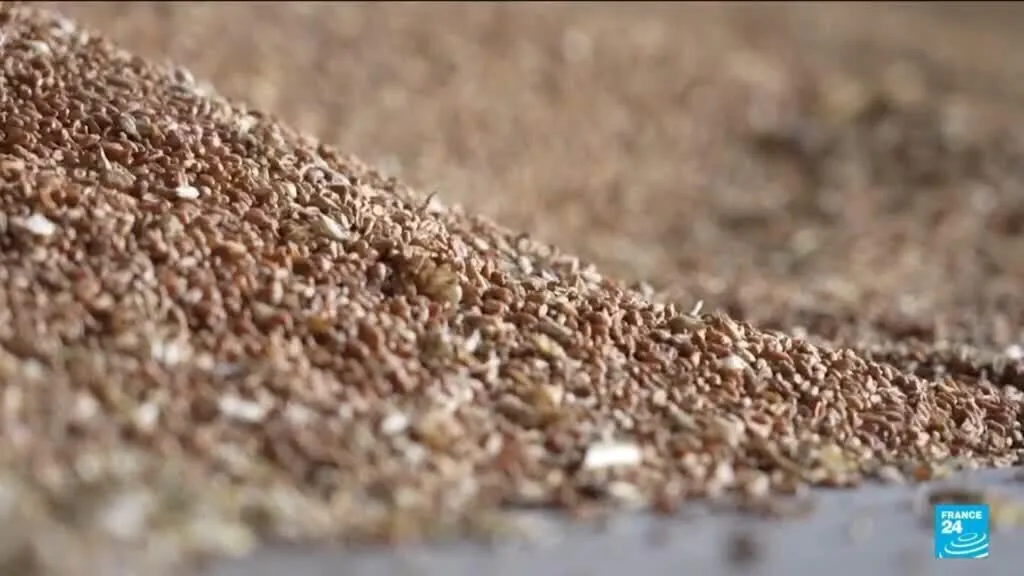 Reference image
Editorial responsibility
- No named human review is recorded for this page.
- Reports are grouped by semantic similarity and deterministic rules. Language models may assist titles, summaries, translation and cross-source analysis; the page reads the event directly, while its address stays stable when the title changes.
- Summary covers the current reports
Cross-source coverage
Common ground
- All sides agree that the 20 million tonne Baltic route figure is aspirational, not a realistic near-term target, and cannot replace Ukraine's pre-war export capacity of 60 million tonnes.
- Everyone acknowledges that the Global South—especially net-food-importing countries like Egypt, Yemen, and Somalia—is bearing the heaviest human cost of the grain export disruption.
- There is agreement that both Russia and the West have used grain as a geopolitical weapon, and that the current system lacks a genuinely neutral framework to protect food security.
- All participants recognize that private sector over-compliance with sanctions creates a de facto blockade on Russian agricultural exports, beyond official policy.
Points of contention
- The Eastern Agent argues Russia's security concerns justify its actions and that the West broke the Black Sea Grain Initiative first, while the Neutral and Regional Agents say Russia's unilateral withdrawal and bombing of Odesa ports destroyed the mechanism.
- The Regional Agent insists the crisis stems from a colonial legacy that leaves the Global South dependent, while the Neutral Agent points to governance failures in importing countries and the Eastern Agent blames Western sanctions and proxy war strategy.
- The Eastern Agent claims Russia offered practical solutions like demilitarized corridors, but the Regional and Neutral Agents counter that those proposals came with strings attached and were contradicted by Russia's own bombing of grain infrastructure.
- The Neutral Agent sees the Baltic route as a necessary diversification investment for Ukraine's long-term security, while the Eastern Agent dismisses it as a propaganda fantasy and the Regional Agent calls it a lifeline too short to matter.
Blind spots
- All sides largely ignore the role of other major grain producers like Brazil and India in shaping global food markets, focusing almost exclusively on the Russia-Ukraine-Western dynamic.
- The debate treats the Black Sea as the only critical corridor, without seriously discussing long-term investments in African agriculture or alternative supply chains to break dependency.
- No participant adequately addresses how to create a genuinely neutral shipping framework with independent enforcement that both Russia and the West would accept.
WorldAttention’s read
This debate reveals a deep structural crisis: Ukraine's grain exports have collapsed from 60 million tonnes pre-war to a fraction of that, and the 20 million tonne Baltic route figure is more political theater than a logistical plan. All sides agree the Global South suffers most, but they disagree sharply on who is to blame—Russia's security demands, Western sanctions and proxy war strategy, or a colonial legacy that left countries like Egypt dependent on imported grain. The core blind spot is that no one proposes a workable neutral framework to move grain without being held hostage by great power rivalry. The real solution requires breaking dependency on Black Sea exports through investment in African agriculture and a multilateral system where food-importing nations have real power—but until then, every argument about blame is just rearranging deck chairs on a sinking ship.
Reporting timeline
Ukraine Agriculture Minister Says Country Expects to Export 20 Million Tonnes of Grain via Baltic Route
Ukraine's Agriculture Minister announced that the country expects to export 20 million tonnes of grain via the Baltic Sea route. This forecast comes as Ukraine seeks alternative export corridors amid ongoing disruptions to its traditional Black Sea shipping routes. The statement highlights Ukraine's efforts to maintain agricultural exports, a key sector for its economy, by utilizing Baltic ports. The volume mentioned represents a significant portion of Ukraine's grain export capacity, though the timeline and specific conditions for achieving this target were not detailed in the report.
Read sourceUkraine Agriculture Minister Says 20 Million Tonnes of Grain Could Be Exported via Baltic Route
Ukraine's Agriculture Minister announced on September 23 that the country expects to export 20 million tonnes of grain via the Baltic Sea route. This forecast highlights Ukraine's efforts to maintain agricultural exports despite ongoing disruptions to traditional Black Sea shipping routes caused by the conflict with Russia. The Baltic route offers an alternative corridor for Ukrainian grain to reach international markets, supporting global food supply chains and Ukraine's agricultural economy. The minister's statement provides a specific volume target, indicating confidence in the logistics and capacity of this alternative export pathway. The announcement comes amid continued uncertainty over the Black Sea Grain Initiative and Russia's blockade of Ukrainian ports.
Read sourceUkraine Agriculture Minister Says 20 Million Tonnes of Grain Could Be Exported via Baltic Route
Ukraine's Agriculture Minister announced that the country expects to export 20 million tonnes of grain via the Baltic Sea route. This forecast highlights Ukraine's efforts to maintain agricultural exports despite ongoing disruptions to traditional Black Sea shipping corridors caused by the war with Russia. The Baltic route offers an alternative pathway for Ukrainian grain to reach global markets, supporting the country's economy and global food security. The minister's statement underscores the importance of alternative logistics in sustaining Ukraine's role as a major grain exporter.
Read sourceShow 4 older updatesHide older updates
Ukraine Suspends Grain Exports Through Black Sea Ports Due to Blockade, Minister Says
Ukrainian Agriculture Policy and Food Minister Taras Vysotskyi announced on the 22nd that Ukraine has suspended grain exports through its Black Sea ports due to a blockade. In a video statement, Vysotskyi confirmed that as of today, grain exports from the Odesa region have ceased entirely. The suspension, reported by state broadcaster CCTV, marks a significant disruption to Ukraine's agricultural exports, which are a critical source of revenue and global food supply. The minister did not specify which party is responsible for the blockade or provide a timeline for when exports might resume. The announcement underscores the ongoing impact of regional conflict on Ukraine's ability to ship grain via its primary maritime route.
Read sourceUkraine Halts Black Sea Grain Exports Due to Port Blockade, Official Says
Ukrainian Agriculture and Food Minister Taras Vysotsky said on August 22 that Ukraine has suspended grain exports through Black Sea ports due to a blockade of the ports. In a video statement, Vysotsky stated that as of today, there are no grain exports from the Odesa region, and exports have stopped. He noted that since August, Ukraine has been exporting grain via rail, inland waterways, and road, with rail and river transport accounting for the vast majority. Vysotsky explained that Ukraine needs to export at least 5 million tons of grain per month, or at least 60 million tons annually, but the capacity of these three routes is only half of the required total export volume. He warned that further expanding land-based exports would raise transportation costs, making exports unprofitable. Ukraine is a major exporter of corn and wheat, relying heavily on Black Sea ports. In recent months, Ukraine and Russia have frequently attacked each other's targets in the Black Sea. Reports indicate that due to mutual attacks on ports and cargo ships, grain exports from both countries in the Black Sea and Azov Sea regions have nearly stalled, with export capacity losses exceeding 97%.
Ukraine Halts Black Sea Grain Exports Due to Port Blockade, Official Says
Ukrainian Agriculture Policy and Food Minister Taras Vysotsky said on August 22 that Ukraine has suspended grain exports through Black Sea ports due to a blockade of the ports. In a video statement, Vysotsky confirmed that as of that day, no grain exports were occurring from the Odesa region. He noted that since August, Ukraine has been exporting grain via rail, river, and road, with rail and river transport accounting for the vast majority. However, he stated that Ukraine needs to export at least 5 million tons of grain per month, or at least 60 million tons annually, but the capacity of these three alternative routes is only half of the required total. Vysotsky warned that any further expansion of land-based exports would raise transportation costs, making exports unprofitable. Ukraine is a major exporter of corn and wheat and relies heavily on its Black Sea ports. In recent months, Ukraine and Russia have frequently attacked each other's targets in the Black Sea. Reports indicate that due to mutual attacks on ports and cargo ships, grain exports from both countries in the Black and Azov Seas have nearly halted, with export capacity losses exceeding 97%.
Read sourceUkraine Agriculture Minister Expects 20 Million Tonnes Grain Exports via Baltic Sea Route
Ukraine's Agriculture Minister announced that the country expects to export 20 million tonnes of grain via the Baltic Sea route. This forecast highlights Ukraine's efforts to maintain agricultural exports amid ongoing disruptions to traditional Black Sea shipping routes. The minister's statement underscores the strategic importance of alternative export corridors for Ukraine's grain sector, which is a key component of the national economy and global food security. The Baltic Sea route provides a vital alternative for Ukrainian agricultural products to reach international markets, helping to stabilize global grain supplies and support Ukraine's economy during the conflict with Russia.
Read source