Trump threatens Iran with "annihilation" at UN, offers post-election deal
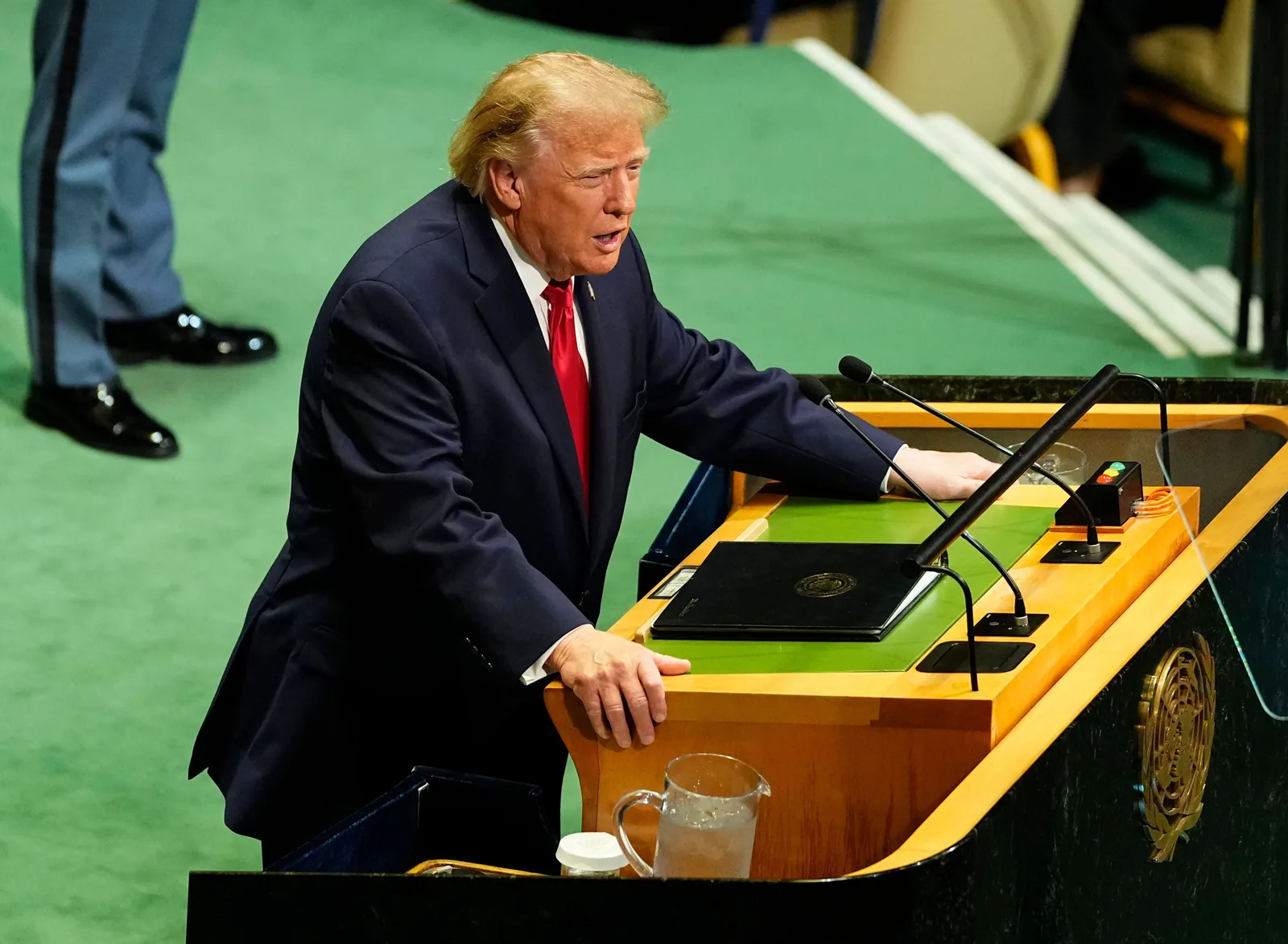
US President Donald Trump addressed the 81st UN General Assembly in New York on September 22, 2026, threatening to "annihilate" Iran if no nuclear deal is reached after November's US midterm elections. He justified the ongoing US-Israeli war against Iran, called for Iran's economic isolation, and predicted oil prices would fall sharply if the conflict ends. Trump also announced renaming artificial intelligence to "superintelligence" in US government documents, signed a security agreement with Denmark to boost US military presence on Greenland, and criticized Cuba as a "failed state." The Iranian and Cuban delegations walked out during his speech.
 Reference image
Editorial responsibility
- No named human review is recorded for this page.
- Reports are grouped by semantic similarity and deterministic rules. Language models may assist titles, summaries, translation and cross-source analysis; the page reads the event directly, while its address stays stable when the title changes.
- Summary covers the current reports
Cross-source coverage
Reporting timeline
Trump at UN General Assembly: Between Warmonger and Peacemaker in Iran War Speech
US President Donald Trump used his address to the 81st UN General Assembly in New York for self-promotion, mixing campaign rhetoric with threats and conditional peace overtures. The 80-year-old Trump, facing domestic pressure ahead of November midterm elections, struck a slightly friendlier tone than the previous year but still criticized multilateral organizations. He threatened Iran with either a diplomatic agreement or 'annihilation,' shocking observers who saw this as a potential war crime statement. Trump claimed his administration holds the upper hand in the Iran conflict, which the US and Israel initiated over six months ago. He also boasted about US economic and military dominance, defended the military action that ousted Venezuelan President Nicolas Maduro, and expressed optimism about ending the Ukraine war through cooperation with Russia and Ukraine. The Iranian delegation walked out during Trump's speech. Trump met with Gulf states and Syria's transitional president on the sidelines. The article notes that allies are seeking new alliances to bypass US isolationism.
Read sourceTrump tells UN he faces 'big decision' on whether to annihilate Iran or make peace
President Donald Trump told the United Nations General Assembly on 22 September 2026 that he faces a 'big decision' on whether to strike Iran again or pursue a peace deal, threatening to 'annihilate' the Islamic Republic if the conflict goes unresolved. His speech contrasted with UN Secretary General António Guterres' farewell address, which warned global divisions were deepening. Trump justified the US-Iran war, arguing it prevented Tehran from obtaining a nuclear weapon, and said a deal might come after November's US midterm elections. He also vowed to broker peace between Russia and Ukraine, rebranded artificial intelligence as 'super intelligence', and signed an agreement with Denmark and Greenland to boost US military presence on Greenland. On the sidelines, US officials held a three-hour meeting with the Iranian delegation, which Iran state TV confirmed. Trump criticized international institutions, accusing the UN of a 'far-left agenda', and emphasized national sovereignty and American military power. The Cuban delegation walked out during his speech after he called Cuba a 'failed state'.
Read sourceTrump announces new term 'Superintelligence' for AI, threatens Iran with 'annihilation' at UN
In a speech before the UN General Assembly in New York on September 22, 2026, US President Donald Trump announced he will replace the term 'Artificial Intelligence' with 'Superintelligence' in US government documents, arguing the current term makes the technology seem 'fake.' He pledged accelerated AI development in the US despite warnings about existential risks, claiming the US is far ahead of China. Trump also threatened Iran with 'annihilation' if it does not agree to a deal after the November 3 congressional elections, referencing the ongoing seven-month US-Israeli war against Iran. He promised a swift end to the Ukraine war, claiming contacts with Putin and Zelenskyy. Additionally, Trump announced two major US military bases on Greenland following a security agreement with Denmark, and called on nations to leave the International Criminal Court. Cuban and Iranian delegations walked out during his remarks.
Read sourceShow 2 older updatesHide older updates
Trump shocks UN with threats against Iran, Cuba, and Russia in second address
In his second address to the UN General Assembly, US President Donald Trump delivered a series of threats and provocations. He threatened to 'obliterate' Iran if no nuclear deal is reached, prompting a stony reaction from the Iranian delegation. Trump also targeted Cuba, calling it a 'failed state' and predicting its imminent fall, which led the Cuban delegation to walk out. He warned Russia to 'end the war' in Ukraine and threatened secondary tariffs on countries buying Russian energy. Trump criticized the UNESCO and the International Criminal Court, and announced he would rename artificial intelligence as 'Super Intelligence' (SI), causing murmurs in the hall. California Governor Gavin Newsom, a potential Democratic presidential candidate, predicted Trump's presidency would end in the November midterms.
Read sourceTrump at UN: Iran Deal Possible After Midterms, Oil Could Plunge; US to 'Only Encourage' AI
In a speech at the United Nations General Assembly on Tuesday, US President Donald Trump reiterated his forecast that a deal with Iran could be reached shortly after the November US midterm elections, predicting that an end to the conflict would cause oil prices to fall sharply, possibly below pre-conflict levels. Trump stated he faces a major decision on Iran: reaching an agreement that allows Iran to rebuild, or taking further military action to 'destroy' the Islamic Republic. He also called for the complete economic isolation of Iran. On artificial intelligence, Trump declared the US would 'only encourage superintelligence, not restrict it,' explicitly rejecting international efforts to establish global AI governance mechanisms. He proposed renaming AI to 'superintelligence' in government documents, arguing the term 'artificial' implies falseness. Trump downplayed risks of frontier models losing control, saying he would not 'kill' a technology potentially greater than the Industrial Revolution. The speech also touched on the Russia-Ukraine war, with Trump emphasizing the need to end the conflict, and highlighted US military readiness, claiming ammunition reserves exceed planned usage and 18 new munitions factories are being opened.