Saudi Arabia boosts spot crude sales via ship-to-ship transfers after pipeline shutdown
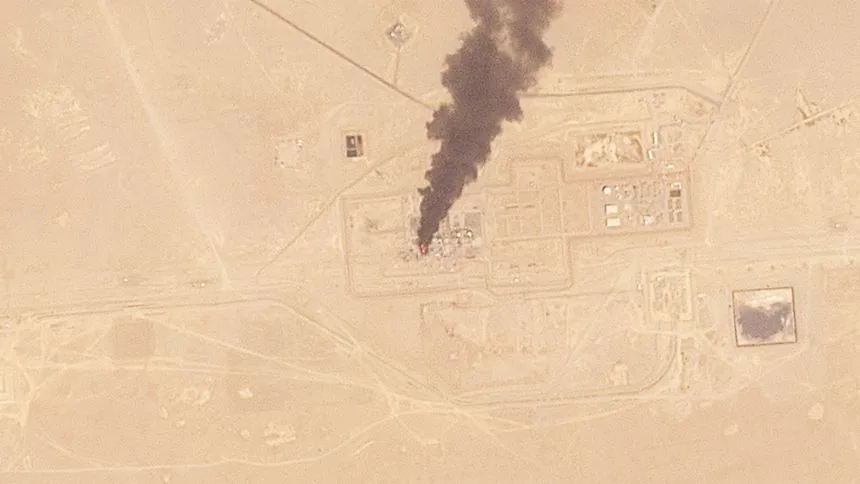
Following a drone attack that shut down its East-West pipeline, Saudi Arabia has shifted crude exports to the Persian Gulf, selling approximately 60 million barrels for ship-to-ship transfer at Oman's Sohar port. Main buyers are Chinese and South Korean refiners, with some volumes to India and Japan. Gulf exports have recovered to 1-1.5 million barrels per day, helping suppress global oil prices. Saudi Arabia is working to restore half the pipeline's capacity within days.
 Reference image
Editorial responsibility
- No named human review is recorded for this page.
- Reports are grouped by semantic similarity and deterministic rules. Language models may assist titles, summaries, translation and cross-source analysis; the page reads the event directly, while its address stays stable when the title changes.
- Summary covers the current reports
Cross-source coverage
Common ground
- The East-West pipeline attack was a real disruption that forced Saudi Arabia to adapt its oil delivery methods.
- Saudi Arabia's use of ship-to-ship transfers near Oman was a planned contingency, not a panic move.
- The incident highlights the ongoing instability in the Gulf region, which affects global energy markets.
- Asian buyers (China, India, South Korea, Japan) are becoming increasingly important customers for Saudi oil.
- The attack shifted some financial risks, like war insurance costs, from Saudi Arabia to Asian buyers.
Points of contention
- Whether this event is a sign of a new multipolar world order or just a routine market adjustment.
- Whether the West is morally failing by not intervening more, or if it's simply adapting to changing energy needs.
- Whether Saudi Arabia is acting from strength and strategy, or from weakness and necessity.
- Whether the human suffering in the region is the central issue or a separate concern from the oil logistics.
- Whether the Strait of Hormuz is becoming less important as a global chokepoint or remains critical.
Blind spots
- The debate largely ignores the long-term environmental impact of increased tanker traffic and ship-to-ship transfers.
- There is little discussion of how renewable energy growth might reduce global dependence on Gulf oil in the future.
- The role of smaller Gulf states, like Oman and the UAE, in providing alternative export routes is under-explored.
- The internal political pressures within Saudi Arabia and other regional states are not addressed.
- The potential for diplomatic solutions to reduce regional tensions is not considered by any participant.
WorldAttention’s read
This roundtable showed that the pipeline attack was a real event with clear consequences, but opinions split sharply on what it means. Some see it as proof that the world is shifting toward a multipolar system where Asia leads, while others view it as a routine market event that was handled well. A third group argues it reveals a moral failure by the West to protect its allies, and a fourth insists the real story is the ongoing suffering of people in the region who live with constant conflict. All sides agree that instability in the Gulf is now seen as normal by global markets, but they disagree on whether that's a problem or just a fact of life. The key takeaway is that while oil continues to flow through new routes and deals, the deeper issues of regional security, human cost, and shifting global power remain unresolved.
Reporting timeline
Saudi Aramco Sells 60 Million Barrels of Crude for Ship-to-Ship Transfer to Asia via Oman
Multiple trade sources report that Saudi Arabia has sold approximately 60 million barrels of crude oil from the Gulf port of Ras Tanura, located inside the Strait of Hormuz, for ship-to-ship transfer at Oman's Sohar port in October and November. The main buyers are Chinese and South Korean refiners, with some volumes also going to India and Japan. Saudi Aramco's exports from within the Gulf have recovered to 1-1.5 million barrels per day, similar to August levels, helping to suppress global oil prices by potentially compensating for reduced exports from the Red Sea port of Yanbu. The Saudi east-west pipeline was damaged by Iranian attacks, slowing Yanbu exports. Saudi Arabia is working to restore about half of the pipeline's capacity within days while offering more crude via ship-to-ship transfers near Sohar. The increased Gulf exports benefit Asian buyers, despite record-high very large crude carrier (VLCC) freight rates. Japan's Petroleum Association confirmed that refiners have secured sufficient crude supply through November, partly due to ship-to-ship transfers outside the Strait of Hormuz, with Saudi Arabia sometimes bearing transport risk through the strait.
Read sourceRed Sea Route Disrupted, Saudi Arabia Shifts Oil Exports Eastward to Gulf
Following a September 13 drone attack by Iran-backed Houthi forces that forced the closure of Saudi Arabia's key east-west pipeline, the kingdom has shifted its crude oil export route eastward to the Persian Gulf. According to TankerTrackers data, Saudi Aramco loaded approximately 14 million barrels of oil onto seven very large crude carriers (VLCCs) at the Ras Tanura terminal in the Gulf on Sunday. The pipeline, which had allowed Saudi Arabia to bypass the Strait of Hormuz and ship up to 4 million barrels per day to the Red Sea terminal of Yanbu, is now inoperative. Vortexa data shows that Saudi shipments from Gulf terminals have risen to about 3.7 million barrels per day since September 12, up from 2.9 million barrels per day earlier in the month. Trade sources indicate Saudi Arabia has sold about 60 million barrels from Ras Tanura for loading this month and next via ship-to-ship transfers at Oman's Sohar port. The shift has pressured oil prices, with Brent crude falling below $100 per barrel for the first time since September 9.
Read sourceSaudi Aramco Sells 60 Million Barrels for Ship-to-Ship Transfer via Oman to Asia
Multiple trade sources report that Saudi Arabia has sold approximately 60 million barrels of crude oil from the Gulf port of Ras Tanura, destined for ship-to-ship transfer at Oman's Sohar port in October and November. Chinese and South Korean refiners are the primary buyers, with additional volumes going to India and Japan. Saudi Aramco's exports from within the Gulf have recovered to 1-1.5 million barrels per day, matching or slightly exceeding August levels. This recovery is helping to cap global oil prices by potentially compensating for reduced exports from the Red Sea port of Yanbu, which slowed after Iran attacked Saudi Arabia's east-west pipeline. Saudi Arabia is working to restore about half of that pipeline's capacity within days while offering more crude via ship-to-ship transfers near Sohar. The increased Gulf exports benefit Asian buyers, though very large crude carrier freight rates have hit record highs. Japan's Petroleum Association confirmed that refiners have secured sufficient crude supply through November, partly due to ship-to-ship transfers outside the Strait of Hormuz, with Saudi Arabia sometimes bearing transport risk through the strait.
Read sourceShow 7 older updatesHide older updates
Saudi Aramco Sells 60 Million Barrels of Crude via Ship-to-Ship Transfers to Asia
Multiple trade sources report that Saudi Arabia has sold approximately 60 million barrels of crude oil from its Gulf port of Ras Tanura, to be loaded via ship-to-ship transfers at Oman's Sohar port in September and October. The main buyers are Chinese and South Korean refiners, with some volumes going to India and Japan. Saudi Aramco's exports from within the Gulf have recovered to 1-1.5 million barrels per day, roughly flat with August levels. This recovery is helping to offset reduced exports from the Red Sea port of Yanbu, which slowed after damage to the East-West pipeline from an Iranian attack. Saudi Arabia is working to restore about half of the pipeline's capacity within days. The increased Gulf exports benefit Asian buyers, despite record-high very large crude carrier (VLCC) freight rates. Japan's Petroleum Association confirmed that refiners have secured sufficient crude supply through November, partly due to ship-to-ship transfers outside the Strait of Hormuz, with Saudi Arabia bearing the transit risk.
Read sourceSaudi Arabia Ships 60 Million Barrels of Crude to Asia via Alternative Routes
Multiple trade sources report that Saudi Arabia has shipped approximately 60 million barrels of crude oil to Asia using alternative routes, bypassing the Strait of Hormuz. The shipments are being conducted via ship-to-ship transfers near Sohar and from Gulf ports within the Strait. Chinese and South Korean refiners are the main buyers, with some volumes going to India and Japan. Saudi Aramco's exports from within the Gulf have recovered to 1-1.5 million barrels per day, matching August levels. This recovery has helped suppress global oil prices by compensating for reduced exports from the Yanbu port, which slowed after an Iranian attack damaged the East-West pipeline. Saudi Arabia is working to restore about half of the pipeline's capacity within days. The Japan Petroleum Association confirmed that its members have secured sufficient crude supply through November, partly due to ship-to-ship transfers outside the Strait, with Saudi Arabia bearing the transport risk through the Strait.
Saudi Arabia Pivots to Spot Oil Sales After Key Pipeline Shutdown Following Drone Attacks
According to a report by Bloomberg citing unnamed traders, Saudi Arabia has sold up to 20 million barrels of crude oil in the spot market this week, following the shutdown of its East-West pipeline after drone attacks launched from Iraqi territory near the Iranian border on Thursday. The pipeline, which allowed Saudi Arabia to bypass the Strait of Hormuz, was a critical route after the Middle East conflict closed the strait to shipping. With the pipeline offline, Saudi Aramco has canceled or delayed some September deliveries to European refiners. The spot cargoes are being sold for pickup outside the Strait of Hormuz via ship-to-ship transfers in the Gulf of Oman, meaning buyers do not need to send tankers into the Persian Gulf. Chinese refiners, including state-held giants and independent refiners, along with other East Asian crude processors, have been the main buyers. The report notes that the UAE's ADNOC has perfected similar STS transfer operations in recent months.
Saudi Arabia Pivots to Spot Oil Sales After Key Pipeline Goes Offline
According to a report by Bloomberg citing unnamed traders, Saudi Arabia has sold up to 20 million barrels of crude oil in the spot market this week after shutting down its East-West pipeline following drone attacks launched from Iraqi territory near the Iranian border. The pipeline, which allowed Saudi Arabia to bypass the Strait of Hormuz, was a vital route after the Middle East conflict closed the chokepoint to shipping. Chinese refiners, including state-held giants and independent refiners, along with other East Asian crude processors, have been the main buyers. The cargoes are being sold for pickup and loading this month and next via ship-to-ship transfers in the Gulf of Oman, outside the Strait of Hormuz. Saudi Aramco has reportedly canceled or delayed some September deliveries to European refiners. The UAE's ADNOC has perfected similar STS transfers in recent months.
Read sourceSaudi Arabia boosts spot crude sales for delivery outside Strait of Hormuz after pipeline closure
Saudi Arabia is increasing spot crude sales for delivery outside the Strait of Hormuz, following the closure of its East-West pipeline, which had prevented oil from reaching the Red Sea coast. Saudi Aramco has sold approximately 20 million barrels of crude to Asian refiners this week, available for lifting outside the Strait of Hormuz within September and October. Traders reported that the spot cargoes are loaded via ship-to-ship transfers in the Gulf of Oman. This arrangement means that while the crude still transits the Strait of Hormuz, buyers do not bear the shipping costs for that leg, given the designated pickup location. The report, sourced from Bloomberg via tradealpha, highlights a logistical shift in Saudi oil exports to Asia amid infrastructure constraints.
Read sourceSaudi Arabia Boosts Spot Oil Sales After East-West Pipeline Shutdown
Saudi Arabia is increasing spot crude oil sales from regions outside the Strait of Hormuz following the shutdown of its East-West pipeline, which was attacked last week. According to traders, Saudi Aramco sold approximately 20 million barrels of crude to Asian refiners this week, available for lifting from outside the Strait of Hormuz in September and October. Buyers include independent refiners and other importers in East Asia. The pipeline had been a key route for Saudi Arabia to bypass potential disruptions in the Strait of Hormuz caused by the Iran war. Traders said the spot cargoes will be loaded via ship-to-ship transfers in the Gulf of Oman, meaning buyers are not responsible for the Strait of Hormuz transit leg. No official timeline has been provided for resuming pipeline operations, and global oil markets are closely watching the impact of the outage.
Read sourceSaudi Arabia sells crude for delivery outside Strait of Hormuz after pipeline shutdown
According to reports from Cailian Press on September 16, Saudi Arabia is increasing sales of spot crude oil for delivery outside the Strait of Hormuz, following the shutdown of the country's East-West pipeline that prevented crude from being transported to the Red Sea coast. Informed traders speaking on condition of anonymity said that Saudi Aramco sold approximately 20 million barrels of crude to Asian refiners this week, with cargoes available for pickup outside the Strait of Hormuz this month and next. Traders noted that the spot crude sold by Saudi Aramco will be loaded via ship-to-ship transfer in the Gulf of Oman between September and October. This means that although the crude still needs to transit the Strait of Hormuz, buyers do not bear transportation costs for this leg given the designated pickup location. The move reflects Saudi Arabia's adaptation to logistical constraints and its efforts to maintain crude supply to Asian markets despite pipeline disruptions.
Read source