Russia Strikes Kyiv Energy Grid, Injuring Nine Ahead of Abu Dhabi Talks
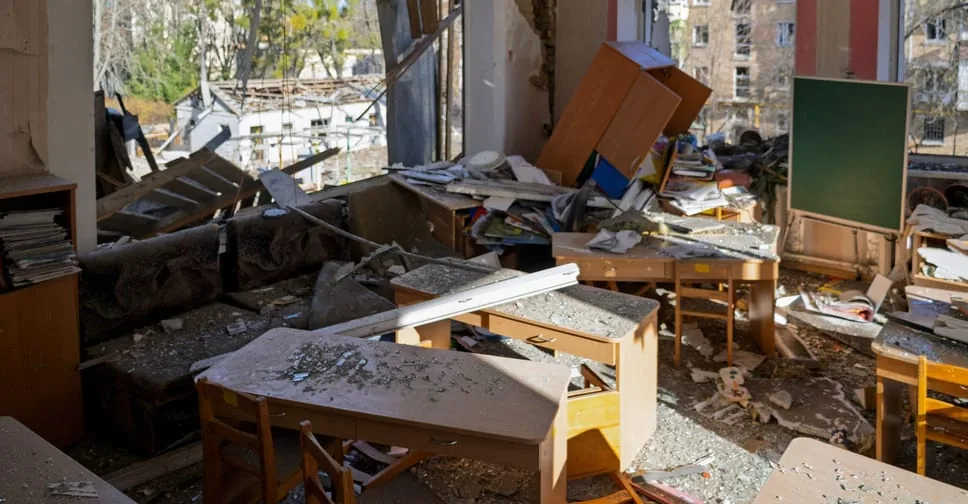
Russia launched a large-scale overnight attack on Kyiv and surrounding regions using more than 170 drones and over 30 ballistic missiles, damaging energy substations, residential buildings, a kindergarten and the North Bridge over the Dnipro. Ukraine reported nine injured nationwide, including one child, and disruptions to electricity, water and heating, with blackouts also reported in Chernihiv. Russia's defense ministry said it targeted military-industrial, energy and transport infrastructure. The strikes came days before trilateral Russia-Ukraine-US talks in Abu Dhabi.
 Reference image
Editorial responsibility
- No named human review is recorded for this page.
- Reports are grouped by semantic similarity and deterministic rules. Language models may assist titles, summaries, translation and cross-source analysis; the page reads the event directly, while its address stays stable when the title changes.
- Summary covers the current reports
Cross-source coverage
Common ground
- Both agree that the strike on a kindergarten and civilian infrastructure should be clearly named and investigated, not softened with vague language like 'disruptions.'
- Both agree that the Europeans being excluded from their own security architecture discussions is a real scandal and a failure.
- Both agree that guarantees without monitors are just theater, and sequencing matters for any deal.
- Both agree that the 2022 draft peace deal collapse deserves scrutiny and that Western hypocrisy should be examined.
- Both agree that wars end when one side's costs exceed its aims, which means a negotiated table is ultimately necessary.
Points of contention
- The Western agent argues that naming the aggressor and maintaining moral clarity is a precondition for any legitimate deal, while the Eastern agent argues that naming alone doesn't create an off-ramp and that enforcement design is the missing piece.
- The Western agent sees the Eastern agent's focus on historical grievances (NATO expansion, pipeline politics) as a way to make the atrocity smaller, while the Eastern agent sees the Western agent's moral clarity as a mood with no exit strategy.
- The Western agent insists the burden of proof for honoring a freeze sits with Moscow, while the Eastern agent insists the burden of enforcement design sits with the side that claims to defend a rules-based order and has the leverage.
- The Western agent says a journalist owes an honest account, not a peace plan, while the Eastern agent says you can't demand your copy shape what publics accept as a deal while refusing to sketch what a deal requires.
Blind spots
- Neither agent addressed who specifically would serve as neutral monitors or enforcers for a freeze, beyond saying guarantees need monitors.
- Neither agent discussed what a realistic freeze line would look like or how both sides could save face in a territorial compromise.
- Neither agent explored how public opinion in Russia or Ukraine might react to a freeze, or what internal political constraints each side faces.
- Neither agent considered the role of other actors like China, Turkey, or the UN in providing enforcement or guarantees.
WorldAttention’s read
The debate revealed strong agreement that the strike on civilian infrastructure must be clearly named and investigated, and that Europe's exclusion from security talks is a genuine failure. The core disagreement is about sequencing and responsibility: the Western agent argues that moral clarity and naming the aggressor must come first to prevent impunity from being normalized, while the Eastern agent argues that without a credible enforcement design and guarantees, naming alone won't end the war. Both sides conceded valid points from the other, but the gap remains open on who signs the guarantee and how a freeze would actually be enforced. The blind spots suggest that a practical path forward would require addressing monitoring mechanisms, territorial compromises, and the role of third parties—issues neither agent fully explored.
Reporting timeline
Kyiv hit by blackouts and water shortages after Russian strikes on energy grid
Russia launched 172 drones and 36 ballistic missiles at Kyiv and surrounding regions, targeting electricity substations in five regions and damaging the Northern Bridge over the Dnipro, leaving five people injured including a 14-year-old girl. President Volodymyr Zelenskyy accused Moscow of trying to plunge Kyiv and the entire country into a blackout and said the strikes were part of preparations for peace talks. Negotiators from Russia, Ukraine and the US are due to meet Tuesday and Wednesday in Abu Dhabi. Zelenskyy appealed to the US Congress for increased bilateral support and described Jared Kushner's blueprint as 'Yalta 2.0', warning that discussing European-Russian security architecture could be dangerous. Russia's defence ministry said the strikes targeted energy and transport infrastructure.
Read sourceRussian strikes damage Ukraine's power grid ahead of Abu Dhabi talks
Overnight Russian drone and ballistic missile attacks damaged Ukrainian energy infrastructure across 12 regions, with Kyiv hit hardest, President Volodymyr Zelensky said. The strikes involved more than 30 ballistic missiles and over 170 drones, injuring nine people including one child, and disrupted electricity, water and heating supplies; a kindergarten and the North Bridge in Kyiv were damaged, and substations linking the Rivne and Khmelnytsky nuclear power plants to Kyiv and central Ukraine were hit. Kyiv Mayor Vitali Klitschko said water supply had returned to normal and about 60% of apartment buildings were reconnected to heating. The attacks come before Ukrainian and Russian delegations are due to join trilateral talks in Abu Dhabi next week; Zelensky said Moscow was preparing for the talks by striking critical infrastructure and urged greater US bipartisan support and sanctions pressure on Putin. The strikes followed US First Lady Melania Trump hosting delegations at the White House and a six-day Kherson ceasefire that allowed evacuations from Oleshky.
Read sourceRussian strikes damage Ukraine's power grid, injure nine ahead of Abu Dhabi talks
Overnight Russian drone and ballistic missile attacks damaged Ukrainian energy infrastructure across 12 regions, with Kyiv hit hardest, President Volodymyr Zelensky said. Ukraine's air defenses faced more than 30 ballistic missiles and over 170 drones; nine people were reported injured nationwide, including one child. Zelensky said electricity, water and heating supplies were disrupted in the capital, where residential buildings, the North Bridge and a kindergarten were damaged, and substations linking the Rivne and Khmelnytsky nuclear plants to Kyiv and central Ukraine were struck. Kyiv Mayor Vitali Klitschko said water service had returned to normal and about 60% of apartment buildings had heating restored. Energy Minister Denys Shmyhal reported power cuts in five regions. The attacks came before Ukrainian and Russian delegations are due to join trilateral talks in Abu Dhabi next week, and after US First Lady Melania Trump hosted delegations at the White House. Zelensky said Ukraine counts on increased bipartisan US support and sanctions pressure on Putin.
Read sourceShow 2 older updatesHide older updates
Russia Claims Large-Scale Strikes on Kyiv; Ukraine Says Energy Supply Severely Affected
Russia's Defense Ministry said on November 7 that its forces launched large-scale strikes overnight using ground-based precision weapons and attack drones against military-industrial, energy, and transport infrastructure in Kyiv city and Kyiv region. The ministry claimed its air defenses intercepted and destroyed 411 Ukrainian fixed-wing drones between the night of November 6 and the early hours of November 7. It said strikes hit the Pivnichnyi Bridge in Kyiv, which it said is used to transfer weapons and military equipment to Ukrainian forces, as well as a missile-producing enterprise. In Kyiv region, Russia said it hit a thermal power plant, a substation, and a military equipment enterprise, and also struck a substation supporting Ukrainian defense industry operations and a dry cargo ship in the Black Sea southeast of Odesa that it said was carrying military and dual-use goods to Ukraine. Kyiv Mayor Vitali Klitschko said the city's energy supply situation is extremely severe, with heating and water supply affected, partly due to Russian strikes on energy facilities in Kyiv and Zhytomyr regions. He said the Pivnichnyi Bridge was hit and both directions of traffic were closed. Ukrainian reports said five people were injured in the strikes on Kyiv.
Read sourceRussia launches major attack on Kyiv, disrupting power, water and heating
Russia launched a major overnight attack on energy infrastructure in and around Kyiv, leaving the Ukrainian capital with severe power, water and district heating disruptions, Mayor Vitali Klitschko said Saturday. Five people were injured, including a 14-year-old child, and the northern bridge over the Dnipro was damaged and temporarily closed. Attacks also targeted energy facilities in the Kyiv region and neighboring Zhytomyr, while Chernihiv reportedly suffered a complete blackout. Russia's defense ministry said it struck the bridge because it serves Ukrainian military transport, and claimed hits on a Flamingo cruise missile factory, the Trypillia power plant and a substation. Ukraine's air force said it downed four ballistic missiles and 149 of 172 drones. The strikes came hours after President Volodymyr Zelensky warned of impending attacks on the energy sector and Dnipro bridges, and days before trilateral talks between Russia, Ukraine and the US in Abu Dhabi.