Pakistan Army Chief Urges Iran to Curb Houthi Attacks on Saudi Arabia, Citing Defense Pact
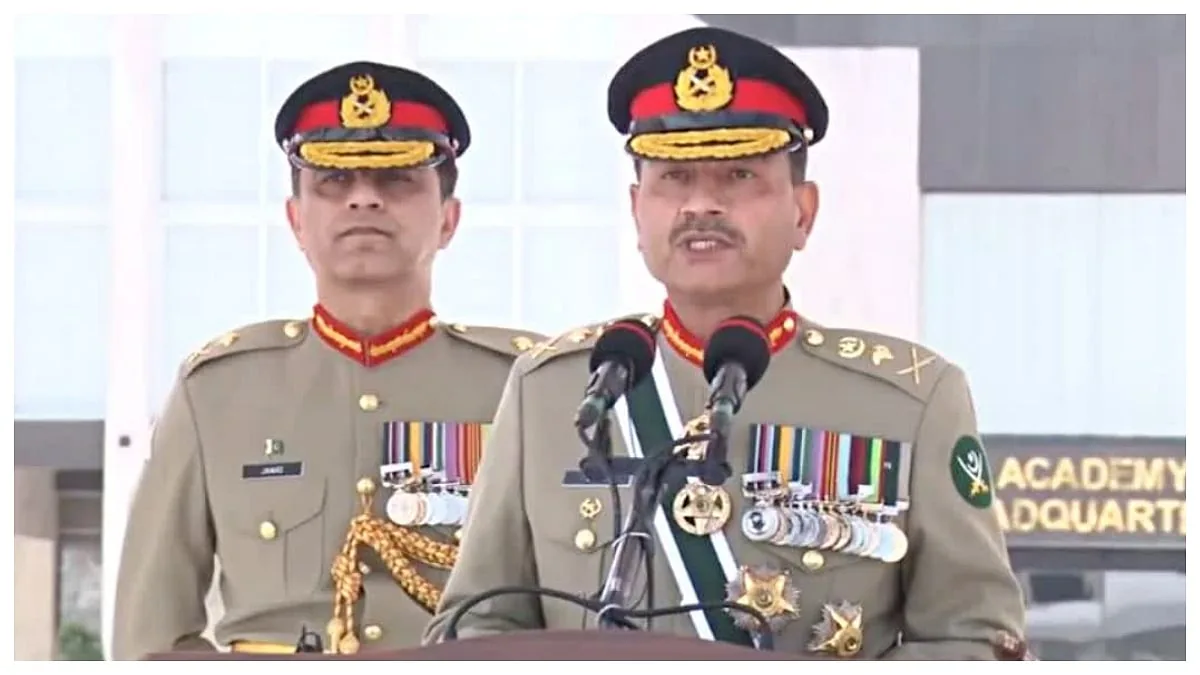
Pakistan's Army Chief, General Asim Munir, has repeatedly urged Iranian leaders to halt Houthi rebel attacks on Saudi Arabia and its energy infrastructure, citing a mutual defense pact between Pakistan and Riyadh. Pakistani officials warned that if Saudi Arabia invokes the agreement, Pakistan could be compelled to defend it. Munir visited Tehran last month and held multiple calls with Iran's foreign minister, pressing for restraint without issuing specific threats.
 Reference image
Editorial responsibility
- No named human review is recorded for this page.
- Reports are grouped by semantic similarity and deterministic rules. Language models may assist titles, summaries, translation and cross-source analysis; the page reads the event directly, while its address stays stable when the title changes.
- Summary covers the current reports
Cross-source coverage
Common ground
- Both sides agree that the Saudi-led coalition's bombing campaign in Yemen has caused massive civilian casualties and humanitarian suffering.
- Both acknowledge that the conflict risks escalating into a wider regional war that would harm civilians across multiple countries.
- Both recognize that Pakistan's involvement signals a serious shift in regional dynamics and the potential for military consequences.
Points of contention
- The Regional Agent sees Houthi missile strikes as legitimate self-defense against years of bombing and blockade, while the Western Agent calls them terrorism and escalation.
- The Regional Agent argues the Houthis are an independent movement with local grievances, while the Western Agent insists they are an Iranian proxy whose attacks align with Tehran's strategic goals.
- The Regional Agent views the 'rules-based order' as a hypocritical tool for powerful nations to justify their own violence, while the Western Agent sees it as a flawed but necessary framework to prevent endless cycles of retaliation.
Blind spots
- Neither side fully addresses the role of other regional actors like the UAE and its backing of the Southern Transitional Council in prolonging the conflict.
- Both focus heavily on military actions but give little attention to diplomatic solutions or ceasefire negotiations that could address root causes.
- The debate overlooks the internal dynamics within Yemen, including the Houthis' own authoritarian practices and human rights abuses against Yemeni civilians.
WorldAttention’s read
This debate reveals a deep divide over how to interpret the Yemen conflict. The Regional Agent argues that Houthi attacks are a direct response to years of Saudi-led bombing and blockade, and that labeling them as terrorism ignores the context of power and impunity. The Western Agent counters that two wrongs don't make a right, and that cross-border strikes on civilian infrastructure are unacceptable escalation, regardless of grievances. Both sides agree the Saudi coalition has committed war crimes, but they disagree on whether that justifies Houthi retaliation. The blind spot is that neither fully explores non-military solutions or the role of other regional players. Ultimately, the region is stuck between a broken order that protects the powerful and a chaotic alternative where every grievance invites more violence—and civilians in Yemen and beyond will pay the price.
Reporting timeline
Pakistan Army Chief Urges Iran to Halt Houthi Attacks on Saudi Arabia, Warns of Defense Pact
According to a report by the Financial Times cited by Geopolitical Futures, Pakistani army chief Asim Munir has repeatedly asked Iranian leaders to stop attacks on Saudi Arabia by Yemen's Iranian-backed Houthi rebels. Pakistani officials have reportedly told Tehran that Pakistan could be forced to defend Riyadh if the kingdom activates the mutual defense agreement that Pakistan, Saudi Arabia, and Turkey signed. The report highlights Pakistan's assertive diplomatic stance in advocating for Saudi Arabia amid regional tensions involving Iran and its proxies. The article, published by Geopolitical Futures, frames this as a significant development in the geopolitical dynamics of the Middle East and South Asia, emphasizing the potential for a military response under the existing defense pact.
Pakistan Army Chief Asks Iran to Stop Houthi Attacks on Saudi Arabia, Warns of Defense Pact Activation
According to a report by the Financial Times cited by Geopolitical Futures, Pakistani army chief Asim Munir has repeatedly asked Iranian leaders to cease attacks on Saudi Arabia by Yemen's Iranian-backed Houthi rebels. Pakistani officials have reportedly communicated to Tehran that Pakistan could be compelled to defend Riyadh if Saudi Arabia activates a mutual defense agreement signed by Pakistan, Saudi Arabia, and Turkey. The report highlights Pakistan's assertive diplomatic stance regarding regional security and its commitment to its defense alliance with Saudi Arabia, potentially escalating tensions between Islamabad and Tehran over the Yemen conflict.
Read sourcePakistan Army Chief Urges Iran to Halt Houthi Attacks on Saudi Arabia, Warns of Defense Pact
According to a report by the Financial Times cited by Geopolitical Futures, Pakistani army chief General Asim Munir has repeatedly urged Iranian leaders to stop attacks on Saudi Arabia carried out by Yemen's Iranian-backed Houthi rebels. Pakistani officials have reportedly communicated to Tehran that Pakistan could be compelled to defend Riyadh if Saudi Arabia activates a mutual defense agreement signed by Pakistan, Saudi Arabia, and Turkey. The report highlights Pakistan's assertive diplomatic stance in the region, leveraging its military and strategic ties to advocate for its ally Saudi Arabia against cross-border threats. The article, published by Geopolitical Futures, frames this as a significant development in regional geopolitics, emphasizing the potential for escalation if Iran does not curb Houthi actions.
Show 2 older updatesHide older updates
Pakistan Urges Iran to Curb Houthi Attacks on Saudi Arabia, Citing Defense Pact
On September 18, sources reported that Pakistan's Army Chief urged Iran to rein in Houthi attacks on Saudi Arabia, citing the mutual defense agreement between Pakistan and Riyadh. Pakistani officials pressed Iran to warn the Houthis against further escalation, stating that if Saudi Arabia invoked the mutual defense clause of the security pact signed last year, Pakistan might be compelled to come to Saudi Arabia's defense. According to the Islamic Republic News Agency, Pakistan's de facto leader, Field Marshal Munir, visited Tehran last month to meet with Iranian President Pezeshkian and other political leaders, and held multiple phone calls with Foreign Minister Abbas Araghchi, most recently on Thursday. Two individuals familiar with recent discussions said that Munir repeatedly asked Iranian leaders to help halt the Houthis' attacks on Saudi Arabia and its energy infrastructure, referencing Islamabad's commitments to Riyadh but without issuing specific threats.
Read sourcePakistan Mediates to Curb Houthi Attacks on Saudi Arabia, Citing Defense Pact with Riyadh
According to sources cited by Jin10 Data on September 18, Pakistan's Army Chief has urged Iran to rein in Houthi attacks on Saudi Arabia, leveraging the mutual defense agreement between Pakistan and Riyadh as a key bargaining chip. Pakistani officials pressed Iran to warn the Houthis against further escalation, stating that if Saudi Arabia invoked the mutual defense clause of the security pact signed last year, Pakistan might be compelled to come to Saudi Arabia's defense. The Islamic Republic News Agency (IRNA) reported that Pakistan's de facto leader, Field Marshal Munir, visited Tehran last month to meet with Iranian President Pezeshkian and other leaders, and has held multiple phone calls with Foreign Minister Abbas Araghchi, most recently on Thursday. Two sources familiar with recent discussions said that Munir repeatedly asked Iranian leaders to help halt Houthi attacks on Saudi Arabia and its energy infrastructure, referencing Islamabad's commitments to Riyadh but without issuing specific threats.