Xiaomi CEO Lei Jun denies staging Wuhan breakfast, clarifies test-drive error
On September 21, Xiaomi CEO Lei Jun addressed two controversies during a livestream. He denied staging a June 15 Wuhan breakfast outing, stating only two colleagues filmed him while bystanders took photos. He also clarified a September 8 test-drive accident where a customer mistook the accelerator for the brake, causing no injuries. The customer ordered the vehicle the next day. Lei Jun also clarified his role in Unitree Technology's investment.
 Reference image
Editorial responsibility
- No named human review is recorded for this page.
- Reports are grouped by semantic similarity and deterministic rules. Language models may assist titles, summaries, translation and cross-source analysis; the page reads the event directly, while its address stays stable when the title changes.
- Summary covers the current reports
Cross-source coverage
Reporting timeline
Xiaomi CEO Lei Jun Responds to Wuhan Breakfast Controversy, Denies Staging Photos
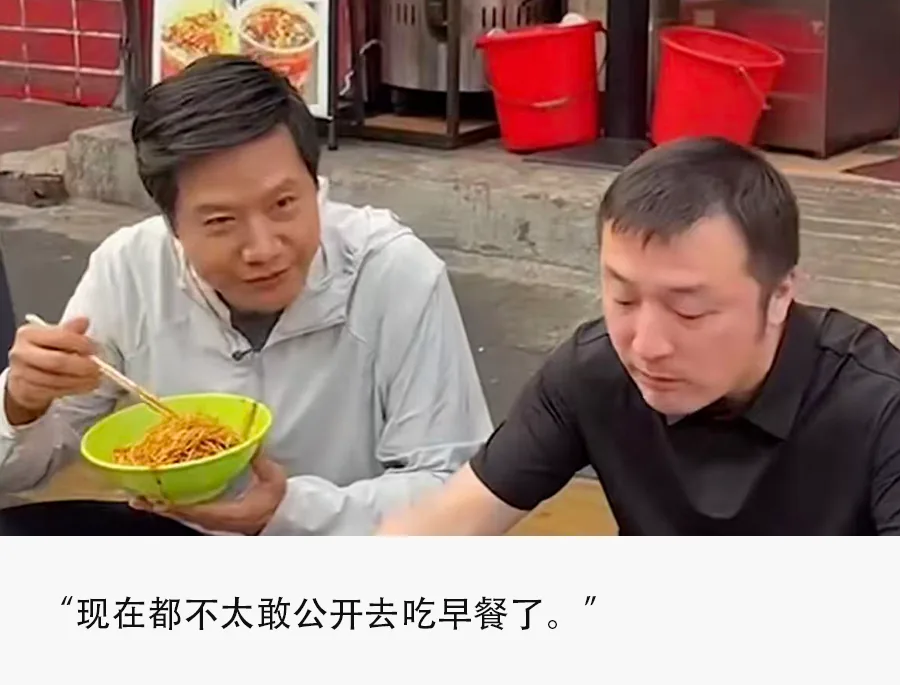
On September 21, Xiaomi founder and CEO Lei Jun addressed the viral controversy surrounding his June 15 breakfast outing in Wuhan during a livestream. The incident, initially promoted by Wuhan tourism authorities to showcase local cuisine, sparked backlash after a video showed a schoolgirl sarcastically remarking, 'Eating breakfast needs so many people taking photos?' Critics accused Lei of 'performative populism.' In the livestream, Lei explained that only two photographers were present—one from his team and one from the tourism bureau—not the dozens implied by online rumors. He admitted the criticism was hard to clarify and said he now avoids eating in public in Wuhan. Lei previously dismissed the backlash as driven by 'traffic-seeking' trolls. The article, published by Observer Network, includes details from Lei's earlier comments and the original Wuhan tourism promotion.
Read sourceXiaomi CEO Lei Jun Addresses Test Drive Accident, Breakfast Controversy, and Unitree Investment in Livestream
On September 21, Xiaomi Group Chairman Lei Jun held an outdoor livestream to address recent controversies surrounding the company. Regarding a September 8 test drive accident where a vehicle crashed onto a绿化带 (green belt), Lei Jun explained it was caused by the driver mistakenly pressing the accelerator instead of the brake while yielding to another car. He noted the customer was impressed by the vehicle's off-road capability and placed an order the next day. Lei Jun emphasized the vehicle's safety systems meet industry standards and promised improved test drive training. On the Wuhan breakfast controversy from June, where Lei Jun was accused of staging a photo opportunity with multiple photographers, he clarified only two colleagues accompanied him and most people filming were spontaneous bystanders. He joked he now avoids eating breakfast in public. Regarding rumors that he personally made over 10 billion yuan from Unitree Technology's IPO, Lei Jun clarified the investment was made by Shunwei Capital, which he co-founded, as an early-stage angel investment, not a personal IPO subscription. He stated Shunwei was Unitree's sole Series A investor and has supported the company for years.
Read sourceXiaomi CEO Lei Jun Responds to Test Drive Accident, Says Customer Ordered Car Next Day
On September 21, Xiaomi CEO Lei Jun addressed two recent controversies during a live-stream. He discussed a September 8 test drive incident involving a customer of the Xiaomi Pengcheng (SU7) who mistakenly stepped on the accelerator instead of the brake, causing the vehicle to drive off a road. Lei Jun stated that no one was injured and that the customer, impressed by the car's ability to climb a 30-40 cm curb, placed an order the next day. Lei Jun also clarified the 'Wuhan street eating hot dry noodles' controversy, explaining that the event was organized by Wuhan tourism to promote local cuisine. He denied accusations of staging the scene with multiple photographers, stating only two colleagues were present, and that the crowd was spontaneous. He noted that due to the backlash, he now eats out discreetly to avoid being photographed and misinterpreted.
Read sourceShow 2 older updatesHide older updates
Xiaomi CEO Lei Jun Says Test-Drive Customer Who Mistook Pedal Locked Order Next Day, Addresses Wuhan Noodle Controversy
On September 21, Xiaomi founder and CEO Lei Jun addressed two incidents during a live stream. He responded to a September 8 test-drive accident involving a customer who mistook the accelerator for the brake while turning, causing the vehicle to drive off the road onto a curb. Lei Jun stated that no one was injured and that the customer, despite the incident, was impressed by the car's performance and placed an order the next day. Lei Jun also addressed controversy over a video of him eating hot dry noodles (re gan mian) on a Wuhan street, which some critics accused of being staged with multiple photographers. He explained that the video was intended to promote local cuisine at the request of Wuhan tourism authorities, and that only two colleagues were filming, while other people filming were bystanders. He noted that he now avoids eating in public to prevent misunderstandings.
Xiaomi CEO Lei Jun Responds to Wuhan Hot Dry Noodle Controversy, Says It Was Tourism Promotion
On September 21, Xiaomi founder and CEO Lei Jun addressed online controversy over his public consumption of hot dry noodles in Wuhan during a livestream. Lei clarified that the meal was part of a collaboration with the Wuhan cultural tourism department to promote local cuisine, not a personal publicity stunt. He explained that Xiaomi Auto Vice President Li Xiaoshuang planned to return to Hubei for an event, and the tourism department suggested inviting Lei to help promote Hubei food culture. Lei accepted, intending to have one colleague film a short video for his social media. He denied rumors of a large camera crew, stating that only two people were filming: one Xiaomi employee and one media worker arranged by tourism officials. The many photos circulating online were taken by spontaneous bystanders, as eating while walking is common in Hubei. Lei noted that the controversy and negative comments, including accusations of pretentiousness, have made him cautious about eating in public. He now chooses secluded spots for meals to avoid being photographed and causing further misunderstandings.
Read source