Leapmotor unveils MM-i hybrid system, lacks China sales license, bets on overseas market
Chinese EV maker Leapmotor unveiled its MM-i multi-mode hybrid powertrain on September 16, 2026, completing a pure EV, range-extender, and plug-in hybrid lineup. However, the company lacks a Chinese license to sell PHEVs domestically, as regulations classify them as fuel vehicles. Leapmotor will first deploy the system overseas via its Stellantis joint venture while applying for domestic approval. The company also received regulatory approval for a 67.44 billion yuan ($9.4 billion) share placement from FAW Equity and Jinyi High-Tech.
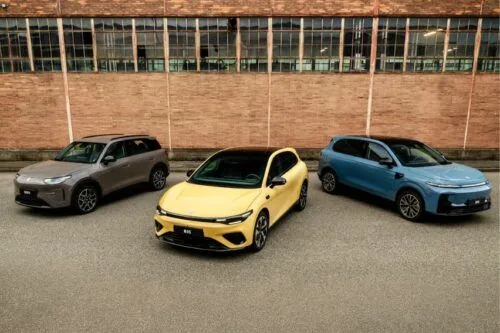 Reference image
Editorial responsibility
- No named human review is recorded for this page.
- Reports are grouped by semantic similarity and deterministic rules. Language models may assist titles, summaries, translation and cross-source analysis; the page reads the event directly, while its address stays stable when the title changes.
- Summary covers the current reports
Cross-source coverage
Common ground
- All agents agree that Leapmotor's technology supply business—platform licensing to FAW and Stellantis—is a key part of their strategy, with higher margins and lower regulatory risk.
- There is agreement that the MM-i system and platform licensing are interdependent: the MM-i proves the architecture in real vehicles, making the licensing model credible.
- All acknowledge that Leapmotor's Stellantis partnership provides crucial distribution and capital, though they disagree on whether it was a bailout or a strategic move.
- There is consensus that Leapmotor is targeting underserved markets with practical hybrids, responding to real infrastructure and affordability challenges.
Points of contention
- The Neutral Agent sees Leapmotor's license issue as a real bottleneck and their Stellantis deal as a lifeline from near-collapse, while the Eastern Agent frames it as a brilliant long-term strategy within China's adaptive regulatory system.
- The Neutral Agent views the MM-i system as a distraction from the technology supply business, while the Eastern Agent sees it as a critical proof of concept for platform licensing.
- The Regional Agent emphasizes the human dimension and colonial legacy, arguing Leapmotor is redefining progress for the Global South, while the Neutral Agent dismisses this as romanticized opportunism.
- The Eastern Agent insists the license issue will be resolved through China's adaptive policy, while the Neutral Agent demands concrete evidence and timelines, calling it faith-based reasoning.
Blind spots
- All agents overlook the potential impact of EU anti-subsidy tariffs on Leapmotor's price advantage in overseas markets, treating it as a secondary concern.
- The debate ignores the role of Leapmotor's workers and supply chain labor in the strategy, focusing only on executives and consumers.
- None of the agents address how Leapmotor's dependency on Stellantis for distribution and margins could limit its long-term autonomy.
- The discussion fails to consider whether Leapmotor's platform licensing model can scale profitably without the MM-i car sales proving demand in diverse markets.
WorldAttention’s read
Leapmotor is a pragmatic company navigating regulatory and financial constraints by building plug-in hybrids for markets where it can legally sell them, while using its Stellantis partnership and platform licensing to FAW as a hedge. The MM-i system and technology supply business are interdependent—the former proves the architecture, the latter scales it. However, the company's strategy is high-risk: it depends on unresolved license issues in China, potential EU tariffs, and the success of its overseas production. The debate reveals a deeper clash over whether this is opportunistic survival or a visionary redefinition of global automotive standards, but all sides agree that Leapmotor's real test will be whether its platform licensing revenue can sustain growth without relying on regulatory luck or trade policy.
Reporting timeline
Leapmotor's Dual Strategy: Hybrid Tech Prepares as $9.4 Billion Share Sale Clears Hurdle
Chinese EV maker Leapmotor simultaneously announced two major developments: the unveiling of its MM-i multi-mode hybrid powertrain and the receipt of regulatory approval for a 67.44 billion yuan ($9.4 billion) share placement. The article analyzes that the hybrid system, classified as a 'fuel vehicle' under Chinese investment rules, requires Leapmotor to apply for a new production license, as its current permit only covers pure electric and range-extender vehicles. The funding, from FAW Equity and Jinyi High-Tech, is primarily allocated to R&D (47.21 billion yuan) and working capital. The author argues this is not a pivot back to gasoline cars but a strategic prepayment for hybrid market access and a financial buffer for R&D. The deal also establishes a two-way investment with FAW, focusing on hybrid powertrain collaboration. Leapmotor plans to first launch hybrid models overseas via its Stellantis joint venture, bypassing domestic license constraints, while awaiting Chinese regulatory approval for domestic production.
Leapmotor Enters Plug-In Hybrid Race, CEO Zhu Jiangming Shifts Stance on Large Range-Extender Batteries
On September 16, 2026, at its Leapmotor Technology Day, Chinese EV maker Leapmotor officially launched the MM-i multi-mode hybrid electric drive system, marking its entry into the plug-in hybrid (PHEV) segment. This completes a 'pure EV + range-extender + plug-in hybrid' powertrain lineup, making Leapmotor the first Chinese EV startup to cover all three routes. The MM-i system allows the P2 motor to assist in driving, uses a coaxial electromagnetic clutch, weighs 106kg, and is 40% lighter than peers. It supports four operating modes and nine sub-modes, with peak power of 206kW. Leapmotor plans to first launch an A0-class model with MM-i overseas in the first half of 2027, as it is still applying for domestic fuel vehicle production permits. CEO Zhu Jiangming explained the overseas focus due to lagging charging infrastructure and a 5-10 year PHEV window. Interestingly, Zhu criticized the trend toward large range-extender batteries, arguing that 70% of users charge at home and a 200-300km range is sufficient, with direct drive as backup. This contrasts with Leapmotor's own D19 model launched in April 2026, which has a 500km pure electric range. Financially, Leapmotor reported H1 2026 revenue of RMB 38.11 billion, up 57.2% year-on-year, and net profit of RMB 210 million, remaining the only profitable EV startup. However, gross margin fell to 11.7% from 14.1%. August 2026 global deliveries hit 103,129 units, up 80.7% year-on-year. Analysts at CLSA and Huatai maintain positive ratings with target prices of HKD 60 and HKD 83.69 respectively. The broader industry faces margin pressure, with the manufacturing profit rate at a decade-low of 1.5% and a forecast that only 7 of 30 Chinese NEV makers may break even by 2030.
Read sourceLeapmotor Applies for Fuel Vehicle License to Enter Plug-In Hybrid Market, Shifts from Large-Battery Range Extender Strategy
Chinese new energy vehicle startup Leapmotor is applying for a fuel vehicle production license, not to build gasoline cars but to enter the plug-in hybrid (PHEV) market. On September 16, 2026, at its Technology Day, Leapmotor unveiled the MM-i multi-mode hybrid electric drive system, completing a layout of pure electric, range-extender (EREV), and plug-in hybrid powertrains—a first among Chinese EV startups. The move marks a strategic shift for Leapmotor, which previously pioneered large-battery range-extender vehicles. CEO Zhu Jiangming now criticizes oversized batteries, arguing that 70% of users charge at home and need only 200-300 km of electric range, with the engine serving as a backup. Leapmotor is collaborating with FAW's Qixin Power on hybrid development. The company plans to launch plug-in hybrids first overseas, leveraging its partnership with Stellantis, citing poor charging infrastructure abroad and higher demand for mid-to-high-speed performance. Zhu indicated the system is also suitable for the domestic Chinese market. Leapmotor's export volume reached 96,300 units in the first half of 2026, up 372.6% year-on-year.
Read sourceShow 2 older updatesHide older updates
Leapmotor builds plug-in hybrid without China sales license, betting on overseas markets
Leapmotor (零跑汽车) has unveiled its LEAP 5.0 architecture and MM-i plug-in hybrid (PHEV) system, completing a full powertrain lineup of pure electric, range-extender, and plug-in hybrid. However, the company lacks a Chinese license to sell PHEVs domestically, as current regulations classify them under fuel vehicles. Leapmotor confirmed it will first deploy the system in overseas models via its joint venture with Stellantis, while applying for domestic approval. The article, citing Dataforce data, notes Chinese PHEV exports to Europe surged 155% in 2025, and Leapmotor's own exports reached 96,294 units in H1 2026. The analysis argues Leapmotor's real strategy is technology supply: it has platform-level deals with FAW and Stellantis, offering core components at lower cost. Challenges include ceding the 200+ million-unit Chinese PHEV market, dependence on Stellantis, and difficulty building brand differentiation as it supplies platforms to rivals. The article estimates MM-i R&D and production investment at 12-16 billion yuan, requiring 60,000 external supply orders to break even. The author concludes Leapmotor's move is a 'forced迂回 escape' with high stakes and a narrow window.
Leapmotor Builds Plug-In Hybrids Without China Sales License, Betting on Overseas and Tech Supply
Leapmotor has unveiled its LEAP 5.0 architecture and MM-i plug-in hybrid (PHEV) system, completing a full powertrain lineup of pure electric, range-extender, and plug-in hybrid. However, the company lacks a license to sell PHEVs in China, as current regulations classify them as fuel vehicles. Leapmotor confirmed the system will first be used in overseas models via its joint venture Leapmotor International with Stellantis, while domestic license applications are pending. The strategy is driven by surging Chinese PHEV exports to Europe (up 155% in 2025) and Leapmotor's technology supply business, which provides platforms and components to partners like FAW and Stellantis. Risks include ceding the large Chinese PHEV market, dependence on Stellantis, and potential EU anti-subsidy tariffs on Chinese PHEVs. Leapmotor's local production in Spain, Malaysia, and Brazil may mitigate trade barriers. The article estimates MM-i R&D costs of 12-16 billion yuan, with profitability dependent on achieving scale through both overseas vehicle sales and external component supply.