Iran's IRGC Says Four Tankers Destroyed by Naval Mines in Strait of Hormuz
Iran's Islamic Revolutionary Guard Corps reported that four oil tankers were destroyed by naval mines in or south of the Strait of Hormuz, with two additional vessels seized, according to statements carried by Reuters, BBC and other outlets. Accounts varied: an IRGC spokesperson cited two tankers exploding after hitting a mine, the IRGC Navy cited three tankers striking mines and catching fire, and Tasnim reported 11 tankers caught fire in the Hormuz area over nine days. No vessel nationalities, casualties or timing were disclosed, and the claims were not independently verified.
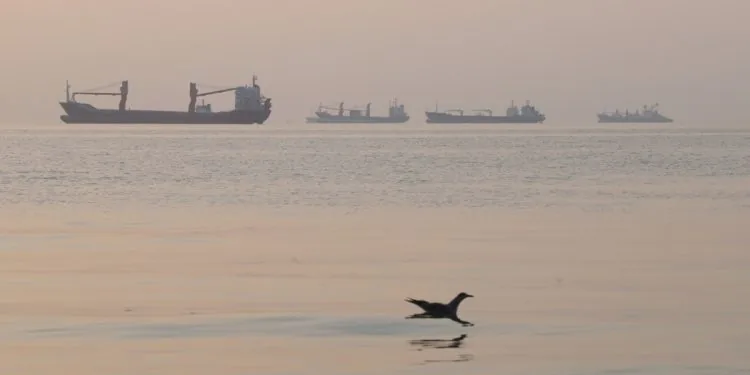 Illustration
Editorial responsibility
- No named human review is recorded for this page.
- Reports are grouped by semantic similarity and deterministic rules. Language models may assist titles, summaries, translation and cross-source analysis; the page reads the event directly, while its address stays stable when the title changes.
- Summary covers the current reports
Cross-source coverage
Common ground
- The IRGC's claims about tankers and mines are contradictory and unverified, so they should not be treated as news without independent confirmation.
- The real weapon may be the ambiguity itself, since a press release can move oil prices and create risk without any physical attack.
- The best response is to publish the 'null result' — showing no AIS gaps, no insurance notices, and no flag-state confirmations — to defang future claims.
- Verification should happen in parallel with caution, not as a reason to do nothing.
- The lack of independent journalists in the Strait of Hormuz is a serious problem that lets belligerents control the narrative.
Points of contention
- Whether the threat should be treated as real based on cost asymmetry (Western Agent) or whether that approach proves too much and creates a permanent hostage clause (Neutral Agent).
- Whether a price spike is meaningful evidence (Neutral Agent says absence of a spike matters; Western Agent says a spike only measures sentiment, not facts).
- Whether raising monitoring (like tasking a satellite or patrol plane) is distinct from raising threat posture, or whether any monitoring is itself a signal.
Blind spots
- No one fully addressed what to do if the IRGC repeats the same playbook after the null result is published — the Neutral Agent's 'publish it again' may not be a long-term strategy.
- The debate focused on whether to believe the claims but did not explore who benefits financially from the ambiguity beyond the IRGC, such as insurers or other actors.
- The discussion did not consider the possibility that the IRGC's claims, while exaggerated, might contain a kernel of truth that independent verification could eventually reveal.
WorldAttention’s read
The roundtable agreed that the IRGC's contradictory claims about tankers and mines are an information operation designed to create ambiguity and leverage, not reliable news. The strongest strategy is to publish the null result — showing the absence of corroborating evidence like AIS gaps, insurance notices, and flag-state confirmations — to make future press releases worthless. However, the group disagreed on whether to treat the threat as real based on cost asymmetry, with the Neutral Agent arguing that approach justifies treating any unverified threat as real forever. The Western Agent conceded that the asymmetry argument proves too much but insisted that the lack of independent journalists in the Strait is the deeper story. The final judgment: verify in parallel with caution, publish the null result, and stop laundering press releases into news, while also recognizing that the information vacuum itself is a core part of the problem.
Reporting timeline
Iran's IRGC Says Four Tankers Destroyed by Naval Mines in Strait of Hormuz
Iran's Islamic Revolutionary Guard Corps (IRGC) stated that four tankers were destroyed by naval mines in the Strait of Hormuz, according to multiple news outlets including BBC and Reuters. The Jerusalem Post reported that two oil tankers exploded after hitting a mine, per an IRGC spokesperson. Tasnim, an Iranian outlet, reported that 11 tankers caught fire in the Strait of Hormuz over a nine-day period, citing the IRGC Navy. The Wall Street Journal characterized the incidents as Iran turning to guerrilla tactics to reassert its grip on the strategic waterway. The Strait of Hormuz is a critical chokepoint for global oil shipments. These reports are attributed to Iranian military sources and have not been independently verified in the provided text.
Read sourceIran Revolutionary Guard Says Four Tankers Still Burning After Mine Strike
Iran's Revolutionary Guard stated that four oil tankers remain on fire after striking mines, according to a brief report carried by the tradealpha source. The item provides no further details on the location, timing, casualties, cargo, or the nationalities of the vessels involved. The claim is attributed solely to the Revolutionary Guard, and no independent confirmation or additional official comment is included in the source text. The report does not specify the waters where the incident occurred or identify the tankers' owners or flag states. Because the information comes from a single attributed statement, the incident's full circumstances and consequences remain unverified in this item.
Read sourceIran's IRGC Says Four Oil Tankers Destroyed by Mines South of Hormuz, Two Vessels Seized
Iran's Islamic Revolutionary Guard Corps (IRGC) stated that four oil tankers were destroyed after striking mines south of the Strait of Hormuz, according to a statement carried by Reuters. The IRGC also said two additional vessels were seized. The statement did not provide further details on the nationality of the vessels, casualties, or the timing of the incidents. The Strait of Hormuz is a critical chokepoint for global oil shipments, and any disruption there carries significant implications for energy markets and regional security. The claim could not be independently verified from the source item.
Read sourceShow 2 older updatesHide older updates
Iran's IRGC Navy says three oil tankers hit mines and caught fire in Strait of Hormuz
Iran's Revolutionary Guard Corps Navy stated that three oil tankers struck mines and caught fire in the Strait of Hormuz, according to a Reuters-sourced report. The claim, attributed to the IRGC Navy, identifies the vessels as oil tankers and the cause as mine strikes in the strategic waterway. No further details were provided in the source item, including the timing of the incidents, the national flags or operators of the tankers, casualty information, or any response from shipping authorities or other governments. The Strait of Hormuz is a critical chokepoint for global oil shipments, and any incident there can affect tanker traffic and energy markets. The report presents the IRGC Navy's account without independent confirmation.
Iran's Revolutionary Guard Says 11 Tankers Caught Fire in Hormuz Area Since October 25
Iran's Islamic Revolutionary Guard Corps stated that 11 oil tankers have caught fire in the Hormuz region since October 25, according to a brief report carried by the outlet tradealpha. The item attributes the claim directly to the Revolutionary Guard and provides no further details on the causes of the fires, the vessels involved, casualties, or the impact on shipping through the Strait of Hormuz. No independent confirmation or additional sourcing is included in the text.