Iran’s President at UN Rejects Nuclear Weapons, Defends Nuclear Rights, and Refuses Strait of Hormuz Concessions
On September 23, Iranian President Masoud Pezeshkian addressed the UN General Assembly, stating Iran seeks no nuclear weapons but will not surrender its right to peaceful nuclear technology. He rejected coercion, sanctions, and military threats, refused to reopen the Strait of Hormuz under sanctions, and accused the US and Israel of aggression. The US delegation walked out during his speech.
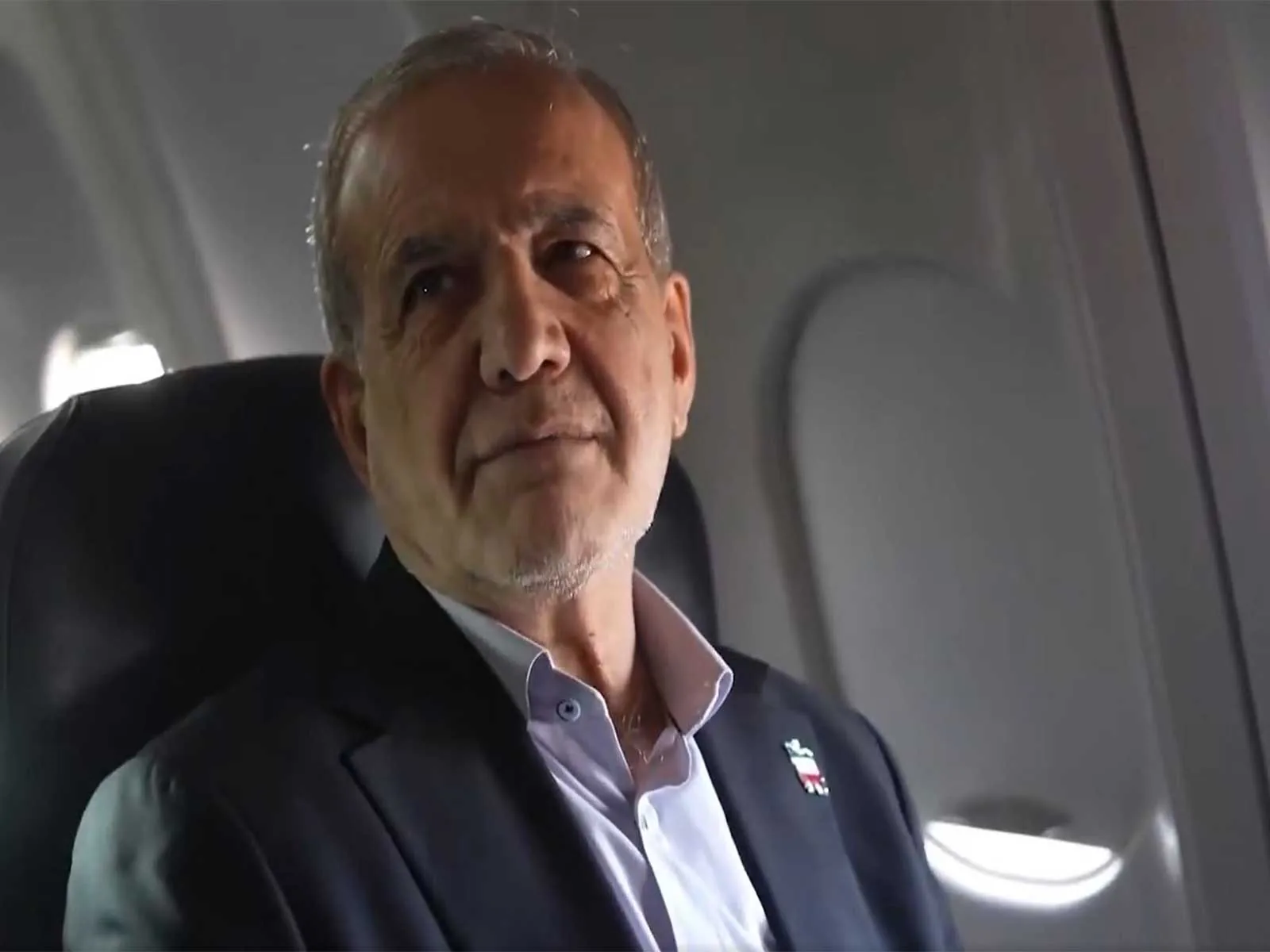 Reference image
Editorial responsibility
- No named human review is recorded for this page.
- Reports are grouped by semantic similarity and deterministic rules. Language models may assist titles, summaries, translation and cross-source analysis; the page reads the event directly, while its address stays stable when the title changes.
- Summary covers the current reports
Cross-source coverage
Common ground
- All sides agree that Iran's 60% uranium enrichment is a significant escalation with no clear civilian justification.
- There is broad agreement that the US withdrawal from the JCPOA damaged trust and contributed to the current crisis.
- Everyone acknowledges that Iran's track record of hiding nuclear facilities and blocking inspectors is a real concern.
- All participants agree that the current diplomatic stalemate is harmful and that a negotiated solution is needed.
Points of contention
- The Neutral Agent argues Iran's 60% enrichment is a technical proliferation risk, while others see it as a political response to US actions.
- Regional and Eastern Agents claim the West applies a double standard by ignoring Israel's nuclear arsenal, while the Neutral Agent says that's a separate issue.
- Western and Neutral Agents insist Iran must accept intrusive inspections, while Regional and Eastern Agents say that demand is unfair without US guarantees.
- Eastern Agent frames the issue as a sovereignty crisis in a multipolar world, while Neutral Agent sees it as a compliance failure under the NPT.
Blind spots
- No one fully addresses how to rebuild trust after both the US withdrawal from the JCPOA and Iran's nuclear opacity.
- The debate overlooks the humanitarian impact of sanctions on ordinary Iranians as a factor in Iran's negotiating stance.
- There is little discussion of what a realistic diplomatic compromise would look like that satisfies both verification and sovereignty concerns.
WorldAttention’s read
This debate shows that the Iran nuclear issue is stuck between two stubborn realities: Iran's 60% enrichment is a genuine proliferation risk with no civilian use, but it was also a direct response to the US tearing up a working deal. All sides agree that trust is broken and the diplomatic middle ground has been abandoned. The US wants Iran to prove it won't build a bomb, but won't guarantee it won't break the next deal. Iran wants the right to enrich without coercion, but won't accept the same inspections other NPT members do. Until both sides admit their own failures—the US for walking away from the JCPOA and Iran for hiding facilities and blocking inspectors—no real solution is possible. Pezeshkian's offer to negotiate without coercion is a starting point, but it's meaningless without verifiable action from Iran and credible guarantees from the West.
Reporting timeline
Iran's President at UN Says Willing to Negotiate but Rejects Coercion, Sanctions
On September 23, Iranian President Masoud Pezeshkian delivered a speech at the 81st United Nations General Assembly general debate. He stated that Iran is open to negotiation and cooperation but will not accept concessions forced by power, sanctions, or military threats. Pezeshkian emphasized that peace must be based on fairness, justice, dignity, and the equal rights of all nations. He reaffirmed Iran's stance on maintaining national security, sovereignty, and the right to peaceful use of nuclear technology, describing its defensive capabilities as essential to deter external threats while denying any pursuit of security through hegemony. The president criticized certain countries for applying double standards regarding Iran's nuclear program and the Israeli-Palestinian conflict, arguing that continued occupation, aggression, and injustice will exacerbate regional tensions. He asserted that war and military force cannot replace international law, diplomacy, and political dialogue, and called for regional cooperation to achieve shared security. The speech was reported by Chinese state media CCTV.
Read sourceIranian President Says No Nuclear Weapons Ambition, But Will Not Give Up Nuclear Technology Rights
Iranian President Pezeshkian stated at the UN General Assembly in New York that Iran has no intention of developing nuclear weapons but will not relinquish its right to develop nuclear technology for economic progress. He asserted that the nuclear issue cannot be resolved on the battlefield, declaring 'no to nuclear weapons, no to depriving us of nuclear knowledge.' His remarks come amid tentative signs of renewed diplomatic efforts to end nearly seven months of conflict between Iran and the US, though significant disagreements remain over terms for a deal and the reopening of the Strait of Hormuz. Pezeshkian warned that Iran would not allow free passage through the waterway while under sanctions. Separately, US President Trump threatened to 'destroy' Iran unless a deal is reached, but later expressed optimism about reaching an agreement, citing 'very good' talks with Iranian representatives and describing relations as 'developing.'
Read sourceIran President Pezeshkian Tells U.N. Iran Will Not Bow to Trump's 'Terrorism' Label
Iranian President Masoud Pezeshkian, in his September 23, 2026, United Nations General Assembly speech, directly challenged U.S. President Donald Trump and Israel, rejecting the characterization of Iran as a terrorist state. He cited the assassination of Supreme Leader Ayatollah Ali Khamenei in February and a U.S.-Israeli airstrike on a school in Minab that killed 178 civilians, mostly children, as evidence of aggression against Iran. Pezeshkian refused to reopen the Strait of Hormuz, arguing that the U.S. and its allies use the waterway to impose insecurity on Iran while blocking Iranian access. He reaffirmed Iran's right to pursue peaceful nuclear technology, stating 'no nuclear weapons, and no limitations to peaceful nuclear technology.' The U.S. delegate walked out during Pezeshkian's speech, mirroring Iranian and Cuban walkouts during Trump's speech the previous day. The speech comes seven months into a war that has resulted in at least 3,000 Iranian deaths and 19 American deaths, with Trump having asked the U.N. if he should 'annihilate the Islamic Republic.'
Read sourceShow 12 older updatesHide older updates
Iranian President Says No Nuclear Weapons but Will Not Give Up Nuclear Rights for Economy
Iranian President Masoud Pezeshkian stated at the United Nations General Assembly in New York that Iran has no intention of developing nuclear weapons but will not relinquish its right to develop nuclear technology for economic purposes. He asserted that the dispute over Iran's nuclear program will not be resolved on the battlefield, saying 'We make it clear: no nuclear weapons, nor being deprived of nuclear knowledge.' The remarks come amid initial signs of renewed diplomacy to end nearly seven months of conflict, though significant differences remain between Tehran and Washington on terms of reconciliation and the reopening of the Strait of Hormuz. Pezeshkian warned that Iran will not allow free passage through the strait while sanctions block its economy. Separately, US President Donald Trump threatened to 'destroy' Iran unless it reaches a deal to end the conflict, but later said he believed a settlement was possible and that his officials had held 'very good' talks with Iranian envoys, describing relations as 'developing.'
Read sourceIran President Defends Nuclear Enrichment Rights, Rules Out Atomic Weapons at UN
Iranian President Masoud Pezeshkian, speaking at the United Nations General Assembly in New York, defended his country's right to develop nuclear technology for economic purposes while reiterating that Iran has no intention of developing atomic weapons. He stated that the issues surrounding the Islamic Republic's nuclear program will not be resolved on the battlefield. The remarks come amid ongoing international concerns over Iran's nuclear activities and enrichment capabilities, which Tehran insists are for peaceful civilian energy and economic development. The president's address underscores Iran's firm stance on maintaining its nuclear enrichment rights despite Western pressure and sanctions.
Read sourceIranian President at UN: Peace Will Not Come from the Battlefield
In a speech at the United Nations General Assembly, Iranian President Masoud Pezeshkian delivered a strong address, stating that 'peace will not come from the battlefield.' He displayed photographs of the late Supreme Leader Ali Khamenei and over 150 schoolchildren who died at the outbreak of war. Pezeshkian asserted that Iran is acting in self-defense and is not a terrorist nation, claiming that innocent Iranians have been targeted by 'vile attacks and aggression' from the United States and Israel. He declared that despite being attacked, Iran has never surrendered. The speech was characterized as a firm stance against the US and Israel, emphasizing Iran's position of resistance.
Read sourceIranian President Pezeshkian at UN General Assembly Outlines Defense, Nuclear, and Regional Stances
On September 23, Iranian President Masoud Pezeshkian addressed the 81st UN General Assembly, outlining Iran's positions on national security, nuclear rights, and regional issues. He asserted Iran's right to sufficient defensive military power, stating it is for self-protection and not aggression or hegemony. Pezeshkian firmly rejected abandoning peaceful nuclear technology, emphasizing its importance for medical, agricultural, industrial, and energy needs, and declared Iran will not accept restrictions on peaceful nuclear rights while opposing nuclear weapons. He warned against using the Strait of Hormuz to threaten Iran, criticized double standards in international nuclear oversight by contrasting Iran's compliance with Israel's undeclared nuclear arsenal, and condemned sanctions for harming ordinary civilians. On regional security, he argued that Middle Eastern wars have no clear borders and that security must be built collectively, not through external imposition. He reiterated that the Palestinian issue is central to regional peace and that resistance will persist as long as occupation and injustice continue. Pezeshkian expressed willingness to engage in dialogue and diplomacy with the US and others but stated Iran will not yield under sanctions, threats, or military pressure, directly responding to former President Trump's remarks by affirming that pressure only strengthens Iranian resistance.
Read sourceIranian President Pezeshkian Says Iran Ready for Negotiations Without Use of Force
Iranian President Masoud Pezeshkian stated that Iran is prepared to engage in negotiations without resorting to the use of force. The brief statement, reported by the domestic source tradealpha, indicates a diplomatic posture from Tehran, emphasizing a willingness to pursue dialogue under conditions that exclude military action. The remark comes amid ongoing tensions between Iran and Western powers over issues including Iran's nuclear program and regional influence. The president's comment suggests a potential opening for talks, though it does not specify the subject or counterpart for such negotiations. The statement is attributed directly to Pezeshkian and reflects the official position of the Iranian government as conveyed through domestic media.
Read sourceIranian President Says Military Is Defensive, Nuclear Program Only for Peaceful Purposes
In a speech at the United Nations General Assembly on Wednesday, Iranian President Pezeshkian stated that the United States has committed crimes against civilians in Iran, and that Iran needs to become strong and capable to resist the US and other hostile forces. He asserted that Iran's nuclear technology development is for peaceful purposes only, emphasizing that Iran needs nuclear energy, not nuclear weapons, and that its military power is defensive. Pezeshkian declared Iran's opposition to nuclear weapons while also opposing restrictions on nuclear energy development, stressing that the nuclear issue cannot be resolved through military means. He further stated that Iran will not abandon its legitimate rights.
Read sourceIranian President Pezeshkian Says Iran Will Not Yield to Military Force, Believes in Diplomacy
Iranian President Masoud Pezeshkian stated that Iran will not succumb to military force and firmly believes in diplomatic solutions. The statement, reported by financial news outlet Jin10, underscores Tehran's continued emphasis on negotiation and dialogue as the primary means of resolving international disputes, while rejecting coercion or threats of military action. This position reflects the Iranian leadership's longstanding policy of resisting external pressure and advocating for diplomacy, particularly amid ongoing tensions with Western powers over Iran's nuclear program and regional influence. The brief but direct declaration reaffirms Iran's official stance without providing specific context or conditions.
Read sourceIranian President Pezeshkian Says Nuclear Issue Will Not Be Resolved on the Battlefield
Iranian President Masoud Pezeshkian stated that the nuclear issue will not be resolved on the battlefield, according to a report by financial news outlet Jin10. The brief statement, attributed directly to the president, underscores Tehran's position that diplomatic means, rather than military conflict, are the appropriate path for addressing concerns over its nuclear program. The remark comes amid ongoing tensions between Iran and Western powers over the country's nuclear activities, and signals a continued preference for negotiation over confrontation from the Iranian leadership. No further context or details were provided in the report.
Read sourceIranian President Pezeshkian: We Oppose Nuclear Weapons and Restrictions on Nuclear Energy Development
In a statement reported by financial news outlet Jin10, Iranian President Masoud Pezeshkian declared his government's dual stance on nuclear issues. He stated that Iran opposes the development and possession of nuclear weapons, while simultaneously rejecting any international restrictions on the country's right to develop nuclear energy for peaceful purposes. The statement reaffirms Iran's long-standing position of seeking a civilian nuclear program under international scrutiny but resisting external limitations on its nuclear activities. The remarks come amid ongoing tensions between Iran and Western powers over Tehran's nuclear advancements and the stalled negotiations to revive the 2015 nuclear deal (JCPOA). President Pezeshkian's comments signal continuity in Iran's nuclear policy under his administration, balancing non-proliferation commitments with demands for unfettered nuclear energy development.
Iran President Pezeshkian: Peaceful Nuclear Technology Part of Progress, Will Not Yield Rights
Iranian President Masoud Pezeshkian stated that the peaceful use of nuclear technology is an integral part of the country's development and progress. He declared that Iran will not back down or abandon its rights in this regard. The statement, reported by financial news outlet Jin10, underscores Tehran's firm stance on its nuclear program amid ongoing international scrutiny and negotiations. Pezeshkian's remarks reaffirm Iran's position that its nuclear activities are for civilian purposes and that it will resist external pressure to curtail them. The comment comes as Iran continues to engage in diplomatic talks with world powers over its nuclear program, with the president signaling no compromise on what he frames as a national right.
Read sourceIranian President Pezeshkian Says Iran Needs Nuclear Energy, Not Nuclear Weapons
In a speech at the United Nations General Assembly on September 23, Iranian President Masoud Pezeshkian stated that Iran needs nuclear energy, not nuclear weapons. He argued that Iran must remain strong to resist the United States and its adversaries, and accused the US of disrespecting international law. During his address, the US delegation staged a walkout in protest. The remarks come amid ongoing tensions over Iran's nuclear program, with Western powers suspecting Iran of seeking nuclear weapons capability, a charge Tehran denies. Pezeshkian's comments were reported by financial news outlet Cailianshe (cls).
Read sourceIranian President Pezeshkian Says Iran Needs Nuclear Energy, Not Nuclear Weapons
Iranian President Masoud Pezeshkian stated that Iran requires nuclear energy for peaceful purposes and is not seeking nuclear weapons. The remark, reported by financial news outlet Jin10, comes amid ongoing international scrutiny of Iran's nuclear program. Pezeshkian's assertion aims to clarify Iran's nuclear ambitions, distinguishing between the development of nuclear energy and the pursuit of atomic weapons. The statement reflects Tehran's official position of maintaining a civilian nuclear program while denying intentions to weaponize it, a stance that has been a point of contention with Western powers and the IAEA.