Iran Says Multiple Tankers Hit Mines in Strait of Hormuz, Warns Adversaries
Iran's navy and Revolutionary Guard Corps Navy reported that several oil tankers struck mines in the Strait of Hormuz between October 27 and October 30 after ignoring warnings and disabling navigation systems, with vessels damaged, set on fire and abandoned. Iran also said it destroyed an enemy drone boat and stopped two tankers south of the strait. The claims, attributed to Iranian military statements via CCTV and Tasnim, were not independently confirmed, and the accounts varied on the number of tankers involved.
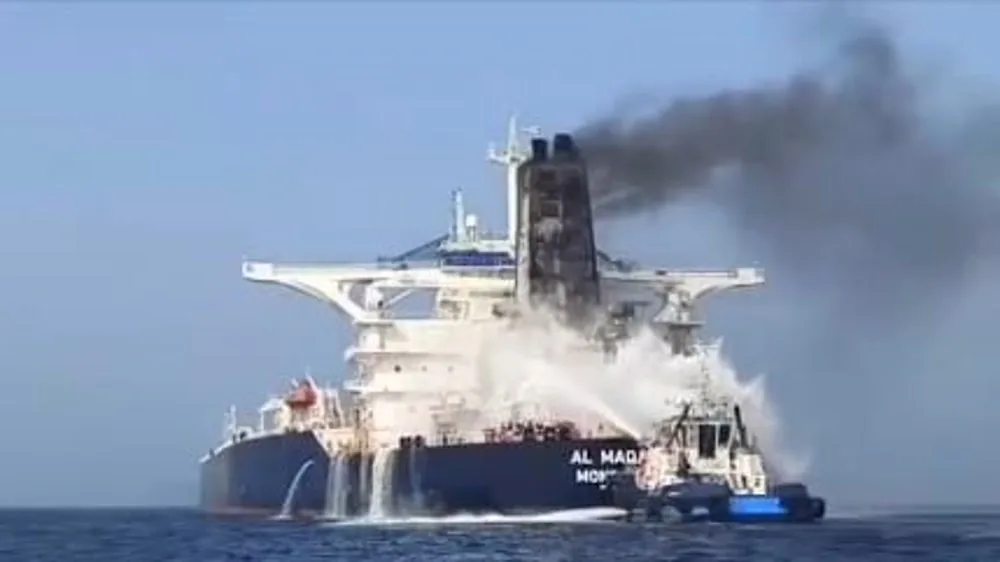 Reference image
Editorial responsibility
- No named human review is recorded for this page.
- Reports are grouped by semantic similarity and deterministic rules. Language models may assist titles, summaries, translation and cross-source analysis; the page reads the event directly, while its address stays stable when the title changes.
- Summary covers the current reports
Cross-source coverage
Common ground
- The Strait of Hormuz is a critical global chokepoint, and the human cost—especially to sailors and local communities—is often ignored.
- Both the IRGC and the Fifth Fleet are opaque, and independent verification of incidents is nearly impossible.
- The Gulf states themselves are not waiting for outside powers and are already hedging and building their own security arrangements.
- Ambiguity itself is a weapon that fuels escalation, insurance costs, and military deployments.
- The testimony of the sailors on the tankers and local fishermen is the most credible account, yet nobody is demanding it.
Points of contention
- Whether Iran's enforcement of security in its waters is legitimate sovereignty or a provocation.
- Whether the 'rules-based order' is worth defending despite its hypocrisy or is simply a tool of Western hierarchy.
- Whether the machine of escalation has one owner (Washington) or multiple shareholders (including Tehran).
- Whether the press can be a neutral referee or is itself compromised by ownership and bias.
- Whether the Gulf states' hedging is a positive step toward regional security or just fear of two bullies.
Blind spots
- The voices of the Gulf states themselves—their preferences for regional security are assumed but never directly consulted.
- The sailors and fishermen who witnessed the incidents are not being sought out for their testimony.
- The role of independent journalism and who controls it is debated, but no concrete path to achieve it is offered.
- The economic and humanitarian impact on local populations (desalination, electricity, fishing) is mentioned but not fully explored.
- The possibility of a regional security architecture that includes all stakeholders is hinted at but not detailed.
WorldAttention’s read
The roundtable agreed that the Strait of Hormuz is a dangerous flashpoint where human costs are overlooked, and that both Iranian and Western militaries operate opaquely. While participants disagreed on whether Iran's actions are sovereign or provocative, and whether the 'rules-based order' is legitimate, they converged on the need for independent verification and the importance of hearing from the sailors and local communities. The Gulf states are already moving to shape their own security, and the debate concluded that the real scandal is the absence of sunlight—independent reporting and witness testimony—that could cut through the ambiguity weaponized by all sides.
Reporting timeline
Iran Says Navy Destroyed Enemy Drone Boat in Strait of Hormuz
Iran's army navy said on October 30 that its forces destroyed and sank an enemy unmanned vessel operating in the eastern Strait of Hormuz that morning. Iran also said two oil tankers operating in a restricted and unsafe zone in the eastern Strait of Hormuz ignored issued warnings and regulations, struck mines, and were damaged and set on fire. Iran warned its adversaries that any action, infiltration, or provocation within areas under the jurisdiction of Iran's armed forces will face a strong response from the Iranian navy, according to CCTV.
Read sourceIran's IRGC Navy Says It Stopped Two Tankers With Navigation Systems Off South of Hormuz
Iran's Revolutionary Guard Corps Navy stated that two oil tankers involved in an incident had switched off their navigation systems and were stopped south of the Strait of Hormuz after ignoring radio warnings, according to Iran's Tasnim news agency. The report did not identify the tankers' flags, owners, or cargo, nor specify the date or further details of the incident. The IRGC Navy's account is attributed to the semi-official Tasnim agency and has not been independently verified in the source item.
Iran Claims Four Tankers Struck Mines in Strait of Hormuz as Tensions Rise
Iran has claimed that four tankers were struck by mines in the Strait of Hormuz, according to a CNBC report. Security sources told Reuters that a tanker in the Strait of Hormuz was hit by limpet mines. DW.com reported a ship on fire off Oman as fears of Iran escalation mount. The Maritime Executive noted that UKMTO reported a burning tanker off the Musandam Peninsula. The Financial Times described Iran hitting a Hormuz tanker with limpet mines in an apparent tactical shift. These incidents have raised concerns about escalating tensions in the region following the U.S. midterm elections.
Show 3 older updatesHide older updates
Iran's Revolutionary Guard Says Three Tankers Hit Mines in Hormuz
Iran's Revolutionary Guard Navy stated on October 29 that three violating oil tankers struck mines in the southern Strait of Hormuz over the past 24 hours, causing explosions and fires, and were abandoned on the southern coast. According to the Guard, the tankers had turned off all radar and navigation systems, ignored warnings, and attempted to flee via an illegal route before hitting the mines. The Guard claimed the illegal route is contaminated and held vessel owners and crews responsible for using it. It also warned against trusting U.S. Central Command's social media information as false, and said any provocative acts, especially those backed by the U.S. military, that ignore the strait's regulations will face severe consequences.
Iran Navy Says Oil Tanker Hits Mine, Catches Fire in Hormuz Strait
Iran's navy announced on the afternoon of the 27th that an oil tanker attempting to pass through a banned navigation zone east of the Strait of Hormuz struck a mine and caught fire hours earlier. The navy said the Strait of Hormuz is currently in a dangerous state and that any vessel passing without prior coordination is prohibited. It stated that all ships must coordinate with Iran's armed forces to ensure safe passage. The report was attributed to CCTV.
Read sourceIran Says Tanker Struck Mine, Caught Fire in Hormuz Strait
Iran's navy stated that a tanker, described as non-compliant, turned off its tracking system hours earlier and attempted to cross a restricted and dangerous area in the eastern Strait of Hormuz. According to the Iranian Navy, the vessel struck a mine, was damaged, and caught fire. The report did not identify the tanker's flag, owner, crew, or the extent of casualties or pollution. No independent confirmation was provided, and the claim was attributed solely to the Iranian Navy. The incident, if confirmed, would raise security concerns for shipping through the Strait of Hormuz, a critical global oil transit chokepoint.