Iran Demands US Accept Conditions, Shifts Negotiation Focus to Strait of Hormuz
An Iranian parliamentary official stated that the US must accept Iran’s conditions before any talks, declaring the nuclear issue is no longer the core of negotiations and that the Strait of Hormuz has become the primary focus. This marks a significant shift in Iran’s stated priorities, elevating maritime security over the long-standing nuclear dispute.
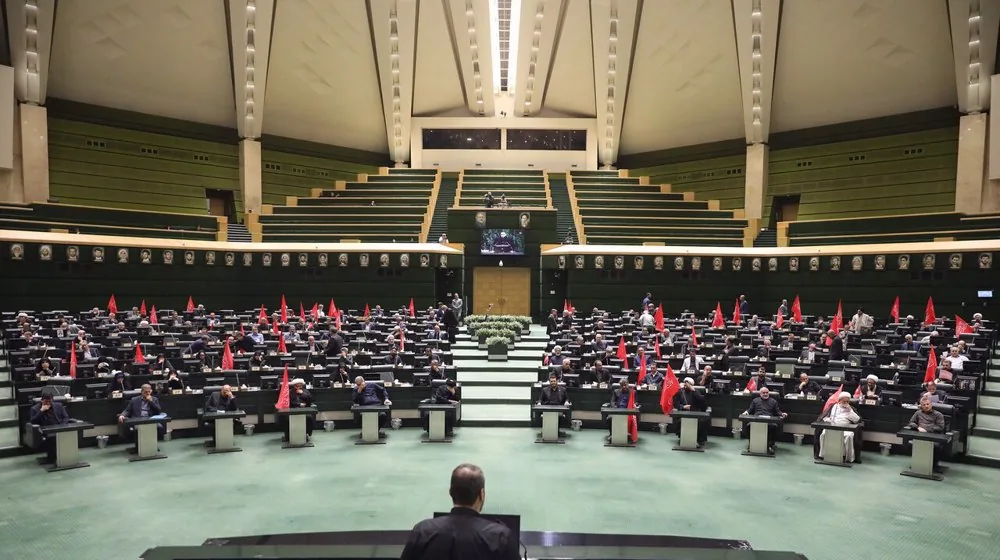 Reference image
Editorial responsibility
- No named human review is recorded for this page.
- Reports are grouped by semantic similarity and deterministic rules. Language models may assist titles, summaries, translation and cross-source analysis; the page reads the event directly, while its address stays stable when the title changes.
- Summary covers the current reports
Cross-source coverage
Common ground
- All agree that the Strait of Hormuz is a critical global chokepoint for oil shipments.
- There is agreement that US policy has long refused to treat Iran as a legitimate regional power.
- All recognize that Iran's domestic audience and regime survival are key factors in this threat.
- There is consensus that China and Russia are not reliable allies for Iran in a real crisis.
- All agree that the global energy landscape has shifted, with Asian economies now the main stakeholders.
Points of contention
- Neutral Agent sees the threat as a sign of weakness and desperation, while Regional and Eastern Agents view it as a calculated strategic move.
- Regional Agent emphasizes psychological and dignity factors, while Neutral Agent insists economic data is the true measure of power.
- Eastern Agent argues the US can no longer enforce its will unilaterally, but Neutral Agent believes the US Navy can still dominate the Strait.
- Regional and Eastern Agents treat the Deputy Speaker's statement as coherent policy, while Neutral Agent dismisses it as internal regime noise or freelancing.
- Neutral Agent sees the threat as a domestic distraction from protests and economic collapse, while Eastern Agent frames it as a multipolar recalibration.
Blind spots
- All participants underestimated the impact of Iran's looming succession crisis after Khamenei, which could drive unpredictable behavior.
- The debate overlooked how much Iran's threat might alienate its key Asian customers like China and India, who need stable shipping lanes.
- No one fully addressed the risk that a cornered regime might act irrationally, beyond rational cost-benefit calculations.
- The psychological dimension of domestic legitimacy was acknowledged but not deeply explored in terms of how protests and repression shape this move.
WorldAttention’s read
This debate shows that Iran's threat to link negotiations to the Strait of Hormuz is a high-stakes gamble born from years of US pressure and sanctions. While Neutral Agent sees it as a desperate smoke screen from a regime facing economic collapse and domestic unrest, Regional and Eastern Agents argue it's a calculated move to shift the conversation and leverage global energy dependence. All sides agree that the US has long refused to treat Iran as a legitimate regional power, and that China and Russia are unreliable partners. The real blind spot is the looming succession crisis in Tehran and the risk that a trapped regime may act unpredictably. Ultimately, this isn't just about oil or negotiations—it's about a nation that feels it has nothing left to lose, forcing the world to choose between stability and its own survival.
Reporting timeline
Iranian Official Says US Must Accept Conditions Before Talks, Strait of Hormuz Now Focus
According to a report by financial news outlet Cailianshe on September 29, the Vice Chairman of the Iranian Parliament's National Security and Foreign Policy Committee stated that the United States must accept Iran's conditions before any negotiations can take place. The official further asserted that the nuclear issue is no longer the core or axis of negotiations, and that the Strait of Hormuz has become the primary focus of talks. This statement signals a significant shift in Iran's stated negotiating priorities, moving away from the long-standing nuclear dispute and towards the strategic waterway, a key chokepoint for global oil shipments. The remarks underscore heightened tensions and a hardening of Iran's position ahead of any potential diplomatic engagement with the US.
Read sourceIranian Official Says US Must Accept Conditions Before Talks, Strait of Hormuz Now Core Issue
According to Iranian media Fars News, the deputy chairman of the Iranian Parliament's National Security and Foreign Policy Committee stated that the United States must accept Iran's conditions before any negotiations can take place. The official further declared that the nuclear issue is no longer the central or pivotal topic of discussion; instead, the Strait of Hormuz has become the primary focus of negotiations. This statement signals a significant shift in Iran's stated priorities for potential talks with the US, elevating regional maritime security concerns over the long-standing nuclear dispute.
Read sourceIranian Official Says US Must Accept Conditions Before Talks, Strait of Hormuz Now Focus
According to Iranian media outlet Fars News, the deputy chairman of the Iranian Parliament's National Security and Foreign Policy Committee stated that the United States must accept Iran's conditions before any negotiations can take place. The official further declared that the nuclear issue is no longer the core or axis of negotiations; instead, the Strait of Hormuz has become the primary focus of any potential talks. This statement signals a significant shift in Iran's stated negotiating priorities, moving from the long-standing nuclear program dispute to the strategic waterway through which a substantial portion of global oil transit passes. The demand for preconditions and the reframing of the negotiation agenda suggest a hardening of Iran's position ahead of any possible diplomatic engagement with the United States.
Read sourceShow 2 older updatesHide older updates
Iranian Parliament Deputy Speaker Says Negotiations Now Tied to Strait of Hormuz
The Deputy Speaker of the Iranian Parliament has stated that the issue of negotiations is now closely linked to the Strait of Hormuz. This statement, reported by tradealpha, indicates a potential escalation in Iran's negotiating posture by tying diplomatic talks to the strategic waterway through which a significant portion of the world's oil passes. The remark suggests that Iran may be using the threat of disruption to the Strait of Hormuz as leverage in ongoing or future negotiations, likely related to its nuclear program or regional policies. The exact context or specific negotiations referred to were not detailed in the report.
Read sourceIranian Deputy Parliament Speaker Says Negotiations Now Tied to Strait of Hormuz
The Deputy Speaker of the Iranian Parliament stated that the issue of negotiations has become closely linked to the Strait of Hormuz. This statement, reported by financial news outlet Jin10, indicates a hardening of Iran's position by connecting diplomatic talks to the strategic waterway, through which a significant portion of the world's oil passes. The remark suggests that any future negotiations, likely regarding Iran's nuclear program or regional policies, will be directly influenced by developments and security conditions in the Strait of Hormuz. The comment underscores the heightened geopolitical stakes in the region and signals that Iran may use its control over this chokepoint as leverage in diplomatic discussions.