Iran warns US and regional states of unlimited retaliation after Trump's UN threat
Iran's military leadership issued multiple warnings to the United States and regional states, threatening unlimited retaliation including "painful" strikes on US bases and expansion of the "geography of the war" if Washington launches new attacks. The warnings follow former President Donald Trump's threat to "obliterate" Iran at the UN General Assembly. Iran also ruled out diplomatic negotiations unless the US makes concessions.
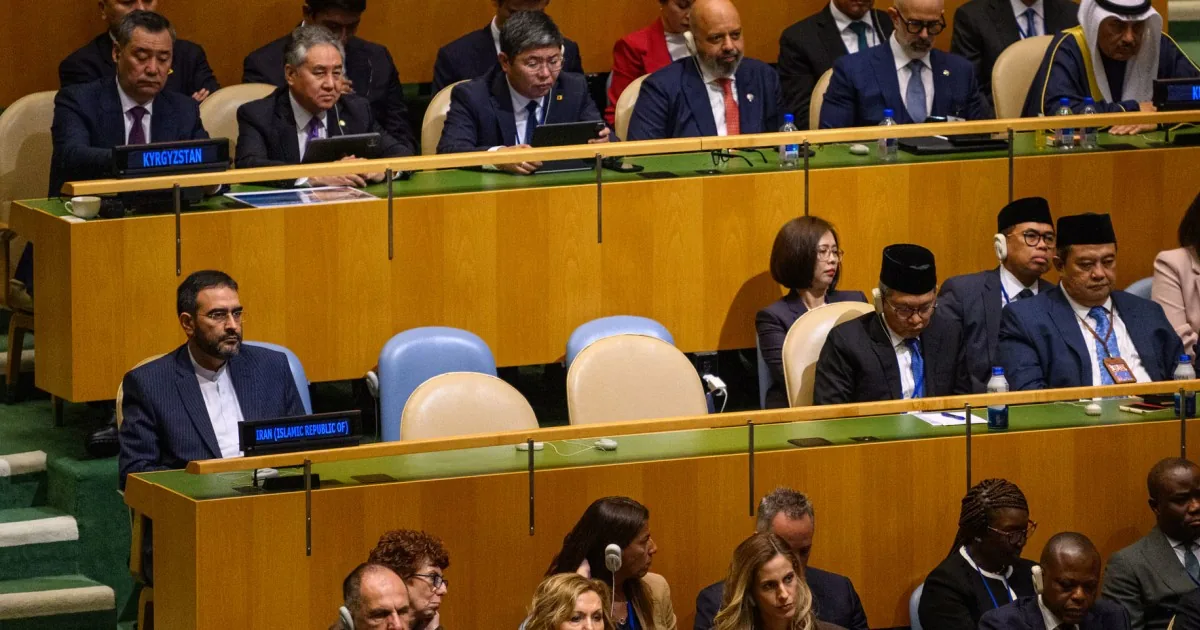 Reference image
Editorial responsibility
- No named human review is recorded for this page.
- Reports are grouped by semantic similarity and deterministic rules. Language models may assist titles, summaries, translation and cross-source analysis; the page reads the event directly, while its address stays stable when the title changes.
- Summary covers the current reports
Cross-source coverage
Common ground
- Both sides agree that the 1953 coup and Soleimani's assassination are significant historical events that shape Iran's current stance.
- Both acknowledge that the JCPOA was a diplomatic achievement, though they disagree on who violated it first.
- Both recognize that Iran's nuclear program and regional militia network are central to the current tensions.
Points of contention
- The Regional Agent sees Iran's actions as defensive responses to U.S. aggression, while the Western Agent views them as offensive moves to dominate the region.
- They disagree on whether Iran negotiated the JCPOA in good faith or used it to buy time for nuclear advancements.
- The Regional Agent argues that U.S. bases in the Gulf are about controlling oil and projecting power, while the Western Agent says they exist because Gulf states requested protection from Iran.
- They clash over whether Iran's enrichment to 60% is a peaceful step or a dangerous move toward weapons capability.
- The Regional Agent claims the 'resistance axis' emerged from real grievances, while the Western Agent says these groups are authoritarian militias that suppress their own people.
Blind spots
- Neither side fully addresses the role of other regional powers like Saudi Arabia and Israel in escalating tensions.
- The debate overlooks the impact of sanctions on ordinary Iranian citizens and how that affects public opinion.
- Both fail to discuss concrete steps for de-escalation beyond blaming the other side.
WorldAttention’s read
This debate shows a deep divide in how Iran's actions are interpreted. The Regional Agent emphasizes historical U.S. hostility and Iran's right to self-defense, while the Western Agent focuses on Iran's current aggressive moves and lack of accountability. Both sides agree on key historical events but disagree on their meaning and consequences. The real challenge is that neither perspective fully acknowledges the other's valid concerns, leading to a cycle of mistrust and escalation. Moving forward, any path to peace must address both the historical grievances that drive Iran's defensive posture and the real threats posed by its nuclear program and proxy networks. Without a mutual recognition of these complexities, the region will remain stuck in the same pattern of threats and retaliation.
Reporting timeline
Iran Warns US Against New Attacks After Trump Threatens to 'Obliterate' Country at UN
On September 23, following a threat by former US President Donald Trump at the United Nations General Assembly to 'obliterate' Iran, Tehran's leadership issued a warning against any new US military action. According to Iranian state media Press TV, the Islamic Revolutionary Guard Corps cautioned that Washington would gain 'nothing but failure' from any such attack. The Iranian Armed Forces General Staff further warned that Tehran would deliver a 'more severe, more destructive, and unpredictable' response, and stated that America's repeated 'baseless accusations and threats' should not be interpreted as a sign of strength.
Read sourceIran warns 'geography of the war' would expand in response to any new U.S. assault
Iran has issued a series of warnings to the United States, stating that any new U.S. assault would expand the 'geography of the war.' The Iranian army chief declared that forces are ready for potential new 'aggression' from the US and Israel. Iran also warned of deploying 'new weapons' as reports emerge that former President Trump is considering a meeting with the Iranian president. These threats come amid escalating regional conflict following Houthi attacks, with the US and Iran trading threats. The Islamic Revolutionary Guard Corps (IRGC) spokesperson stated that the IRGC is prepared for a 'counteroffensive' if the US attacks. The warnings are reported by multiple major news outlets including CBS News, Al Jazeera, NBC News, Reuters, and ABC News, indicating a significant escalation in rhetoric between the two nations.
Read sourceIran's Military Warns US Against New Attacks, Threatens Painful Strikes on Regional Bases
On September 20, 2026, the Iranian military issued a direct warning to the United States, threatening further 'painful' attacks on all US bases in the region if Washington launches new strikes. The statement, reported by German outlet Die Welt, also ruled out any return to diplomatic negotiations unless the US makes concessions. This escalation follows heightened tensions between the two countries, with Iran signaling a hardline stance against any military action. The threat encompasses all US military installations across the Middle East, indicating a broad and potentially severe response. The Iranian position explicitly conditions any future talks on prior US concessions, suggesting a breakdown in diplomatic channels. The warning underscores the volatile security situation in the region and the risk of further military confrontation.
Read sourceShow 2 older updatesHide older updates
Iran warns regional states against aiding any US attack, threatens unlimited retaliation
According to Iranian state media, the Central Command of the Iranian Armed Forces has issued a stark warning to regional countries, stating that any nation participating in a potential U.S. attack on Iran should not expect restraint from the Iranian military. The command further declared that any U.S. strike would trigger Iranian retaliation with 'no limits or considerations' placed on U.S. bases and interests. This statement, reported by the domestic source tradealpha, represents a significant escalation in rhetoric amid heightened tensions between Iran and the United States. The warning explicitly targets both regional allies of the U.S. and American military assets, signaling that Iran views any cooperation with a potential U.S. operation as a hostile act that would invite a broad and unrestricted response.
Read sourceIran Warns Regional States Against Joining Any US Attack, Vows Unrestrained Retaliation
According to Iranian state media, the Central Command of the Iranian Armed Forces has issued a stark warning to regional countries, stating that any nation participating in a potential U.S. attack on Iran should not expect restraint from the Iranian military. The command further declared that any U.S. strike would trigger Iranian retaliation, with 'no limits or considerations' imposed on U.S. bases and interests. This statement represents a significant escalation in rhetoric, explicitly threatening both regional partners of the U.S. and American assets directly, without specifying the conditions or scope of the potential U.S. attack it is responding to.