Iran Committee Approves 20% Cargo Fine and Vessel Seizure for Unauthorized Hormuz Transit
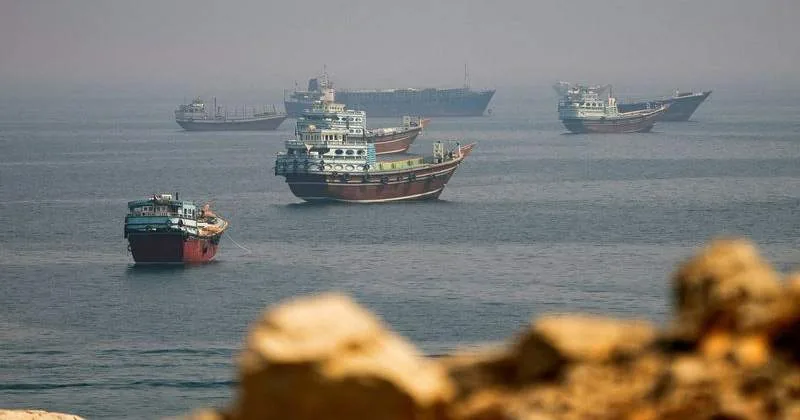
Iran's parliamentary National Security Committee approved new legal provisions imposing a 20% fine on cargo value for vessels transiting the Strait of Hormuz without authorization, with temporary seizure for non-payment. A specialized judicial branch will enforce the rules, and Iran's armed forces must report implementation every three months. The bill still requires full parliamentary approval. The announcement coincided with conflicting reports about a potential reopening of the strait and U.S. President Trump's comments on ongoing negotiations.
 Illustration
Editorial responsibility
- No named human review is recorded for this page.
- Reports are grouped by semantic similarity and deterministic rules. Language models may assist titles, summaries, translation and cross-source analysis; the page reads the event directly, while its address stays stable when the title changes.
- Summary covers the current reports
Cross-source coverage
Common ground
- Iran has legitimate grievances about US sanctions, the JCPOA withdrawal, and the Soleimani assassination.
- The US has limited appetite for another Middle Eastern war due to Afghanistan, Ukraine, and domestic issues.
- Iran's 20% fine law creates uncertainty and raises costs for shipping through the Strait of Hormuz.
- The law is a strategic move to gain leverage, not a random act of aggression.
Points of contention
- One side says the law is a legitimate assertion of sovereignty; the other says it violates UNCLOS and is a bargaining chip from weakness.
- One side argues Iran's leverage is real and structural due to geography; the other says it's temporary and depends on the US not escalating.
- One side claims the law is a 'reckoning' that shifts power; the other says it's posturing that avoids actual enforcement to prevent military retaliation.
- One side rejects the North Korea comparison as irrelevant; the other says it's valid because both are sanctioned states using strategic geography.
Blind spots
- Neither side fully addresses how global shipping companies and insurers will actually react to the law in practice.
- The debate overlooks the potential impact on Iran's own economy if the law disrupts its ability to export oil.
- There's little discussion of how other regional powers like Saudi Arabia or the UAE might respond to escalate tensions.
WorldAttention’s read
This debate shows that Iran's 20% fine law is a calculated move to gain leverage by creating uncertainty in the Strait of Hormuz, rather than a direct act of aggression. Both sides agree Iran has real grievances from US actions, and the US is unlikely to start a new war right now. However, they disagree on whether this law reflects genuine power or just smart posturing from a weaker position. The key blind spot is how the law will actually play out in practice—shipping companies, insurers, and regional rivals all have a role that wasn't fully explored. In the end, Iran is using legal ambiguity to raise costs for others without triggering a military response, but whether that's a lasting power shift or a temporary bluff depends on what happens when the law is actually tested.
Reporting timeline
Iran Approves 20% Fine, Vessel Seizure for Unauthorized Hormuz Strait Transit
Iran's parliamentary national security committee has approved new legal provisions imposing a 20% fine on the value of cargo for vessels transiting the Strait of Hormuz without authorization, with non-paying vessels subject to temporary seizure. A special judicial branch will enforce the rules, and Iran's armed forces must report implementation every three months. The move comes amid conflicting signals: a Reuters report citing an Iranian official that Iran could reopen the strait in seven days if the US reduces military pressure and lifts port blockades was denied by Iran's Fars news agency. US President Donald Trump said on the same day that the US and Iran are still in communication and he expects a deal eventually, though he warned of possible military action if no agreement is reached. The strait's commercial shipping remains at extremely low levels, with only two cargo ships transiting on September 21, compared to a pre-crisis average of 125 per day. The new measures underscore that passage rights through the strait remain a key bargaining chip in US-Iran negotiations.
Read sourceIran Parliament Approves New Law Fining, Seizing Vessels Violating Hormuz Strait Rules
Iran's parliamentary National Security Committee has approved new legal provisions concerning the Strait of Hormuz. Under these rules, vessels that violate passage regulations will face a fine equivalent to 20% of their cargo's value and will be temporarily seized until the fine is paid. To ensure enforcement, Iran will establish a dedicated judicial branch, and the Iranian Armed Forces will report on implementation every three months. The law targets compliance with Iran's unilateral navigation rules in the strategic waterway, a critical chokepoint for global oil transit. The move signals Tehran's intent to tighten control over the strait, potentially escalating tensions with international shipping and regional powers. The source, tradealpha, is a domestic outlet, suggesting the report reflects Iranian official perspectives.
Read sourceIran Approves 20% Fine, Vessel Seizure for Unauthorized Strait of Hormuz Transit
Iran's parliamentary national security committee has approved new legal provisions for the Strait of Hormuz, imposing a fine equivalent to 20% of cargo value on vessels transiting without authorization, with temporary seizure until payment. A special judicial branch will enforce the rules, and Iran's armed forces will report compliance every three months. The announcement came on the same day Reuters reported an Iranian official offered to reopen the strait within seven days if the US reduces military pressure and lifts port blockades, though Iran's Fars news agency denied that report. US President Donald Trump said on Tuesday that the US and Iran are still communicating and he expects a deal will eventually be reached, while warning of possible military action if no agreement is made. The Strait of Hormuz remains largely closed to commercial shipping, with only two cargo vessels transiting on September 21, compared to a pre-crisis average of 125 per day. The situation underscores that transit rights and rules remain key bargaining chips in US-Iran negotiations.
Read sourceShow 2 older updatesHide older updates
Iranian Parliament Reviews Bill to Fine Violating Vessels Up to 20% of Cargo Value
According to Iranian media outlet Fars News, the Iranian parliament is reviewing a draft bill titled 'Strategic Action to Ensure the Security and Sustainable Development of the Strait of Hormuz and the Persian Gulf.' The proposed legislation explicitly stipulates that vessels found in violation of its provisions could face fines of up to 20% of their cargo's value. The bill aims to enhance security and promote sustainable development in the strategically vital waterway, through which a significant portion of the world's oil and gas shipments pass. The specific violations and enforcement mechanisms are not detailed in the report, but the draft indicates a hardening of Iran's stance on maritime traffic in the region. The bill is currently under parliamentary review and has not yet been enacted into law.
Read sourceIranian Parliament Reviews Bill to Fine Violating Vessels Up to 20% of Cargo Value in Strait of Hormuz
The Iranian parliament is reviewing a draft bill titled 'Strategic Action to Ensure the Security and Sustainable Development of the Strait of Hormuz and the Persian Gulf.' The bill explicitly stipulates that vessels found in violation of its provisions will face a fine of up to 20% of the value of their cargo. The legislation aims to enhance security and promote sustainable development in the strategically critical waterway, through which a significant portion of global oil shipments transit. The draft is currently under parliamentary consideration, and its final form and enactment timeline remain uncertain. The reported penalty is notably high, potentially impacting shipping costs and maritime traffic in the region if the bill becomes law.