Iran Says Two Oil Tankers Struck Mines and Caught Fire in Strait of Hormuz
Iran's Islamic Revolutionary Guard Corps Navy said two oil tankers struck mines and caught fire in the Strait of Hormuz after attempting to transit unauthorized routes with navigation systems shut off, one reportedly under US military support. The IRGC declared the strait blockaded until "seven conditions" are met and warned vessels cooperating with the US would face the same fate. Iranian state television reported explosions in southern Iran, including Qeshm Island. The US military said it disabled a commercial vessel attempting to break its blockade of Iran, and UKMTO reported a separate incident in the Gulf of Oman. No casualties, vessel identities, or cargo details were disclosed.
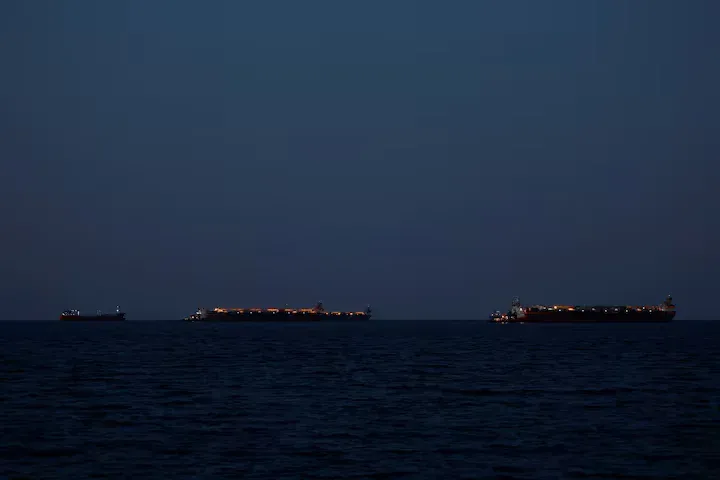 Reference image
Editorial responsibility
- No named human review is recorded for this page.
- Reports are grouped by semantic similarity and deterministic rules. Language models may assist titles, summaries, translation and cross-source analysis; the page reads the event directly, while its address stays stable when the title changes.
- Summary covers the current reports
Cross-source coverage
Common ground
- An independent inquiry should pull the paper trail: ship manifests, war-risk insurance premiums, and military transit orders.
- The inquiry must be able to name specific acts, including any ordnance laid in the lane, and not stop there.
- The sailors and crews on the tankers have been unnamed and unaccounted for, which is a scandal.
- The architecture of flags of convenience, London underwriters, and navies that file transit plans with nobody is part of the problem.
- The fishermen, dockworkers, and crews are the moral center because they did not get to choose.
Points of contention
- Eastern and Regional agents say the escort of tankers through a declared closed lane was the provocation; Western agent says the core issue is a state using force to rewrite navigation rules.
- Eastern agent argues the system is designed so no one is accountable; Western agent warns that focusing only on the system lets specific crimes blur.
- Regional agent insists the lane is real and Iran had authority to enforce it; Western agent questions who declared the lane and under what authority.
- Eastern agent says the insurance trail indicts a specific architecture, not everyone equally; Western agent says the inquiry must indict both the architecture and any Iranian ordnance.
Blind spots
- No one has named a single sailor or confirmed whether they are alive.
- The flag states have not been named, which would reveal the insurers, owners, and escorting navy.
- The escorting command's decision to send crews into a declared danger zone with rising war-risk premiums has not been fully examined.
- The role of the IRGC in enforcing the lane and any ordnance it may have laid needs specific investigation, not just systemic critique.
WorldAttention’s read
The roundtable agreed that an independent inquiry must pull the paper trail—manifests, insurance premiums, and transit orders—and be empowered to name specific acts, including any ordnance laid in the lane, while also exposing the broader architecture of flags of convenience and unaccountable escort commands. The sailors remain unnamed, and that silence is itself a scandal. The participants disagreed on whether the escort or Iran's enforcement was the primary provocation, but all agreed that accountability must cut both ways: Tehran included, no exemptions, and the system's sins must not blur the specific crime. The moral center is the people who did not get to choose—the fishermen, dockworkers, and crews—and they deserve both a name and an answer.
Reporting timeline
Iran's Revolutionary Guard Says Two Tankers Exploded in Hormuz on Unauthorized Routes
Iran's Islamic Revolutionary Guard Corps announced on the 10th that two oil tankers suffered violent explosions and were forced to halt while traveling through the Strait of Hormuz on routes not authorized by Iran. The IRGC said one supertanker struck a mine, causing the explosion. The second tanker, reportedly under U.S. military escort, attempted to transit via an illegal route and also encountered an incident. The IRGC Navy reiterated that routes not authorized by Iran are unsafe and warned that "any vessel colluding with the U.S. military and attempting to pass through these routes will face the same fate." The report was carried by CCTV. No further details on casualties, cargo, or the vessels' identities were provided in the source.
Read sourceIran Says Two Violating Oil Tankers Explode and Catch Fire in Strait of Hormuz
Iran's Islamic Revolutionary Guard Corps Navy public relations department stated that two oil tankers traveling on an unauthorized route in the Strait of Hormuz were intercepted and subsequently exploded and caught fire. One vessel, a supertanker, exploded after hitting a mine. The second tanker, reportedly attempting to secretly pass through an illegal route under the protection of US military fighter jets, also had an accident, was intercepted, and is now engulfed in flames. Both tankers had turned off all navigation and identification systems and ultimately struck a "firewall" in the strait, being abandoned on the southern coast and still burning.
Iran Says Three Oil Tankers Exploded and Caught Fire in Strait of Hormuz
Iran's Islamic Revolutionary Guard Corps Navy said on November 8 that a third oil tanker attempting to cross the Strait of Hormuz via an unauthorized route exploded and caught fire, bringing the total to three tankers that exploded and burned since early that morning. The IRGC Navy stated that Iran's regulations for the Strait of Hormuz have been communicated to all vessels multiple times and warned that any ship violating these rules by using unauthorized routes to transit the strait will face the same outcome. The report did not identify the tankers, their flags, cargoes, or casualties, and no independent confirmation was provided.
Show 3 older updatesHide older updates
Two Oil Tankers Hit Mines and Burn in Strait of Hormuz, Iran Says
Iran's Revolutionary Guards said two oil tankers caught fire in the Strait of Hormuz after striking mines while attempting to pass through an "unauthorized route." Iranian state television reported explosions in several areas of southern Iran, including Qeshm Island in the strait, suggesting possible links to Iranian military activity, though the connection remained unclear. The US military said its forces disabled a commercial vessel attempting to break the US blockade against Iran. Separately, the UK Maritime Trade Operations agency reported an incident in the Gulf of Oman about 18 nautical miles east of Khor Fakkan in the UAE, without naming the military forces involved. The condition of the bulk carrier's crew, the extent of damage, and environmental impacts were not immediately known, and investigations were ongoing. Shipping through the Strait of Hormuz, a key route for international oil trade, is a central point of contention in the US-Iran conflict.
Read sourceIran Says Two Tankers Struck Mines and Caught Fire in Strait of Hormuz
Iran's Revolutionary Guard Navy public relations department said in a statement on November 8 that two tankers struck mines and caught fire in the Strait of Hormuz. According to the statement, the two violating tankers were located in the eastern part of the strait and inside the strait, and exploded and burned after hitting mines while attempting to pass through unauthorized shipping lanes. The statement said the tankers had repeatedly violated rules and had turned off navigation and positioning systems to try to transit unauthorized routes through the strait, and were still burning fiercely. The statement warned that, as previously announced, any vessel cooperating with the United States, described as an "aggressive plunderer," that violates Iran's regulations on the Strait of Hormuz and enters restricted zones will inevitably strike mines. It also called on the outside world not to believe the "fantasies" of the commander of U.S. Central Command.
Read sourceIran's Revolutionary Guard says two oil tankers hit mines and caught fire in Strait of Hormuz
Iran's Revolutionary Guard Navy public relations department stated on November 6 that two violating oil tankers—one in the eastern Strait of Hormuz and another in the strait—attempted to use unauthorized channels and were hit by mines, forcing them to stop in the waterway. According to the statement, the tankers had turned off all navigation and identification systems and tried to exit via an illegal route with U.S. military support; after hitting mines they caught fire and were forced to halt. The Strait of Hormuz is now blockaded, and the situation will not change until "seven conditions" are implemented. The statement also claimed that U.S. Central Command's attempts to force tankers through mined illegal waters will yield only repeated failure and humiliation.