Houthi forces seize Red Sea port of Mocha and Perim Island, threatening Bab el-Mandeb Strait
Iran-backed Houthi rebels captured the strategic Red Sea port city of Mocha and Perim Island from Saudi-backed Yemeni government forces, advancing within 75 km of the Bab el-Mandeb Strait. The rapid offensive broke a years-long defensive line, giving the Houthis de facto control over the critical chokepoint for global oil and trade. Saudi Arabia shut down a pipeline in response. At least 46,000 civilians have been displaced, and oil prices surged above $100 per barrel.
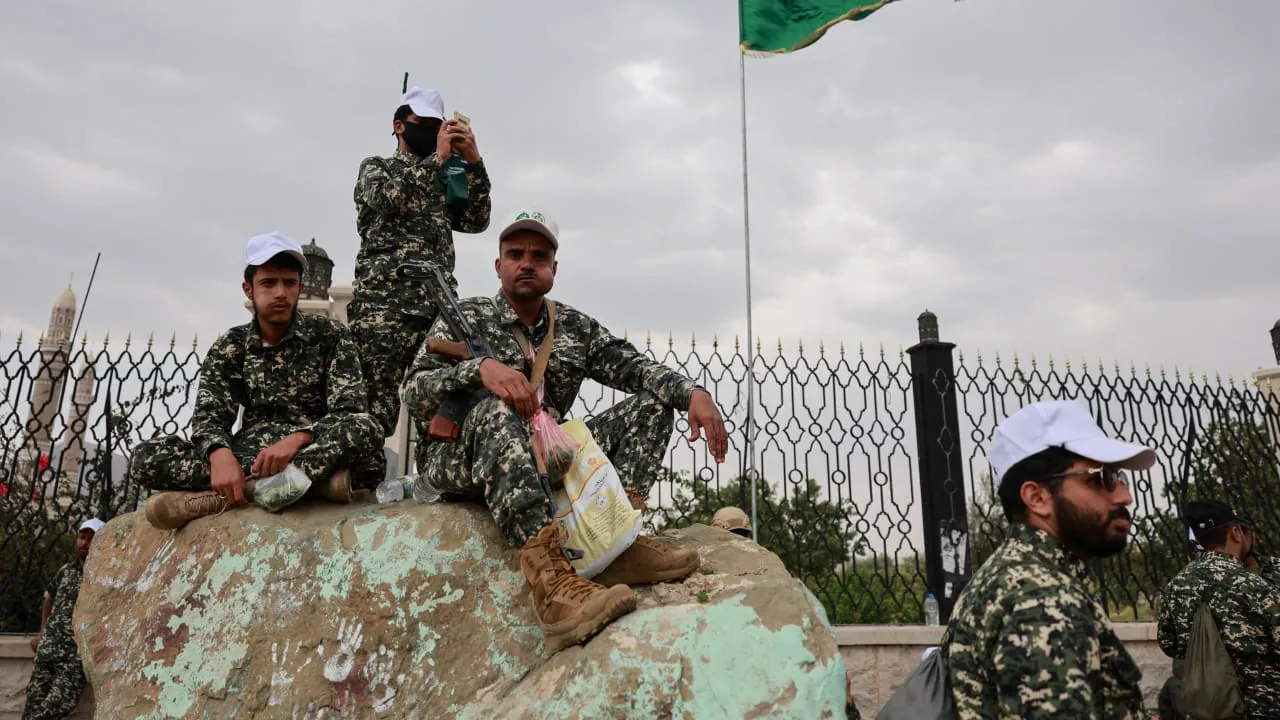 Reference image
Editorial responsibility
- No named human review is recorded for this page.
- Reports are grouped by semantic similarity and deterministic rules. Language models may assist titles, summaries, translation and cross-source analysis; the page reads the event directly, while its address stays stable when the title changes.
- Summary covers the current reports
Cross-source coverage
Common ground
- The Houthi coastal gains are a symptom of the Saudi-led coalition's failed strategy of bombing and blockading without building a political solution.
- Coastal tribes switched sides out of exhaustion and survival, not ideology, because the coalition treated them as disposable mercenaries.
- The Bab el-Mandeb strait won't be fully closed soon because the Houthis are strategic and know a military response would destroy their assets.
- The international community enabled this outcome through arms sales to Saudi Arabia and empty UN resolutions without enforcement.
- The Houthis are now the dominant force on the ground, and the only way forward is direct negotiation with them.
Points of contention
- Whether the Houthis are a legitimate popular resistance movement or an authoritarian militia that seized power by force.
- Whether the Houthis' threat to shipping is a strategic bargaining chip or a de facto stranglehold that's already disrupting global trade.
- Whether the moral hazard of rewarding Houthi violence is the key problem or just a symptom of Western hypocrisy.
- Whether the Houthis bear primary responsibility for humanitarian suffering or whether it's mainly caused by the Saudi-led coalition's blockade and bombing.
Blind spots
- The debate largely ignored the role of the Southern Transitional Council and other anti-Houthi Yemeni factions as legitimate political actors.
- There was little discussion of how the Houthis' internal governance—including repression, child conscription, and the Taiz blockade—affects civilian lives beyond the coastal front.
- The long-term economic and environmental impact of disrupted Red Sea shipping on global supply chains and regional food security was barely mentioned.
WorldAttention’s read
The Houthi seizure of Mokha and Perim Island is not a sudden military breakthrough but the predictable result of eight years of Saudi-led bombing and blockade that failed to build a political alternative. Coastal tribes switched sides out of exhaustion, not ideology, revealing the coalition's strategy of buying loyalty with cash instead of earning it through legitimacy. The Houthis are now the dominant force on the ground, and while they won't fully close the Bab el-Mandeb strait—because that would trigger a devastating military response—they will keep the threat alive to extract concessions in peace talks. The international community, through arms sales and toothless UN resolutions, enabled this outcome. The real question is whether Saudi Arabia and its allies can admit their strategy failed and negotiate directly with the Houthis as a political reality, rather than continuing a cycle of bombing that only strengthens the group's hand.
Reporting timeline
Houthi Advance to Bab al-Mandab Raises Questions on Return of Yemen War
The International Crisis Group reports that over the past week, Houthi forces have advanced down Yemen's western coast and reached the strategic Bab al-Mandab strait, breaking a defensive line that had held for years. The collapse exposed fragmentation among government-aligned forces, including the National Resistance, Giants Brigades, and other units with separate commands and backers, who lost key locations such as Khokha, Mokha, and roads linking Taiz, Hodeida, and the coast. The Houthi foothold near this critical shipping chokepoint provides them with new leverage over Saudi Arabia, whose containment strategy is under strain, and ties their campaign more closely to Iran's standoff with Washington. Disruption to shipping through Bab al-Mandab could compound effects of restrictions around the Strait of Hormuz, raising economic costs of a wider confrontation. Crisis Group is hosting an online event on 22 September 2026 with experts including April Longley Alley, Ahmed Nagi, and Peter Salisbury, moderated by Yasmine Farouk, to discuss the front's collapse, the new balance of power for Taiz and Marib, and whether Saudi Arabia, the Yemeni government, and neighbors can prevent a wider war.
Houthi Advance to Bab al-Mandab Raises Risk of Wider War in Yemen and Region
The International Crisis Group reports that over the past week, Houthi forces have swept down Yemen's western coast and reached the strategic Bab al-Mandab strait, breaking a defensive line that had held for years. The rapid advance exposed deep fragmentation among government-aligned forces, including the National Resistance, Giants Brigades, and other units with separate commands and backers, who lost key locations such as Khokha, Mokha, and roads linking Taiz, Hodeida, and the coast. The Houthi foothold near this critical shipping chokepoint provides them with fresh leverage over Saudi Arabia, whose containment strategy is under strain. The advance also ties the Houthi campaign more closely to Iran's standoff with Washington, as any disruption to shipping through Bab al-Mandab would compound effects of restrictions around the Strait of Hormuz. Crisis Group is hosting an online event with experts including April Longley Alley, Ahmed Nagi, and Peter Salisbury, moderated by Yasmine Farouk, to discuss how the front collapsed, the new balance of power for Taiz and Marib, and whether Saudi Arabia, the Yemeni government, and neighbors can prevent a wider war.
Read sourceHouthis seize Yemen's port of Mocha, gaining de facto control over Bab el-Mandeb Strait
According to a report from tradealpha, Yemen's key port of Mocha changed hands in a lightning strike within 48 hours, giving the Houthis de facto control over the Bab el-Mandeb Strait. The report states that with the Strait of Hormuz disrupted and Middle Eastern crude oil rerouted through the Red Sea, spillover effects from U.S.-Iran tensions have pushed the Red Sea to the center of the storm. The article implies that this development significantly impacts global oil shipping routes and regional security dynamics.
Read sourceShow 17 older updatesHide older updates
Houthi Rebels Capture Red Sea Islands, Intensify Fighting in Yemen, Threaten Shipping
Fighting between the Houthi rebels and Yemen's internationally recognized National Government continued over the weekend after the Iranian-backed group captured strategic points on the Red Sea. The Houthis seized the port city of Mocha, Yemen, and Perim Island late last week, establishing a new stronghold along the Red Sea, particularly near the Bab el-Mandeb strait, one of three critical Middle Eastern shipping chokepoints. According to Sal Mercogliano, a professor at Campbell University, although the Houthis have been able to target ships since 2023, when they launched a campaign against U.S.- and Israel-linked vessels in support of Palestine, these islands now provide them with enhanced visibility of maritime traffic. The development poses a significant challenge to Saudi Arabia's pipeline infrastructure and regional maritime security.
Read sourceHouthi advance in Yemen forces Gulf states into uncomfortable strategic choice
A Reuters article reports that the Houthi movement's military advance in Yemen is presenting Gulf states, particularly Saudi Arabia, with a difficult strategic dilemma. The Houthis have made territorial gains, including seizing areas near the Red Sea, which a former Pentagon official warns puts them in a US 'kill box.' The advance forces Gulf states to choose between escalating military involvement or accepting a strengthened Houthi position that threatens regional security and Red Sea shipping lanes. CNN notes Saudi Arabia has few options in its conflict with the Houthis, while The Atlantic argues the situation represents a strategic loss for the Trump administration. Al Jazeera reports that Yemen's army has struck Houthi vehicles in Dhubab and Mocha. The situation is complicated by the Houthis' ties to Iran, raising concerns about broader regional conflict.
Read sourceHouthi advance in Yemen puts U.S. in a new bind, with blame game and humanitarian crisis unfolding
A series of news reports indicate that Iran-backed Houthi forces have made significant advances in Yemen, including seizing the strategic Mayun Island and advancing down the Red Sea coast. This development has put the United States in a difficult position, according to Reuters. CNN reports a blame game has begun, with one source calling it 'a f***-up of epic proportions.' The New York Times describes Yemenis fleeing the new fighting, leaving with only the clothes they were wearing. The Atlantic frames the event as 'Trump Loses the Other Strait,' while Al Jazeera questions whether the Houthis can hold the captured Mayun Island. The situation represents a major shift in the Yemen conflict and poses new strategic challenges for U.S. interests in the region.
Read sourceYemen's Houthis capture a Red Sea island, threatening global shipping and regional stability
Yemen's Houthi forces have captured a Red Sea island, escalating threats to one of the world's most critical shipping lanes. The advance, described by CNN as a 'f***-up of epic proportions,' has triggered a blame game among regional actors. Multiple news outlets, including NPR, The New York Times, and The Atlantic, report that the Houthis' lightning advance down the Red Sea coast poses a significant danger to global maritime trade. Al Jazeera notes that fighting has re-erupted in Yemen, with civilians bearing the brunt of the renewed violence. The Atlantic frames the development as a strategic loss for the Trump administration, while the NYT analyzes how the Houthis' advances specifically threaten global shipping in the Red Sea. The capture of the island gives the Iran-backed group a strategic vantage point to disrupt shipping routes, potentially impacting global supply chains and energy markets.
Read sourceBlame game begins after Iran-backed Houthis' lightning advance down Red Sea coast
A series of news reports indicate that Iran-backed Houthi forces have made a rapid military advance along Yemen's Red Sea coast, capturing a key island and threatening a crucial oil shipping choke point. The advance has triggered a blame game among Yemeni factions, with one source quoted by CNN calling it 'a f***-up of epic proportions.' The New York Times reports that civilians are fleeing the new fighting, leaving with only the clothes they were wearing. AP News confirms the Houthis captured a Red Sea island, posing a threat to international shipping. CNBC highlights the threat to the Bab el-Mandeb strait, a vital oil transit route. Al Jazeera reports that fighting has re-erupted in Yemen and civilians are paying the price. The developments represent a significant escalation in the long-running Yemen conflict.
Houthi advance displaces 50,000 civilians, threatens Red Sea shipping and global oil route
Nearly 50,000 Yemeni civilians have fled their homes as Houthi forces advance along the Red Sea coast, according to The Guardian. The Houthis have reportedly seized a key island in the Red Sea, further threatening the Bab al-Mandeb Strait, a critical chokepoint for global oil shipments. Saudi Arabia has shut down a pipeline in response, and AP News frames the move as opening a new front in the Iran war. CNN reports that the Bab al-Mandeb Strait, a lifeline for the global economy, is in jeopardy. The Atlantic comments that this development represents a strategic loss for the Trump administration. CNBC notes that the Houthi advance to the key Red Sea island further threatens the crucial oil choke point. The situation involves a humanitarian crisis with mass displacement and a significant escalation in regional conflict with global economic implications.
Read sourceHouthis capture Red Sea island, threatening shipping; Saudi Arabia shuts pipeline
Yemen's Houthi rebels have captured a Red Sea island, posing a new threat to international shipping in the strategic Bab al-Mandeb Strait, according to multiple news reports. The AP News reports that the seizure opens a new front in the conflict with Iran. In response, Saudi Arabia has shut down a pipeline, as reported by AP News and Al Jazeera. CNN highlights that the Bab al-Mandeb Strait, a critical chokepoint for global trade and energy supplies, is now in jeopardy. The Atlantic commentary frames the development as a strategic loss for the Trump administration. The Houthi action escalates regional tensions and directly endangers a key maritime route for oil and commercial cargo.
Read sourceHouthis Seize Key Red Sea Island, Threatening Global Oil Route
Yemen's Houthi rebels have seized a strategically important island in the Red Sea, escalating threats to a key global oil shipping route. The seizure, reported by multiple news outlets including The New York Times, AP News, CNN, The Atlantic, and Reuters, has prompted Saudi Arabia to shut down a major pipeline as a precautionary measure. The Bab al-Mandeb Strait, a vital chokepoint for global oil and trade, is now considered in jeopardy. Analysts and reports suggest this action opens a new front in the regional conflict involving Iran, with potential consequences for global energy markets and maritime security. The Houthi move is seen as a significant escalation that could disrupt oil supplies from the Gulf region, threatening another critical artery for the world economy.
Read sourceYemen's Houthis seize strategic island at mouth of vital Bab al-Mandeb shipping lane
Yemen's Houthi forces have reached and seized a strategic island located at the entrance of the Bab al-Mandeb Strait, a vital global shipping lane. Multiple news outlets, including Reuters, AP News, and CNN, report that this development opens a new front in the conflict with Iran and raises significant concerns about a key maritime choke point for global trade. The AP News report also notes that Saudi Arabia has shut down a pipeline in response. The Atlantic frames the event as a strategic loss for the Trump administration, while CNN describes the Bab al-Mandeb Strait as a lifeline for the global economy that is now in jeopardy. The Houthi advance is attributed to the ongoing war in Yemen and is seen as a direct threat to one of the world's most important shipping routes, potentially impacting energy and cargo shipments.
Read sourceHouthi gains in Yemen threaten Red Sea chokepoint, potentially pushing gas prices higher
A series of news reports indicate that Iran-backed Houthi forces in Yemen have made significant military gains, including seizing an island in a key strait and taking effective control of a critical Red Sea chokepoint. These developments are reported to threaten global shipping routes and could push gas prices even higher, according to NPR. The AP News reports the seizure opens a new front in the conflict with Iran. The New York Times and The Atlantic analyze the threat to global shipping and strategic implications, while the Wall Street Journal confirms the Houthis' effective control of the key chokepoint. The reports attribute the potential for higher gas prices to the disruption of maritime traffic through this vital waterway.
Read sourceHouthis claim major advance in Yemen, seize strategic Perim Island on Red Sea shipping route
Yemen's Iran-backed Houthis have claimed a major advance on the western Red Sea coast, seizing Perim Island at the mouth of the Bab al-Mandab Strait, a source from Yemen's internationally-recognized government told the BBC. The capture follows the Houthis' takeover of the strategic port city of Mokha from Saudi-backed pro-government forces, with a Yemeni military official telling AFP the Houthis now control the entire coastline. The Houthis reiterated their threat to target Saudi vessels while claiming maritime navigation is safe for other companies. Saudi Crown Prince Mohammed bin Salman has personally pressed US President Donald Trump to take military action, but Trump has declined direct involvement, offering instead intelligence and targeting support, according to sources cited by CBS News. A senior Trump administration official told the BBC the US is in continuous dialogue with Saudi Arabia and Yemen's government regarding regional stability. The escalation has contributed to a surge in oil prices, and at least 46,000 people have been displaced in Yemen since fighting escalated, according to the International Organization for Migration.
Read sourceHouthi advance near Bab al-Mandab Strait threatens global trade and oil prices
Yemen's Iran-backed Houthi group has seized territory near the Bab al-Mandab Strait in the Red Sea, a critical trade gateway linking Asia and Europe. The Houthis have stated they pose no threat to international shipping but have reiterated their intention to target vessels from Saudi Arabia. Saudi Arabia has increasingly relied on the Red Sea for oil exports since the US and Israel's war effectively closed the Strait of Hormuz. The United Nations reports that at least 46,000 people have been displaced in Yemen since fighting escalated last week. BBC Verify's Thomas Copeland reports on how this advance could impact global trade and oil prices, given the strategic importance of the Bab al-Mandab Strait for oil shipments and container traffic.
Read sourceHouthis control key Red Sea shipping route after coastal gains in Yemen
Multiple news outlets report that Houthi forces in Yemen have made significant advances along the Red Sea coast, gaining control of a key shipping route and threatening a crucial oil choke point. According to Al Jazeera, the Houthis now control a key shipping route after territorial gains. CNBC reports that the Houthis have advanced to a key Red Sea island, further threatening the Bab el-Mandeb strait, a vital passage for global oil shipments. AP News notes that the Houthi advance raises concerns about this key shipping choke point. Fox News, citing sources, reports that Iran pushed the Houthis to capture Yemeni Red Sea ports and to attack Saudi Arabia. The Atlantic frames this as a strategic loss for the Trump administration, titled 'Trump Loses the Other Strait.' The developments represent a significant escalation in the conflict, with potential implications for global maritime trade and regional security.
Read sourceAnalysts warn Houthis may close Bab al-Mandeb after seizing Yemen's Red Sea coast
Analysts have warned that the Houthi movement may be able to effectively close the Bab al-Mandeb shipping route after seizing Yemen's entire Red Sea coastline. The warning, reported by Polymarket, highlights a significant escalation in the conflict's impact on global maritime trade. Bab al-Mandeb is a strategic chokepoint connecting the Red Sea to the Gulf of Aden, through which a substantial portion of global oil and container traffic passes. The Houthis' control of the coastline gives them the ability to threaten or disrupt shipping lanes, potentially leading to increased shipping costs, delays, and rerouting around the Cape of Good Hope. The analysts' assessment is based on the group's recent territorial gains and their demonstrated capability to target vessels. The situation remains fluid, with implications for regional security and global supply chains.
Read sourceIran-backed Houthis reportedly seize strategic island in key global shipping route
Multiple news outlets report that Iran-backed Houthi forces in Yemen have seized a strategic island in a key global shipping route, the Bab el-Mandeb strait. The Wall Street Journal states the Houthis have taken effective control of this key Red Sea chokepoint. The Associated Press reports the seizure opens a new front in the conflict with Iran. CNBC adds that the Houthis have also seized a key port and are advancing on another vital oil choke point. Radio Free Europe/Radio Liberty analyzes what these Houthi gains mean for the broader conflict with Iran. The BBC reports the Houthis have reached the strategic island. The reports collectively indicate a significant escalation in the Houthi threat to international maritime trade and regional security, with implications for the Iran conflict.
Read sourceHouthis Reach Dhubab, a Port City on Yemen's Bab el-Mandeb Coast, Sources Say
According to two Yemeni government sources, Houthi forces have reached the port city of Dhubab, located on the coast of the strategic Bab el-Mandeb Strait in Yemen. This development marks a significant advance for the Houthi group in a key maritime chokepoint, potentially threatening shipping lanes and regional security. The report, sourced from tradealpha, indicates that the Houthis have expanded their territorial control to this critical coastal area. The Bab el-Mandeb Strait is a vital waterway for global oil and cargo shipments, connecting the Red Sea to the Gulf of Aden. The arrival of Houthi forces in Dhubab could escalate the ongoing conflict in Yemen and have broader implications for international trade and naval operations in the region. The claim is attributed to unnamed government sources, and no further details or independent verification have been provided at this time.
Read sourceIran-Backed Houthi Rebels Seize Strategic Red Sea Port in Yemen, Reports Say
Multiple news outlets report that Iran-backed Houthi rebels have seized a strategic port on Yemen's Red Sea coast, marking a significant military gain. According to Al Jazeera, the Houthis have taken control of Yemen's entire Red Sea coastline. CNBC adds that the rebels are advancing on another vital oil choke point. The New York Times describes the port seizure as a major victory for the Iranian ally. NPR reports that the Houthi gains could push gas prices even higher, highlighting potential economic consequences. The coordinated coverage from NPR, Al Jazeera, CNBC, and The New York Times underscores the event's geopolitical and economic significance, linking the Houthi offensive to broader regional tensions involving Iran and potential disruptions to global energy markets.
Read source