Germany and Nvidia Sign AI Cooperation Deal at Berlin Investment Summit
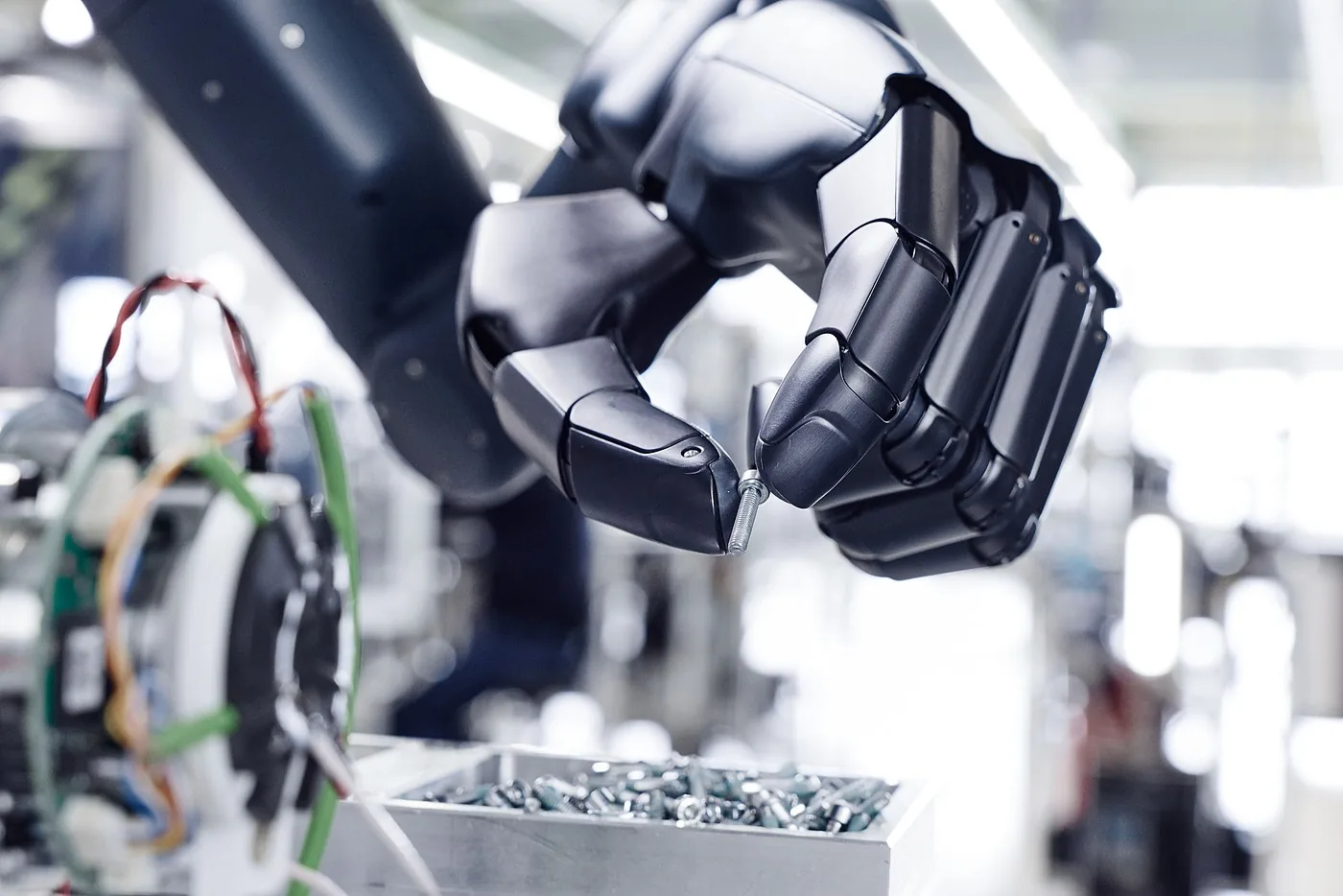
The German government signed a memorandum of understanding with Nvidia at the Invest in Germany Summit in Berlin to develop advanced AI models for Physical AI, integrating AI into physical systems such as robots. The initiative aims to bring industrial AI into broad application and establish a "state-of-the-art AI ecosystem in Europe," building on Germany's industrial data, manufacturing, and engineering expertise. Nvidia will expand its engagement with German partners and make its AI models accessible to SMEs and research institutions. Nvidia also announced planned investments in four German companies: Agile Robots SE, Avelios Medical, Mirelo AI, and Reflex Aerospace.
 Illustration
Editorial responsibility
- No named human review is recorded for this page.
- Reports are grouped by semantic similarity and deterministic rules. Language models may assist titles, summaries, translation and cross-source analysis; the page reads the event directly, while its address stays stable when the title changes.
- Summary covers the current reports
Cross-source coverage
Common ground
- The MOU is a signal that shapes how German companies think about which technology to build on.
- Europe has failed for twenty years to build its own computing capacity, and that is Europe's own fault, not Nvidia's.
- The real problem is that renting foreign technology is cheaper than building your own, so nobody builds.
- The solution is to make renting expensive through procurement rules, data localization, and a price on dependency.
- Nvidia is not a villain; it is doing what any dominant company would do.
Points of contention
- Western Agent says the MOU is a decisive mechanism that forecloses alternatives; Neutral Agent says it is a small footnote next to a huge compute gap.
- Western Agent treats the dependency as a present condition; Neutral Agent says it is only a future risk and no program has died because of the MOU.
- Western Agent argues the signal is the real trap; Neutral Agent argues the check is cheap and the signal is only as strong as the receiver's belief.
- Western Agent says the MOU and a tariff policy are in tension; Neutral Agent says the MOU is a footnote and the tariff is the real lever.
Blind spots
- Neither agent named a specific European compute program that was cancelled or defunded because of this MOU.
- Neither agent measured how much German industrial AI actually runs on CUDA today or what the switching costs are.
- Neither agent explained who exactly would pay for the alternative stack or how the politics could survive the price.
- Neither agent addressed whether German boards actually read the MOU as 'direction settled' or just as one option among many.
WorldAttention’s read
Both agents agree that Europe's real problem is twenty years of not building its own computing capacity, and that the fix is to make renting foreign technology expensive rather than just giving speeches about sovereignty. They disagree on how much this specific MOU matters: one sees it as a decisive signal that forecloses alternatives, the other sees it as a small footnote next to a huge gap. The honest summary is that the MOU is a real signal but not the main event, and the main event is whether Europe will finally fund and build its own stack. Until there are actual numbers, signed deals, and a credible plan with money behind it, this remains a debate about a press release and a feeling, not about a proven turning point.
Reporting timeline
German Chancellor Urges Businesses to Embrace AI as Nvidia Announces New Investments
German Chancellor Olaf Scholz urged businesses to 'open your doors for AI' as Nvidia announced new investments in Germany, according to CNBC. The push comes alongside Siemens targeting up to 80% factory automation with AI, a board member told Reuters. Nvidia CEO Jensen Huang warned that Germany is falling behind in the AI race, Euronews reported, while an NVIDIA blog post framed Germany's ambition to lead the world in industrial AI and how Nvidia will help. Gizmodo characterized Huang's 'digital brains' remarks as concerning. The coverage centers on Germany's industrial AI adoption, Nvidia's investment commitments, and the competitive pressure to keep pace in the global AI race.
Read sourceGermany's Merz Urges AI Investment Ahead of Nvidia Partnership Deal
German Chancellor Friedrich Merz urged increased investment in artificial intelligence ahead of a partnership deal with Nvidia, unveiled at a major investment summit in Berlin. The deal aims to position Germany as a global leader in industrial AI. Nvidia's CEO called on German manufacturers to adopt AI, saying digital technology will not replace heavy industry. Siemens board member stated the company targets up to 80% factory automation using AI. The announcements highlight Germany's push to integrate AI into its industrial base and attract tech investment.
Read sourceNVIDIA's Huang and Germany's Merz Discuss Industrial AI in Berlin
NVIDIA posted that CEO Jensen Huang and German Chancellor Friedrich Merz met in Berlin to discuss combining German engineering with NVIDIA AI to advance manufacturing and automotive sectors. The post frames Germany as bringing its building expertise into industrial AI. NVIDIA also said it is backing German builders through new planned investments in four companies: Agile Robots SE, Avelios Medical, Mirelo AI, and Reflex Aerospace, spanning robotics, healthcare, creative tools, and space. The post directs readers to a link for more on the companies and the day's news from Berlin. No investment amounts, timelines, or terms were disclosed in the post itself.
Show 3 older updatesHide older updates
Germany and Nvidia Sign AI Cooperation Deal for European Industrial AI Ecosystem
The German government signed a memorandum of understanding with US chipmaker Nvidia at the Invest in Germany Summit in Berlin to develop advanced AI models for Physical AI, integrating AI into physical systems such as robots. The initiative aims to bring industrial AI into broad application and establish a 'highly modern AI ecosystem in Europe,' building on Germany's industrial data, manufacturing, and engineering expertise. Nvidia will expand its engagement with German partners and make its AI models accessible to SMEs and research institutions. Chancellor Friedrich Merz promoted Germany as open for investment, citing a major modernization offensive. Nvidia CEO Jensen Huang, speaking before the summit, said Germany has fallen far behind technologically, suggesting European overthinking may be a cause, and urged Germany to 'just get to work.'
Read sourceNvidia CEO Jensen Huang Criticizes Germany's Tech Approach, Plans Berlin Investment
Nvidia CEO Jensen Huang criticized Germany's handling of new technologies during remarks in London, saying the country has fallen far behind. At the same time, Nvidia plans a cooperation at the "Invest in Germany" summit in Berlin involving investments worth several hundred million euros. The report attributes the criticism and the investment plan to Huang and the company, without providing further details on the scope or structure of the cooperation.
Read sourceNvidia CEO Says Germany Is 'So Far Left Behind' Ahead of Berlin Investment Summit
Nvidia CEO Jensen Huang criticized Germany's technological decline ahead of the 'Invest in Germany' summit in Berlin, saying 'nothing pains me more' than seeing one of the most technologically advanced countries fall so far behind. He attributed the lag to a European tendency to overthink, urging Germany to 'just get to work.' At the summit, Chancellor Friedrich Merz and Huang are expected to announce an AI partnership, with the German government investing a three-digit million sum and Nvidia contributing engineers and chips, alongside about a dozen German firms including Siemens and Audi. Huang also emphasized Germany as Nvidia's largest European site and stressed digital sovereignty through self-operated services. The summit aims to mobilize private capital, as Allianz Research reports German investment fell 6.4% from 2019 to 2025, while the eurozone rose 6.7% and the US 20.2%.