GAC-Huawei JV Qijing launches GX7 SUV with L3-ready architecture, starting at 229,900 yuan
On September 23, GAC Group and Huawei Qiankun launched the Qijing GX7, a large five-seat extended-range electric SUV. Priced from 229,900 to 291,900 yuan, it features an L3-level autonomous driving architecture with four LiDAR sensors and Huawei Qiankun ADS 5. The vehicle uses CATL batteries, offers a combined range over 1,500 km, and supports 5C fast charging. Qijing reported over 20,000 refundable pre-orders in 18 hours.
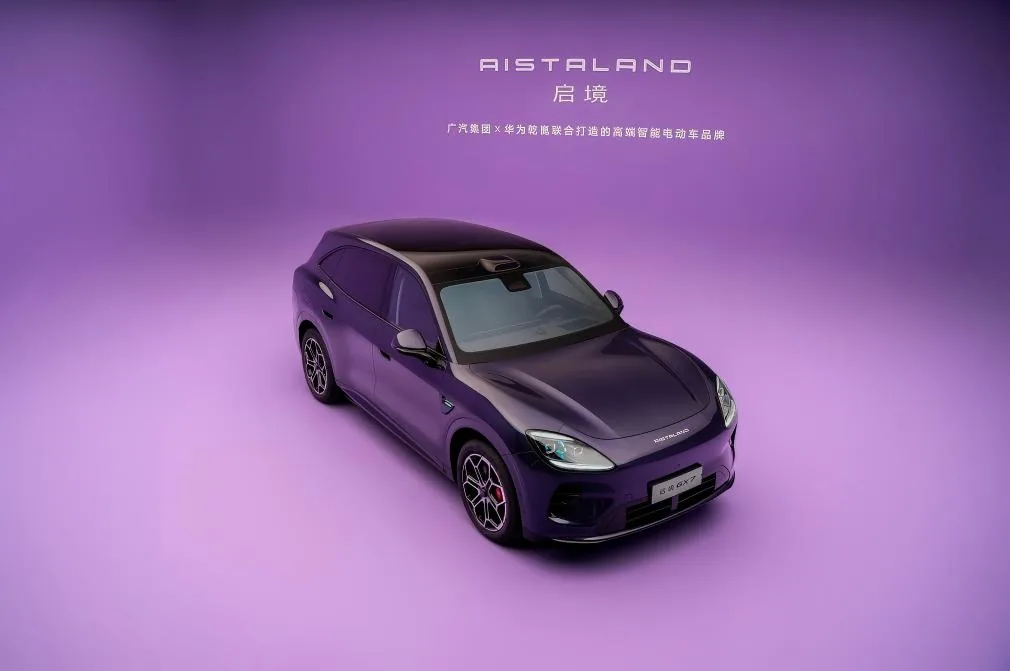 Reference image
Editorial responsibility
- No named human review is recorded for this page.
- Reports are grouped by semantic similarity and deterministic rules. Language models may assist titles, summaries, translation and cross-source analysis; the page reads the event directly, while its address stays stable when the title changes.
- Summary covers the current reports
Cross-source coverage
Common ground
- Both sides agree that the Huawei distribution channel and ecosystem integration are innovative and create a different kind of customer relationship.
- Both acknowledge that China's industrial coordination and supply chain integration are real and impressive.
- Both agree that the 20,000 pre-orders show early adopter enthusiasm, though not necessarily mainstream dominance.
- Both recognize that residual value and depreciation are significant concerns in China's EV market.
Points of contention
- Eastern Agent sees the GX7 as a revolution demonstrating China's industrial ecosystem and long-term strategy, while Neutral Agent views it as a stopgap PHEV from an automaker with an uncompetitive BEV platform.
- Eastern Agent argues CATL gives GAC priority through strategic partnerships and R&D integration, while Neutral Agent insists CATL is a commodity supplier that allocates based on price, not patriotism.
- Eastern Agent claims the 1,500 km combined range is a practical necessity for China's uneven geography, while Neutral Agent calls it marketing fluff that doesn't reflect real-world driving.
- Eastern Agent believes software updates preserve residual value, while Neutral Agent argues battery health and brand reputation matter far more than OTA updates.
Blind spots
- Neither side fully addresses how the rapid expansion of China's charging infrastructure by 2026 could make PHEVs obsolete for most urban drivers.
- Both overlook the question of whether GAC can actually service these cars in third-tier cities, which is critical for long-term success.
- The debate ignores the competitive threat from upcoming sub-200,000 RMB BEVs with 600+ km range and ultra-fast charging, which could undercut the GX7's value proposition.
WorldAttention’s read
The Qijing GX7 launch is a significant event, but it's not the revolution Eastern Agent claims. It's a competent PHEV at a competitive price, leveraging China's strong supply chain and Huawei's ecosystem. However, it's also a stopgap for GAC's slow BEV development, entering a segment dominated by BYD. The real test will be whether GAC can deliver a competitive BEV by 2026, as the charging infrastructure gap closes and cheaper, longer-range EVs hit the market. The West shouldn't panic over this launch, but they should watch how China's integrated industrial ecosystem evolves—especially in autonomous driving and software-defined vehicles.
Reporting timeline
GAC and Huawei Deeply Collaborate to Launch Qijing GX7 SUV with L3-Level Architecture
On September 23, GAC Group and Huawei Qiankun jointly launched the Qijing GX7, an SUV marketed as the industry's first 'wide five-seat intelligent versatile SUV.' The vehicle is available in three versions: Ultra, Ultra dual-motor AWD, and Ultra tri-motor AWD, with limited-time prices of 229,900, 249,900, and 291,900 RMB respectively. It features a CLTC pure electric range of 385 km, a combined range of over 1,500 km, and a CLTC fuel consumption of 4.85 L/100 km. The GX7 is the only vehicle in its class equipped with seven major Huawei automotive intelligent solutions, covering intelligent driving, cockpit, chassis, and charging. Huawei Senior Vice President and Yinwang CEO Jin Yuzhi stated at the launch that the GX7 represents the highest level of 'Huawei content' and is a benchmark for intelligent vehicles. The SUV focuses on family use, offering a spacious interior with a 3,070 mm wheelbase and a 20-second one-button flat bed function. It is the first in its class to feature an L3-level autonomous driving architecture, equipped with four LiDAR sensors and 38 high-performance sensors, powered by Huawei Qiankun ADS 5. Safety features include a 'Xuandun' cage body with 90.3% high-strength steel and aluminum alloy, which withstood an 11-megajoule impact from a falling billboard in a test. The battery, co-developed with CATL and Huawei, supports 5C ultra-fast charging, achieving 30-80% charge in 10 minutes. The tri-motor version produces 550 kW and accelerates from 0-100 km/h in 3.9 seconds.
Read sourceQijing GX7 SUV Launches with L3 Architecture, CATL Batteries, Targeting Family Market
On September 23, Qijing Automotive launched its first SUV, the GX7, a large five-seat extended-range electric vehicle co-developed by GAC Group and Huawei Qiankun. The GX7 is equipped with CATL batteries as standard and features an L3-level autonomous driving architecture with Huawei Qiankun ADS 5, four lidar sensors, and 38 perception sensors. CEO Liu Jiaming stated the architecture is designed to remain relevant for five years. The SUV offers 12 spatial configurations, with seats that can adjust in 20 seconds to create a flat space over 1.8 meters long. Priced between 229,900 and 291,900 yuan (limited-time), the GX7 targets the fast-growing mid-to-large SUV segment, which saw 56.6% year-on-year sales growth from January to August 2026. However, competition is intense, with top sellers including Fangchengbao Titan 7, Li Auto i6, and Xiaomi YU7. Qijing reported over 20,000 pre-orders within 18 hours, though these are refundable. Analysts at Dongfang Securities and Dongwu Securities view the GX7 as a key growth driver for Qijing and GAC Group, though Chief Product Officer Luo Jianhua described it as a 'slow-burn product' that will take time to gain market recognition.
Read sourceQijing GX7 SUV Launches with L3 Architecture, CATL Battery, Targeting Family Market
On September 23, Qijing Automotive launched its first SUV, the GX7, which is equipped with CATL batteries as standard and offers only an extended-range electric powertrain. The vehicle is priced at a limited-time range of 229,900 to 291,900 yuan. As the second model from the Qijing brand, a joint venture between GAC Group and Huawei Qiankun, the GX7 is a large five-seat SUV aimed at the mainstream family market, a larger segment than the niche GT7 hatchback. Key features include an L3-level autonomous driving architecture with Huawei Qiankun ADS 5, four lidar sensors, and 38 perception sensors. Qijing CEO Liu Jiaming stated the architecture is future-proof for five years. The vehicle offers flexible seating that can create a flat space over 1.8 meters long. The GX7 enters a rapidly growing but competitive mid-to-large SUV segment, where it will face established models like the Fangchengbao Titan 7, Li Auto i6, and Xiaomi YU7. Pre-orders exceeded 20,000 units in 18 hours, though these are refundable deposits. Analysts from Dongfang Securities and Dongwu Securities view the GX7 as a key growth driver for Qijing and GAC Group, though Qijing's Chief Product Officer Luo Jianhua described it as a 'slow-burn product' that will take time to gain market recognition.
Read sourceShow 6 older updatesHide older updates
GAC and Huawei Launch Qijing GX7 SUV with Autonomous Driving and 5C Fast Charging
On September 23, GAC Group and Huawei Qiankun jointly launched the Qijing GX7, a large five-seat extended-range electric SUV. The vehicle is offered in three versions: Ultra, Ultra dual-motor all-wheel drive, and Ultra three-motor all-wheel drive, with limited-time prices of 229,900 yuan, 249,900 yuan, and 291,900 yuan respectively. The GX7 is equipped with four LiDAR sensors, Huawei's Qiankun ADS 5 autonomous driving system, and HarmonyOS Cockpit 6. It features redundant design in eight major systems including power supply, steering, and braking. The vehicle uses an 800V high-voltage platform and CATL's Xiaoyao battery, supporting 5C fast charging. According to official disclosures, the CLTC pure electric range is 385 kilometers, and charging from 30% to 80% takes 10 minutes. The GX7 has a wheelbase of 3,070 millimeters and supports a one-button expansion into a flat bed in 20 seconds. Qijing has over 300 stores in more than 90 cities across China, with stores gradually opening for test drives.
Read sourceQijing GX7 Launches in China, Standard with CATL Battery, Starting at $31,600
On September 23, Chinese automaker Qijing officially launched the GX7 model. The vehicle is priced with a limited-time starting price of 229,900 yuan (approximately $31,600). According to the announcement, the GX7 offers a CLTC-rated pure electric range of 385 kilometers and a combined total range of over 1,500 kilometers. The company stated that the Qijing GX7 is equipped with batteries from CATL (Contemporary Amperex Technology Co. Limited) as standard across all trims. The report from Jin10 Data provides these specifications and pricing details as released by the manufacturer during the launch event.
Read sourceGAC-Huawei Qijing GX7 Launches with CATL Batteries, Starting at $31,700
On September 23, the Qijing GX7, a spacious five-seat smart SUV jointly developed by GAC and Huawei, officially launched in China. It is available in three versions: Ultra, Ultra dual-motor all-wheel drive, and Ultra triple-motor all-wheel drive, with limited-time promotional prices ranging from 229,900 to 291,900 yuan (approximately $31,700 to $40,300). The vehicle integrates seven Huawei automotive intelligent solutions, including Huawei Qiankun smart driving, HarmonyOS cockpit, Qiankun Chitu platform, Zhiqing electric drive, Qiankun vehicle cloud, Jingqi communication, and Qiankun in-vehicle lighting. The GX7 is equipped exclusively with CATL large-capacity batteries and features a 1.5-liter turbocharged range-extender powertrain, offering a total range of 1,500 kilometers. The article is sourced from Times Weekly and republished on NetEase Finance.
Read sourceGAC and Huawei Launch Qijing GX7 SUV with L3 Autonomy, Priced from 22.99 to 29.19万元
On September 23, GAC Group and Huawei Qiankun jointly launched the Qijing GX7, an SUV priced at a limited-time权益价 (rights price) of 22.99-29.19万元 (approximately $31,500-$40,000). The vehicle features a 20-second一键纯平大床 (one-button flat bed) and supports over 12 scene modes. It is the first domestic brand to equip all its models with an L3 autonomous driving architecture as standard, including 4 lidar sensors and 38 high-performance sensors. The Qijing GX7 is powered by CATL batteries, offering a combined range of over 1,500 km and a 30%-80% fast charge in just 10 minutes. The launch positions the vehicle as a new value benchmark in the 300,000-yuan intelligent SUV market.
Qijing GX7 Launches in China, Standard with CATL Battery, Starting at $31,600
On September 23, the Qijing GX7 was officially launched in China, with a limited-time starting price of 229,900 yuan (approximately $31,600). The vehicle offers a CLTC-rated pure electric range of 385 kilometers and a combined range of over 1,500 kilometers. The Qijing GX7 is equipped standard with a battery from CATL (Contemporary Amperex Technology Co. Ltd.), a major Chinese battery manufacturer. The announcement was made via a press release from People's Financial Information on the evening of September 23.
Read sourceGAC-Huawei JV Qijing Launches GX7 SUV with L3 Architecture, Targets Family Market
Qijing, the joint venture between GAC Group and Huawei Qiankun, has launched its second model, the GX7, a five-seat extended-range electric SUV. Positioned for the mainstream family market, the GX7 is built on an architecture designed for L3-level autonomous driving and features Huawei's ADS 5 system with four lidar sensors. The vehicle offers flexible seating that can create a flat space over 1.8 meters long. The launch comes as the mid-to-large SUV segment in China is the fastest-growing market, with sales up 56.6% year-on-year in the first eight months of 2026. However, competition is intense, with models like the Fangchengbao Titan 7, Li Auto i6, and Xiaomi YU7 leading sales. Qijing's first model, the GT7 hatchback, has seen modest sales, declining to 1,100 units in August. The GX7 received over 20,000 pre-orders in 18 hours, though these are refundable. Analysts at Dongfang Securities and Dongwu Securities view the GX7 as a key growth driver for Qijing and GAC Group. Qijing's Chief Product Officer Luo Jianhua described the GX7 as a 'slow-burn product,' acknowledging that gaining market recognition will take time.
Read source