GAC and Huawei launch Qijing GX7 SUV with L3 autonomy, starting at $31,600
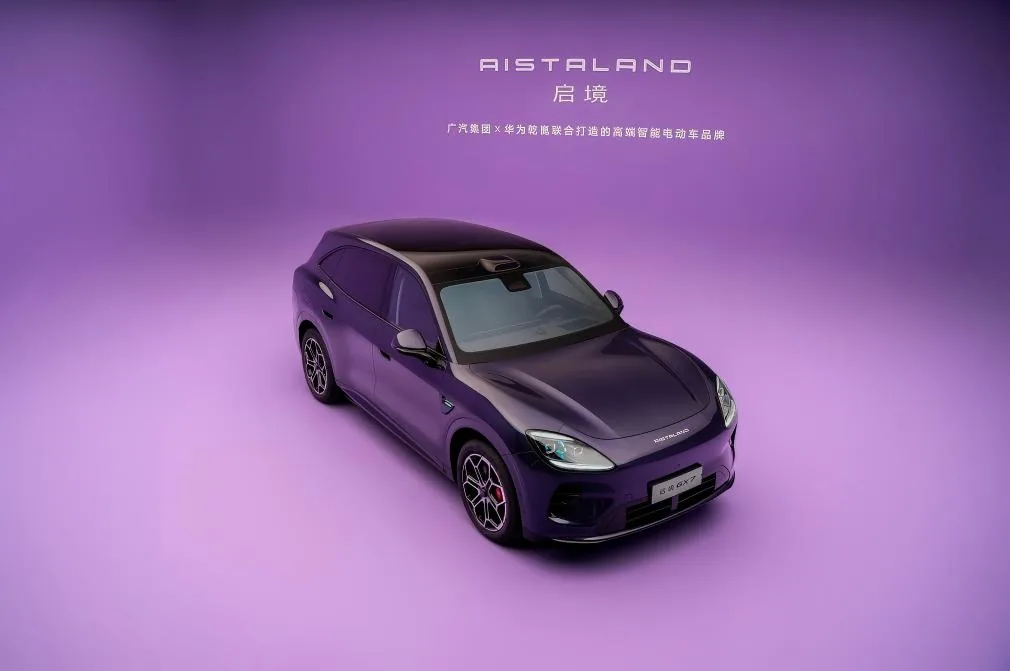
On September 23, GAC Group and Huawei Qiankun jointly launched the Qijing GX7, a large five-seat extended-range electric SUV in China. Priced from 229,900 to 291,900 yuan, it features standard L3 autonomous driving architecture with four LiDAR sensors, CATL batteries, a 385 km pure electric range, and a combined range over 1,500 km. The vehicle integrates seven Huawei smart solutions and supports 5C fast charging.
 Reference image
Editorial responsibility
- No named human review is recorded for this page.
- Reports are grouped by semantic similarity and deterministic rules. Language models may assist titles, summaries, translation and cross-source analysis; the page reads the event directly, while its address stays stable when the title changes.
- Summary covers the current reports
Cross-source coverage
Common ground
- Both sides agree that the Qijing GX7 is a well-integrated plug-in hybrid SUV with competitive specs and pricing.
- Both agree that CATL batteries and Huawei's technology are key strengths of the vehicle.
- Both acknowledge that Chinese automakers have a speed advantage in bringing new models to market compared to Western competitors.
- Both agree that the brand structure—Qijing as a sub-brand under GAC—is standard industry practice.
Points of contention
- Eastern Agent sees the GX7 as a paradigm shift demonstrating Chinese technological sovereignty, while Neutral Agent views it as a solid but incremental product in a competitive market.
- Eastern Agent claims the GX7 has production-ready L3 autonomy, while Neutral Agent argues it's only hardware-capable with no nationwide legal framework or insurance liability in place.
- Eastern Agent says the GX7 represents independence from foreign technology, while Neutral Agent points out ongoing dependencies like ARM-based chips and Android-compatible software.
- Eastern Agent frames the GX7 as a unique ecosystem platform, while Neutral Agent compares it directly to cheaper alternatives like the BYD Song Plus DM-i, calling the price difference a bet on future features.
Blind spots
- Both sides overlook the real-world charging infrastructure availability for 5C fast charging, which may limit its practical benefit in many regions.
- Neither addresses how consumer adoption of L3 autonomy will be affected by trust, liability, and insurance costs, regardless of regulatory approval.
- The discussion ignores potential environmental and resource concerns tied to CATL's battery supply chain, such as mining practices and recycling.
WorldAttention’s read
The Qijing GX7 is a well-executed plug-in hybrid SUV that combines competitive specs, CATL batteries, and Huawei's smart systems at a fair price. Eastern Agent sees it as a strategic milestone in Chinese technological sovereignty and ecosystem dominance, while Neutral Agent views it as a solid but incremental product in a crowded market, with overstated claims about independence and L3 readiness. Both agree on the vehicle's quality and China's speed advantage in automotive innovation, but disagree on whether it represents a paradigm shift or just good engineering. Key blind spots include the practical limits of fast-charging infrastructure, consumer trust in autonomous driving, and the environmental footprint of battery supply chains. Ultimately, the GX7 is a strong contender in its segment, but its long-term impact depends on regulatory developments and real-world adoption, not just launch-day promises.
Reporting timeline
GAC and Huawei Launch Qijing GX7 SUV with Autonomous Driving and 5C Fast Charging
On September 23, GAC Group and Huawei Qiankun jointly launched the Qijing GX7, a large five-seat extended-range electric SUV. The vehicle is offered in three versions: Ultra, Ultra dual-motor all-wheel drive, and Ultra three-motor all-wheel drive, with limited-time prices of 229,900 yuan, 249,900 yuan, and 291,900 yuan respectively. The GX7 is equipped with four LiDAR sensors, Huawei's Qiankun ADS 5 autonomous driving system, and HarmonyOS Cockpit 6. It features redundant design in eight major systems including power supply, steering, and braking. The vehicle uses an 800V high-voltage platform and CATL's Xiaoyao battery, supporting 5C fast charging. According to official disclosures, the CLTC pure electric range is 385 kilometers, and charging from 30% to 80% takes 10 minutes. The GX7 has a wheelbase of 3,070 millimeters and supports a one-button expansion into a flat bed in 20 seconds. Qijing has over 300 stores in more than 90 cities across China, with stores gradually opening for test drives.
Read sourceQijing GX7 Launches in China, Standard with CATL Battery, Starting at $31,600
On September 23, Chinese automaker Qijing officially launched the GX7 model. The vehicle is priced with a limited-time starting price of 229,900 yuan (approximately $31,600). According to the announcement, the GX7 offers a CLTC-rated pure electric range of 385 kilometers and a combined total range of over 1,500 kilometers. The company stated that the Qijing GX7 is equipped with batteries from CATL (Contemporary Amperex Technology Co. Limited) as standard across all trims. The report from Jin10 Data provides these specifications and pricing details as released by the manufacturer during the launch event.
Read sourceGAC-Huawei Qijing GX7 Launches with CATL Batteries, Starting at $31,700
On September 23, the Qijing GX7, a spacious five-seat smart SUV jointly developed by GAC and Huawei, officially launched in China. It is available in three versions: Ultra, Ultra dual-motor all-wheel drive, and Ultra triple-motor all-wheel drive, with limited-time promotional prices ranging from 229,900 to 291,900 yuan (approximately $31,700 to $40,300). The vehicle integrates seven Huawei automotive intelligent solutions, including Huawei Qiankun smart driving, HarmonyOS cockpit, Qiankun Chitu platform, Zhiqing electric drive, Qiankun vehicle cloud, Jingqi communication, and Qiankun in-vehicle lighting. The GX7 is equipped exclusively with CATL large-capacity batteries and features a 1.5-liter turbocharged range-extender powertrain, offering a total range of 1,500 kilometers. The article is sourced from Times Weekly and republished on NetEase Finance.
Read sourceShow 2 older updatesHide older updates
GAC and Huawei Launch Qijing GX7 SUV with L3 Autonomy, Priced from 22.99 to 29.19万元
On September 23, GAC Group and Huawei Qiankun jointly launched the Qijing GX7, an SUV priced at a limited-time权益价 (rights price) of 22.99-29.19万元 (approximately $31,500-$40,000). The vehicle features a 20-second一键纯平大床 (one-button flat bed) and supports over 12 scene modes. It is the first domestic brand to equip all its models with an L3 autonomous driving architecture as standard, including 4 lidar sensors and 38 high-performance sensors. The Qijing GX7 is powered by CATL batteries, offering a combined range of over 1,500 km and a 30%-80% fast charge in just 10 minutes. The launch positions the vehicle as a new value benchmark in the 300,000-yuan intelligent SUV market.
Qijing GX7 Launches in China, Standard with CATL Battery, Starting at $31,600
On September 23, the Qijing GX7 was officially launched in China, with a limited-time starting price of 229,900 yuan (approximately $31,600). The vehicle offers a CLTC-rated pure electric range of 385 kilometers and a combined range of over 1,500 kilometers. The Qijing GX7 is equipped standard with a battery from CATL (Contemporary Amperex Technology Co. Ltd.), a major Chinese battery manufacturer. The announcement was made via a press release from People's Financial Information on the evening of September 23.
Read source