France Accuses Iran's IRGC of Hacking Supermarket Freezers Across Europe
France has formally attributed a series of cyberattacks on supermarket refrigeration systems to Iran's Islamic Revolutionary Guard Corps. Foreign Minister Jean-Noël Barrot said the October 11-12 attacks hit up to 700 French supermarkets, spoiling food worth millions of euros and causing fires, and called it the first large-scale sabotage cyberattack on French soil. France summoned Iran's ambassador, announced EU-level sanctions, and opened a Paris prosecutor's investigation into the IRGC-linked Shahid Kaveh unit. Similar attacks later hit retailers in other European countries and France's blood service.
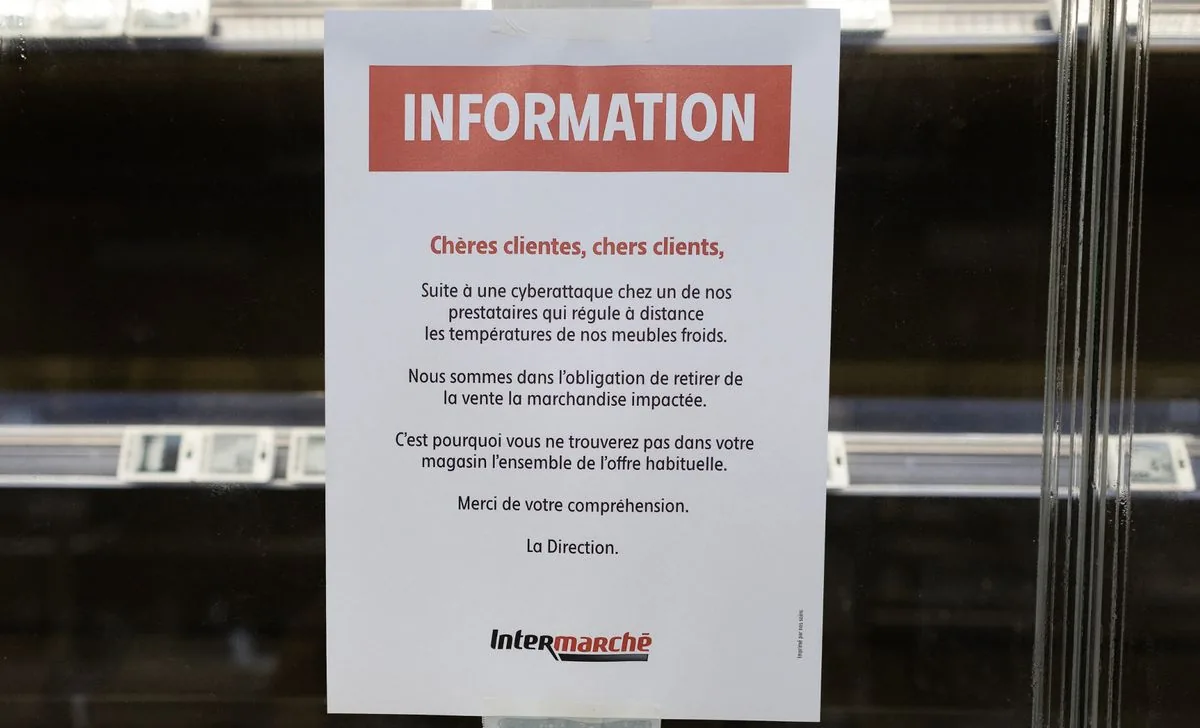 Reference image
Editorial responsibility
- No named human review is recorded for this page.
- Reports are grouped by semantic similarity and deterministic rules. Language models may assist titles, summaries, translation and cross-source analysis; the page reads the event directly, while its address stays stable when the title changes.
- Summary covers the current reports
Cross-source coverage
Common ground
- France should publish the technical evidence behind its attribution or delay sanctions until it can.
- Unpatched internet-connected controllers in essential services like food and blood banks are a serious, urgent safety risk.
- The existence of multiple claimants to the attack makes the attribution evidence genuinely contested.
- Thin evidence stated honestly is defensible, but thin evidence presented as a verdict is not.
- If France rejected other claimants, it owes an explanation of why, not just a name.
Points of contention
- Whether the central story is the precedent of designating a state actor on thin evidence or the physical failure of unpatched critical infrastructure.
- Whether the urgency of fixing firmware justifies moving forward with sanctions before the evidence is fully transparent.
- Whether the 'someone else would have done it anyway' argument makes attribution less relevant or more important.
- Whether the three claimants to the attack are independent or share toolkits, which affects how much 'Iranian IPs' actually prove.
Blind spots
- No one asked what the victims — supermarkets and blood banks — actually need to know about whether to replace their controllers.
- The reporting never clarifies whether the three claimants are independent, which is a key forensic question.
- The discussion largely ignored the possibility that France's evidence is genuinely thin rather than deliberately withheld.
- The debate did not explore how the February strike killing Iran's supreme leader might explain retaliatory motives, beyond noting it as contested context.
WorldAttention’s read
Both agents agree that France should either publish its indicators or hold off on sanctions, and that unpatched controllers in critical services are an urgent separate problem. They disagree on which issue is the main story: one sees the precedent of designating a state actor on thin evidence as the core threat to the rules-based order, while the other sees the physical vulnerability of essential infrastructure as the more pressing and permanent failure. The sharpest unanswered question is whether the three groups claiming the attack are truly independent, since shared tools would make 'Iranian IPs' far less meaningful. The practical path forward is to patch the freezers regardless and to demand a transparent paper trail before any state designation.
Reporting timeline
France Blames Iran's IRGC for Mass Hacks on Freezers, Blood Banks
France's foreign minister, Jean-Noël Barrot, formally attributed at least two waves of cyberattacks on internet-connected industrial refrigerated and freezer units across France and wider Europe to Iran's Islamic Revolutionary Guard Corps. The October-November attacks remotely compromised web-based controllers managing cold-storage fleets at grocery stores and supermarkets, raising temperatures to spoil food and destroy goods; medical blood banks were also targeted but attacks were stopped before any blood was spoiled, according to the French Blood Establishment. Barrot called it an unprecedented act of sabotage and a major assault on national interests, saying it will not go without consequences. France summoned Iran's ambassador, plans European-wide sanctions, and referred the matter to its justice system. The U.S. has linked similar attacks to pro-Iranian hacktivists and is reportedly investigating freezer hacks at military bases.
Read sourceFrance Blames Iran's Revolutionary Guards for Supermarket Cooling Cyberattacks
France has accused Iran's Islamic Revolutionary Guard Corps of carrying out cyberattacks on supermarket cooling systems, Foreign Minister Jean-Noël Barrot said. The Iranian ambassador was summoned to protest what Barrot called an attack of unprecedented scale and aggression, describing it as the first large-scale sabotage cyberattack on French soil and a serious breach of national interests and public safety. Barrot announced that France would impose sanctions at the European level against all those responsible and take further appropriate measures, public or otherwise, to respond and deter repeat attacks. The attacks in the night of October 11-12 affected around 700 supermarkets in France, damaging goods and causing fires. Since mid-October, other European countries have seen similar attacks on refrigeration and freezing systems, and France's blood bank was targeted in early November. US media report several incidents under investigation, and the EU Commission convened a crisis meeting; the perpetrators had previously been unclear.
Read sourceFrance accuses Iran's IRGC of hacking supermarket fridges across Europe
France has accused Iran's Islamic Revolutionary Guard Corps of carrying out cyber-attacks that raised temperatures in supermarket fridges and freezers, Foreign Minister Jean-Noël Barrot said, calling the incident "unprecedented in both its scale and its level of aggression." The October attack affected hundreds of stores across France, including more than 100 Coopérative U supermarkets and 180 Intermarché and Netto stores, spoiling food worth millions of euros; some fridge temperatures reportedly reached 50C overnight. The hackers targeted temperature-management software from Danish firm Danfoss. A second wave last week hit more than 100 stores in seven other European countries, including Belgium, Luxembourg, Sweden, Ireland, the Netherlands, Estonia and Finland; it is unknown whether the incidents are linked. France summoned Iran's ambassador and said it would pursue EU-level sanctions. The Paris prosecutor opened an investigation into the head of an IRGC-affiliated offensive cyber unit, Shahid Kaveh, and two deputies. Iran has not responded.
Read sourceShow 2 older updatesHide older updates
France Accuses Iran's IRGC of Hacking Supermarket Fridges and Freezers
France has accused Iran of carrying out cyber-attacks that raised the temperatures of fridges and freezers in hundreds of supermarkets across the country. French Foreign Minister Jean-Noël Barrot said at a news conference that the attack was conducted by Iran's Islamic Revolutionary Guard Corps (IRGC), describing it as "unprecedented in both its scale and its level of aggression," and said France would implement sanctions at the European level against all those responsible. The attack last month spoiled fresh and frozen food estimated to be worth millions of euros; more than 100 Coopérative U supermarkets were hit, along with 180 Intermarché and Netto stores, with some fridge temperatures reportedly reaching 50C (120F) overnight. Last week, dozens of supermarkets in seven other European countries were also affected by a similar cyber-attack, though it is unknown whether the incidents are linked. Iran has not yet responded to the allegations. Separately, the Paris prosecutor said an investigation had been opened into the head of an IRGC-affiliated offensive cyber unit, named Shahid Kaveh, and his two deputies.
France Blames Iran's Revolutionary Guards for Supermarket Freezer Cyber-Attack
France has attributed a large-scale cyber-attack on supermarket freezers and chiller cabinets to Iran's Islamic Revolutionary Guards Corps. Foreign minister Jean-Noël Barrot said the attacks, which remotely overrode digital thermostats to push temperatures above 50C, were of 'unprecedented scale and unprecedented aggression' and vowed Europe-wide sanctions. The Iranian ambassador was summoned in protest. Paris prosecutor Laure Beccuau said investigators identified a modus operandi characteristic of the IRGC-linked group Shahid Kaveh, citing Farsi use and Iranian IP addresses, and opened an investigation. The October 11-12 attacks hit up to 700 supermarkets, forcing food disposal and causing fires. Similar incidents later affected cold stores at France's blood service and retailers in 11 European countries. The EU's Kaja Kallas said the incidents call for a strong response, with discussion due at the foreign affairs council.
Read source