F-35 Parts Diverted to Hong Kong; US Congress Probes Potential Stealth Tech Compromise
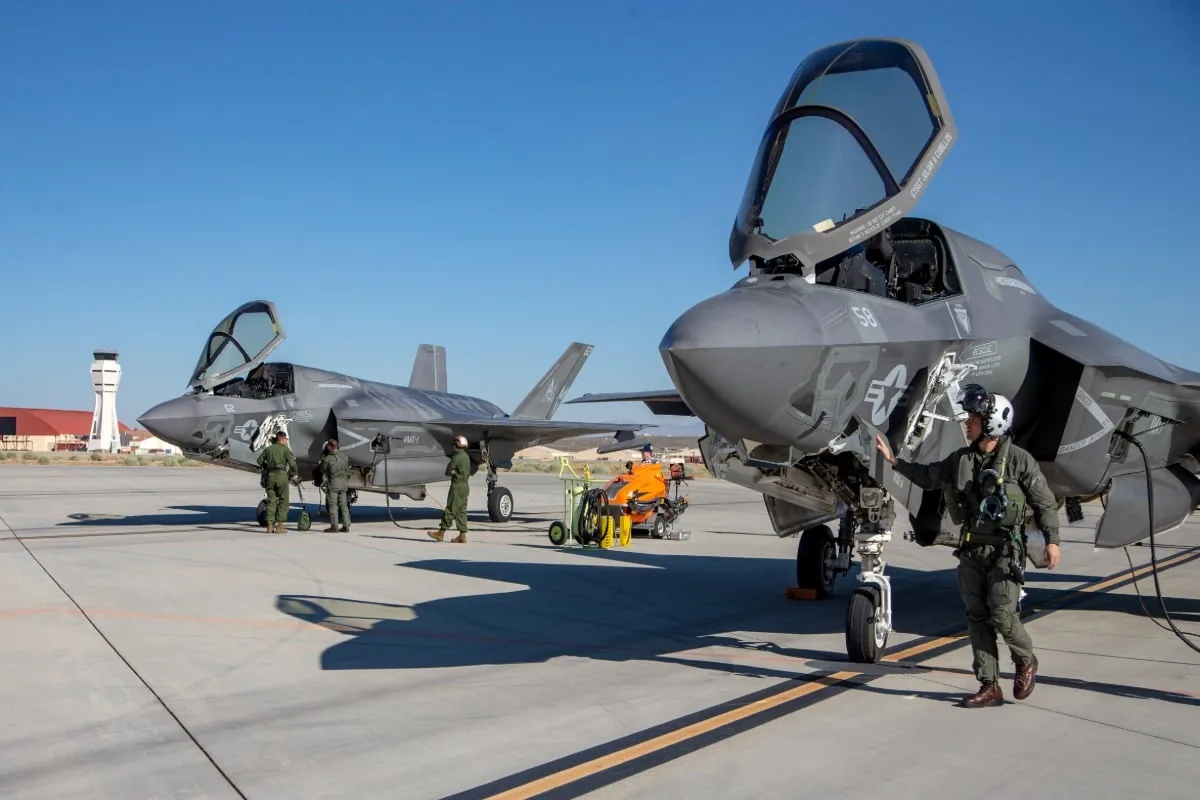
A shipment of F-35 fighter jet components, including a cockpit canopy with stealth coating, was diverted from Australia to Hong Kong this summer while en route to the US for repairs. The Pentagon confirmed some parts remain missing, prompting a US congressional investigation. No evidence suggests Chinese authorities intercepted the shipment, and the cause—logistical error or tampering—remains unclear. Lockheed Martin declined to comment, citing security.
 Illustration
Editorial responsibility
- No named human review is recorded for this page.
- Reports are grouped by semantic similarity and deterministic rules. Language models may assist titles, summaries, translation and cross-source analysis; the page reads the event directly, while its address stays stable when the title changes.
- Summary covers the current reports
Cross-source coverage
Common ground
- Both sides agree the F-35 program has serious problems, including lost parts and poor oversight.
- Both acknowledge the Pentagon's supply chain is broken and that over a million parts have gone missing in five years.
- Both agree that Lockheed Martin and the Pentagon share responsibility for the program's failures.
Points of contention
- The Western side sees the loss of stealth canopy material as a unique security breach, while the Eastern side says it's just one more lost part in a dysfunctional system.
- The Western side believes Hong Kong's location and China's surveillance capabilities make Chinese involvement likely, while the Eastern side says there's no evidence and it's just a busy shipping hub.
- The Western side argues the burden of proof shifts to China given the circumstances, while the Eastern side insists the burden stays with those making accusations.
Blind spots
- Neither side fully addresses how the US could prevent similar incidents in the future, focusing instead on blame.
- The debate ignores the role of allied nations, like Australia, in the supply chain and their potential responsibility.
- Both sides overlook the possibility that non-state actors or third-party criminals could have intercepted the parts for profit, not espionage.
WorldAttention’s read
The roundtable revealed deep disagreement over whether the missing F-35 stealth canopy material is a case of Chinese espionage or just another symptom of the Pentagon's broken supply chain. Both sides agree the F-35 program is a mess, with over a million parts lost and poor oversight. But they split on the key question: the Western side argues that losing such sensitive technology to Hong Kong, a city under Beijing's watch, is too suspicious to be an accident, while the Eastern side insists there's zero evidence of Chinese involvement and that blaming China distracts from America's own failures. Neither side offered a clear path forward, and both overlooked the possibility that criminals or other actors could be responsible. Ultimately, the debate highlighted how trust in the US defense system is eroding, but no consensus was reached on who is to blame for this specific incident.
Reporting timeline
F-35 Parts Diverted to Hong Kong; Pentagon Confirms Some Components Still Missing
According to a report by U.S. media outlet Politico, a shipment of F-35 fighter jet components, including a canopy with a critical stealth coating, was diverted from its intended route from Australia to the United States and ended up in Hong Kong this summer. The Pentagon has confirmed that some parts remain unaccounted for, prompting a U.S. congressional investigation and media speculation about potential leaks of sensitive technology to China. The article, published by Sina Finance citing Chinese military analysis outlet 'War Sentry Post', notes that the parts were defective units destined for repair, not new equipment. It emphasizes that no evidence suggests Chinese authorities intercepted the shipment, and the diversion may be a logistics error. The analysis highlights deeper issues in the U.S. defense supply chain, citing Government Accountability Office data showing over 1 million F-35 spare parts lost in five years and a decline in mission capability rates from 67% in FY2021 to 44% in FY2025. The article attributes these problems to outsourcing of logistics and maintenance to commercial third parties, creating accountability gaps.
Report: F-35 stealth jet parts diverted to Hong Kong, may have been seized by China
According to a report by Politico, parts of a US F-35 stealth fighter jet, including the cockpit canopy with its stealth technology, were diverted to Hong Kong while being shipped from Australia to the United States for repairs. The shipment is now missing, raising concerns that secret technology may have fallen into Chinese hands. The US Congress has reportedly launched an investigation into the incident. Lockheed Martin, the manufacturer, declined to comment, citing security reasons, but stated it complies with all US Department of Defense transport rules. The F-35 is considered the world's most advanced combat aircraft, capable of flying at 1.6 times the speed of sound and carrying over eight tons of weapons. Germany's Defense Minister Boris Pistorius recently took delivery of the first F-35 for the Bundeswehr. The article notes that 19 countries have ordered the aircraft.
Read sourceUS Congress probes whether F-35 stealth jet parts were diverted to China via Hong Kong
According to a Politico investigation reported by German outlet taz, the US Congress is examining whether secret technology from the advanced F-35 stealth fighter jet has fallen into Chinese hands. A shipment containing F-35 parts, including the cockpit canopy with stealth technology, was reportedly diverted from Australia to the United States via Hong Kong and has been considered missing since then. The parts were originally destined for repair in the USA. It remains unclear why the shipment was rerouted to Hong Kong, a Chinese Special Administrative Region, or where it currently is. Lockheed Martin, the manufacturer, declined to comment citing security reasons but stated it complies with all US Department of Defense regulations. The F-35 is the world's most modern fighter aircraft, capable of flying at 1.6 times the speed of sound and carrying over eight tons of weapons. Germany has just received its first F-35 jets, planning to acquire up to 35 to replace its aging Tornado fleet.
Show 2 older updatesHide older updates
US Congress Probes Whether F-35 Stealth Jet Parts Were Diverted to Hong Kong
According to a Politico investigation reported by taz.de, the US Congress is examining whether secret technology from the advanced F-35 stealth fighter jet has fallen into Chinese hands. The report states that a shipment containing F-35 parts, including the cockpit canopy with stealth technology, was diverted to Hong Kong while en route from Australia to the USA and has been considered missing since then. The parts were reportedly being shipped to the USA for repair purposes. The reason for the diversion to Hong Kong, a Chinese Special Administrative Region, and the current location of the shipment remain unclear. An investigation has been launched in the US Congress. Manufacturer Lockheed Martin declined to comment, citing security reasons, but stated it complies with all US Department of Defense regulations. The F-35 is considered the world's most modern fighter aircraft, with 19 countries having ordered it, including Germany, which recently took delivery of its first jet.
Read sourceCongress Probes Reports Top Secret F-35 Fighter Jet Parts Mistakenly Sent to China
Multiple news outlets report that the U.S. Congress is investigating allegations that top-secret technology from the F-35 fighter jet was mistakenly diverted to China. According to reports from Politico, Mediaite, The Times of Israel, and others, F-35 parts were rerouted to Hong Kong, raising fears that China may have gained access to sensitive stealth technology. The incident is described as a Pentagon blunder, and the investigation is underway on Capitol Hill. The reports attribute the diversion to a logistical error, but the potential compromise of classified technology has sparked serious national security concerns.