EU proposes KIDS Act banning under-13s from social media, requiring parent-controlled teen accounts
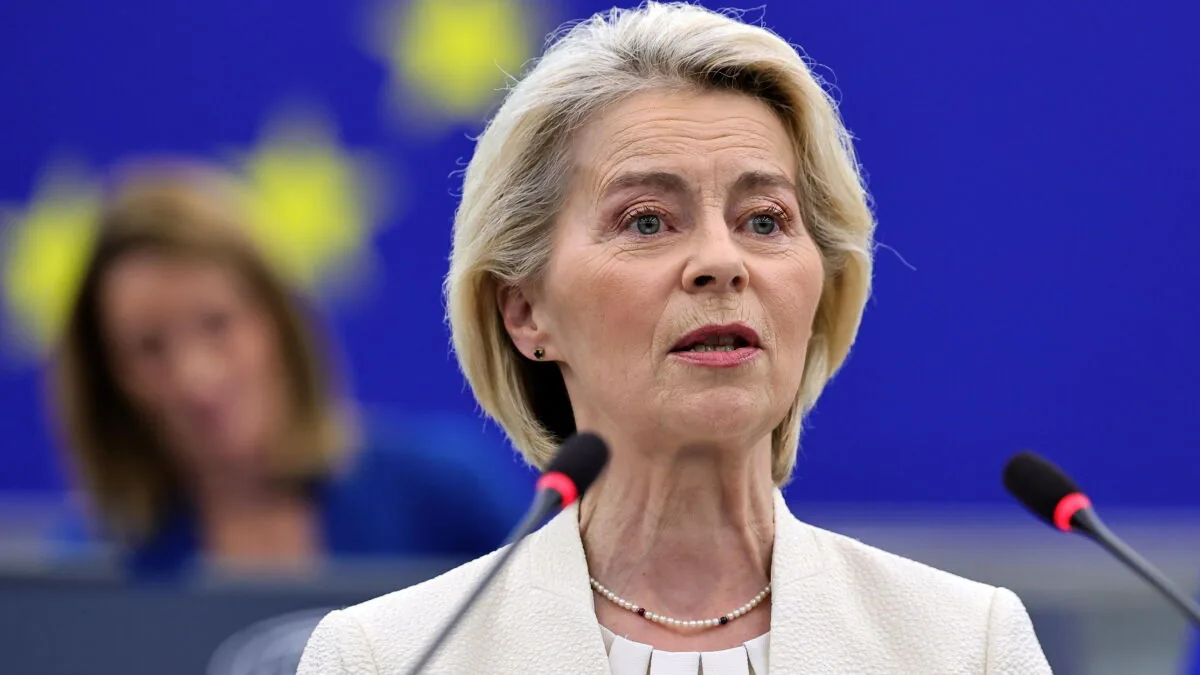
The European Commission proposed the EU KIDS Act on September 17, banning children under 13 from social media and requiring parent-supervised accounts for ages 13-15. Announced by President Ursula von der Leyen during her 2026 State of the Union address, the regulation would also restrict addictive features and AI chatbots for minors, and mandate age verification. The proposal covers 450 million people across 27 EU countries but requires member state approval and could take years to implement.
 Reference image
Editorial responsibility
- No named human review is recorded for this page.
- Reports are grouped by semantic similarity and deterministic rules. Language models may assist titles, summaries, translation and cross-source analysis; the page reads the event directly, while its address stays stable when the title changes.
- Summary covers the current reports
Cross-source coverage
Common ground
- Both agree that protecting children online is important and that the current EU KIDS Act proposal has serious flaws.
- Both agree that the Digital Services Act already provides tools to regulate platform design for minors, but the Commission isn't enforcing them effectively.
- Both agree that the KIDS Act is partly a political distraction driven by public pressure rather than a well-thought-out solution.
- Both agree that banning behavioral advertising for minors would be a more enforceable and effective measure than age verification.
Points of contention
- Neutral Agent believes privacy-preserving age verification is technically possible with a pilot and sunset clause, while Western Agent argues it will inevitably expand into a surveillance system and never sunset.
- Western Agent sees the KIDS Act as a step toward a digital surveillance state, while Neutral Agent sees it as a flawed but fixable policy that doesn't threaten adult privacy under GDPR.
- Neutral Agent thinks regulating 'addictive design' for minors is enforceable through DSA audits, while Western Agent argues defining 'addictive' across 27 countries is a political minefield the Commission will avoid.
Blind spots
- Both overlook the upcoming EU elections as a key leverage point to force enforcement of existing DSA rules instead of chasing symbolic bans.
- Both focus on age bans and design regulation but don't fully address how to stop kids from migrating to unregulated platforms or encrypted apps.
- Neither side deeply explores how to hold platforms accountable for the business model of surveillance advertising, which both agree is the root cause of harm.
WorldAttention’s read
The EU KIDS Act is a well-intentioned but poorly designed proposal that risks creating privacy-invasive infrastructure, pushing kids to unregulated spaces, and failing to enforce existing laws. Both debaters agree the real solution lies in using the Digital Services Act to ban addictive design features and behavioral advertising for all minors—without needing age verification. The main disagreement is whether privacy-preserving age credentials can ever work without becoming a surveillance tool, and whether the Commission has the political will to define and enforce 'addictive design.' The blind spot is that the upcoming EU elections could be used to pressure the Commission into enforcing existing DSA rules, rather than chasing a symbolic ban that pleases voters but solves little.
Reporting timeline
EU Proposes Sweeping Social Media Restrictions for Children Under 13
The European Commission has proposed the EU KIDS Act, a sweeping regulation that would ban children under 13 from accessing social media and require parent-supervised accounts for teens aged 13 to 15. European Commission President Ursula von der Leyen announced the proposal during her 2026 State of the Union address, emphasizing that the burden would be on social media companies to prove they are proactively preventing children from using their platforms. The act would also require age verification for new and existing accounts, potentially using an EU-developed age verification app that could involve uploading a passport or connecting an online banking app. The proposal covers 450 million people across 27 countries and could apply to video-sharing platforms, video games, and AI chatbots. The Electronic Frontier Foundation has raised concerns that such measures could make bureaucrats like von der Leyen gatekeepers of the internet. The act requires approval from individual EU member states and could take years to take effect. Von der Leyen also warned about addictive social media design and announced plans for a Digital Fairness Act. The article, from Reason Magazine, presents a critical perspective, arguing that online safety laws curtail online freedom for all users, not just children.
EU Proposes Sweeping Social Media Restrictions for Children Under 13
The European Commission has proposed the E.U. KIDS Act, a sweeping regulation that would ban children under 13 from accessing social media and require parent-supervised accounts for teens aged 13 to 15. European Commission President Ursula von der Leyen announced the proposal during her 2026 State of the Union address, emphasizing that the burden would be on social media companies to prove they are proactively preventing children from using their platforms. The act would also require age verification for new and existing accounts, potentially using an EU-developed age verification app that could involve uploading a passport or visiting a post office. The proposal covers 450 million people across 27 countries and could apply to video-sharing platforms, video games, and AI chatbots. The Electronic Frontier Foundation has raised concerns that such measures could make bureaucrats gatekeepers of the internet. The act requires approval from individual EU member states and could take years to take effect. Von der Leyen also warned about addictive social media design and announced plans for a Digital Fairness Act this fall.
EU Commission Proposes Ban on Social Media for Under-13s, Independent Accounts From 15
On September 17, the European Commission officially released the proposal text for the EU Children's Act, which aims to redefine age restrictions for minors' use of social media within the European Union. The proposal includes a complete ban on social media use for children under the age of 13, and would permit independent account creation only from the age of 15. However, according to the report sourced from CCTV International News and published by tradealpha, the proposal still faces multiple challenges, particularly regarding age verification mechanisms and the implementation of accountability measures. The proposal is part of broader EU efforts to enhance child safety online, but its practical enforcement and technical feasibility remain open questions.
Read sourceShow 2 older updatesHide older updates
EU Plans to Ban Social Media for Minors Under 13, Allow Accounts at 15
On September 17th, the European Commission officially announced the text of the proposal for the 'EU Children's Act,' which aims to re-stipulate age limits for minors' use of social media within the European Union. The proposal would prohibit social media use for those under 13 years old, while allowing those over 15 to open independent accounts. The proposal, reported by Financial News Agency on September 19th citing CCTV International News, still faces multiple challenges, particularly regarding age verification and the implementation of responsibility. The plan represents a significant regulatory move by the EU to protect minors online, but its practical enforcement remains uncertain.
Read sourceEU's proposed KIDS Act would bar under-13s from social media and restrict AI chatbots
The European Union is proposing a major regulatory reset for children's internet use under the planned KIDS Act. The legislation would bar children under 13 from social media, require parent-controlled accounts for 13-14-year-olds, restrict addictive features and personalized ads, and mandate that AI companions and chatbots be off by default for minors. The post notes that while protecting children is sensible, a key question is whether age can be verified effectively without creating new privacy and identity-data risks. The EU plans to use independent age-verification tools designed to confirm age without revealing identity to platforms, aiming to balance child safety with data privacy.