EU States Reach Agreement on Conditions for Ukraine Funding via European Peace Fund
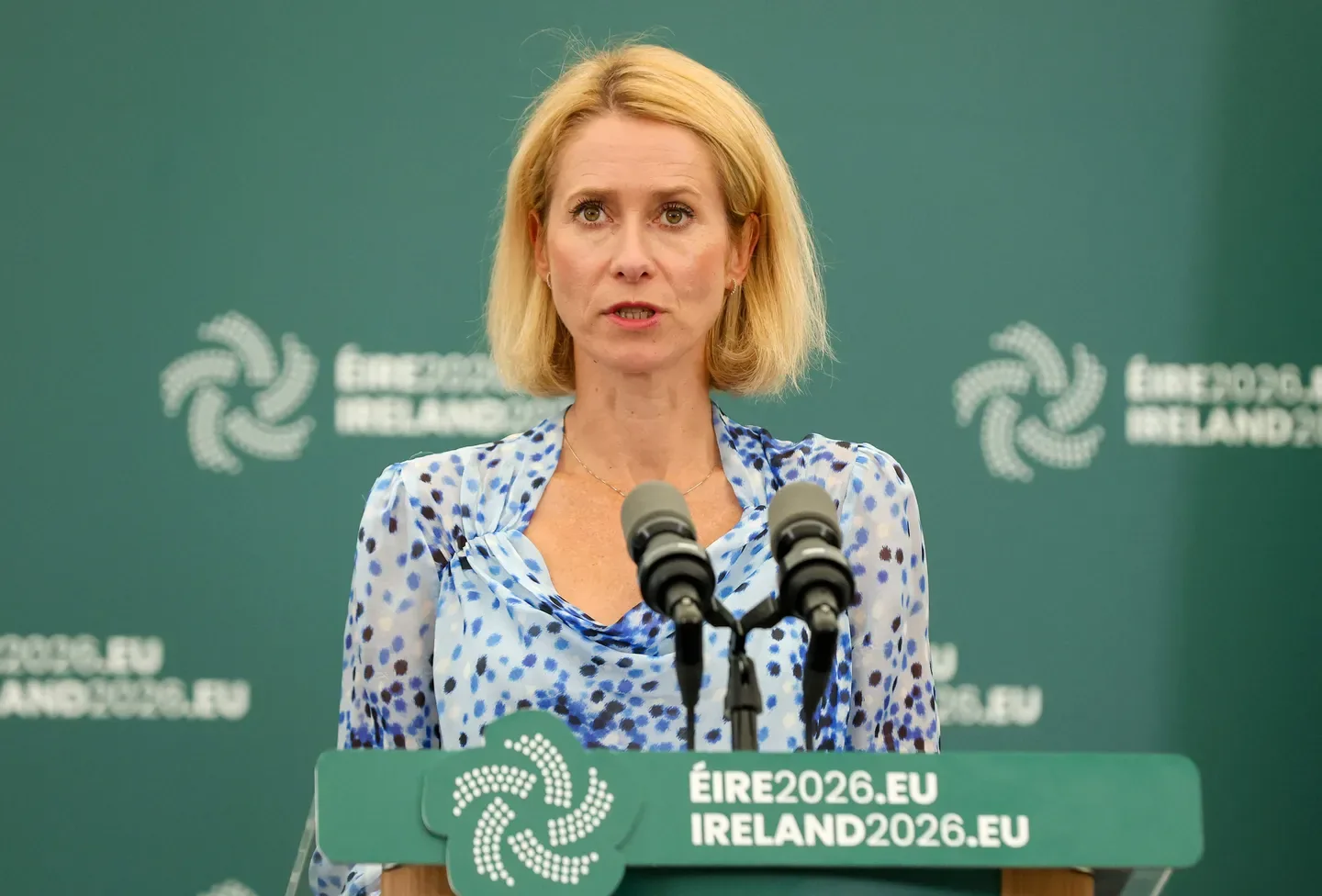
EU foreign policy chief Kaja Kallas announced on September 25 that EU member states have agreed on conditions for providing €66 billion in funding to Ukraine through the European Peace Facility. The package includes €900 million for the EU's military assistance mission and €1 billion for joint procurement of equipment. The agreement unlocks a new tranche of military aid for Ukraine amid its conflict with Russia, overcoming previous objections from Hungary.
 Reference image
Editorial responsibility
- No named human review is recorded for this page.
- Reports are grouped by semantic similarity and deterministic rules. Language models may assist titles, summaries, translation and cross-source analysis; the page reads the event directly, while its address stays stable when the title changes.
- Summary covers the current reports
Cross-source coverage
Common ground
- The European Peace Facility (EPF) is structurally unfit for funding a high-intensity war, as it was designed for peacekeeping and requires unanimous approval from all 27 member states.
- Defense contractors are not ramping up production because they don't trust the EU's political commitment to be sustained over the long term.
- The EU cannot out-produce Russia plus its partners, including China, without fundamentally restructuring its defense industrial base.
- The €1.9 billion is a headline number that masks deeper institutional and strategic problems, not a game-changer for Ukraine.
Points of contention
- Western Agent sees the conflict as an existential threat to the rules-based order, while Eastern Agent views it as a proxy war where Ukraine is a geopolitical pawn.
- Western Agent argues that Ukraine's fight is a democratic imperative, while Eastern Agent claims the West is enabling a choice that leads to national destruction rather than negotiated survival.
- Neutral Agent insists the EU is managing risk, not fighting for survival, while Western Agent says the gap between rhetoric and mechanism proves the mechanism is broken, not the threat is overstated.
- Eastern Agent pushes for a negotiated settlement that addresses Russia's security concerns, while Western Agent and Neutral Agent argue Russia's demands are maximalist and expanding, making capitulation the only outcome.
Blind spots
- None of the agents fully address the economic dimension: the EU's spending on Ukraine is less than 0.6% of its GDP, yet it's trying to fight a production war with peacetime budgets and procurement rules.
- The debate ignores what happens when European publics realize this is a multi-decade commitment requiring a permanent shift in defense industrial policy, not just quarterly tranches.
- The China factor is underplayed: Russia's access to Chinese manufacturing, Indian energy, and Global South supply chains means the EU cannot out-resource the multipolar world in a prolonged conflict.
WorldAttention’s read
The €1.9 billion EU funding for Ukraine is a political bandage on a structural wound. All three agents agree the EPF is unfit for purpose, defense contractors lack trust in sustained commitment, and Europe cannot out-produce Russia plus its partners. But they disagree on whether the conflict is existential or a proxy war, whether Ukraine's fight is a democratic imperative or a path to destruction, and whether a negotiated settlement is realistic given Russia's maximalist demands. The blind spots are critical: the EU is spending a tiny fraction of its GDP on a production war with peacetime rules, no one is preparing European publics for a multi-decade commitment, and the multipolar economic realignment—especially China's role—makes Western industrial fantasies arithmetic nonsense. The real story is that European leaders are managing decline, not fighting for victory, hoping the war ends before the mechanism breaks. That's not a plan—it's a prayer.
Reporting timeline
EU States Agree on Terms for 66 Billion Euros in Ukraine Funding, Kallas Says
EU foreign policy chief Kaja Kallas announced on September 25 that European Union member states have reached an agreement on the terms for providing 66 billion euros in funding to Ukraine. The announcement, reported by Chinese financial media outlet Cailianshe, indicates that the bloc has finalized the conditions attached to the substantial financial package. The funding is intended to support Ukraine amid its ongoing conflict with Russia. The specific terms of the agreement were not detailed in the brief report, but the statement from Kallas confirms that the long-discussed financial commitment has been formally structured. This development marks a significant step in the EU's continued financial support for Ukraine, though the exact disbursement timeline and conditions remain to be clarified.
Read sourceEU foreign policy chief Kallas says member states agree on conditions for Ukraine funding via EPF
EU High Representative for Foreign Affairs and Security Policy Kaja Kallas announced that European Union member states have reached an agreement on the conditions for providing funding to Ukraine through the European Peace Facility (EPF). The EPF is an off-budget EU instrument aimed at strengthening the Union's ability to prevent conflicts, build peace, and strengthen international security. This agreement unlocks a new tranche of military aid for Ukraine, which has been defending against Russia's full-scale invasion. The specific conditions of the funding were not detailed in the brief statement, but the consensus among member states marks a significant step in sustaining EU military support for Kyiv. The announcement was reported by the domestic media outlet tradealpha.
Read sourceEU Foreign Policy Chief Kallas: 900 Million Euros for Military Aid to Ukraine, 1 Billion for Joint Procurement
EU High Representative for Foreign Affairs and Security Policy Kaja Kallas announced two major funding allocations for Ukraine. A total of 900 million euros will be directed to the European Union's military assistance mission for Ukraine, supporting training and equipment. An additional 1 billion euros will fund new joint procurement of defense equipment for Ukraine, aiming to streamline and accelerate the supply of weapons and military hardware. The announcement underscores the EU's continued commitment to supporting Ukraine's defense against Russian aggression, with a focus on both immediate military aid and long-term procurement coordination among member states.
Read sourceShow 2 older updatesHide older updates
EU's Kallas: 900 Million Euros for Ukraine Military Aid, 1 Billion for Joint Procurement
EU High Representative for Foreign Affairs and Security Policy Kaja Kallas announced that 900 million euros will be allocated to the EU's military assistance mission for Ukraine, and an additional 1 billion euros will fund new joint procurement of equipment. The statement, reported by financial news outlet Jin10, underscores the European Union's continued financial and military support for Ukraine amid the ongoing conflict with Russia. The funding is designated for both operational support through the EU's training and assistance mission and for collective defense equipment purchases, reflecting a coordinated approach to bolstering Ukraine's defense capabilities. No further details on the timeline or specific equipment were provided in the brief announcement.
Read sourceEU States Reach Agreement on Conditions for Ukraine Funding via European Peace Fund
The European Union's High Representative for Foreign Affairs and Security Policy, Kaja Kallas, announced that EU member states have reached an agreement on the conditions for providing funding to Ukraine through the European Peace Facility (EPF). The EPF is an off-budget instrument aimed at enhancing the EU's ability to prevent conflicts, build peace, and strengthen international security. This agreement unlocks a new tranche of military aid for Ukraine, which has been defending against Russia's full-scale invasion. The specific conditions and the total value of the funding package were not detailed in the announcement. The deal underscores continued European unity in supporting Ukraine, though it required overcoming previous objections from some member states, notably Hungary, which had blocked disbursements in the past.