Chinese tech giants escalate AI office race with integrated platforms and surging user data
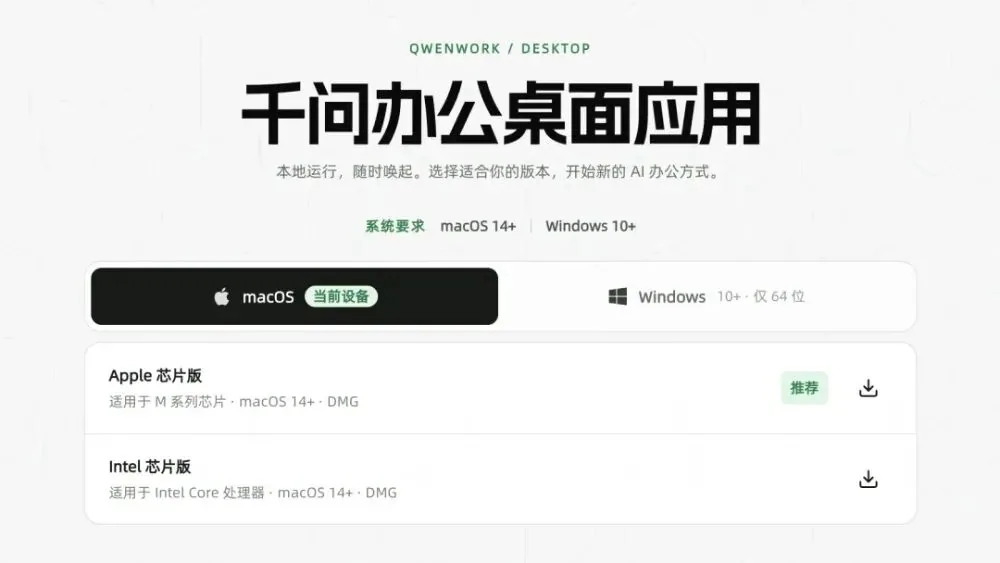
Chinese internet giants Tencent, ByteDance, Alibaba, and Baidu are intensifying competition in the AI-powered office productivity market, having consolidated product portfolios into single-entry platforms like WorkBuddy, Doubao Work, Qianwen Office, and Baidu Dazi. Commercialization data shows rapid growth: Feishu's ARR exceeded 3 billion yuan in 2025 with Q2 2026 ARR growing over 100% year-on-year, Tencent WorkBuddy recorded 20.97 million monthly visits in June 2026, and Alibaba's Qianwen Office surpassed 30 million users in its first month. Industry analysts characterize the competitive pace as a "life-or-death sprint" spanning six to twelve months, with the market shifting from basic AI features to deep workflow integration and enterprise ecosystem binding.
 Reference image
Editorial responsibility
- No named human review is recorded for this page.
- Reports are grouped by semantic similarity and deterministic rules. Language models may assist titles, summaries, translation and cross-source analysis; the page reads the event directly, while its address stays stable when the title changes.
- Summary awaiting refresh
Summary awaiting refresh
Cross-source coverage
Reporting timeline
Chinese Tech Giants Intensify AI Office Race, Shift to Agent Fine Management
Chinese internet giants are escalating competition in the AI office sector, moving beyond basic AI features to focus on deep workflow integration, ecosystem binding, and enterprise customization. Tencent leads with its WorkBuddy assistant, integrating WeChat Work, Tencent Docs, and Tencent Meeting. ByteDance restructured to combine Feishu, Doubao, and Volcano Engine into a unified AI office product targeting large enterprises. Alibaba consolidated tools into Qianwen Office, focusing on code assistance and automation for SMEs. Baidu launched 'Baidu Dazi' as a lightweight C-end product. Baidu product architect Li Jingqiu stated that the industry is now more open, with Baidu Dazi supporting login via Feishu and DingTalk, and integrating third-party apps. He noted that enterprises are moving from initial AI trials to fine-grained management, quantifying the value of AI agents versus human labor in specific tasks, and focusing on human-machine collaboration. The core competitive dimensions are now underlying tech architecture, full-process scenario adaptation, and enterprise ecosystem binding.
Chinese Tech Giants Rush into AI Office Sector as Enterprises Shift to Agent Fine Management
The article reports that Chinese internet giants are intensifying competition in the AI office sector, moving beyond general large models to specific application scenarios. Tencent leads with its WorkBuddy smart assistant integrated across WeCom, Tencent Docs, and Tencent Meeting. ByteDance restructured to combine Feishu, Doubao, and Volcano Engine into a unified product system targeting mid-to-large enterprises. Baidu launched 'Baidu Dazi' as a lightweight entry for the consumer market. Li Jingqiu, product architect of Baidu Dazi, told Securities Times that competition now focuses on underlying tech architecture, full-process scenario adaptation, and enterprise ecosystem binding. He noted that enterprises are moving from initial trial to fine management of AI agents, quantifying the value of human-agent collaboration and evaluating tasks based on standardized SOPs versus subjective creativity. The industry is becoming more open, with Baidu Dazi supporting Feishu and DingTalk accounts and integrating third-party office applications.
Read sourceTencent, Feishu, and Baidu Dazi See Surging Data as AI Office Competition Accelerates in China
Red Star Capital Bureau reports that Baidu's AI office agent 'Baidu Dazi' Enterprise Edition experienced rapid ARR growth in July and August 2025, leading Baidu to internally raise annual revenue targets multiple times. Baidu did not respond to confirmation requests. The article highlights accelerating competition in China's AI office sector, with multiple product launches and updates in September 2025. Feishu's ARR exceeded 3 billion yuan in 2025, with 100% year-on-year growth in Q2 2026. Tencent WorkBuddy recorded 20.97 million monthly visits in June 2026, ranking first among domestic desktop AI office agents. Alibaba's Qianwen Office surpassed 30 million users in its first month. Industry analyst Tian Feng of the Fast Thinking & Slow Thinking Research Institute stated the competitive pace is a 'life-or-death sprint' lasting six to twelve months. IDC data forecasts the Chinese enterprise-level AI agent market to grow from 21.2 billion yuan in 2025 to potentially exceed 332 billion yuan by 2029. A KPMG report notes 88% of surveyed enterprises have integrated Agentic AI, but only 24% have achieved ROI across multiple use cases.
Read sourceShow 3 older updatesHide older updates
AI Office Tools Pose a Dilemma for Chinese Internet Giants Amid Fierce Competition
Chinese internet giants Tencent, ByteDance, and Alibaba are intensifying competition in the AI-powered office productivity market, having consolidated their product portfolios into single-entry platforms: WorkBuddy, Doubao Work, and Qianwen Office, respectively. According to the article by Haike Finance on NetEase Finance, these platforms, along with Baidu Dazi and Kingsoft Lingxi, are vying for dominance in a market projected by iiMedia Research to reach 698 billion USD globally and 155.8 billion RMB domestically by 2026. The article notes that while these AI agents offer deep integration with existing enterprise tools like WeCom, DingTalk, and Feishu, their capabilities still fall short of true intelligence, often failing in complex, multi-step tasks. It highlights a strategic dilemma: the high cost of serving massive consumer AI users is unsustainable, pushing firms toward monetization, while the fear of missing out (FOMO) on a potentially trillion-dollar market drives relentless investment. The piece also contrasts domestic efforts with global leaders like Microsoft Copilot and OpenAI, suggesting that the advent of AGI could render the current office-agent intermediary layer obsolete.
AI Office Tools Intensify Competition Among Chinese Internet Giants
This article from NetEase Finance analyzes the intensifying competition in the AI office tool sector among Chinese internet giants ByteDance, Tencent, Alibaba, Baidu, and Kingsoft. It details recent product integrations and launches, such as ByteDance's 'Doubao Work Partner', Tencent's 'WorkBuddy' platform, and Alibaba's 'Qianwen Office'. The piece cites market data from QuestMobile showing the AI efficiency office track reached 102 million MAU in July 2026, with Tencent's WorkBuddy leading at 6.58 million MAU. An iMedia Research white paper forecasts the global AI agent market will grow from $37.2 billion in 2025 to $312.2 billion by 2030. The article notes that while domestic players leverage their existing ecosystems (WeChat, DingTalk, Feishu) for competitive advantage, overseas leaders like Microsoft Copilot and Google Workspace face different dynamics. It concludes that despite rapid growth and heavy investment driven by FOMO, significant uncertainties remain, including the potential for AGI to render specialized office agents obsolete.
Tencent, Feishu, and Baidu's AI Office Agents See Surging Data as Competition Intensifies
Red Star Capital Bureau reports that Baidu's enterprise AI agent 'Baidu Dazi' saw rapid Annual Recurring Revenue (ARR) growth in July and August 2026, leading to multiple upward revisions of internal revenue targets. This is part of a broader acceleration in China's AI office productivity sector. Feishu's ARR exceeded 3 billion yuan in 2025, with Q2 2026 ARR growing over 100% year-on-year. Tencent WorkBuddy recorded 20.97 million monthly visits in June 2026, ranking first among domestic desktop AI office agents. Major tech firms including Tencent, Alibaba, Baidu, and ByteDance have concentrated on integrating product lines and launching new offerings since Q2 2026, moving from single-point AI plugins to comprehensive solutions. Industry analysts, such as Tian Feng of the Fast Thinking & Slow Thinking Research Institute, characterize the competitive pace as a 'life-or-death sprint' spanning six to twelve months. Third-party data from IDC and Analysys indicates market potential remains far from saturated, with combined monthly visits for 17 mainstream desktop AI office agents tripling to over 60 million between March and June 2026. A KPMG report notes that while 88% of surveyed enterprises have begun integrating Agentic AI, only 24% have achieved return on investment across multiple use cases.
Read source