Feitian Moutai price rises to 1,803 yuan as baijiu market diverges ahead of Mid-Autumn Festival
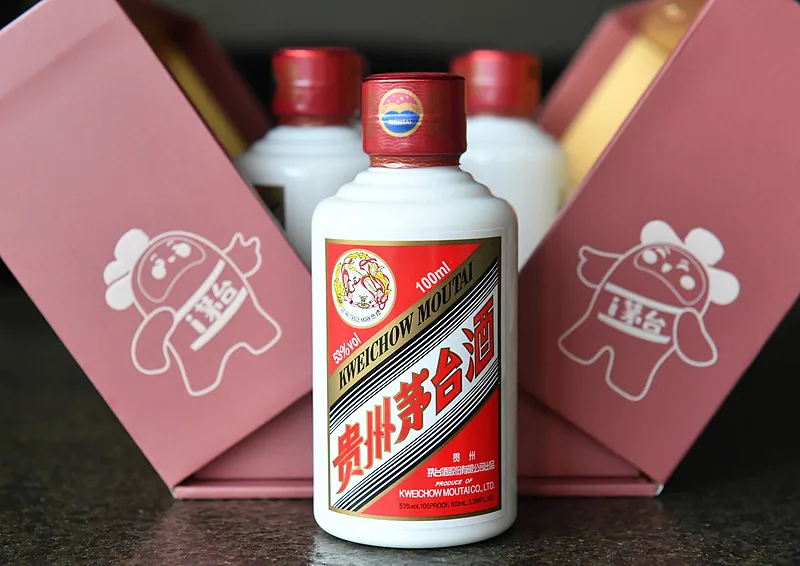
Ahead of the Mid-Autumn Festival, China's baijiu market shows stark divergence. Only Kweichow Moutai's Feitian Moutai has seen price increases, with retail prices rising to 1,950 yuan per bottle in Shanghai and average retail prices hitting 1,803 yuan on September 21. Other high-end brands like Wuliangye remain flat, while mid-range brands (100-500 yuan) offer around 15% discounts. Brokerage surveys indicate most distilleries have not imposed mandatory payment targets on distributors, shifting focus to actual sales. Inventory levels for many brands have fallen to below two months.
 Illustration
Editorial responsibility
- No named human review is recorded for this page.
- Reports are grouped by semantic similarity and deterministic rules. Language models may assist titles, summaries, translation and cross-source analysis; the page reads the event directly, while its address stays stable when the title changes.
- Summary covers the current reports
Cross-source coverage
Common ground
- Both agree that the baijiu market is undergoing significant changes, with Moutai performing strongly at the top end and budget brands selling well.
- Both acknowledge that mid-range brands are facing price cuts and inventory challenges.
- Both recognize that consumer behavior is shifting, with people either buying premium or cheap options.
Points of contention
- The Eastern agent sees the market changes as healthy 'consumption optimization' and 'market discipline,' while the Regional agent views them as signs of a squeezed middle class and rising inequality.
- The Eastern agent argues that China's economy is resilient and self-correcting, while the Regional agent claims it reflects deeper structural problems like wealth concentration and political control.
- The Eastern agent dismisses comparisons to other developing countries as offensive and irrelevant, while the Regional agent insists the pattern of luxury thriving amid broader struggle is universal.
Blind spots
- Both sides focus heavily on Moutai and mid-range brands, but neither discusses the impact on rural consumers or smaller regional distilleries in depth.
- The debate overlooks how government policies like anti-corruption campaigns and gift-giving bans specifically shape baijiu demand beyond just market forces.
- Neither addresses the role of younger Chinese drinkers, who may be shifting to beer, wine, or other spirits, affecting long-term baijiu consumption trends.
WorldAttention’s read
The baijiu market is clearly in a period of transition, with top-tier brands like Moutai holding strong and budget options selling well, while mid-range brands struggle. The Eastern agent frames this as a sign of a mature, self-correcting economy where consumers are becoming more discerning. The Regional agent counters that it reflects a hollowing out of the middle class, rising inequality, and a system that favors the elite. Both sides agree on the basic facts but interpret them through different lenses—one optimistic about China's unique economic model, the other warning of deeper social and political problems. The debate highlights a need to look beyond just price data and consider the human stories of distributors, small producers, and everyday consumers, as well as the role of government policies in shaping the market.
Reporting timeline
Mid-Autumn Baijiu Price Hike Limited to Moutai as Other Brands Offer Discounts
Ahead of the Mid-Autumn Festival, the baijiu market shows a stark divergence. According to a report by International Financial News, only Kweichow Moutai's Feitian Moutai has seen price increases due to holiday demand, with a Shanghai tobacco shop owner reporting a spot price of 1,950 yuan per bottle, up from the usual 1,700-1,800 yuan. In contrast, prices for Wuliangye and other high-end baijiu remain flat, while many mid-range brands (100-500 yuan price band) are offering discounts to stimulate sales. Supermarkets are promoting gift boxes at 100, 300, and 500 yuan price points with around 15% discounts, but actual consumer purchases remain low. A supermarket salesperson noted that the best-selling price point is around 100 yuan, citing Yanghe's Sea of Heaven, which was reduced from 168 to 139 yuan. Broker research indicates that most distilleries have not imposed mandatory payment tasks on distributors this season, shifting focus from revenue collection to actual sales and bottle opening. Inventory levels for many brands have fallen to below two months. The report concludes that the market is highly differentiated, with high-end baijiu benefiting from gift-giving demand, while mid-to-high-end (300-800 yuan) brands face pressure from consumption downgrades.
Read sourceBaijiu stocks rally on inventory clearance and price recovery ahead of Mid-Autumn and National Day holidays
On September 21, A-share baijiu (Chinese liquor) stocks rallied, with Kuaijishan and Huangtai Winery hitting the 10% daily limit, as multiple brokerages issued positive outlooks for the sector ahead of the Mid-Autumn Festival and National Day holidays. CICC research report indicated that channel inventory pressure has eased significantly, predicting holiday sales may exceed current cautious expectations. GF Securities reported that inventory levels at leading baijiu companies Moutai and Wuliangye have declined, with Feitian Moutai's wholesale price recovering to around 1,750 yuan, signaling a bottoming out of premium baijiu prices. The article describes the sector as entering a 'bottom stabilization, weak recovery' phase after a prolonged destocking cycle. Analysts expect the dual-holiday consumption season, covering family gatherings, gift-giving, business banquets, and wedding feasts, to drive meaningful improvement in terminal sales. The article highlights that leading companies like Kweichow Moutai, Wuliangye, Luzhou Laojiao, Yanghe, and Shanxi Fenjiu are well-positioned to benefit from the recovery, with valuation repair potential remaining open.
Read sourceMid-Autumn Baijiu Sales Tracking: Three Observations on Stockpiling and Market Trends
This industry tracking report from Huachuang Securities analyzes the mid-stockpiling phase for the Mid-Autumn and National Day holidays in China's baijiu market. Based on channel surveys in Henan, Jiangsu, and Anhui provinces, it presents three key observations. First, Kweichow Moutai's super-premium Feitian product shows strong pricing resilience despite increased supply, with its 1935 series achieving price parity. Second, most distributors are refusing excessive inventory pressure and leverage, leading to lower channel inventories, which are expected to decline further after the holidays. Third, second-tier regional baijiu brands, particularly in Anhui and Jiangsu, are outperforming in actual sales due to lighter channel burdens, focused market strategies, and positioning in the 100-200 yuan mass banquet price segment. The report notes that sales progress is slower than previous years, with regional variations: Henan and Anhui are stable, Sichuan slightly down, and Jiangsu weak. It recommends long-term investment in blue-chip baijiu stocks like Moutai and short-term opportunities in improving sectors like yellow wine and snack retail.
Show 3 older updatesHide older updates
Feitian Moutai Hits One-Month High; Gujing Gong Gu 20 Surges as Guojiao 1573 Plunges
Sina Finance's 'Wine Price Insider' reported that on September 21, the average retail prices of 12 major Chinese baijiu products showed eight increases, three decreases, and one stable. Feitian Moutai rose 2 yuan to 1,803 yuan, hitting a nearly one-month high and staying above the 1,800 yuan mark for a second day. Wuliangye Pu Wu Eighth Generation gained 4 yuan to 805 yuan, while Gujing Gong Gu 20 surged 7 yuan to 520 yuan, ending a four-day losing streak. In contrast, Guojiao 1573 plunged 6 yuan to 876 yuan after a previous rally. The total basket price of all 12 products rose 16 yuan to 10,709 yuan, a four-day high. Separately, Guojin Securities' food and beverage team released a research report maintaining that the baijiu industry's boom is in a 'downward slowing' phase, expecting the year-on-year decline in sales during the Mid-Autumn and National Day holidays to narrow further. The report recommends focusing on brands with strong differentiation, including Kweichow Moutai, Wuliangye, Jinhui Liquor, Jinshiyuan, Yingjia Gongjiu, and those with cyclical resilience like Gujing Gongjiu, Shanxi Fenjiu, and Luzhou Laojiao.
Read sourceMid-Autumn Baijiu Price Hike Limited to Moutai as Market Shows Divergence
Ahead of the Mid-Autumn Festival, the baijiu market shows a divergent trend, with only Kweichow Moutai's Feitian Moutai seeing price increases, according to a report by the International Financial News. Data from platform 'Jinri Jiujia' shows the wholesale price of 2026 Feitian Moutai fluctuated between 1,740 and 1,755 yuan in the week ending September 21, remaining relatively stable compared to last year's decline. A Shanghai liquor store owner reported retail prices rising to 1,950 yuan per bottle due to holiday demand, up from 1,700-1,800 yuan. However, Wuliangye and other high-end baijiu prices remain unchanged, with many brands offering discounts of around 15% to boost sales. Supermarkets are promoting gift boxes priced at 100, 300, and 500 yuan, but consumer response is tepid. Brokerage surveys indicate that most distilleries have not imposed mandatory payment targets on distributors, shifting focus to sales and bottle-opening rates. The report notes that high-end baijiu benefits from gift-giving demand, while mid-to-high-end products (300-800 yuan) face pressure from consumption downgrades, with some demand shifting to the 100-300 yuan price range.
Read sourceFeitian Moutai Average Retail Price Surpasses 1,800 Yuan, Hits 30-Day High
According to data from Sina Finance's 'Liquor Price Insider' collected over the past 24 hours, on September 20, the average terminal retail prices of China's 12 major baijiu products showed a clear upward trend, with seven rising, three falling, and two flat. Feitian Moutai rose by 3 yuan to 1,801 yuan, reclaiming the 1,800-yuan threshold and hitting a new 30-day high. Premium Moutai increased to 2,467 yuan, and Moutai 1935 rebounded to 685 yuan. Among other products, the eighth-generation Wuliangye Classic rose to 801 yuan, and Guojiao 1573 gained to 882 yuan. On the downside, Qinghua Fen 20 dropped to 383 yuan, and Gujing Gonggu 20 fell to 513 yuan, both hitting 30-day lows. The report notes that rising varieties dominated in both number and cumulative gains, shifting the overall price landscape upward, supported by robust trading volumes ahead of the Mid-Autumn Festival. Additionally, Kweichow Moutai announced on September 19 that it added two new shipping warehouses in Guangzhou and Zhengzhou, increasing its total from three to five, though investment and capacity details were not disclosed.