China's baijiu holiday sales weaken as bulk orders drop, firms shift to small bottles
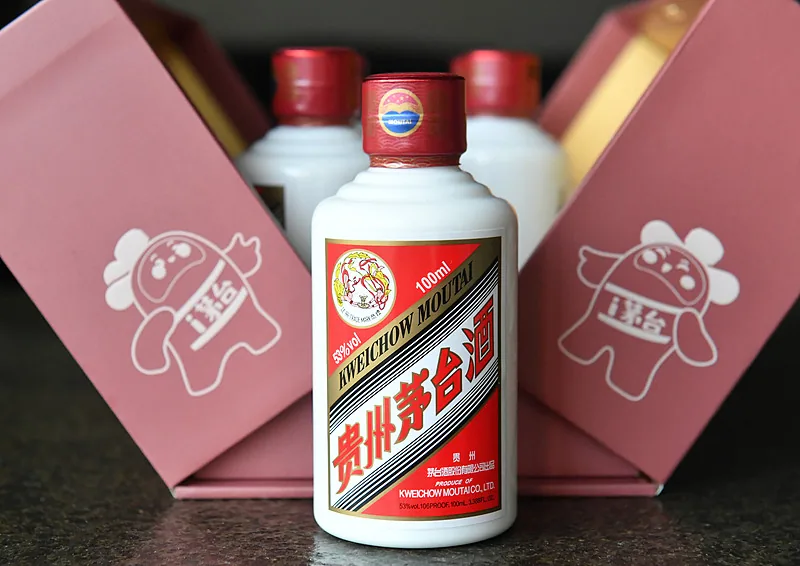
China's baijiu market experienced a subdued Mid-Autumn Festival and National Day holiday season, with sales failing to meet typical seasonal expectations. Large-volume orders from corporate clients and banquets declined sharply, while retail single-bottle purchases increased but could not offset the loss. Major producers including Moutai and Wuliangye abandoned traditional gift box sets and launched small-bottle products targeting younger consumers. Prices of mainstream products like Feitian Moutai remained relatively stable, while mid-range baijiu faced downward pressure. Analysts offered mixed outlooks on the industry's recovery timeline.
 Illustration
Editorial responsibility
- No named human review is recorded for this page.
- Reports are grouped by semantic similarity and deterministic rules. Language models may assist titles, summaries, translation and cross-source analysis; the page reads the event directly, while its address stays stable when the title changes.
- Summary covers the current reports
Cross-source coverage
Common ground
- The baijiu industry is undergoing a painful but necessary adjustment after years of over-distribution and inventory buildup.
- Moutai's price resilience is a luxury goods story, not a signal for the broader baijiu market.
- The 100-200 yuan price segment is growing as consumers buy baijiu for personal consumption rather than gift-giving.
- The old model of forcing inventory onto distributors is broken and cannot continue.
- The industry's future depends on clearing 18-24 months of unsold stock for mid-tier brands.
Points of contention
- Whether this is a 'mature market correction' or a 'debt-fueled Ponzi scheme' being exposed.
- Whether young Chinese are rejecting baijiu entirely or just shifting to cheaper bottles.
- Whether the international market matters for baijiu's future or is a distraction.
- Whether government actions like anti-corruption campaigns caused the downturn or just revealed existing problems.
- Whether the supply-side investments (like iMoutai app) are genuine innovation or desperate damage control.
Blind spots
- The human cost for distributors and small producers stuck with debt and unsold inventory.
- The possibility that baijiu's premium pricing was always a 'tax' on participating in China's growth story, which is now fading.
- The lack of genuine international connoisseurship to fall back on, unlike Bordeaux or Scotch whisky.
- The role of the property market collapse and slowing economy in directly triggering the baijiu downturn.
- The fact that the 100-200 yuan segment growth might just be older drinkers trading down, not new consumers entering the market.
WorldAttention’s read
The baijiu industry is in the middle of a painful inventory-driven debt liquidation, not a simple crisis or success story. The old model of forced distributor purchases and gift-giving has collapsed, and the industry must clear 18-24 months of unsold stock before real demand can be measured. Moutai's resilience is a luxury outlier, not a bellwether. The real winners will be brands that capture the growing 100-200 yuan consumer-driven market, but that requires a completely different business model. By late 2025, when inventory clears, we'll see what genuine demand looks like. Until then, every headline about recovery or collapse is just noise.
Reporting timeline
Mid-Autumn Baijiu sales weaken as big orders drop and firms shift to small bottles
The Chinese baijiu (white spirit) industry experienced a subdued Mid-Autumn Festival and National Day holiday season, with sales failing to meet typical seasonal expectations, according to a report by Southern Metropolis Daily. Key indicators of weakness include a sharp decline in large-volume orders from corporate clients and banquets, while retail purchases of single bottles increased but failed to offset the loss. Many distributors reported that large orders had effectively disappeared, forcing some to extend employee holidays. In response, several major baijiu producers, including Moutai and Wuliangye, abandoned traditional gift box sets and instead launched small-bottle (100-200ml) products targeting younger consumers and solo drinking occasions. Prices of mainstream products like Feitian Moutai, Wuliangye, and Guojiao 1573 remained relatively stable, partly due to regulatory pressure against price wars and clear subsidy policies. Analysts cited in the report, including from Huachuang Securities and Guojin Securities, offered mixed outlooks: some see inventory destocking progressing, while others, such as analyst Cai Xuefei, warned that a true industry recovery may not occur until 2027 and that risks remain elevated for at least three years.
Read sourceMid-Autumn Baijiu Sales Cool: Fewer Bulk Orders, Firms Shift to Mini Bottles
A report by Southern Metropolis Daily's Nandu Finance and Wine New Consumption division indicates that the baijiu (white spirit) market in China experienced a subdued Mid-Autumn Festival and National Day holiday season in 2024. Key signs include a sharp decline in large-volume orders from corporate and banquet clients, a reduction in the number and scale of festive banquets, and a shift by consumers toward more cost-effective options. Many liquor distributors reported that retail sales, while slightly up, could not compensate for the loss of bulk orders. In response, several major baijiu brands, including Kweichow Moutai and Wuliangye, reduced or eliminated traditional gift box sets and instead launched smaller, more affordable bottle sizes (e.g., 99ml, 100ml) to target individual consumers and younger demographics. Industry observers cited in the article believe the 'holiday effect' is weakening as consumption becomes more rational and value-driven, with baijiu gradually losing its 'social currency' status. Analysts from Huachuang Securities and Guojin Securities offered divergent views on whether the post-holiday destocking will continue, while other market voices warned that the current downturn may only be the beginning of a deeper adjustment period lasting several years.
China Merchants Securities: Baijiu Holiday Sales Under Pressure, Industry Health Improves Awaiting Demand Recovery
China Merchants Securities published a research report stating that baijiu (Chinese liquor) sales during the Mid-Autumn Festival and National Day holiday period are under temporary pressure, with a year-on-year decline of around 10%, though the decline has narrowed compared to the 20% drop in 2025. The report notes that due to the separation of the Mid-Autumn Festival and National Day holidays, some demand may be deferred. High-end gift-giving, banquets, and self-drinking demand are expected to show resilience. The industry is in a supply contraction phase, with price bands gradually recovering, but the recovery cycle may be prolonged due to weak demand and uneven corporate adjustments. Key brands like Moutai and Wuliangye show price stability and inventory improvement, while second-tier brands face significant pressure. The report highlights that the upcoming Spring Festival will be a critical node to verify demand recovery and industry consolidation. Regional breakdowns show varying performance, with Henan seeing a 0-5% decline, Anhui 5-10%, Jiangsu over 10%, Sichuan 5-8%, Zhejiang over 10%, and Shandong around 20%.
Read sourceShow 17 older updatesHide older updates
China's Baijiu Market Sees Weak Peak Season as Firms Shift from Inventory Push to Consumer Pull
Ahead of the 2026 Mid-Autumn Festival and National Day holidays, China's traditional baijiu peak season has failed to materialize, with the market characterized by 'weak season, structural divergence.' An investigation by National Business Daily reveals that major baijiu companies have abandoned traditional channel inventory-pushing models, shifting to consumer-focused operations centered on bottle-scanning and real consumption to drive channel destocking and price stabilization. Despite subdued terminal sales, two industry data points signal improvement: August national baijiu output grew 2.1% year-on-year, the first monthly increase in 26 months, and the mid-September wholesale price index edged up 0.07%, ending a decline. Analysts from Guotai Haitan Securities, Guosheng Securities, and Guojin Securities view the industry as in a bottoming phase with limited downside, citing clear signals of fundamental, institutional positioning, and valuation bottoming. A private equity source noted about six months of inventory destocking remain, but medium-term pessimism is fading. The report highlights brand divergence, with high-end products like Wuliangye and Guojiao 1573 performing relatively well, while low-end segments show resilience in the 50-70 yuan and 100-300 yuan price bands, driven by consumer upgrades from unbranded products to branded light bottles.
Read sourceBaijiu Market Shows Weak Peak Season as Firms Shift from Inventory Push to Consumer Pull, Analysts See Bottom
The 2026 Mid-Autumn Festival and National Day period, traditionally a peak sales season for Chinese baijiu, has not seen the expected surge in demand, with the market characterized by 'weak season and structural divergence.' According to a survey by National Business Daily, major baijiu companies have abandoned traditional channel inventory-pushing models, shifting to a refined operational approach centered on bottle-opening scanning and real consumer sales, aiming to reduce channel inventory and stabilize prices. Positive signals include a 2.1% year-on-year increase in August baijiu production, the first monthly growth in 26 months, and a slight 0.07% rise in the mid-September wholesale price index, ending a period of decline. Analysts from firms like Guotai Junan Securities and Guosheng Securities believe the worst of the destocking phase is nearing an end, with fundamentals, fund holdings, and valuations all showing signs of bottoming. However, demand remains weak overall, with only certain high-end brands like Wuliangye and Luzhou Laojiao showing relative stability, while low-end products in the 50-70 yuan and 100-300 yuan price bands demonstrate resilience. Companies are focusing on promotional activities tied to bottle-opening scans rather than traditional gift boxes, with brands like Moutai, Wuliangye, and Shanxi Fenjiu launching digital campaigns to boost real consumption.
Read sourceChina's Baijiu Market Sees Tepid Holiday Sales as Firms Shift to Consumer-Focused Strategy
Ahead of the 2026 Mid-Autumn Festival and National Day holidays, China's baijiu (white liquor) market is experiencing a 'peak season without peak sales,' according to a survey by National Business Daily. The article reports that major distillers have abandoned traditional channel inventory-pushing tactics, instead focusing on consumer 'bottle-opening' rates through QR code scanning and promotional campaigns. While overall sales are subdued, brand differentiation is evident: high-end brands like Moutai, Wuliangye, and Luzhou Laojiao maintain price stability through controlled supply, while mid-range products (100-300 yuan) and high-end bottled liquor (50-70 yuan) show resilience. Notably, Moutai canceled its Mid-Autumn gift box, and other brands like Yanghe and Gujing Gongjiu launched consumer-centric promotions. Positive signals include a 2.1% year-on-year increase in August baijiu production (first growth in 26 months) and a slight uptick in wholesale prices in mid-September. Multiple brokerages, including Guosheng Securities, view the sector as bottoming out with limited downside, though analysts caution that inventory digestion may take another six months and business banquet demand remains unrecovered.
Read sourceChina baijiu market shows mixed trends ahead of Mid-Autumn and National Day holidays
Ahead of China's Mid-Autumn Festival and National Day holidays, the baijiu (白酒) market is experiencing structural divergence, according to a report by Red Star Capital Bureau. While premium brands like Feitian Moutai, Wuliangye, and Guojiao 1573 maintain stable or slightly rising prices driven by gift-giving demand, sub-premium baijiu (300-800 yuan price range) faces sales pressure due to weak consumer and business spending. Some demand is shifting to mass-market products priced 100-300 yuan. A dealer surnamed Zhao reported overall sales are poor, warning that further price increases would reduce buyers. Feitian Moutai's spot price rose to 1,790 yuan per bottle, up 5 yuan from the previous day. Analyst Cai Xuefei attributed sub-premium weakness to dual pressures from consumer and business markets, predicting a trend of 'prices stabilizing first, volumes recovering slowly, and further structural divergence.' Guosheng Securities maintained its view that the industry is in a 'decelerating downturn' phase, expecting holiday sales to decline only slightly or stabilize, with channel destocking nearing completion.
Read sourceFeitian Moutai prices rise ahead of holidays as mid-range baijiu demand weakens
Ahead of China's Mid-Autumn Festival and National Day holidays, the baijiu market shows structural divergence. High-end brands like Feitian Moutai, Wuliangye, and Guojiao 1573 maintain stable or slightly rising prices, driven by gift-giving demand. Feitian Moutai's market price reached 1,790 yuan per bottle on September 23, up 5 yuan from the previous day, while Moutai's self-operated stores sell it at 1,766 yuan. In contrast, mid-range baijiu (300-800 yuan) faces pressure from weak consumer spending and sluggish business activity, with prices declining. For example, Qinghua Lang has dropped from over 1,000 yuan last year to 650 yuan, and Fenjiu Qinghua 20 fell to 390 yuan. Demand is shifting to the 100-300 yuan mass-market price segment. Analyst Cai Xuefei attributes the trend to dual pressures from consumption and business sectors, predicting a 'price first, volume slow recovery, structural divergence' pattern. Guojin Securities maintains that the industry is in a 'downward slowing' phase, with inventory destocking nearing completion and price stability supporting channel sentiment.
Read sourceFeitian Moutai prices rise ahead of Mid-Autumn and National Day holidays; mid-tier baijiu demand weakens
Ahead of the Mid-Autumn Festival and National Day holidays, China's baijiu market shows structural divergence. While overall seasonal sales momentum has weakened, high-end brands like Feitian Moutai, Wuliangye, and Guojiao 1573 have seen stable to slightly rising prices, driven by gift-giving demand. Feitian Moutai's spot price reached 1,790 yuan per bottle on September 23, up 5 yuan from the previous day, according to a dealer. In contrast, mid-tier baijiu (300-800 yuan price band) faces pressure from both weak consumer spending and sluggish business activity, with some demand shifting to the mass-market 100-300 yuan segment. Dealers report price cuts on products like Qinghua Lang and Fenjiu Qinghua 20 to boost sales. Analyst Cai Xuefei attributes the trend to dual pressures from consumption and business sectors, forecasting a 'price first, volume later, more structural divergence' trajectory. Guojin Securities maintains that the industry is in a 'deceleration bottoming' phase, with inventory destocking nearing completion and price stability supporting channel sentiment.
Read sourceChina Baijiu Golden Week sales weak; Feitian Moutai holds, other brands hit floor prices
Ahead of China's Mid-Autumn Festival and National Day holidays, the baijiu (white liquor) market is experiencing a 'peak season but not booming' trend, according to a survey by The Paper. Feitian Moutai terminal retail prices remain relatively firm at around 1,800 yuan per bottle, supported by gift and corporate welfare demand, while most other baijiu brands have fallen to 'floor prices,' dealers say. Industry analysts attribute the structural divergence to a shift from channel stuffing to real consumption (bottle-opening rates). Independent commentator Xiao Zhuqing notes that 2026 Mid-Autumn baijiu consumption is down to only two main scenarios—gift and corporate welfare—both weakening, marking a new cycle of volume contraction and head-only profit. Analyst Cai Xuefei sees positive signals in price stabilization before volume recovery, predicting this may be the first post-holiday season without new inventory buildup. Securities firms including Huachuang and Guojin forecast that industry sell-in declines will narrow to slight or flat year-on-year, with channel inventory gradually clearing and prices bottoming out.
Read source11 Baijiu Stocks Fall; Kweichow Moutai Closes at 1251.24 Yuan per Share
On September 23, at the close of the afternoon trading session, the Shanghai Composite Index fell 0.39% to 3936.52 points. The baijiu sector index dropped 0.61% to 1902.83 points, with 11 baijiu stocks declining. Among individual stocks, Kweichow Moutai closed at 1251.24 yuan per share, down 0.20%; Wuliangye closed at 70.34 yuan, down 0.28%; Shanxi Fenjiu closed at 114.03 yuan, up 0.73%; Luzhou Laojiao closed at 72.11 yuan, up 0.88%; and Yanghe Shares closed at 38.03 yuan, down 0.83%. CITIC Securities stated in its research report that the bottom of the baijiu industry has been reached, with bottoming characteristics such as accelerated clearance among leading distilleries, inventory reduction, price-volume stabilization, proactive supply contraction, channel ecosystem improvement, and low market expectations gradually emerging. The report noted that positive macroeconomic signals have been accumulating from multiple dimensions this year. The year-on-year decline in overall baijiu sales has narrowed to some extent. If demand gradually stabilizes, considering the base effect in 2025, the performance of baijiu companies is expected to show some improvement starting from the second quarter of 2026.
Read sourceChina Baijiu Holiday Sales Weak: Feitian Moutai Holds Price, Many Brands at 'Floor Prices'
Ahead of the Mid-Autumn Festival and National Day holidays, China's baijiu (white liquor) market is experiencing a 'peak season but not booming' phenomenon, according to a field survey by The Paper. Terminal sales show structural divergence: Feitian Moutai's retail price remains firm at around 1,800 yuan per bottle, while many other baijiu brands have fallen to 'floor prices,' dealers say. Industry commentator Xiao Zhuqing notes that 2026 holiday sales show clear structural divergence, weak seasonality, and overall contraction, with demand shrinking to gift and corporate welfare uses. Analyst Cai Xuefei views the price stabilization before volume recovery as a positive signal, suggesting this may be the first holiday season in three years without new inventory buildup. Brokerages including Huachuang Securities and GF Securities expect industry sales declines to narrow further to slight declines or stabilization, with channel destocking nearing completion and prices bottoming out.
Read sourceBaijiu Stocks Fall; CITIC Says Sector Bottom Reached, Recovery Seen by 2026
On September 23, Chinese baijiu stocks declined in late trading, with the Shanghai Composite Index down 0.39% to 3,936.52 points. Kweichow Moutai closed at 1,251.24 yuan per share. Other major baijiu producers including Wuliangye, Shanxi Fenjiu, Luzhou Laojiao, and Yanghe also fell. A research report from CITIC Securities stated that the baijiu industry has reached a bottom, citing signs such as accelerated inventory clearance by leading companies, stabilizing volume and price, active supply contraction, improved channel ecology, and low market expectations. The report noted that positive macroeconomic signals have been accumulating from multiple dimensions this year. While overall sales momentum has narrowed its year-on-year decline, the report forecasts that if demand gradually stabilizes, and considering the base effect from 2025, baijiu companies' performance could see improvement starting from the second quarter of 2026. The article is sourced from Beijing Business Today and published on East Money's A-share company page.
Read sourceFeitian Moutai prices rise ahead of holidays, mid-range baijiu demand weakens
Ahead of the Mid-Autumn Festival and National Day holidays, the baijiu market shows structural divergence. While overall seasonal sales momentum has weakened, high-end products like Feitian Moutai, Wuliangye, and Guojiao 1573 maintain stable or slightly rising prices. Feitian Moutai is priced around 1,790 yuan per bottle at some stores, up 5 yuan from the previous day, and a Moutai self-operated store raised its price to 1,766 yuan in early September. In contrast, mid-range baijiu (300-800 yuan) faces downward price pressure, with Qinghua Lang dropping from over 1,000 yuan last year to 650 yuan, and Fenjiu Qinghua 20 falling to 390 yuan. Store managers attribute this to a shift in consumer demand toward cheaper options for personal consumption, with popular products now around 200 yuan. Analyst Cai Xuefei forecasts a trend of 'prices stabilizing first, volumes recovering slowly, and further structural divergence,' with some demand shifting to the 100-300 yuan mass-market segment.
Read sourceMid-Autumn Baijiu Price Rises Only for Moutai as Other Brands Offer Discounts
Ahead of the Mid-Autumn Festival, the Chinese baijiu market shows a stark divergence, with only Kweichow Moutai's Feitian Moutai seeing price increases, according to a report by International Financial News. Data from platform 'Today's Liquor Price' shows Feitian Moutai wholesale prices fluctuated between 1,740 and 1,755 yuan in the week to September 21, remaining relatively stable compared to last year's decline. Retail prices at Shanghai tobacco and liquor stores have risen to around 1,950 yuan per bottle due to holiday demand, while Moutai franchise stores offer 1,630-1,800 yuan. In contrast, Wuliangye and other high-end baijiu prices are unchanged, and many brands in the 100-500 yuan range are offering discounts of around 15% to boost sales, such as Yanghe's Dream Blue and Jiannanchun's Crystal Sword. Supermarket sales staff note that consumers are most interested in the 300 yuan range but actual sales are strongest around 100 yuan, highlighting a focus on value. Brokerage surveys indicate that most distilleries have not imposed mandatory payment targets on dealers for the holiday, shifting focus to sell-through and bottle-opening rates. Inventory levels for many brands have fallen to below two months, and industry inventory is expected to decline further after the festival. The report notes that high-end baijiu benefits from gift-giving demand, while the 300-800 yuan sub-premium segment is under pressure from consumption downgrades and weak business scenarios.
Read sourceNine Baijiu Stocks Fall as Kweichow Moutai Closes at 1,253.8 Yuan per Share
On September 22, the Shanghai Composite Index closed at 3,952.13 points, up 0.06%, while the baijiu sector fell 0.42% to 1,914.60 yuan per share, with nine baijiu stocks declining. Individual stock movements included Kweichow Moutai closing at 1,253.80 yuan per share (up 0.10%), Wuliangye at 70.54 yuan (up 0.38%), Shanxi Fenjiu at 113.20 yuan (up 0.35%), Luzhou Laojiao at 71.48 yuan (down 1.00%), and Yanghe Shares at 38.35 yuan (down 0.13%). Huachuang Food & Beverage Research stated in a report that based on Mid-Autumn Festival channel feedback, liquor companies generally are not forcing inventory pressure, payment collection progress is slower than previous years, and channel inventory levels are declining. Most channels no longer accept excess inventory pressure or use leverage to stockpile, with terminal inventory falling to reasonably low levels. The research noted that after the Mid-Autumn Festival, industry inventory is expected to further decline. Most liquor companies did not issue mandatory payment collection tasks, shifting assessment focus from payment collection to sales turnover and bottle opening. Dealers are generally unwilling to borrow to boost sales, as fee subsidies cannot cover inventory and capital costs, and some social inventory formed by financial leverage is unsustainable as prices decline. Terminal destocking is faster than dealer-level destocking, with most brand terminal inventory falling to below two months. Demand remains weak but is stabilizing marginally, so the report expects channel inventory to accelerate after the Mid-Autumn Festival and National Day peak season.
Read sourceBaijiu Stocks Rally on Inventory Clearance and Price Recovery Ahead of Holidays
On September 21, A-share baijiu stocks rose, with Kuaijishan and Huangtai Winery hitting daily limits, driven by improving fundamentals. CICC research notes that channel inventory pressure has eased ahead of the Mid-Autumn Festival and National Day holidays, predicting holiday sales may exceed cautious market expectations. GF Securities data shows Moutai and Wuliangye inventory declining, with Feitian Moutai's wholesale price recovering to around 1,750 yuan, signaling a bottom for high-end baijiu pricing. The article describes the sector as entering a 'bottom stabilization, weak recovery' phase after a prolonged destocking cycle. Analysts expect the holiday season to catalyze further valuation recovery, with leading firms like Kweichow Moutai, Wuliangye, Luzhou Laojiao, Yanghe, and Shanxi Fenjiu benefiting from strong brand moats and channel discipline. The rally reflects a convergence of fundamental recovery, seasonal consumption tailwinds, and low valuation expectations.
Read sourceMid-Autumn Baijiu Price Rises Only for Moutai as Other Brands Offer Discounts
Ahead of the Mid-Autumn Festival, the baijiu market shows a stark divergence, with only Kweichow Moutai's Feitian Moutai seeing price increases, according to a report by International Financial News. Reporter visits to Shanghai liquor stores and supermarkets found Feitian Moutai prices rising by 30-50 yuan to around 1,950 yuan per bottle at independent shops, while Moutai franchise stores offered prices between 1,630 and 1,800 yuan. In contrast, prices for Wuliangye and other high-end baijiu remained flat. Many brands in the 100-500 yuan price range are offering discounts of around 15% to stimulate sales, including Moutai Daqu, Yanghe Tianzhilan, and Jiannanchun Shuijingjian. Supermarket sales staff noted that consumers are most interested in the 300 yuan range, but actual sales are strongest for budget options around 100 yuan, such as Yanghe Haizhilan. Brokerage surveys cited in the report indicate that most distilleries have not imposed mandatory payment targets on distributors this season, shifting focus from cash collection to sell-through and bottle opening. The report notes that inventory levels for many brands have fallen to below two months, and further destocking is expected after the holiday. The report concludes that the premium baijiu segment benefits from gift-giving demand, while the 300-800 yuan sub-premium segment is under pressure from consumption downgrades and weak business scenarios.
Read sourceFeitian Moutai Rises for Fourth Day to Monthly High; Wuliangye and Xijiu Fall
According to data collected by Sina Finance's 'Wine Price Insider' over the past 24 hours, the average terminal retail prices of 12 major Chinese baijiu products showed six increases and six decreases on September 22. Feitian Moutai rose by 2 yuan to 1,805 yuan, marking its fourth consecutive gain and a new one-month high, staying above 1,800 yuan for three straight days. Moutai 1935 also rose by 2 yuan to 685 yuan, matching its record high since tracking began. Other gainers included Qinghua Fen 20, Guojiao 1573, Yanghe Dream Blue M6+, and Gujing Gong Gu 20. On the downside, Jingpin Moutai fell by 3 yuan to 2,460 yuan, continuing a two-day decline. Wuliangye Puwu Badai dropped by 3 yuan to 802 yuan, ending a two-day winning streak but holding above the 800 yuan mark. Xijiu Junpin fell by 3 yuan to 636 yuan after a short-term rally. The total combined price of all 12 products reached 10,713 yuan, a 4 yuan increase from the previous day and a six-day high. Separately, Kweichow Moutai will launch its 'Four Seasons' cultural product series in Xiangyang, Hubei, and on the iMoutai app on September 22.
Nine Baijiu Stocks Fall; Kweichow Moutai Closes at 1253.8 Yuan per Share
On September 22, at the end of the trading session, the Shanghai Composite Index stood at 3952.13 points, up 0.06%. Baijiu (Chinese liquor) stocks declined. Among individual stocks, Kweichow Moutai, Wuliangye, Shanxi Fenjiu, Luzhou Laojiao, and Yanghe shares fell. Huachuang Food & Beverage stated in its research report that based on Mid-Autumn Festival feedback from multiple channels, liquor companies generally are not forcing inventory pressure, payment collection progress is slower than the same period last year, and channel inventory levels are moving downward. Most channels no longer accept excessive inventory pressure or use leverage to stockpile, and terminal inventory has dropped to a reasonably low level. After the Mid-Autumn Festival, industry inventory is expected to further decline. The report noted that most liquor companies did not issue mandatory payment collection tasks during the festival, shifting assessment focus from payment collection to sales turnover and bottle opening. Distributors are generally unwilling to borrow to boost sales, as fee subsidies cannot cover inventory and capital costs, and some social inventory formed by financial leverage is unsustainable as prices fall. Terminal destocking is faster than at the distributor level, with most brands' terminal inventory falling to a low level of under two months. Demand is weak but marginally stabilizing, so channel inventory is expected to accelerate after the National Day holiday peak season.