China intensifies production bans on 'old man cars,' parts orders drop by a third
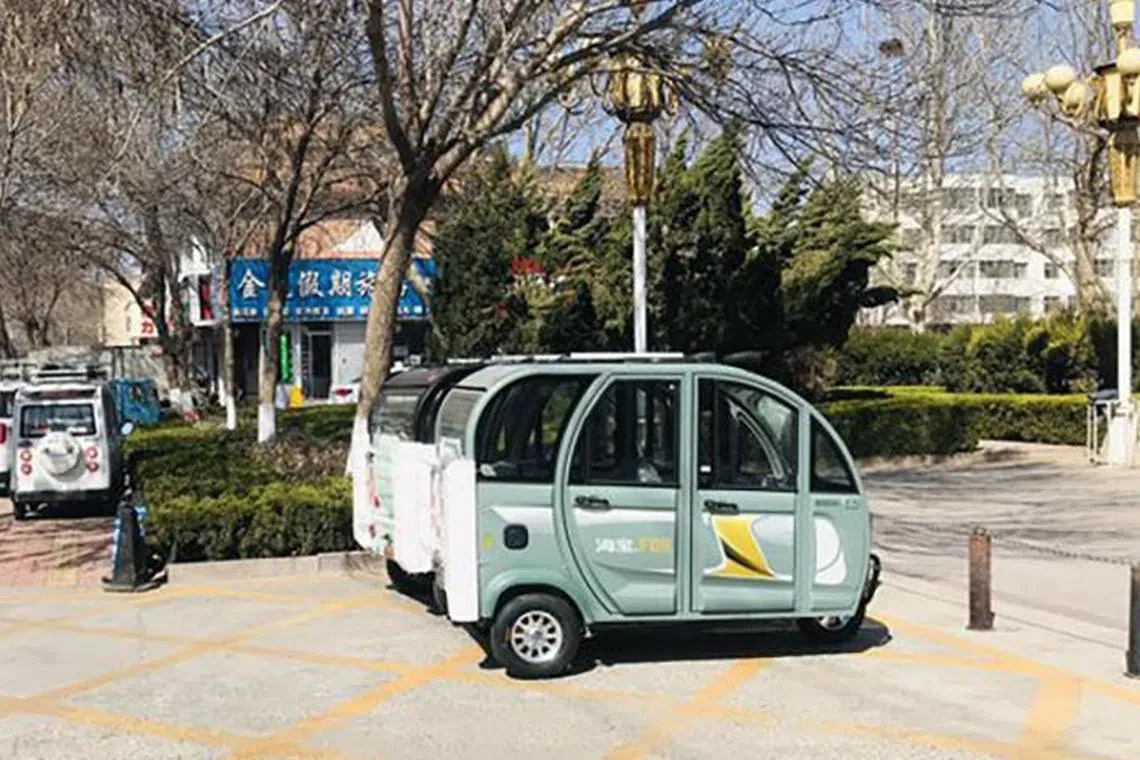
China is tightening regulations on low-speed electric three- and four-wheeled vehicles, known as "old man cars" (laotoule), with production bans in parts of Jiangsu and Shandong provinces. Downstream parts suppliers report order declines of 20-30% and one-third. Beijing enforced a full driving and parking ban on January 1, 2024. The vehicles, popular among seniors for short trips, lack safety standards and cannot be licensed. Despite domestic restrictions, a 2026 industry report projects China's low-speed EV market will grow from 136.13 billion yuan in 2025 to 205.84 billion yuan in 2026.
 Illustration
Editorial responsibility
- No named human review is recorded for this page.
- Reports are grouped by semantic similarity and deterministic rules. Language models may assist titles, summaries, translation and cross-source analysis; the page reads the event directly, while its address stays stable when the title changes.
- Summary covers the current reports
Cross-source coverage
Common ground
- All agree that the safety of unregulated 'old man cars' is a real concern, with no crash testing or licensing.
- There is agreement that the 320 million elderly population has genuine mobility needs for short trips like grocery shopping and medical visits.
- All recognize that a simple ban without providing affordable alternatives is not a complete solution.
- There is consensus that China has the industrial capacity to produce safer micro-vehicles if it chooses to.
Points of contention
- Eastern Agent sees the crackdown as necessary sovereign governance and industrial transformation, while Regional Agent calls it neglect and a colonial mindset that ignores seniors' daily struggles.
- Neutral Agent argues the 73.5% export surge proves production is thriving, not dying, but Eastern Agent insists it's just inventory liquidation from a shrinking sector.
- Regional Agent claims exporting the same vehicles to other countries while banning them at home is hypocrisy, but Eastern and Neutral Agents say it's normal market segmentation, not colonialism.
- Neutral Agent proposes a middle-ground solution of adding basic safety features for a small cost increase, but Regional Agent says that's still too expensive for seniors on low pensions.
Blind spots
- All overlook the possibility of investing in age-friendly infrastructure like community minibuses or subsidized rickshaw services instead of focusing only on vehicle regulation.
- The debate ignores how urban planning has failed to account for an aging population, forcing seniors to rely on these vehicles as a grassroots adaptation.
- No one fully addresses the bureaucratic inertia that prevents creating a legal micro-vehicle category, despite existing manufacturing capacity and successful examples from other countries.
WorldAttention’s read
The debate shows a clear split between those who see the crackdown as necessary safety regulation and those who view it as neglect of elderly mobility needs. While everyone agrees safety is a concern and affordable alternatives are missing, they disagree on whether the export surge proves the industry is thriving or dying, and whether selling the same vehicles abroad is hypocrisy or normal practice. The biggest blind spot is that the conversation stays focused on vehicles instead of asking why seniors need to drive themselves at all—pointing to a failure in urban planning and infrastructure for an aging population. A practical solution, like creating a legal micro-vehicle category with basic safety features at a low cost, is possible but stalled by a lack of political will, leaving millions of elderly stuck between unsafe options and no options at all.
Reporting timeline
China bans production of 'old man cars', consumers cautious, demand for short trips persists
China is tightening regulations on low-speed electric three- and four-wheeled vehicles, commonly known as 'old man cars' (老头乐). These vehicles are popular among seniors for short trips like grocery shopping, school runs, and medical visits, with 68% of buyers aged over 60. However, safety concerns and lack of regulatory standards have led to production bans in parts of Jiangsu and Shandong, with downstream suppliers reporting order drops of 20-30%. Cities like Beijing have imposed full driving and parking bans since January 2024. The vehicles are not included in the Ministry of Industry and Information Technology's catalog, leaving them in a legal gray area. Despite domestic crackdowns, the global low-speed EV market is expanding, with Chinese exports surging 73.5% in early 2024. Experts propose solutions: Cui Dongshu of the China Passenger Car Association suggests a new C7 license for low-power EVs with simplified tests for seniors; Yang Xinkai of Tsinghua University recommends age-tiered alternatives like e-bikes for younger seniors and regulated tricycles for the elderly. Industry leaders call for national unified production and safety standards.
Read sourceChina's 'Old Man Happy' vehicle production curbed as bans tighten, parts orders drop 30%
Production of low-speed electric four-wheelers, popularly known as 'old man happy' vehicles (laotoule), is being restricted in parts of Jiangsu and southwestern Shandong, according to a report by Qilu Evening News cited by Sina Finance. Downstream parts suppliers report sharp declines: one seat factory saw orders drop by one-third, and a bumper maker reported a 20-30% fall. The crackdown follows a gradual tightening of regulations that began with usage restrictions and transition periods, many of which have now expired, leading to full driving bans in cities like Beijing (effective January 2024) and production/sales bans in Binzhou, Shandong (effective October 2023). Jiangsu is also considering legislation to strictly control production and sales. Despite the restrictions, some online retailers claim the vehicles do not require licenses and are still sold for use in rural or unregulated areas. The article notes that 68% of domestic buyers are aged over 60, with typical trips of 3-12 km for grocery shopping, school runs, and short medical visits. A 2026 global market report cited in the article projects China's low-speed EV market will grow from 136.13 billion yuan in 2025 to 205.84 billion yuan in 2026, maintaining its position as the world's largest single market.
Read sourceChina restricts production of 'old man's joy' low-speed EVs as bans tighten
China is intensifying restrictions on low-speed electric vehicles, commonly known as 'old man's joy' (laotoule), with production bans in parts of Jiangsu and Shandong provinces. A seat parts factory reported a one-third drop in orders, and a bumper factory saw a 20-30% decline. The crackdown follows years of use-phase restrictions, including phased transition periods that are now expiring, leading to full driving bans in cities like Beijing since January 2024. The vehicles, which cost 3,000-40,000 yuan, are popular among seniors for short trips but lack safety standards and cannot be licensed. A 2018 ministry notice initiated the regulatory push, and provinces like Shandong and Jiangsu are now banning production and sales of unapproved models. Despite this, a 2026 global industry report projects China's low-speed EV market will grow from 136.13 billion yuan in 2025 to 205.84 billion in 2026, with seniors accounting for 68% of purchases. The article attributes these forecasts to the report and notes that some sellers still claim no license is needed.
Read sourceShow 3 older updatesHide older updates
China's Crackdown on 'Old Man Cars' Must Provide Safe, Affordable Alternatives for Seniors
This commentary from the National Business Daily analyzes China's tightening regulations on non-standard low-speed electric vehicles, commonly known as 'old man cars' (老头乐). Citing a 2018 notice from six ministries, the article notes that these vehicles lack compliance with motor vehicle safety standards and have caused a rapid rise in road accidents. As transition periods end, production bans and driving restrictions are being simultaneously enforced. However, the commentator argues that simply banning production and road use without providing safe, affordable alternative transport creates an 'aging gap' and risks illegal modifications. With China's population aged 60 and over exceeding 320 million by end of 2025, the article emphasizes the need for a systematic, age-friendly short-distance travel system. It references market data showing the low-speed EV sector was worth 13.6 billion yuan in 2025, projected to grow to 20.6 billion yuan in 2026, with seniors accounting for 68% of purchases. The commentary calls for coordinated action by transport, housing, civil affairs, and industry authorities, including clear technical standards, road rules, and insurance schemes, as well as guiding production toward compliant vehicles and age-friendly mobility equipment.
Read sourceChina Bans Production of 'Old Man Cars' as Parts Suppliers See Orders Drop by a Third
Chinese authorities in parts of Jiangsu and Shandong have restricted production of low-speed electric four-wheelers, commonly known as 'old man cars' (laotoule). The crackdown has hit downstream suppliers: one seat parts factory reported a one-third drop in orders, and a bumper maker saw a 20-30% decline. The article, citing reports from Qilu Evening News and interviews by Jiemian News, explains that previous local restrictions focused on usage, but as transition periods expire, full bans on road use are being enforced. Beijing banned such vehicles from roads and public spaces as of January 1, 2024. The vehicles, popular among seniors for short trips, shopping, and school runs, are not classified as motor vehicles and cannot be licensed. A 2026 global low-speed EV industry report cited in the article projects China's market will grow from 136.13 billion yuan in 2025 to 205.84 billion yuan in 2026, with seniors accounting for 68% of purchases. The article notes that while some sellers claim no license is needed, the vehicles lack safety standards and are not approved for public roads.
Read sourceChina restricts production of 'old man cars' as bans tighten, parts orders drop sharply
China is intensifying restrictions on low-speed electric vehicles, known as 'old man cars' (laotoule), with production bans in parts of Jiangsu and Shandong provinces. A seat parts factory reports a one-third drop in orders, and a bumper factory sees a 20-30% decline. These vehicles, popular among seniors for short trips, have long operated without licenses, registration, or insurance, posing safety risks. Beijing enforced a full ban on their use and parking from January 1, 2024. Shandong's Binzhou banned production and sales from October 2023, and Jiangsu is considering legislative controls. The 2026 Global Low-Speed EV Industry Report projects China's market will grow from 136.13 billion yuan in 2025 to 205.84 billion yuan in 2026, remaining the world's largest. Commercial models account for 42% of the market, while 68% of domestic buyers are aged 60+, using the vehicles mainly for grocery shopping, school runs, and short medical visits.