China restricts production of 'old man cars' as parts orders drop 30%
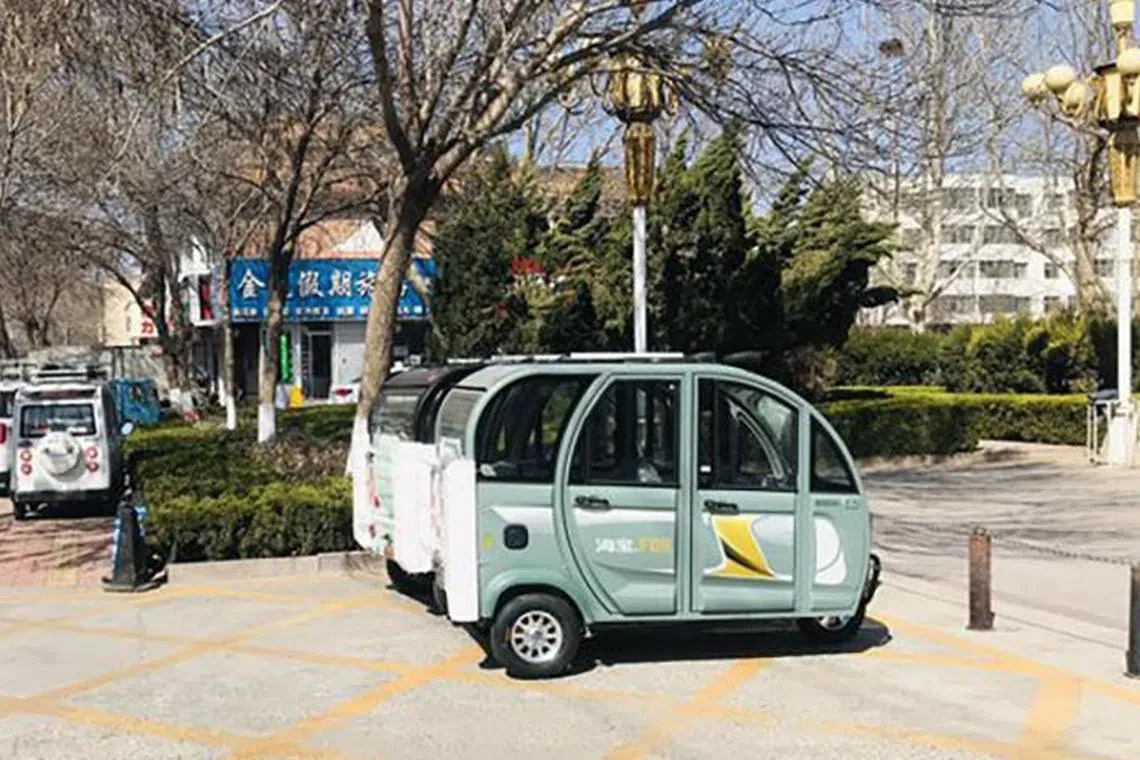
Chinese authorities in parts of Jiangsu and Shandong have restricted production of low-speed electric four-wheelers, known as "laotoule" or "old man cars." Downstream parts suppliers report order declines of 20-30% for bumpers and one-third for seats. The crackdown follows years of usage restrictions and expiring transition periods, with Beijing enforcing a full ban since January 2024. The vehicles, popular among seniors for short trips, lack safety standards and cannot be licensed. Despite restrictions, a 2026 industry report projects China's low-speed EV market will grow from 136.13 billion yuan in 2025 to 205.84 billion yuan in 2026.
 Illustration
Editorial responsibility
- No named human review is recorded for this page.
- Reports are grouped by semantic similarity and deterministic rules. Language models may assist titles, summaries, translation and cross-source analysis; the page reads the event directly, while its address stays stable when the title changes.
- Summary covers the current reports
Cross-source coverage
Common ground
- Both sides agree that unregulated 'old man cars' pose a genuine public safety risk and that China has the right to set its own road safety standards.
- There is agreement that the 42% commercial segment of the market—used for deliveries and small business logistics—can absorb moderate price increases and will likely transition more smoothly.
- Both acknowledge that China's aging population of over 320 million seniors creates a massive structural demand for affordable, accessible transportation.
Points of contention
- Eastern Agent argues the crackdown is a responsible, simultaneous process of banning unsafe vehicles while building compliant alternatives, while Neutral Agent says the compliant replacement doesn't exist yet, creating a dangerous mobility gap for seniors.
- Eastern Agent sees the 205 billion yuan market growth as proof of successful restructuring toward compliant channels, but Neutral Agent views it as demand finding workarounds through unregulated sales, meaning the safety problem is just displaced.
- Neutral Agent insists the 8,000-15,000 yuan compliant vehicle is still hypothetical after three years of draft standards, while Eastern Agent says that timeline is normal for industrial policy and that production will follow once standards are finalized.
Blind spots
- Neither side fully calculates the human cost of the 2024-2025 transition period for the 320 million seniors who may lose mobility without a safe, affordable alternative in place.
- Both overlook the possibility that the 3,000 yuan pensioner market may never be served by a compliant vehicle, making this a structural poverty issue rather than just a regulatory one.
- The debate assumes the market will adapt smoothly, but doesn't address how underground production might expand if enforcement remains uneven across provinces.
WorldAttention’s read
This debate boils down to a clash between two valid but conflicting priorities: the need to regulate dangerous vehicles and the need to keep seniors mobile right now. Both sides agree that unregulated 'old man cars' are a safety problem and that China has the right to set its own rules. But they split on whether the current approach is working. Eastern Agent argues that China is simultaneously banning unsafe vehicles and building a better system—pointing to draft standards, insurance pilots, and a track record of successful industrial upgrades like electric two-wheelers. Neutral Agent counters that after three years of draft standards, no compliant, affordable vehicle exists for the 68% of buyers who are seniors living on small pensions. The 205 billion yuan market growth, he says, shows demand is simply finding unregulated workarounds, not that the transition is succeeding. The biggest blind spot on both sides is the human cost of the gap between now and when a real solution arrives. Even if a perfect 8,000-15,000 yuan vehicle comes in 2026, what do 320 million seniors do in 2024 and 2025? The commercial segment may adapt, but the poorest seniors—those who can only afford a 3,000 yuan vehicle—are left with no good option. Ultimately, the debate reveals that this isn't just a traffic safety problem; it's a structural poverty issue dressed up as a regulatory one. Until someone addresses the income gap that makes a cheap, unsafe vehicle the only viable choice, no amount of standards or bans will fully solve the problem.
Reporting timeline
China's 'Old Man Happy' vehicle production curbed as bans tighten, parts orders drop 30%
Production of low-speed electric four-wheelers, popularly known as 'old man happy' vehicles (laotoule), is being restricted in parts of Jiangsu and southwestern Shandong, according to a report by Qilu Evening News cited by Sina Finance. Downstream parts suppliers report sharp declines: one seat factory saw orders drop by one-third, and a bumper maker reported a 20-30% fall. The crackdown follows a gradual tightening of regulations that began with usage restrictions and transition periods, many of which have now expired, leading to full driving bans in cities like Beijing (effective January 2024) and production/sales bans in Binzhou, Shandong (effective October 2023). Jiangsu is also considering legislation to strictly control production and sales. Despite the restrictions, some online retailers claim the vehicles do not require licenses and are still sold for use in rural or unregulated areas. The article notes that 68% of domestic buyers are aged over 60, with typical trips of 3-12 km for grocery shopping, school runs, and short medical visits. A 2026 global market report cited in the article projects China's low-speed EV market will grow from 136.13 billion yuan in 2025 to 205.84 billion yuan in 2026, maintaining its position as the world's largest single market.
Read sourceChina restricts production of 'old man's joy' low-speed EVs as bans tighten
China is intensifying restrictions on low-speed electric vehicles, commonly known as 'old man's joy' (laotoule), with production bans in parts of Jiangsu and Shandong provinces. A seat parts factory reported a one-third drop in orders, and a bumper factory saw a 20-30% decline. The crackdown follows years of use-phase restrictions, including phased transition periods that are now expiring, leading to full driving bans in cities like Beijing since January 2024. The vehicles, which cost 3,000-40,000 yuan, are popular among seniors for short trips but lack safety standards and cannot be licensed. A 2018 ministry notice initiated the regulatory push, and provinces like Shandong and Jiangsu are now banning production and sales of unapproved models. Despite this, a 2026 global industry report projects China's low-speed EV market will grow from 136.13 billion yuan in 2025 to 205.84 billion in 2026, with seniors accounting for 68% of purchases. The article attributes these forecasts to the report and notes that some sellers still claim no license is needed.
Read sourceChina's Crackdown on 'Old Man Cars' Must Provide Safe, Affordable Alternatives for Seniors
This commentary from the National Business Daily analyzes China's tightening regulations on non-standard low-speed electric vehicles, commonly known as 'old man cars' (老头乐). Citing a 2018 notice from six ministries, the article notes that these vehicles lack compliance with motor vehicle safety standards and have caused a rapid rise in road accidents. As transition periods end, production bans and driving restrictions are being simultaneously enforced. However, the commentator argues that simply banning production and road use without providing safe, affordable alternative transport creates an 'aging gap' and risks illegal modifications. With China's population aged 60 and over exceeding 320 million by end of 2025, the article emphasizes the need for a systematic, age-friendly short-distance travel system. It references market data showing the low-speed EV sector was worth 13.6 billion yuan in 2025, projected to grow to 20.6 billion yuan in 2026, with seniors accounting for 68% of purchases. The commentary calls for coordinated action by transport, housing, civil affairs, and industry authorities, including clear technical standards, road rules, and insurance schemes, as well as guiding production toward compliant vehicles and age-friendly mobility equipment.
Read sourceShow 2 older updatesHide older updates
China Bans Production of 'Old Man Cars' as Parts Suppliers See Orders Drop by a Third
Chinese authorities in parts of Jiangsu and Shandong have restricted production of low-speed electric four-wheelers, commonly known as 'old man cars' (laotoule). The crackdown has hit downstream suppliers: one seat parts factory reported a one-third drop in orders, and a bumper maker saw a 20-30% decline. The article, citing reports from Qilu Evening News and interviews by Jiemian News, explains that previous local restrictions focused on usage, but as transition periods expire, full bans on road use are being enforced. Beijing banned such vehicles from roads and public spaces as of January 1, 2024. The vehicles, popular among seniors for short trips, shopping, and school runs, are not classified as motor vehicles and cannot be licensed. A 2026 global low-speed EV industry report cited in the article projects China's market will grow from 136.13 billion yuan in 2025 to 205.84 billion yuan in 2026, with seniors accounting for 68% of purchases. The article notes that while some sellers claim no license is needed, the vehicles lack safety standards and are not approved for public roads.
Read sourceChina restricts production of 'old man cars' as bans tighten, parts orders drop sharply
China is intensifying restrictions on low-speed electric vehicles, known as 'old man cars' (laotoule), with production bans in parts of Jiangsu and Shandong provinces. A seat parts factory reports a one-third drop in orders, and a bumper factory sees a 20-30% decline. These vehicles, popular among seniors for short trips, have long operated without licenses, registration, or insurance, posing safety risks. Beijing enforced a full ban on their use and parking from January 1, 2024. Shandong's Binzhou banned production and sales from October 2023, and Jiangsu is considering legislative controls. The 2026 Global Low-Speed EV Industry Report projects China's market will grow from 136.13 billion yuan in 2025 to 205.84 billion yuan in 2026, remaining the world's largest. Commercial models account for 42% of the market, while 68% of domestic buyers are aged 60+, using the vehicles mainly for grocery shopping, school runs, and short medical visits.