China A-shares fall broadly; Strait concept stocks surge, over 4,300 decline
On September 24, China's A-share market experienced a broad decline, with the Shanghai Composite Index falling 1.22% to below 3,900 points, the Shenzhen Component Index dropping 2.34%, and the ChiNext Index losing 2.68%. Over 4,300 stocks declined, and trading volume shrank to approximately 1.65-1.67 trillion yuan. Despite the overall weakness, Strait concept stocks surged in late trading, with Lulu Information hitting the 30% daily limit and Strait Innovation rising 20%. Textile manufacturing, coal, and banking sectors gained. Analysts cited pre-holiday risk aversion and expect a potential post-holiday rebound.
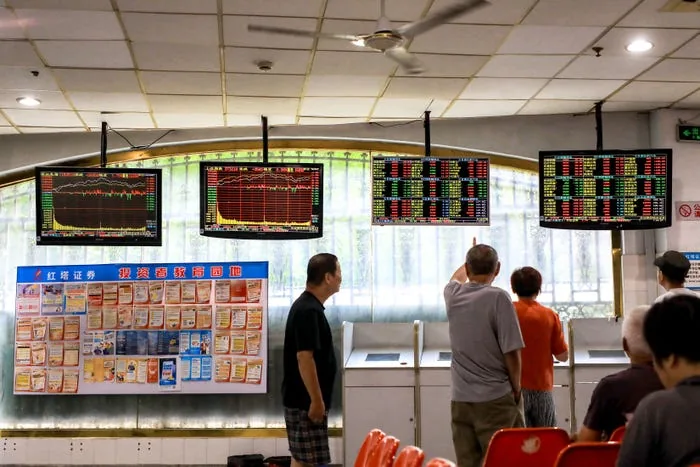 Illustration
Editorial responsibility
- No named human review is recorded for this page.
- Reports are grouped by semantic similarity and deterministic rules. Language models may assist titles, summaries, translation and cross-source analysis; the page reads the event directly, while its address stays stable when the title changes.
- Summary covers the current reports
Cross-source coverage
Reporting timeline
A-Share Market Falls but Strait Concept Stocks Surge; Analysts See Post-Holiday Rebound Potential
On September 24, China's A-share market experienced a broad decline, with the Shanghai Composite Index falling below 3,900 points, the ChiNext Index losing 3,300 points, and over 4,300 stocks declining. Trading volume dropped to 1.67 trillion yuan. However, Strait concept stocks staged a dramatic late-session rally, with Lulu Information (920748) hitting the 30% daily limit and several other stocks surging. Textile manufacturing stocks also rose against the trend. High-dividend sectors like oil, banking, coal, and power outperformed. In terms of fund flows, the electronics sector saw net outflows of over 207 billion yuan, while automobiles and banking attracted inflows. Looking ahead, Datong Securities expects the market to remain without a clear trend but believes the 'sentiment bottom' has been formed, recommending short-term focus on coal and banking. China Merchants Securities noted that pre-holiday trading is typically thin but expects a post-National Day rebound, citing a nearly 60% historical probability of gains in the week after the holiday, though the traditional calendar effect may be diminishing due to early positioning by investors.
Read sourcePre-Holiday Adjustment Releases Risk; Post-Holiday Fund Inflow Seen as Key to A-Share Recovery
On the last trading day before the Mid-Autumn and National Day holidays, China's A-share market experienced an accelerated decline, with the Shanghai Composite Index closing at 3,888.37 points, down 1.22%, and the Shenzhen Component Index falling 2.34%. Trading volume shrank to 1.67 trillion yuan, down over 110 billion yuan from the previous session. Analysts cited a combination of factors: hawkish signals from a Federal Reserve official raising global risk-free rates, which pressured risk assets, and domestic pre-holiday effects reducing trading appetite. However, analysts quoted in the article argue the sell-off is not a trend reversal. They note that the probability of a Fed rate hike has fallen from 75% to 68.6%, and that domestic private equity fund positions have risen for two consecutive weeks, with 67% of funds having over 80%仓位. Analyst Yang Changlong from Jufu Investment Advisors stated that market risks have been released after recent valuation digestion, and sentiment could recover if overseas uncertainties ease. Another securities analyst forecasted that once funds return after the holiday, a rebound is likely due to the rapid risk release from the recent correction. The outlook is conditional on overseas interest rate trends, domestic policy signals, and trading volume recovery.
Read sourceChina A-shares fall broadly; Strait concept stocks surge, analysts see post-holiday rebound
On September 24, China's A-share market experienced a broad decline, with the Shanghai Composite Index falling over 1% to below 3,900 points, while the Shenzhen Component Index, ChiNext Index, and STAR Composite Index each dropped over 2%. More than 4,300 stocks declined, and total turnover shrank to 1.67 trillion yuan. Sectors such as oil & gas, textile manufacturing, coal, and banking posted gains, while precious metals, components, energy metals, and consumer electronics fell. The Strait concept (Fujian-Taiwan) stocks surged in late trading, with Luku Information hitting the 30% daily limit, Strait Innovation (300300) hitting the 20% limit, and several others also limit-up. Textile manufacturing stocks remained strong throughout the session. High-dividend blue chips in oil, banking, coal, and power also rose. Looking ahead, Datong Securities expects the market to remain 'theme-less' but sees an 'emotional bottom' already formed, recommending short-term focus on coal and banking dividend stocks. China Merchants Securities noted that pre-holiday trading is typically thin due to risk aversion, but the market tends to rebound after the National Day holiday, with a nearly 60% probability of gains in the week following the holiday over the past decade, though the 'learning effect' has led to some pre-holiday front-running in recent years.
Read sourceShow 17 older updatesHide older updates
China Stocks Fall, Shenzhen and ChiNext Drop Over 2%, Over 4,300 Stocks Decline
Chinese stock markets closed lower on September 24, with the Shenzhen Component Index and the ChiNext Index both falling over 2%, while the Shanghai Composite Index dropped over 1%. More than 4,300 stocks declined. The wind power equipment sector bucked the trend, with Zhenhong Shares rising over 10% and Jixin Technology hitting the daily limit, supported by expectations that offshore wind capacity will double to 100 GW by 2030. The education and coal sectors also saw gains. On the downside, precious metals continued to fall, led by Shandong Gold, and PCB and innovative drug concepts weakened. In other news, Beijing released a policy supporting AI+audio-visual applications, with project support up to 3 million yuan. TD Securities forecast that gold could challenge $5,000 per ounce again by 2027, citing strong investment demand despite rate headwinds. Citigroup predicted the Fed would hold rates steady in October and December, resuming cuts in June 2027 as inflation cools.
Read sourceA-share market returns to low volume, Shanghai Composite loses 3900 points before Mid-Autumn Festival
On September 24, the A-share market experienced a broad decline, with the Shanghai Composite Index falling 1.22% to lose the 3900-point mark, the Shenzhen Component Index dropping 2.34%, and the ChiNext Index falling 2.68%. Trading volume shrank to 1.65 trillion yuan, returning to a yearly low-volume range. Over 4,300 stocks fell. The article attributes the decline to a 'pre-holiday effect' ahead of the Mid-Autumn Festival, noting that historical data from Wind shows a pattern of 'first falling then rising' in the three days before the National Day holiday. It cites a pattern where the third-to-last trading day is the most dangerous, while the last two days tend to turn positive. The article also discusses the ongoing China-US meeting as a key event for the weekend, with a report from Kaiyuan Securities suggesting that while the meeting may have limited impact on overall risk appetite, any substantive changes in tariff negotiations could benefit export-oriented sectors like light manufacturing, auto parts, and basic chemicals. The robot concept stock sector showed relative strength, attributed to Elon Musk's interview with CCTV Finance forecasting 100 billion humanoid robots globally in 15 years, and a report from Orient Securities predicting 2026 as the first year of mass production for embodied intelligence.
Read sourceChina A-shares fall before holiday; Shenzhen index drops 2.34%, weight-loss drug and e-cig stocks weak
China's A-share markets experienced a full-day contraction and consolidation before the Mid-Autumn Festival, with losses widening in the afternoon and overall trading sentiment declining. The Shanghai Composite Index fell 1.22%, the Shenzhen Component Index dropped 2.34%, and the ChiNext Index lost 2.68%. Total turnover on the Shanghai and Shenzhen exchanges was approximately 1.65 trillion yuan, shrinking by about 111.6 billion yuan from the previous session. Declining stocks outnumbered gainers, with over 4,300 stocks falling versus more than 1,100 rising. Sectors such as advanced packaging, weight-loss drugs, CPO, and e-cigarettes led the declines, while education, shipping ports, coal, and engineering machinery posted gains. Essence Securities commented that if trading volume remains insufficient before the holiday, the market will still rely on certain sectors and individual stocks to drive performance. The firm identified AI hardware as a short-term key, noting its upside depends on whether US capital expenditure and earnings performance can continue to be validated. Regarding convertible bonds, the firm noted that valuations have recovered somewhat, mainly in high-premium bonds, but overall valuations remain high and a one-week rebound does not yet indicate a broad rally. It advised focusing on individual bonds where the underlying stock's expectations still have room for improvement and the bond price has not fully reflected this. For core holdings, the firm recommended comparing credit risk, holding returns, and remaining maturity, while considering entry price and exit timing.
China stocks fall: Shanghai index loses 1.22%, over 4,300 stocks decline
On September 24, China's A-share market experienced a broad decline, with the Shanghai Composite Index falling 1.22% to 3,888.37 points, the Shenzhen Component Index dropping 2.34%, and the ChiNext Index losing 2.68%. Total trading volume reached 1.65 trillion yuan, with over 4,300 stocks declining. Sector performance was mixed: Fujian local stocks surged in late trading, with Fujian Cement hitting its daily limit; robotics concept stocks were active, driven by Elon Musk's forecast of at least 1 billion humanoid robots within a decade; textile manufacturing rose on the back of a new government plan; and wind power equipment gained on offshore wind targets. Real estate and PCB concepts weakened. Institutional views: CITIC Securities advised against expecting high trading volume or index gains before the holiday, recommending a defensive approach. Galaxy Securities forecast auto sales to improve month-on-month in the 'golden September and silver October' season. CICC noted that Fed nominee Warsh's policy reaction function may shift, cautioning against linear extrapolation of current hawkishness.
Read sourceChina stocks fall sharply, Shenzhen and ChiNext down over 2%, more than 4,300 stocks decline
Chinese stock markets closed lower on September 24, with the Shenzhen Component Index and ChiNext Index both falling over 2%, while the Shanghai Composite dropped over 1%. More than 4,300 stocks declined. Wind power equipment bucked the trend, with Zhenhong shares up over 10% and Jixin Technology hitting the daily limit, supported by expectations that offshore wind capacity will double to 100 GW by 2030. Education and coal sectors also rose. Precious metals, PCB concepts, and innovative drugs led the declines. In other news, Beijing announced support for AI+audio-visual projects with up to 3 million yuan in funding. TD Securities forecast gold could reach $5,000/oz by 2027, while Citigroup expects the Fed to hold rates steady in October and December and resume cuts in June 2027. Tencent launched 'TenPay Go' for inbound travelers. Brokerages including Dongfang, Guohai, Huabao, and Guojin offered mixed outlooks, with some expecting a near-term rebound but limited by holiday effects.
Read sourceA-Share Markets Fall on External Pressure; Media Stocks Rally on Policy and M&A News
Chinese A-share markets opened lower on September 24, with the Shanghai Composite Index down 0.31%, the Shenzhen Component Index down 0.76%, and the ChiNext Index down 0.77%, pressured by rising U.S. Treasury yields and expectations of prolonged Fed tightening. Despite the broad decline, the media sector rallied, driven by a policy notice on the publishing industry's 15th Five-Year Plan and a major acquisition announcement by Xinhua Media. Individual stocks like Xinhua Winshare, Xinhua Media, and Tianwei Vision extended their winning streaks. Other active sectors included textile manufacturing, AI pharma concepts, VNA instruments, and robotics, while real estate weakened. Newly listed N-Bairuiji surged 347%. Looking ahead, China Securities Co. advised caution, noting the market is transitioning from single-theme speculation to a 'tech + dividend' dual-mainline rebalancing phase, and warned against high expectations for index gains before the holiday. Galaxy Securities forecast a seasonal uptick in auto sales, while CICC commented on the potential for a dovish shift in Fed policy under a possible Trump-appointed Fed chair.
Read sourceChina A-Share Indices Open Lower; Gold, Real Estate Sectors Lead Declines
On September 24, China's four major A-share indices opened lower, with the Shanghai Composite Index falling 0.28%, the Shenzhen Component Index down 0.45%, the ChiNext Index dropping 0.38%, and the STAR Composite Index declining 0.51%. Sectors including gold, real estate, semiconductors, and computer hardware led the losses, with over 3,400 stocks declining. In individual stocks, Baiji surged over 347% on its first trading day. Guangda Securities commented that while liquidity and policy uncertainties have eased both domestically and internationally, the approaching Mid-Autumn Festival and National Day holidays are increasing pre-holiday risk aversion among investors, leading to declining trading activity. The brokerage expects short-term market conditions to remain characterized by consolidation and rapid sector rotation.
Read sourceChina A-Share Indices Open Lower; Gold, Real Estate Sectors Lead Declines
On September 24, China's four major A-share indices opened lower, with the Shanghai Composite Index down 0.28%, the Shenzhen Component Index down 0.45%, the ChiNext Index down 0.38%, and the STAR Composite Index down 0.51%. Sectors including gold, real estate, semiconductors, and computer hardware led the declines. Over 3,400 stocks fell in early trading. In individual stocks, Bairuiji surged over 347% on its debut. Guangda Securities commented that while liquidity and policy uncertainties have eased both domestically and internationally, the approaching Mid-Autumn Festival and National Day holidays are increasing pre-holiday risk aversion, reducing trading activity. The brokerage expects the short-term market to continue consolidating with rapid sector rotation.
Read sourceChina A-Share Indices Open Lower; Gold, Real Estate Sectors Lead Declines
On September 24, China's four major A-share indices opened lower, with the Shanghai Composite Index down 0.28%, the Shenzhen Component Index down 0.45%, the ChiNext Index down 0.38%, and the STAR Composite Index down 0.51%. Sectors including gold, real estate, semiconductors, and computer hardware led the declines. Over 3,400 stocks fell in early trading. In individual stocks, Bairuiji surged over 347% on its debut. Guangda Securities commented that while liquidity and policy uncertainties have eased both domestically and internationally, the upcoming Mid-Autumn Festival and National Day holidays are increasing pre-holiday risk aversion among investors, leading to declining trading activity. The brokerage expects short-term market movements to remain characterized by consolidation and rapid sector rotation.
Read sourceChina A-Share Indices Open Lower; Gold, Real Estate Sectors Lead Declines
On September 24, China's four major A-share indices opened lower, with the Shanghai Composite Index falling 0.28%, the Shenzhen Component Index down 0.45%, the ChiNext Index dropping 0.38%, and the STAR Composite Index declining 0.51%. Sectors including gold, real estate, semiconductors, and computer hardware led the losses. Over 3,400 stocks declined in early trading. In individual stocks, Bairuiji surged over 347% on its debut. Everbright Securities commented that while liquidity and policy uncertainties have eased both domestically and internationally, the approaching Mid-Autumn Festival and National Day holidays are increasing investors' pre-holiday risk aversion, reducing trading activity. The brokerage expects the short-term market to continue consolidating with rapid sector rotation.
Read sourceChina A-Share Indices Open Lower; Gold, Real Estate Sectors Lead Declines
On September 24, China's four major A-share indices opened lower, with the Shanghai Composite Index falling 0.28%, the Shenzhen Component Index down 0.45%, the ChiNext Index dropping 0.38%, and the STAR Composite Index declining 0.51%. Sectors including gold, real estate, semiconductors, and computer hardware led the losses. Over 3,400 stocks declined in early trading. In individual stocks, Bairuiji surged over 347% on its debut. Everbright Securities commented that while liquidity and policy uncertainties have eased both domestically and internationally, the approaching Mid-Autumn Festival and National Day holidays are increasing pre-holiday risk aversion among investors, leading to declining trading activity. The brokerage expects the short-term market to continue consolidating with rapid sector rotation.
Read sourceChina A-Share Indices Open Lower; Gold, Real Estate Sectors Lead Declines
On September 24, China's four major A-share indices opened lower, with the Shanghai Composite Index falling 0.28%, the Shenzhen Component Index down 0.45%, the ChiNext Index dropping 0.38%, and the STAR Composite Index declining 0.51%. Sectors including gold, real estate, semiconductors, and computer hardware led the losses, with over 3,400 stocks declining. In individual stocks, Bairuiji surged over 347% on its debut. Everbright Securities commented that while liquidity and policy uncertainties have eased both domestically and internationally, the approaching Mid-Autumn Festival and National Day holidays are increasing pre-holiday risk aversion, reducing trading activity. The brokerage expects short-term market consolidation with rapid sector rotation.
Read sourceChina A-Share Indices Open Lower; Gold, Real Estate Sectors Lead Declines
On September 24, China's four major A-share indices opened lower, with the Shanghai Composite Index falling 0.28%, the Shenzhen Component Index down 0.45%, the ChiNext Index dropping 0.38%, and the STAR Composite Index declining 0.51%. Sectors including gold, real estate, semiconductors, and computer hardware led the losses, with over 3,400 stocks declining. In individual stocks, Bairuiji surged over 347% on its debut. Guangda Securities commented that while liquidity and policy uncertainties have eased both domestically and internationally, the approaching Mid-Autumn Festival and National Day holidays are increasing pre-holiday risk aversion, reducing trading activity. The brokerage expects the short-term market to continue consolidating with rapid sector rotation.
Read sourceChina A-Share Indices Open Lower; Gold, Real Estate Sectors Lead Declines
On September 24, China's four major A-share indices opened lower, with the Shanghai Composite Index falling 0.28%, the Shenzhen Component Index down 0.45%, the ChiNext Index dropping 0.38%, and the STAR Composite Index declining 0.51%. Sectors including gold, real estate, semiconductors, and computer hardware led the losses, with over 3,400 stocks declining. In individual stocks, Bairuiji surged over 347% on its debut. CGS-CIMB Securities commented that while liquidity and policy uncertainties have eased both domestically and internationally, the approaching Mid-Autumn Festival and National Day holidays are increasing pre-holiday risk aversion among investors, leading to declining trading activity. The brokerage expects the short-term market to continue consolidating with rapid sector rotation.
Read sourceChina A-Share Indices Fall, Wind Power Sector Rises as Trading Volume Dips Below 1.7 Trillion Yuan
China's A-share markets closed lower on Wednesday, with the Shanghai Composite Index falling 1.22%, the Shenzhen Component Index dropping 2.34%, and the ChiNext Index declining 2.68%. Total trading volume on the Beijing, Shanghai, and Shenzhen exchanges was below 1.7 trillion yuan, shrinking by over 100 billion yuan from the previous day. Most industry sectors declined, with precious metals, components, energy metals, industrial metals, non-ferrous metals, baijiu, glass, bioproducts, and chemical pharmaceuticals among the worst performers. The wind power equipment sector bucked the trend, rising strongly. Over 1,100 stocks advanced, with more than 50 hitting the daily limit. In other news, vector network analyzer (VNA) concept stocks surged on reports of supply tightness. The U.S. dollar strengthened to its highest level since late July on expectations of further Federal Reserve rate hikes. OpenAI CEO Sam Altman and Anthropic CEO Dario Amodei spoke at the UN Security Council, calling for international AI governance. Brokerage reports cited include: Galaxy Securities forecasting auto sales to improve month-on-month in the 'golden September and silver October' season; CITIC Securities stating AI computing has entered a 'full liquid cooling' era; China Securities noting five uncertainties and five certainties in the global macro environment; and Zheshang Securities predicting PCB drill demand growth driven by AI.
Read sourceChina A-shares Fall Before Holiday; Shenzhen Index Down 2.34%, Weight-Loss Drug and E-Cig Stocks Weak
China's A-share markets experienced a full-day volatile session with shrinking volume ahead of the Mid-Autumn Festival, with losses deepening in the afternoon. The Shanghai Composite Index fell 1.22%, the Shenzhen Component Index dropped 2.34%, and the ChiNext Index declined 2.68%. Total turnover on the Shanghai and Shenzhen exchanges was approximately 1.65 trillion yuan, down about 111.6 billion yuan from the previous trading day. More than 4,300 stocks declined while only over 1,100 advanced. Sectors including advanced packaging, weight-loss drugs, CPO, and e-cigarettes led the declines, while education, shipping ports, coal, and engineering machinery sectors gained. Essence Securities commented that if pre-holiday trading volume remains insufficient, the market rally will depend on certain sectors and individual stocks. The firm noted that AI hardware is a short-term key, with its upside depending on continued verification of US capital expenditure and earnings performance. Convertible bonds saw some recovery last week, but overall valuations remain high, and a broad rally cannot be inferred from one week's rebound. The firm advised focusing on individual bonds where underlying stock expectations may improve but prices have not yet fully reflected this.
Read source