CATL market cap erases over $100B as automakers shift battery supply to rivals
CATL, the world's largest EV battery maker, has lost over 700 billion yuan ($100B) in market value since May 2026 as automakers including Li Auto, Xiaomi, and Huawei's HIMA accelerate "de-CATL" strategies, awarding contracts to second-tier suppliers like Sunwoda, CALB, and Gotion High-tech. Despite record first-half profits of 43.3 billion yuan, CATL's stock has fallen over 35% from its peak. The company plans to issue a statement addressing market rumors.
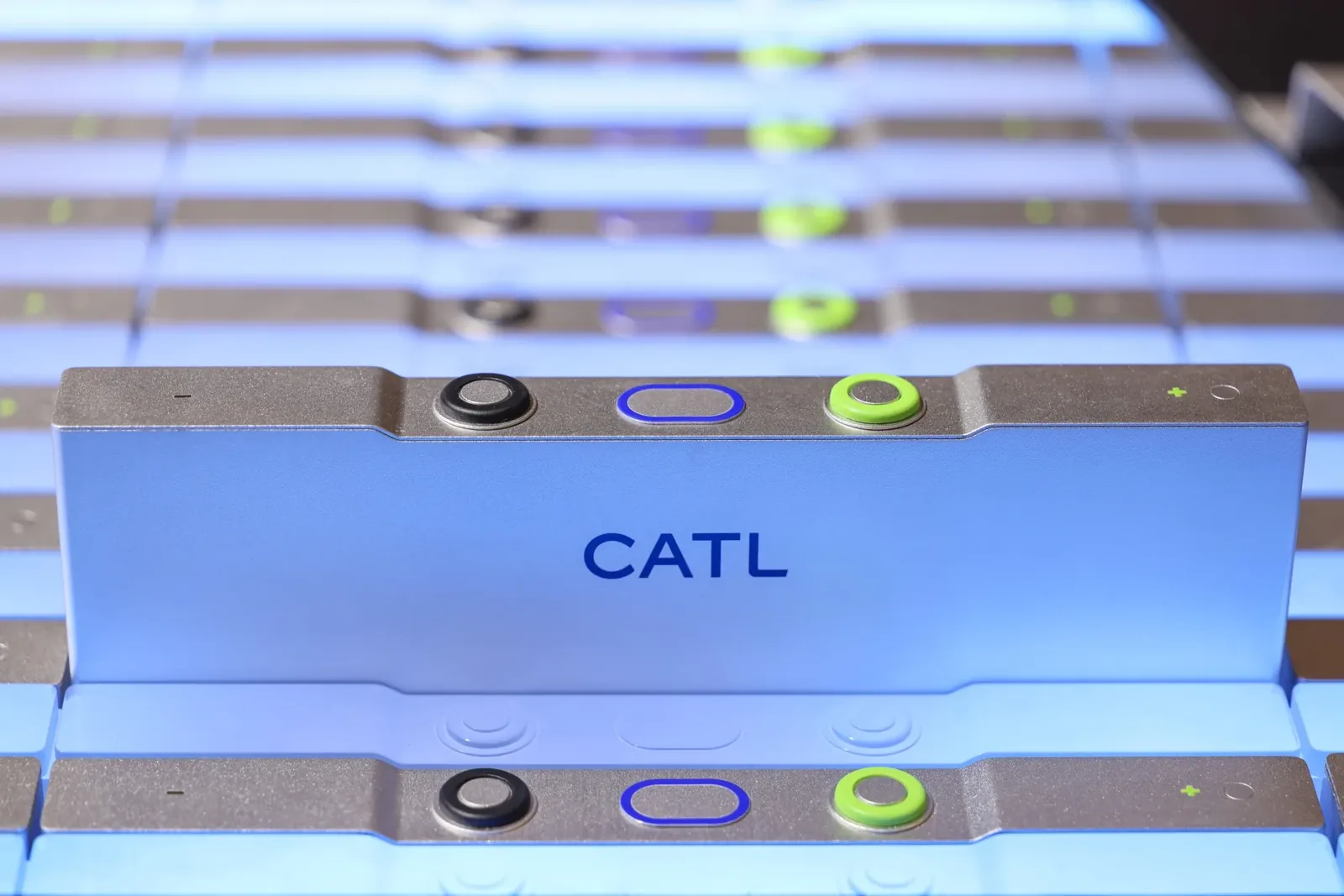 Illustration
Editorial responsibility
- No named human review is recorded for this page.
- Reports are grouped by semantic similarity and deterministic rules. Language models may assist titles, summaries, translation and cross-source analysis; the page reads the event directly, while its address stays stable when the title changes.
- Summary covers the current reports
Cross-source coverage
Common ground
- CATL's sell-off at 13x forward earnings is overdone in the short term, making the stock cheap relative to its growth projections.
- The global battery market is growing so fast that even if CATL's market share drops, its absolute production and revenue will likely increase.
- CATL's technology, scale, and manufacturing efficiency remain unmatched, with 95% capacity utilization versus the industry average of 65%.
- Margin compression is a real risk as competition intensifies and automakers diversify suppliers.
Points of contention
- Whether the automaker diversification is a normal competitive dynamic or a structural shift that permanently erodes CATL's pricing power.
- Whether the stock decline is a rational market repricing of risk or a manufactured panic driven by Western narratives and financial system bias.
- Whether CATL's government backing as a national champion can protect its market share and margins from competitive pressure.
- Whether the 40 billion yuan buyback signals genuine confidence or is a weak gesture given only 1.6 billion has been executed.
Blind spots
- The debate largely ignores the human impact on retail investors in China who are being shaken out by the volatility.
- There is little discussion of how CATL's insider selling of over 2 billion yuan in six months might reflect concerns about future competition.
- The possibility that CATL might need to become an automaker itself or develop a breakthrough technology to regain its monopoly premium is not fully explored.
WorldAttention’s read
All sides agree that CATL is a strong company with solid fundamentals, but they disagree on whether the recent stock drop is a buying opportunity or a sign of lasting change. The neutral view sees the sell-off as overdone but warns that CATL's monopoly premium is gone for good due to real competitive pressure from automakers funding rivals and building their own batteries. The Eastern and Regional views argue this is a manufactured panic driven by Western narratives and a biased financial system, and that CATL's government backing and the massive growth in battery demand will drive a recovery. The key blind spots are the human cost for retail investors, the significance of insider selling, and whether CATL can adapt to a future where its customers are also its competitors. Ultimately, the stock may recover, but it likely won't return to its peak valuation unless something fundamental changes.
Reporting timeline
CATL loses $100B market cap as automakers diversify battery supply to second-tier firms
CATL, China's dominant EV battery maker, has seen its stock fall over 35% from a May 2026 high, erasing more than 700 billion yuan ($100B) in market value, despite reporting record first-half profits of 43.3 billion yuan. The decline reflects a structural shift as automakers pursue 'de-CATL' strategies to reduce dependence on the battery giant. Key automakers including Li Auto, Xiaomi, and Xpeng have awarded contracts to second-tier suppliers such as欣旺达 (Sunwoda), 中创新航 (CALB), 国轩高科 (Gotion High-tech), and 亿纬锂能 (EVE Energy). However, analysts question whether these firms can meet quality and delivery requirements, citing recent recalls and quality issues. CATL's capacity utilization remains at 95% versus an industry average of 65%, and its profitability still far exceeds competitors. The article concludes that the battery industry is transitioning from a single-dominant player to a multi-supplier equilibrium, but second-tier firms face significant hurdles in manufacturing consistency, technology, and scale.
Read sourceAutomakers Accelerate Battery Supplier Diversification, CATL Faces Valuation Crisis
CATL, the world's largest battery maker earning approximately 2.4 billion yuan per day, is experiencing a significant valuation crisis as automakers accelerate efforts to diversify their battery supply chains. The company's stock price has fallen over 35% from its 2026 peak, with A+H share market value evaporating over 700 billion yuan, despite reporting strong first-half 2026 profits of 432.84 billion yuan. Key triggers include automaker supply chain shifts: Li Auto's new L8 model uses batteries from Sunwoda, in which Li Auto invested 2.65 billion yuan; Xiaomi's new 'Long Arm Battery' excludes CATL; and Huawei's Harmony Intelligent Mobility has added CALB and Gotion High-Tech as suppliers. These moves represent about 13.6% of CATL's domestic installations. The article notes that automakers are seeking to reduce battery costs, which account for 30-40% of vehicle costs, and to gain control over product definition. Additional pressures include a new 2% consumption tax on lithium batteries effective September 2026, and the looming threat of solid-state battery technology. Analysts at Huachuang Securities maintain a positive outlook with a 514.46 yuan target price, while market sentiment remains bearish.
Read sourceCATL's Reaction Is Too Strong: Battery Giant Faces Client Defections and Stock Decline
An article from Ofweek维科网 analyzes the challenges facing Chinese battery giant CATL (宁德时代). Despite reporting strong 2026 first-half net profit of 433 billion yuan, up 42% year-on-year, its stock price has fallen over a third from its May high. The decline is attributed to major automakers like Li Auto, Xiaomi, and AITO diversifying or replacing CATL as their battery supplier. Li Auto, once CATL's largest customer, saw its share of CATL's orders drop from 12.6% in February to 6.8% in June 2026 after a battery delivery delay. The article notes that CATL's batteries cost 10-15% more than competitors, pressuring automaker margins. While CATL maintains a 39.9% global market share and a significant R&D spending advantage (over 900 billion yuan over ten years), its gross margin has slipped, and inventory has grown. The article concludes that CATL's moat is real but may be easier to bypass than many believe, as automakers seek to reduce costs and reclaim product definition power.
Read sourceShow 17 older updatesHide older updates
CATL shares fall below 300 yuan, market cap loses 800 billion, analysts say 'de-Ning' fears exaggerated
Contemporary Amperex Technology Co. Ltd. (CATL), China's largest battery maker, saw its A-share price fall below 300 yuan on Monday, hitting a one-year low and bringing its market capitalization loss to over 800 billion yuan since a May peak. The stock decline is driven by concerns over automakers reducing reliance on CATL, with companies like Li Auto, Xiaomi, XPeng, HarmonyOS, and NIO adopting self-developed or multi-supplier strategies. Despite the selloff, CATL has conducted multiple share buybacks totaling over 5.2 million shares worth more than 1.6 billion yuan. Analysts at Goldman Sachs, JPMorgan, Dongwu, Everbright, and Industrial Securities remain bullish, arguing that the 'de-Ning' trend is a local phenomenon rather than a systemic replacement. JPMorgan stated CATL is 'not losing the crown,' citing robust fundamentals in shipments, energy storage, and cash flow, as well as potential upside from sodium-ion batteries and overseas storage. CATL also announced plans for a 4.5 billion yuan green technology bond and a new lithium carbonate production line in Yaan.
Read sourceCATL shares fall below 300 yuan, market cap loses 800 billion, analysts say de-Ninghua fears exaggerated
Contemporary Amperex Technology Co. Ltd. (CATL), China's largest battery maker, saw its A-share price fall below 300 yuan on Monday, hitting a one-year low and bringing its market capitalization loss to over 800 billion yuan since a May peak. The stock decline is attributed to concerns over automakers reducing reliance on CATL, with companies like Li Auto, Xiaomi, XPeng, HarmonyOS Smart Mobility, and NIO adopting self-developed or multi-supplier battery strategies. Despite the selloff, CATL has conducted multiple share buybacks totaling over 5.2 million shares worth more than 1.6 billion yuan. The company also announced strong Q4 energy storage production plans, restarted environmental review for a lithium mine project, and plans to issue 4.5 billion yuan in green bonds. Analysts from Goldman Sachs, JPMorgan, Dongwu, Everbright, and Industrial Securities maintain bullish views, arguing that concerns over 'de-Ninghua' and overcapacity are overblown. JPMorgan stated CATL is 'not losing the crown,' calling the automaker shift a local phenomenon rather than systemic replacement.
Read sourceCLSA Says CATL Shares Reflect Pessimism, Maintains Outperform Rating Despite No Near-Term Catalysts
Contemporary Amperex Technology Co. Ltd. (CATL) saw its Hong Kong-listed shares (03750) fall 1.58% to 499.00 HKD, while its A-shares (300750) dipped 0.73% to 299.72 CNY. According to a recent research note from CLSA, CATL's stock has corrected approximately 15% over the past month and 30% from its May high. The brokerage noted that investors are focused on negative factors including potential demand destruction from rising energy storage system (ESS) prices and the risk that clients like Xiaomi and Li Auto may switch to other battery suppliers. CLSA stated that while there are no positive catalysts in the near term, the stock price has already priced in these pessimistic expectations. The firm maintains a 'high conviction outperform' rating with a target price of 770 HKD. CLSA expects that falling lithium prices could ease some cost pressures, and cheaper sodium-ion batteries could help CATL offer more competitive pricing and regain cost competitiveness. The bank also views the widening gap between US ESS battery shipments and installations as a timing issue rather than a sign of weakening terminal demand. CLSA forecasts an improvement in gross margins for the third quarter and sees intensified competition as a normal industry trend, with no evidence that CATL is losing market share to rivals.
Read sourceCATL Stock Plunges 35% as Automakers Reduce Dependence on Battery Giant
CATL's stock has plunged 35% from its peak, with market concerns shifting from 'buying the dip' to 'de-Ninghua' (reducing dependence on CATL). The article attributes this to automakers like Li Auto and Xiaomi switching to alternative battery suppliers for high-end models, eroding CATL's market share. The analysis highlights a profit imbalance where CATL captured 74.6% of the lithium battery industry's net profit in 2025, while automakers face thin margins. As EV penetration growth slows from 93.4% in 2022 to an expected 10.1% in 2026, the market is revaluing CATL from a high-growth tech company (30x PE) to a mature manufacturing firm (10-15x PE). The article notes CATL's domestic market share fell from 45.6% to 43.4%, and its revenue growth dropped from 152.4% in 2021 to 17% in 2025. The author concludes that CATL's high profits and valuation are being challenged as the industry enters a phase of profit redistribution and slower growth.
Read sourceBernstein Says CATL Sell-Off Excessive, Maintains Outperform Rating on Long-Term Growth
Bernstein published a research report analyzing the sharp decline of CATL (HK3750), which saw its market cap drop by 300 billion yuan in one month. The report dismisses concerns over third-quarter earnings, slowing demand, capacity constraints, and automaker 'de-CATLization' as insufficient justifications for the sell-off. Bernstein calculates that Q3 profit expectations are in line with historical patterns and that CATL's market share has actually increased. The firm argues the sell-off is sentiment-driven, noting CATL's advantages in technology, scale, cost, and balance sheet strength. The current valuation implies zero growth, with H-share forward P/E at 17x (13x after deducting cash). Bernstein maintains an Outperform rating with target prices of 800 yuan for A-shares and 770 HKD for H-shares, using a discounted cash flow model. They forecast CATL's revenue to maintain 20%-30% annual growth through 2030, reaching nearly 2.4 trillion yuan by 2035. Risks include domestic oversupply, geopolitical restrictions, and competition.
Read sourceCATL Stock Plunges on Automaker Defection, Production Cut Rumors, and Buyback Criticism
CATL's stock price fell over 3% on September 16, hitting a one-year low after a 30% drawdown from its May peak, wiping out 700 billion yuan in market cap. The decline is driven by three major negative factors: automakers seeking to reduce reliance on CATL (de-CATL-ing), with Li Auto planning self-developed batteries and Xiaomi switching to CALB and Sunwoda; rumors of production schedule cuts and lower per-Wh profit guidance, which the company did not explicitly deny; and a criticized share buyback plan of 20-40 billion yuan announced in July but only 200 million yuan executed by September 11, leading to investor accusations of fraud. Despite the sell-off, BlackRock increased its long position, and CLSA maintained a 'High Conviction Outperform' rating with a 770 HKD target price. A prominent Xueqiu influencer used double leverage to buy 5.56 million yuan in shares. The article concludes the market is repricing CATL from a 'scarce industry leader' to a 'strong cyclical manufacturing leader,' with 300 yuan potentially not the bottom.
Read sourceCustomer 'Infidelity' Drives CATL's Market Cap Down by $60 Billion
This article from NetEase Finance analyzes the recent sharp decline in CATL's stock price, which has fallen over 36% from its May 2025 high, wiping out approximately $60 billion in market value. The primary driver identified is a trend of major customers, including Li Auto and Xiaomi, reducing their reliance on CATL for batteries. Li Auto, once CATL's largest customer, is now co-developing batteries with Xinwangda and has started using its own self-developed batteries in some models. Xiaomi is also diversifying its battery suppliers. Despite these customer shifts, the article notes that CATL's financial performance remains strong, with record profits and a dominant global market share of nearly 40% in the first half of 2026. The analysis suggests that the stock market is re-pricing CATL due to concerns that its historical advantages from high customer concentration and loyalty may erode as automakers seek to gain more control over battery technology and costs, which represent a significant portion of vehicle expenses.
Read sourceCATL to Issue Statement Soon on Rumors Automakers Are Choosing Other Suppliers
According to a Cailian Press report on September 16, CATL, the Chinese battery giant, will issue a statement soon in response to rumors that automakers are selecting other power battery suppliers. These rumors have been cited as a factor contributing to consecutive declines in CATL's stock price. The report, citing journalists, indicates that the company is preparing to address the market speculation directly. The exact content and timing of the statement have not been disclosed, but the announcement is expected to clarify the situation regarding customer relationships and supplier choices. The news highlights ongoing competitive dynamics in the electric vehicle battery supply chain and investor sensitivity to shifts in automaker procurement strategies.
Read sourceCATL to Respond Soon to Rumors That Automakers Are Choosing Other Suppliers
On September 16, it was learned that Contemporary Amperex Technology Co. Limited (CATL), a major Chinese power battery manufacturer, will respond in the coming days to market rumors that 'relevant automakers are choosing other power battery suppliers.' These rumors have reportedly caused CATL's stock price to fall for several consecutive trading sessions. The report, sourced from tradealpha, indicates that the company is preparing to address the speculation, which has negatively impacted investor sentiment. The exact content of CATL's planned response has not been disclosed, and the identity of the automakers allegedly switching suppliers remains unspecified in the report.
Read sourceCATL to Respond Soon to Rumors Automakers Are Choosing Other Battery Suppliers
According to a report from Jin10 Data on September 16, citing the China Securities Journal, sources indicate that Contemporary Amperex Technology Co. Limited (CATL) will soon respond to rumors that 'relevant automakers have chosen other power battery suppliers.' These rumors have caused consecutive declines in CATL's stock price. The company's forthcoming response is expected to address market concerns and clarify the situation regarding its customer relationships in the power battery sector.
CATL Shares Plunge Over 5% on De-CATLization Fears; Sunwoda Surges 14%
On September 16, CATL's A-shares and H-shares both fell more than 5% during intraday trading, with the A-share price dropping below 300 yuan to a one-year low of 299 yuan per share and net selling exceeding 1.9 billion yuan. H-shares hit a low of 486.4 HKD. In contrast, Sunwoda surged over 14% in early trading. Market participants attribute CATL's decline primarily to automakers' trend of reducing reliance on CATL, termed 'de-CATLization.' Specifically, Li Auto has increased its investment in Sunwoda Power and announced that its self-developed batteries will be equipped across all vehicle models. Additionally, some new Xiaomi models have moved away from using CATL batteries, switching instead to suppliers such as CALB and Sunwoda.
Read sourceCATL Shares Plunge Over 5% on De-CATLization Fears; Sunwoda Surges 14%
On September 16, shares of Contemporary Amperex Technology Co. Ltd. (CATL), known as 'King Ning,' fell more than 5% in both A-share and H-share markets. The A-share price dropped below the key 300 yuan level to a low of 299 yuan per share, a one-year low, with net selling exceeding 1.9 billion yuan. H-shares hit a low of HK$486.4. In contrast, Sunwoda's stock surged over 14% in early trading. According to market participants cited by Shanghai Securities News, the decline is attributed to growing concerns over automakers' trend toward 'de-CATLization.' Specifically, Li Auto has increased its investment in Sunwoda Power and announced that its self-developed batteries will be used across all its vehicle models. Additionally, some new Xiaomi models have reportedly switched from CATL batteries to suppliers such as CALB and Sunwoda.
Read sourceCATL Shares Plunge Over 5%, Break Below 300 Yuan, Hit One-Year Low
On September 16, shares of Contemporary Amperex Technology Co. Ltd. (CATL) fell sharply, with the intraday decline widening to over 5%. The stock price broke below the key 300-yuan threshold, reaching a one-year low. The combined market capitalization of its A-share and H-share listings approached 1.4 trillion yuan. The report from Cailian Press did not attribute the decline to any specific cause or provide forecasts.
Read sourceCATL Shares Fall Over 5%, Break Below 300 Yuan to Hit One-Year Low
On September 16, shares of Contemporary Amperex Technology Co. Ltd. (CATL) experienced a significant decline, falling over 5% during intraday trading. The stock price broke below the key 300-yuan threshold, reaching a one-year low. The combined market capitalization of its A-shares and H-shares approached 1.4 trillion yuan. The report, sourced from Cailian Press, highlights a sharp downturn for the battery giant, which is a major supplier to the electric vehicle industry. No specific reason for the drop was provided in the brief report.
Read sourceCATL Stock Price Falls Below 300 Yuan, Hits Lowest Level Since September 2025
On September 16, shares of Contemporary Amperex Technology Co. Limited (CATL) experienced a significant decline, falling more than 5% during trading. The stock price dropped below the 300 yuan threshold, reaching its lowest point since September 2025. This price movement was reported by Jin10 Data, a Chinese financial information service. The report does not provide specific reasons for the decline, such as company announcements, market conditions, or broader economic factors. The drop represents a notable decrease in the company's market valuation, reflecting bearish sentiment among investors toward the battery manufacturer at the time of reporting.
Read sourceCATL Shares Plunge to New Low as Automakers Diversify Battery Suppliers, Analysts Warn
On September 16, CATL (Contemporary Amperex Technology Co.) shares continued their decline, with A-shares falling over 4% to 302.2 yuan, a new low since September 2025, and down 35% from a May high of 467.06 yuan. H-shares also dropped 5% to 490.2 Hong Kong dollars. Analysts attribute the sell-off to growing concerns that downstream automakers are accelerating efforts to reduce reliance on CATL, a trend dubbed 'de-Ningde-ization.' Reports indicate that Li Auto has shifted some models to rival Xinwangda and self-developed batteries, while Xiaomi's new Pengcheng N70 and N90 models use batteries from China Innovation Airlines and Xinwangda instead of CATL. The market fears that automakers' strategies of self-developing batteries and adopting multiple second-tier suppliers will erode CATL's pricing power and market share in China's high-end segment, potentially forcing a revaluation from a high-growth tech stock to a traditional cyclical manufacturing stock, despite the company's over 40% net profit growth in its latest half-year report.
Hong Kong Lithium Battery Stocks Extend Decline; CATL Falls Over 4%, Ganfeng and Tianqi Drop 2%
Hong Kong-listed lithium battery stocks continued their downward trend in trading, according to a report from financial news outlet Jin10. CATL (03750.HK) led the decline, falling more than 4%. Ganfeng Lithium (01772.HK) and Tianqi Lithium (09696.HK) each dropped over 2%, while CALB (03931.HK) declined by more than 1%. The report does not provide specific reasons for the sell-off, but the broad-based decline across multiple major players in the lithium battery sector suggests a sector-wide negative sentiment or external market pressure affecting investor confidence in these stocks.
Read source