**ByteDance spends over 8.7 billion yuan on three Beijing land parcels for AI R&D expansion in 2026**
ByteDance has acquired three land parcels in central Beijing in 2026, totaling over 8.7 billion yuan ($1.2 billion), according to public land auction records. The purchases include a 2.613 billion yuan commercial plot in the Olympic Park area (September 21), a 2.8 billion yuan plot in Haidian's Dazhongsi area (February), and a 3.305 billion yuan plot near Tsinghua and Peking universities (March). The parcels are designated for office, R&D, and industrial support facilities, supporting ByteDance's AI, algorithm, and enterprise services teams. The company has also registered 9.1 billion yuan in compute infrastructure investments in Ningxia and Inner Mongolia.
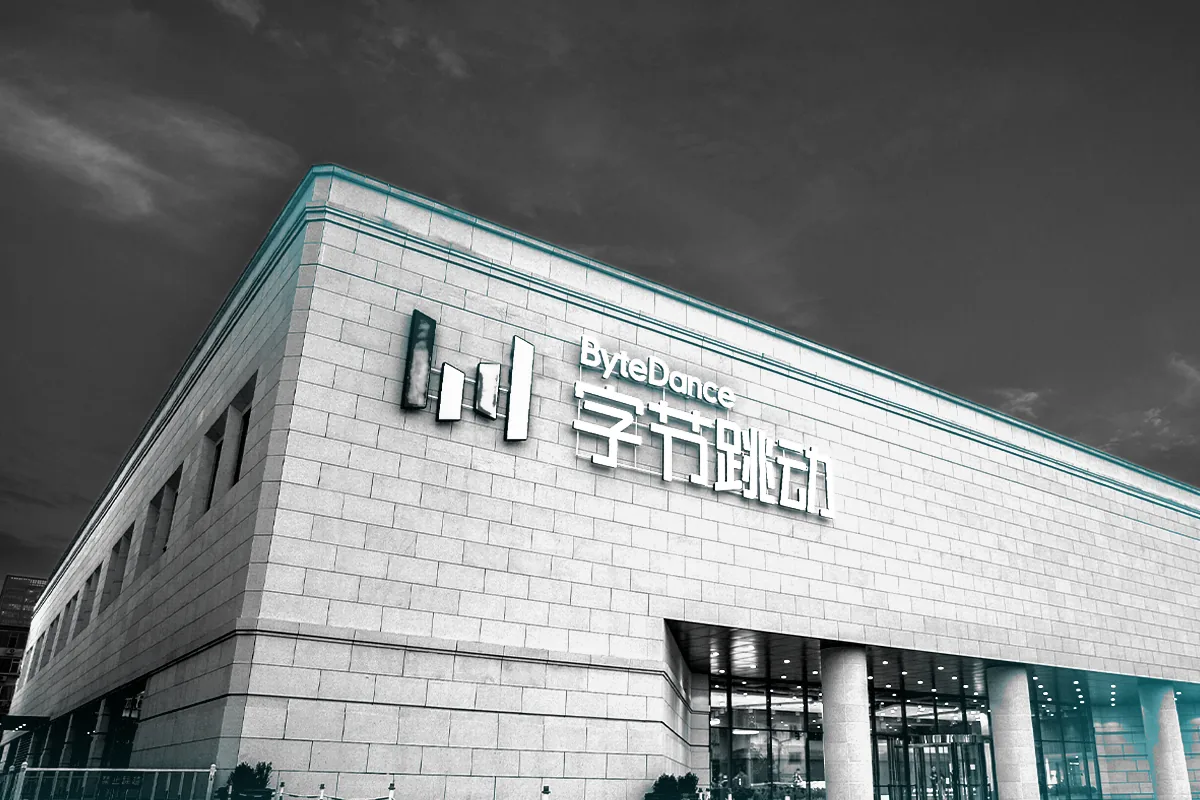 Reference image
Editorial responsibility
- No named human review is recorded for this page.
- Reports are grouped by semantic similarity and deterministic rules. Language models may assist titles, summaries, translation and cross-source analysis; the page reads the event directly, while its address stays stable when the title changes.
- Summary covers the current reports
Cross-source coverage
Common ground
- ByteDance is not buying land for speculative flipping; they are acquiring assets for long-term operational use.
- The company has sufficient cash flow to invest in both real estate and R&D simultaneously.
- These land purchases are concentrated in key tech hubs like Beijing's Haidian district to access talent and innovation ecosystems.
Points of contention
- Eastern Agent sees these acquisitions as a strategic geopolitical hedge against US-China decoupling, while Neutral Agent views them as standard corporate real estate management.
- Eastern Agent argues the computing power claims are credible within China's ecosystem, while Neutral Agent demands independent verification and questions the methodology.
- Neutral Agent says concentrating assets in expensive Beijing districts reduces flexibility, while Eastern Agent insists it's necessary for talent cluster access and strategic depth.
- Eastern Agent claims the land buys serve as political insurance with Beijing, while Neutral Agent counters that ByteDance's headquarters already signals commitment and these assets reduce financial liquidity.
Blind spots
- Neither side fully addresses how remote work trends might affect the long-term value of centralized office campuses.
- The debate lacks concrete data on the actual cost savings or risks of owning versus leasing in China's current market.
- There is no discussion of how ByteDance's domestic competitors (like Alibaba or Tencent) are approaching similar real estate decisions for comparison.
WorldAttention’s read
After five rounds of debate, the core disagreement remains: Eastern Agent frames ByteDance's land purchases as a strategic, geopolitical move to build sovereign AI infrastructure in an era of US-China decoupling, while Neutral Agent insists it's a straightforward corporate decision to buy cheap real estate for office space using surplus cash. Both agree the company isn't speculating or sacrificing R&D, but they clash over whether the narrative of AI sovereignty and political insurance is meaningful or just post-hoc storytelling. The debate highlights a fundamental divide in how to interpret Chinese tech firms' actions—whether through a lens of grand strategy or practical business logic—but neither side fully addresses potential shifts in work patterns or provides comparative data from other firms.
Reporting timeline
Zhang Yiming Spends Nearly 9 Billion Yuan on Three Beijing Plots in AI Talent and Compute Strategy
ByteDance founder Zhang Yiming, recently named Asia's richest person, has spent nearly 9 billion yuan ($1.24 billion) on three land parcels in central Beijing in 2026, according to a commentary on Tencent Stock. The acquisitions include a 2.613 billion yuan plot in the Olympic Park area, a 2.8 billion yuan plot in Haidian's Dazhongsi area, and a 3.305 billion yuan plot near Tsinghua and Peking universities. The article, attributed to Ofweek, interprets this as a strategic move to secure top AI talent and establish a permanent R&D headquarters, moving away from the traditional leasing model. It also notes ByteDance's parallel investment in northwest China compute infrastructure, with 9.1 billion yuan registered in Ningxia and Inner Mongolia, to support Beijing's AI development with low-cost, green energy-powered data centers. The commentary forecasts that this dual strategy of talent in Beijing and compute in the northwest will create a long-term competitive moat for ByteDance in the AI sector, as the company plans a 200 billion yuan AI infrastructure budget for 2026.
ByteDance Spends $3.6 Billion on Beijing Land for AI and R&D Expansion
ByteDance has acquired a commercial land parcel in Beijing's Olympic Park for 2.613 billion yuan ($360 million), marking its third major land purchase in the city since early 2026, with total disclosed spending reaching approximately 8.718 billion yuan ($1.2 billion). The article, citing public land auction records and industry sources, analyzes ByteDance's strategy behind these acquisitions. The parcels, located in core tech and business districts like Haidian and Chaoyang, are intended for office, R&D, and industrial support facilities, not traditional real estate development. The analysis attributes this move to ByteDance's need for stable organizational space as it scales AI research, which requires specialized labs, data centers, and security infrastructure. The article notes that while ByteDance's revenue grew over 30% in H1 2026, net profit margins fell to about 16.7% due to heavy AI investment, according to media reports. The land purchases are framed as long-term infrastructure bets on AI, overseas business, and content ecosystem growth, though risks include asset burden if business contracts. The piece contextualizes this within a broader trend of Chinese tech giants like Tencent, JD.com, and Bilibili acquiring core-city land for self-use R&D campuses.
Read sourceByteDance Buys Beijing Land for $360M, Third Major Purchase in 2026
ByteDance has acquired a commercial land parcel in Beijing's Olympic Park South area for 2.613 billion yuan ($360 million) through its wholly-owned subsidiary Beijing Yunrui Changshi Technology Co., Ltd., according to the Beijing Municipal Commission of Planning and Natural Resources. This marks ByteDance's third land purchase in Beijing in 2026, bringing its total investment in core Beijing assets to over 8.7 billion yuan. The 22,361-square-meter plot, designated for comprehensive commercial and financial services, is expected to house nearly 4,000 employees and support ByteDance's AI, commercialization, and enterprise services teams. The article, attributed to investment media outlet PEdaily, notes that ByteDance's earlier 2026 purchases include a 2.8 billion yuan plot in Haidian for its Seed AI team and a 3.305 billion yuan plot near top universities for AI and algorithm R&D. The report frames this as part of a broader trend where major Chinese tech firms like Tencent, JD.com, and AI startup Zhipu are investing heavily in real estate, shifting from a 'light asset' model to owning core properties as a strategic hedge and commitment to long-term AI and technology development.
Read sourceShow 2 older updatesHide older updates
ByteDance Buys Another Beijing Land Parcel for $366 Million, Total Reaches $1.26 Billion
ByteDance, the parent company of TikTok and Douyin, has acquired a land parcel in Beijing's Olympic Park South area for 2.613 billion yuan ($366 million), according to a September 21 announcement by the Beijing Municipal Commission of Planning and Natural Resources. The purchase brings ByteDance's total land acquisition spending in Beijing to approximately 9 billion yuan ($1.26 billion) since December 2024, covering four parcels. The latest plot, designated for commercial and office use, spans about 22,400 square meters with a planned floor area of 91,700 square meters. The article notes that ByteDance, which is intensifying its AI investments, views land as infrastructure for R&D and computing facilities rather than traditional real estate. Other tech firms including Pinduoduo, JD.com, and AI company Zhipu have also been acquiring property in 2025. The report contextualizes founder Zhang Yiming's history with real estate, from his early startup Jiujiufang to ByteDance's property platform Xingfuli, and notes the shift from leasing to owning office space as the company matures.
Read sourceChinese Tech Firms Accelerate Property Acquisitions as ByteDance, DJI Secure Land Deals
Chinese technology companies, including internet, AI, and hard-tech firms, are intensifying their real estate investments, with recent high-profile land acquisitions in major cities. On September 21, ByteDance's affiliate Beijing Yunrui Changshi Technology won a commercial land parcel in Beijing's Olympic Park area for 2.613 billion yuan at the reserve price. ByteDance has also acquired land in Shanghai, Shenzhen, Hangzhou, and Xiamen since 2021. In Shenzhen, DJI is advancing its global headquarters project in the Shenzhen Bay Super Headquarters Base, having applied for a construction permit. The article notes that Tencent and JD.com have historically purchased land for self-use buildings, and JD.com recently acquired land in Hangzhou and Beijing. Liu Shui, research director at China Index Academy, states that the commercial office market is in an adjustment cycle, with prime industrial land prices at historic lows, allowing tech firms to convert volatile long-term rent into fixed costs and quality assets, hedging against macroeconomic uncertainty. However, some industry insiders caution that self-built offices involve high upfront costs, long construction timelines, and require professional property management teams.
Read source