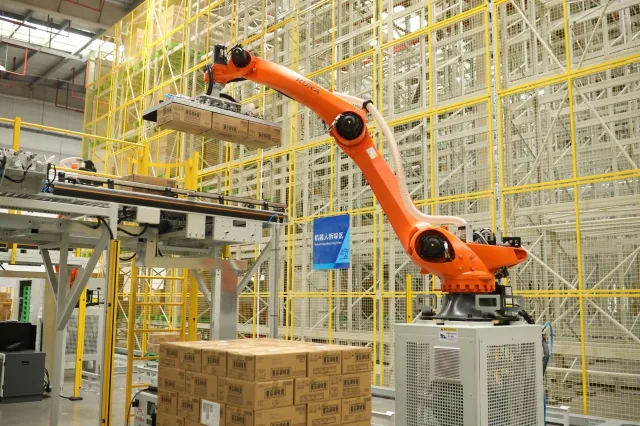
At the opening of the 2026 World Humanoid Robot Games in Beijing, Chinese humanoid robots shattered multiple human athletic world records, including a 9.39-second 100-meter sprint that surpassed Usain Bolt's 2009 record of 9.58 seconds. Over 2,000 robots from 16 countries competed in 51 events, highlighting China's rapid robotics progress amid escalating US-China tech tensions and a recent US ban on Chinese humanoid robot imports.
Chinese memory chipmaker ChangXin Memory Technologies (CXMT) debuted on Shanghai's STAR Market on July 27, 2026, raising $8.6 billion in Asia's largest IPO this year. Shares surged over 470%, giving CXMT a market cap exceeding $484 billion—making it mainland China's most valuable listed firm. The Hefei-based company, now the world's fourth-largest DRAM maker with 8% global market share, swung to profit amid AI-driven demand. The IPO highlights China's state-led tech push but raises concerns about liquidity drain and economic rebalancing.
Indian Foreign Secretary Vikram Misri met Sun Haiyan, Vice Minister of the International Department of the Central Committee of the Communist Party of China, in Beijing on July 27, 2026. The Indian Embassy stated they discussed ways to deepen implementation of the guidance of leaders for bilateral relations, addressing priority issues, and promoting political, people-to-people, academic, and think-tank exchanges. Misri also met Hong Liang, Deputy Secretary General of the 14th National Committee of the Chinese People’s Political Consultative Conference (CPPCC), to enhance bilateral exchanges. The visit follows External Affairs Minister S. Jaishankar's meeting with Chinese Foreign Minister Wang Yi on the sidelines of ASEAN meetings in Manila on July 21. Misri previously served as India's Ambassador to China.
Chinese DRAM maker CXMT (ChangXin Memory Technologies) debuted on the Shanghai Stock Exchange on July 27, 2026, surging 472% after a US$9.8 billion IPO—China's second-largest ever. The listing gave CXMT a US$487 billion market cap, making it China's most valuable publicly traded company and roughly half the value of global leaders Micron and SK Hynix. The event underscores Beijing's push for semiconductor self-sufficiency amid geopolitical tensions and strong investor appetite for domestic chip champions.
On July 25, Spanish footballer Pedri updated his Instagram story with a series of photos from his trip to Beijing, China. The images, shared via his Instagram account, show him visiting iconic landmarks including the Temple of Heaven and the Great Wall. The post was reported by Chinese sports media outlet Hupu, which aggregated the photos and provided a brief description. The article consists primarily of embedded images from Pedri's Instagram story, with a short text summary noting the locations visited. This is a light entertainment and sports news item, highlighting the athlete's travel and cultural engagement in China.
Chinese sports commentator Zhan Jun posted on Weibo that he encountered FC Barcelona and Spain midfielder Pedri at the Temple of Heaven in Beijing. In a brief interview, Zhan asked Pedri who would win between the current World Cup-winning Spain team and the 2010 champions; Pedri laughed and said a draw. Zhan then asked if Pedri would consider joining Liverpool if he ever left Barcelona. Pedri replied directly that Liverpool is a team he really likes. When Zhan mentioned that Liverpool is now coached by Spanish manager Iraola, Pedri confirmed he knows him and has already spoken to Munoz. The encounter appears to be part of Pedri's visit to China, though the article notes some skepticism about whether it was truly a chance meeting.
JPMorgan Chase has relocated over 30 quantitative researchers from its China operations in Beijing and Shanghai to Singapore and Hong Kong, according to sources familiar with the matter. Approximately 25 to 30 staff were moved to Singapore, while about six members of the bank's quantitative trading and research unit were transferred to Hong Kong. The move, reported by The Business Times on July 24, 2026, reflects a strategic shift in the US bank's regional talent deployment amid ongoing geopolitical and regulatory dynamics in China. The relocation underscores JPMorgan's efforts to consolidate its quantitative research capabilities in key Asian financial hubs outside mainland China.
JPMorgan Chase has relocated over 30 quantitative researchers from its China operations, moving approximately 25 to 30 staff from Beijing and Shanghai to Singapore, and about six members of its quantitative trading and research unit to Hong Kong, according to sources familiar with the matter. The move, reported by The Business Times Singapore, reflects a significant shift in the US bank's regional talent deployment, likely driven by geopolitical tensions and regulatory considerations in China. The relocation underscores the growing importance of Singapore and Hong Kong as financial hubs for global banks seeking to maintain access to Asian markets while managing risks associated with operating in mainland China.
Barcelona and Spain midfielder Pedri has arrived in China, as reported by Hupu on July 23. He shared multiple photos on social media showcasing Beijing's cityscape and enjoying Peking duck at a local restaurant. Pedri's visit is part of his participation in activities related to the Jiangsu Provincial City Football League and the National Youth Campus Football League. On Saturday, he is scheduled to appear at the Suzhou Sports Center Stadium to watch the match between Suzhou Team and Wuxi Team, and will pass the ball during the opening ceremony. On Sunday, he will attend the finals of the National Youth Campus Football Four-Level League's high school division, where he will interact closely with participating players.
China's crude oil import strategy is a key factor shaping global oil prices through the end of the year, alongside Middle East supply disruptions. After slashing imports to a decade-low 7.12 million barrels per day in June—a 41.3% year-over-year drop—China helped cap price spikes during the Iran war by removing about 4 million bpd of demand. Beijing has been drawing down its estimated 1.2-1.4 billion barrel stockpile, pulling 41 million barrels from reserves in June alone. Goldman Sachs predicts China could resume buying as soon as this month after oil prices dipped to $70 in late June, but with prices now near $90, refiners may reduce purchases for cargoes arriving after September. China's opportunistic buying strategy—ramping up imports when prices fall to $60-70 and cutting when above $80—makes it the swing demand buyer on the global market. The market is closely watching Beijing's next moves on crude imports and refined product exports.
Chinese AI startup Moonshot AI released Kimi K3, the world's first open AI model with 2.8 trillion parameters, featuring a 1-million-token context window and native vision. It outperforms older US rivals on coding benchmarks but still trails Anthropic's Claude Fable 5 and OpenAI's GPT 5.6 Sol overall. The release intensifies US-China AI competition, with Moonshot backed by Alibaba and Tencent. Full model weights are due by July 27.
The article analyzes the closure of Taiwan's trade office in Papua New Guinea (PNG) as the latest and most significant step in Beijing's decade-long campaign to restrict Taiwan's unofficial diplomatic presence. Unlike previous cases where offices were downgraded or blocked, PNG evicted a long-standing mission in a country that never formally recognized Taipei. The author argues this represents a logical endpoint of escalating pressure, citing prior examples in Nigeria, Fiji, Guyana, Hong Kong, and Lithuania. Beijing's actions are grounded in an expansive interpretation of UN Resolution 2758, which originally only transferred China's UN seat. The closure occurred shortly after PNG Prime Minister James Marape's visit to China and during the 50th anniversary of PNG-China relations, signaling Beijing's growing influence in the Pacific. Taiwan has been left to reassess its economic ties with PNG.
Chinese AI developer Z.ai (formerly Zhipu) has completed construction of a 1-gigawatt data center powered exclusively by domestically produced chips, with partial activation underway. The facility will train the company's GLM model family. Bloomberg reported that Z.ai now operates multiple computing clusters each containing over 10,000 chips. While the chip supplier was not named, Z.ai's recent training of GLM-5.2 on Huawei Ascend accelerators suggests Huawei is the source. The company has been on the U.S. Commerce Department's entity list since January 2025, cutting off legal access to Nvidia silicon. Chinese accelerators like Huawei's Ascend trail Nvidia's Blackwell on performance per watt, meaning a gigawatt of domestic silicon delivers less usable compute. The development comes amid Beijing's plan to spend roughly 2 trillion yuan ($295 billion) over five years on a nationwide AI data center grid, with at least 80% of technology sourced domestically. However, supply constraints at SMIC and limited HBM production pose challenges. Z.ai is on track for $1 billion in annual recurring revenue after hitting its 2026 sales target in July.
This opinion piece from The Business Times argues that China's current policy focus on improving the quality and satisfaction of shopping experiences is misguided. The author contends that Chinese consumers already have access to a wide range of high-quality goods. The core problem, according to the analysis, is not the quality of goods available but rather the lack of disposable income and the high propensity to save among Chinese households. Until consumers have more money to spend and fewer reasons to save (such as concerns about social safety nets), incremental improvements to the shopping experience will not significantly boost domestic consumption. The article suggests Beijing is addressing a symptom rather than the root cause of weak consumer spending.
This analysis from The Business Times argues that Beijing's efforts to boost domestic consumption by improving the shopping experience and product quality are misguided. The author contends that Chinese consumers already have access to a wide range of high-quality goods. The core problem, according to the piece, is not the quality of goods but the lack of disposable income and a high propensity to save among households. Until Chinese households have more money to spend and less reason to save, incremental improvements to the retail environment will not significantly stimulate consumption. The article critiques the focus of China's first-ever five-year consumption plan, suggesting it addresses a symptom rather than the root cause of weak consumer spending.
The Business Times reports on Moonshot AI, a Beijing-based Chinese startup founded in 2023 by former professor Yang Zhilin. The company's Kimi K3 AI model delivers performance that rivals offerings from leading US firms OpenAI and Anthropic. This development is causing significant market disruption, as it demonstrates China's growing competitiveness in the AI sector. Moonshot was considered the poster boy of Chinese AI before the emergence of DeepSeek. The article highlights the intensifying global AI race and the market implications of Chinese AI advancements.
China's passenger car market is on track for its worst performance since 2021, with first-half 2026 sales dropping 20.2% year-on-year. The China Passenger Car Association (CPCA) revised its full-year forecast to a 14% decline, projecting 20.4 million units sold, down from a record 23.7 million in 2025. Soaring fuel costs (up 15.3% in June) and Beijing's pullback of new energy vehicle (NEV) subsidies have stifled demand. Internal combustion engine vehicle sales fell 39% in June, while NEV sales are expected to decline 5-6%. Rising raw material and component costs have squeezed profit margins to 3.4%, with industry profits down 20%. Analysts expect a market shakeout, consolidating China's fragmented EV market to 7-8 major players by 2030, with American automakers unlikely to survive. Recovery is anticipated in 2027, driven by export growth.
Die Welt reports that Beijing is intensifying economic pressure on Germany, particularly affecting major companies like Volkswagen. China expert Mikko Huotari outlines four elements of a counter-strategy for Germany but stresses the need for urgency. He warns that Volkswagen's current strategic direction poses significant risks to Germany's attractiveness as a business location. Even the most optimistic scenario for VW, according to the analysis, would involve substantial financial burdens. The article highlights the growing geopolitical and economic tensions between China and Germany, with implications for the broader European economy.
On June 26, 2026, a small recreational plane crashed into the 109-story CITIC Tower in Beijing, killing the pilot and injuring 13 people. The incident exposed significant gaps in China's heavily guarded airspace, as the rogue aircraft deviated from its flight path and struck one of the most politically sensitive buildings in the country. The Chinese government quickly deployed security forces, censored social media footage, and after nearly a week of silence, attributed the crash to a suicide attack by a mentally ill 66-year-old pilot. The CCP also suspended light aircraft operations nationwide. Hoover Institution fellow Miles Yu argued that while physical damage was modest, the political and military implications were profound, undermining the regime's prized narrative of invincibility and raising serious questions about the effectiveness of China's air defense systems, especially in light of recent purges within the PLA.
This commentary by Hudson Institute Senior Fellow Michael Sobolik argues that while the Chinese Communist Party (CCP) aggressively seeks to collect global data, its primary strategic advantage lies in exploiting political and social divisions within Western nations. The piece contends that Beijing leverages these divisions to weaken collective responses to its data ambitions and broader geopolitical goals. Published on July 16, 2026, via CBS, the analysis suggests that internal discord in the West, rather than China's technological capabilities alone, is the key enabler of CCP influence and data acquisition efforts.
This commentary from the Hudson Institute argues that while the Chinese Communist Party (CCP) aggressively seeks to acquire data from Western nations, its primary strategic advantage lies in exploiting political and social divisions within those countries. The author, Michael Sobolik, contends that internal discord in the West weakens collective resistance to Beijing's data-gathering efforts and broader influence operations. The piece highlights how the CCP leverages these divisions to advance its interests, suggesting that the greatest threat is not just data theft but the erosion of unity among Western democracies. The analysis is framed as a warning about the interplay between data security and geopolitical strategy.
This analysis argues that Europe's assumption of China's unstoppable rise and eventual liberalization is outdated. China faces mounting structural pressures: aging population, property crisis, weak consumption, and high debt. These vulnerabilities make Beijing more assertive and protectionist. However, Europe retains leverage through access to its single market, technological excellence, and industrial know-how. The article recommends a pragmatic, interest-driven China policy: build on European strengths, diversify supply chains, create credible escalation tools (e.g., Anti-Coercion Instrument), and tie dialogue to concrete demands like curbing export surges and dual-use goods to Russia. It warns that inaction risks eroding Europe's industrial base and confidence in democratic defense of interests.
This analysis argues that Europe's China policy has been based on outdated assumptions of China's unstoppable rise and inevitable liberalization. It highlights China's mounting structural pressures—aging population, property crisis, weak consumption, and high debt—which are driving assertive foreign policy and excess capacity exports. Despite these vulnerabilities, the article contends that China still needs Europe's single market, technology, and industrial know-how. It recommends a leverage-based strategy: protect technological advantages, diversify supply chains, create credible escalation tools like the Anti-Coercion Instrument, and tie dialogue to concrete demands such as curbing export surges and dual-use goods to Russia. The piece warns that inaction risks eroding Europe's industrial base and that a pragmatic, interest-driven approach is necessary to defend European interests without full decoupling.
This analysis argues that Europe's China policy has been based on outdated assumptions of inevitable Chinese growth and liberalization. It highlights China's mounting structural pressures—aging society, property crisis, weak consumption, high debt—which paradoxically fuel domestic control and assertive foreign policy. China's weak demand pushes excess capacity abroad, threatening European industry. However, the EU retains leverage: China needs access to the European Single Market, especially as the US market tightens, and still depends on European research and technology. The article recommends a pragmatic, leverage-based strategy: protect technological advantages, diversify supply chains, create credible escalation tools (e.g., Anti-Coercion Instrument), and tie dialogue to concrete demands like curbing export surges and dual-use goods to Russia. It warns that inaction risks eroding Europe's industrial base and democratic credibility.
China and North Korea have engaged in a series of reciprocal high-level visits, including talks between Workers' Party secretary Jo Yong Won and Chinese Politburo Standing Committee member Wang Huning in Pyongyang on July 15, and a prior trip by North Korean Premier Pak Thae Song to Beijing from July 10-12 where he met Chinese leader Xi Jinping. These exchanges, officially commemorating the 65th anniversary of the China-DPRK Treaty of Friendship, Cooperation and Mutual Assistance, come amid a shifting geopolitical landscape. Notably, China has refrained from raising North Korea's nuclear issues in official readouts, a move interpreted as de facto recognition of Pyongyang as a nuclear-armed state. The visits follow Xi's first trip to North Korea in seven years and occur as Pyongyang deepens its ties with Moscow, including providing ammunition and troops for Russia's war in Ukraine in exchange for suspected economic aid and missile technology. Beijing appears to be aligning more closely with North Korea, creating space for Pyongyang to evade U.S. and U.N. sanctions while strengthening bilateral cooperation.
China and North Korea conducted a series of reciprocal high-level visits in July, including talks between Workers' Party secretary Jo Yong Won and Chinese Politburo Standing Committee member Wang Huning in Pyongyang, and North Korean Premier Pak Thae Song's meeting with Chinese leader Xi Jinping in Beijing. These exchanges follow Xi's first visit to North Korea in seven years and come as Beijing works to keep pace with Pyongyang's deepening military and economic ties with Moscow amid Russia's war in Ukraine. Officially commemorating the 65th anniversary of the China-DPRK Treaty of Friendship, Cooperation and Mutual Assistance, the visits underscore a shift in China's stance: Beijing has refrained from raising North Korea's nuclear issues, effectively recognizing Pyongyang as a nuclear-armed state. Analysts suggest China is creating space for North Korea to evade U.S. and U.N. sanctions while strengthening bilateral cooperation, even as Washington, Seoul, and Tokyo bolster their trilateral security coordination.
North Korea's state media reported that Jo Yong Won, a senior Workers' Party official, held talks with Chinese Politburo Standing Committee member Wang Huning in Pyongyang on July 15, emphasizing the need to strengthen bilateral unity under the 1961 friendship treaty. Wang also met North Korean leader Kim Jong Un. Days earlier, North Korean Premier Pak Thae Song visited Beijing and met Chinese leader Xi Jinping. These reciprocal visits follow Xi's own summit with Kim in Pyongyang a month prior, his first in seven years. Officially commemorating the 65th anniversary of the China-DPRK Treaty of Friendship, Cooperation and Mutual Assistance, the exchanges are driven by the current geopolitical environment, particularly North Korea's deepening ties with Russia amid Moscow's war in Ukraine. China has notably refrained from raising denuclearization in official readouts, signaling a shift toward de facto recognition of North Korea as a nuclear state and aligning more closely with Pyongyang against U.S.-led pressure.
Chinese gaming giant Tencent is in talks to become the largest shareholder of Singapore-based AI startup Manus, following Beijing’s order for Meta to unwind its $2 billion acquisition. Tencent, along with original investors ZhenFund and HSG, plans to repurchase Manus for at least $2 billion. The deal was blocked amid rising U.S.-China tech tensions, with China viewing the acquisition as a threat to its AI assets. Manus, which develops autonomous AI agents, relocated from China to Singapore last year.
During the recent summit between Donald Trump and Xi Jinping in Beijing, underlying tensions between Chinese and U.S. security services surfaced despite the leaders' public displays of friendship. The article highlights several contentious incidents that occurred on the sidelines of the diplomatic meeting. These included a standoff involving a U.S. Secret Service agent's weapon and a chaotic melee where a U.S. staffer was trampled. The mutual distrust between the two nations was further emphasized by strict security measures imposed by U.S. officials. Specifically, staffers and media personnel, including an AFP reporter, were required to surrender all badges and pins provided by the Chinese side before boarding Air Force One. These events illustrate the complex and often adversarial nature of security operations during high-level diplomatic engagements, contrasting sharply with the cooperative narrative presented by the heads of state. The report underscores how logistical and security frictions can reveal deeper geopolitical strains even amidst formal diplomatic pleasantries.
This editorial analyzes the recent summit between US President Donald Trump and Chinese President Xi Jinping in Beijing, highlighting the fragile nature of US-China relations. While both leaders projected success, citing commercial agreements and a framework for strategic stability, the article argues that structural differences ensure continued volatility. Xi Jinping bluntly warned that mishandling the Taiwan issue could trigger military conflict, a topic Trump notably avoided publicly. The piece notes a shift in dynamics since Trump's previous visit nine years ago; Washington now approaches Beijing with more flexibility, acknowledging China's grown economic and military strength, while Xi acts with greater confidence amid perceived US decline. For India, the editorial posits that the defining geopolitical story of 2026 remains the fluctuating US-China rivalry. Consequently, India's most effective hedge against this uncertainty is not relying on external alliances but accelerating its own domestic capabilities. The author concludes that India's strategic autonomy depends on strengthening its economic power, technological infrastructure, and military readiness to navigate the unsteady balance between the two superpowers.
1 reports · 1 sources
Periodic recap
What changed for this subject in each tracking window — generated from matched events, delta-first.
→· 1 event in window
Only one event related to Beijing occurred in this period: the US announced new sanctions on Iran, targeting China as the largest buyer of Iranian oil. China rejected the sanctions as unhelpful and vowed to protect its economic interests. This development contrasts with Beijing's recent showcase of technological strength in robotics, reflecting ongoing pressure in US-China relations across multiple fronts.
The US announced what it calls the "toughest sanctions in history" on Iran, with Treasury Secretary Bessent preparing new measures under "Operation Economic Outcast."
The sanctions explicitly target China as the largest buyer of Iranian oil, aiming to cut off revenue for Iran's nuclear and military programs.
China rejected the sanctions as unhelpful and vowed to protect its economic interests.
Earlier recaps
→· 1 event in window
Since the last digest, Beijing hosted the 2026 World Humanoid Robot Games, where Chinese-developed humanoid robots broke multiple human world records, including a 100-meter sprint time surpassing Usain Bolt's. This demonstration took place against the backdrop of a recent US ban on Chinese humanoid robot imports over national security concerns, highlighting the ongoing escalation in US-China tech competition in robotics.
→· 1 event in window
The Trump administration, through the FCC, banned imports of new Chinese-made humanoid and quadruped robots and connected power inverters, citing national security risks. China condemned the move as smearing its companies. The ban does not affect existing devices and allows for exemption applications.
→· 1 event in window
China's securities regulator approved fast-fashion retailer Shein's Hong Kong IPO, marking its third attempt to go public after failed efforts in New York and London. The politically sensitive listing required top-level CCP clearance. Shein, now valued at US$40-50 billion, down from US$100 billion in 2022, plans to offer up to 341.6 million shares with a hearing scheduled for July 16.
→· 1 event in window
CXMT's debut performance continued its strong momentum, with its market capitalization stabilizing above US$484 billion, cementing its position as mainland China's most valuable listed company. The US$8.6 billion IPO was confirmed as Asia's largest this year, further highlighting Beijing's national strategy for semiconductor self-sufficiency. Amid the strong investor enthusiasm, the market has also begun to focus on the potential impact of such a large-scale listing on market liquidity and economic rebalancing.
→· 1 event in window
Chinese DRAM maker CXMT debuted on the Shanghai Stock Exchange on July 27, surging 472% on its first day to reach a market capitalization of US$487 billion, making it China's most valuable listed company. The US$9.8 billion IPO, China's second-largest ever, underscores Beijing's push for semiconductor self-sufficiency. The listing reflects strong investor appetite for domestic chip champions.
Tracked events
Events matched to this subject by the tracking pipeline, with signal scores.