BYD completes 2,000th highway flash charging station, hitting annual target early
On September 24, BYD inaugurated its 2,000th highway flash charging station at the Baoying Service Area in Yangzhou, Jiangsu Province, achieving its annual construction target ahead of schedule. The company has built 11,586 flash charging stations across 341 Chinese cities. BYD aims to reach 20,000 stations nationwide by end of 2026 and 6,000 overseas.
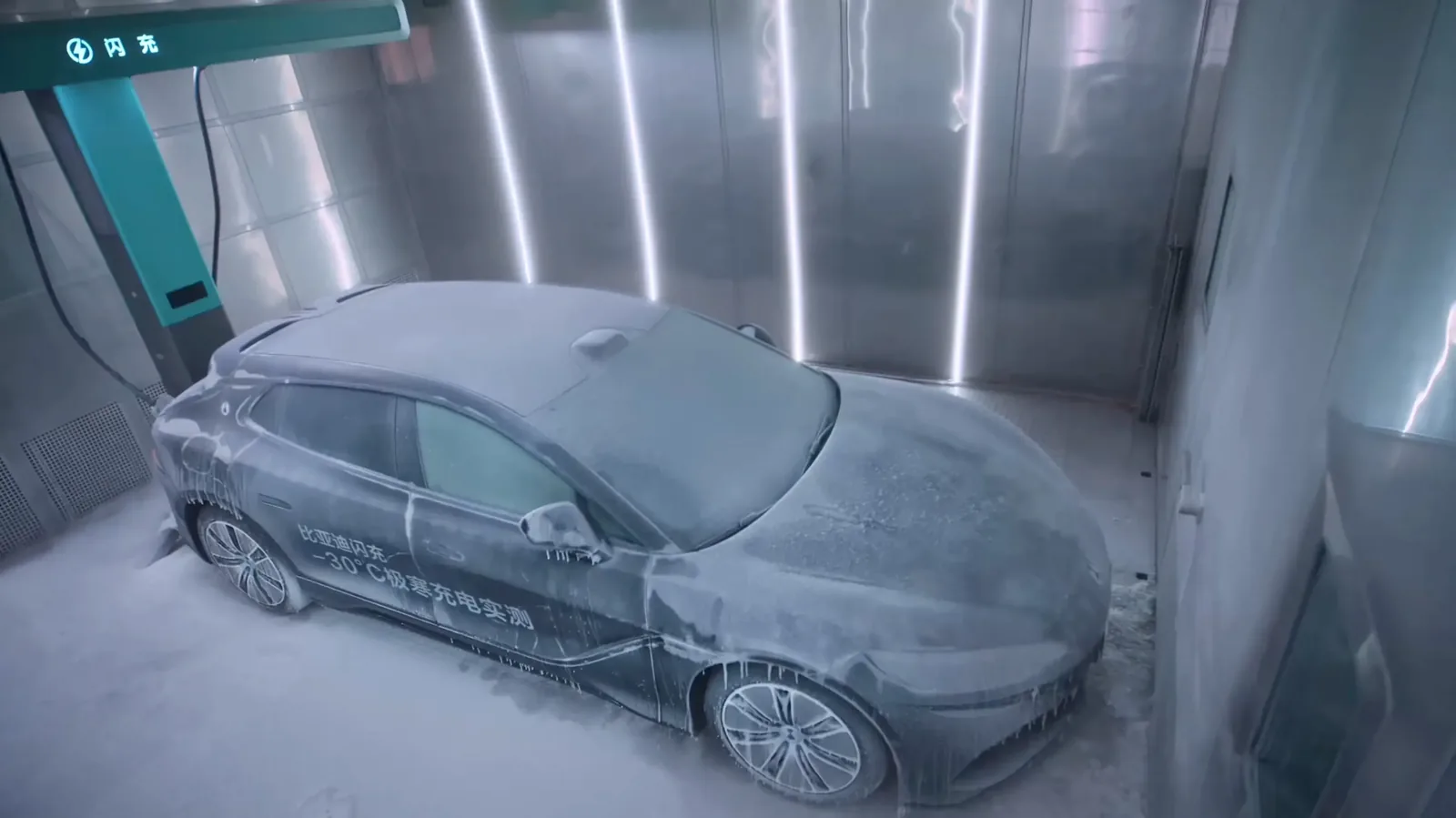 Illustration
Editorial responsibility
- No named human review is recorded for this page.
- Reports are grouped by semantic similarity and deterministic rules. Language models may assist titles, summaries, translation and cross-source analysis; the page reads the event directly, while its address stays stable when the title changes.
- Summary covers the current reports
Cross-source coverage
Common ground
- BYD's achievement of 2,000 highway flash charging stations ahead of schedule is a real logistics success.
- China's grid modernization plan and coordination between BYD and State Grid are genuine advantages.
- Transformer upgrades at the local level are a real engineering challenge for high-power charging.
- The density of charging stations in China (30-50 km apart) is a structural advantage over regions like the US.
- These stations are open to all EV brands, not just BYD vehicles.
Points of contention
- Whether the lack of transparent data on wait times and usage rates undermines the achievement or is just a distraction from strategic progress.
- Whether BYD's 1,000V system will become a global standard or remain a proprietary feature due to interoperability issues.
- Whether the transformer bottleneck is a temporary growing pain or a structural flaw that will cause real-world problems during peak demand.
- Whether the 'average wait times under 15 minutes' claim is credible without supporting data on peak periods.
- Whether China's coordinated industrial policy is superior to market-driven approaches or just benefits from different accountability standards.
Blind spots
- Both sides overlooked the timeline mismatch between fast charger deployment (weeks) and local substation upgrades (months), which creates immediate friction for drivers.
- Neither side provided concrete data on utilization rates during peak holidays, such as the 95th percentile wait times or stall occupancy percentages.
- The debate ignored how urban transformer constraints (e.g., near hospitals or malls) could be just as critical as rural ones for overall network reliability.
WorldAttention’s read
BYD's rapid deployment of 2,000 highway flash charging stations is a genuine infrastructure achievement, backed by China's coordinated industrial policy and grid modernization plans. However, the narrative is inflated by strategic storytelling that lacks transparent data on peak-hour wait times, transformer capacity mismatches, and true interoperability with non-BYD vehicles. The real test will come during peak travel periods like National Day, where the gap between headline claims and lived experience—due to local transformer bottlenecks and stall shortages—remains unaddressed. While China's approach builds faster than Western market-driven systems, the debate shows that technical constraints like grid upgrades and standards adoption can't be waved away by strategic vision alone.
Reporting timeline
BYD Completes Annual Target of 2,000 Fast-Charging Highway Stations Ahead of Schedule
On September 24, Chinese electric vehicle manufacturer BYD announced the completion of its 2,000th fast-charging highway station, located at the Baoying Service Area in Yangzhou, Jiangsu Province. This milestone marks the early fulfillment of the company's annual construction target for its flash-charging highway network. The achievement underscores BYD's aggressive expansion of charging infrastructure to support its growing fleet of electric vehicles and enhance long-distance travel convenience for EV owners. The company did not disclose specific details on future expansion plans beyond this year's goal.
BYD Completes 2000th Flash Charging Station, Hits Annual Target Early
On September 24, BYD announced the completion of its 2000th flash charging highway station at the Baoying Service Area in Yangzhou, Jiangsu Province. This milestone means the company has achieved its annual construction target for flash charging stations ahead of schedule. The announcement was made by Jin10 Data, a financial information platform. The rapid deployment of these stations supports BYD's electric vehicle infrastructure expansion in China.
Read sourceBYD Completes Annual Flash Charging Station Target Ahead of Schedule
On September 24, BYD announced it had completed its annual construction target for flash charging stations ahead of schedule. As of that date, the company had built a total of 11,586 flash charging stations, covering 341 cities across China. BYD also stated that it aims to complete the construction of 20,000 flash charging stations nationwide by the end of 2026. In addition, the company is steadily advancing its global expansion plans for flash charging, with a target to build 6,000 flash charging stations overseas. The information was sourced from an article on East Money, citing Jiemian News.
Read sourceShow 2 older updatesHide older updates
BYD to Complete 2,000th Highway Flash Charging Station on September 24
Chinese electric vehicle manufacturer BYD announced that the inauguration ceremony for its 2,000th highway flash charging station will be held on September 24. This milestone marks the completion of the highway network phase under its 'Flash Charge China' strategy, which was launched on March 5, 2026, alongside the release of the second-generation blade battery and flash charging technology. The overall plan aims to build 20,000 flash charging stations nationwide by the end of 2026, comprising 18,000 urban stations and 2,000 highway stations. The highway stations will cover nearly one-third of highway service areas, with an average spacing of over 100 kilometers. The construction of the highway stations was originally scheduled for year-end but has been accelerated to late September to be operational before the National Day holiday travel peak. BYD brand general manager Li Yunfei confirmed on September 13 that 10,000 flash charging stations had been built as of August 28, and that all stations are open to all EV brands. Technical specifications include a single-gun maximum power of 1500 kW, a 1000V high-voltage platform, and charging from 10% to 70% in 5 minutes at room temperature.
Read sourceBYD to Open 2,000th Highway Flash Charging Station Ahead of National Day Travel Rush
Chinese electric vehicle manufacturer BYD announced on September 23 that the inauguration ceremony for its 2,000th highway flash charging station will be held on September 24. This milestone means there will be an average of one flash charging station every 100 kilometers on Chinese highways, fully operational before the National Day holiday travel peak. According to BYD's previously announced plan, the company aims to build 20,000 flash charging stations nationwide by the end of 2026, including 18,000 urban stations and 2,000 highway-specific stations covering nearly one-third of highway service areas. As of August 28, BYD had already surpassed 10,000 total flash charging stations in China. All stations are open to new energy vehicles of all brands. The flash charging technology features a maximum charging voltage of 1,000V, current of 1,000A, peak power of 1 megawatt (1,000 kW), and a charging rate of 10C, enabling 1 second to charge 2 kilometers and 5 minutes to charge 400 kilometers. Some chargers can deliver up to 1,500 kW per gun, charging from 10% to full in under 9 minutes. The system automatically matches the vehicle's maximum supported charging power. BYD's second-generation blade battery, released in March, works synergistically with the flash charging technology, supporting 5-minute charging from 10% to 70%, with only a 3-minute slowdown in -30°C conditions. The charging stations are equipped with energy storage systems to release high power instantly without straining the power grid.