Bank of Japan raises rate to 1.25%, a 31-year high, as yen weakens on cautious outlook
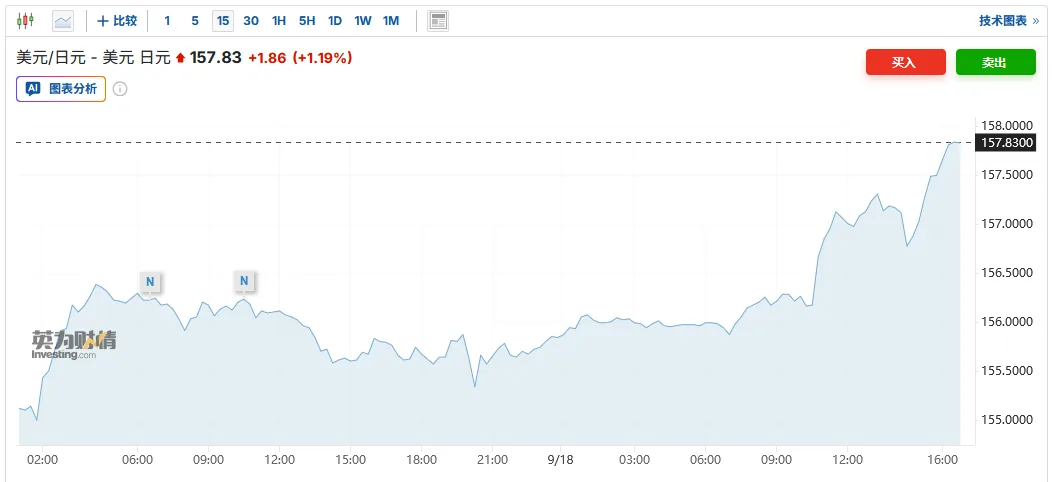
The Bank of Japan raised its benchmark interest rate by 25 basis points to 1.25% on September 18, the highest level since 1995 and a 31-year high. The widely expected move failed to boost the yen, which weakened as Governor Kazuo Ueda’s press conference lacked a hawkish tone. Two of nine board members dissented, citing weak inflation and economic conditions. Ueda said there is no preset pace for future hikes and policy will depend on data. Markets now focus on the pace of further tightening amid a global hawkish shift by central banks.
 Illustration
Editorial responsibility
- No named human review is recorded for this page.
- Reports are grouped by semantic similarity and deterministic rules. Language models may assist titles, summaries, translation and cross-source analysis; the page reads the event directly, while its address stays stable when the title changes.
- Summary covers the current reports
Cross-source coverage
Common ground
- The BOJ's rate hike to 1.25% is a symbolic milestone, not a full policy pivot, and the yen's weakening on the announcement shows markets doubt the hawkish narrative.
- Japan's 255% debt-to-GDP ratio is a major constraint on the BOJ, making every rate hike a gamble that adds trillions in interest payments.
- The weak yen was already hurting ordinary Japanese households through higher import costs on food and energy, and the rate hike doesn't fix that.
- There is a democratic deficit in Japan's decision-making, with a split board, a reluctant cabinet, and opaque processes that insulate elites from accountability.
- Japan's economy was built on cheap credit and export-led growth, and it's unclear if it can survive a transition to positive rates without breaking something.
Points of contention
- Whether the rate hike was driven by domestic fundamentals like inflation and wages, or by external pressure from Washington and the Fed.
- Whether Japan's monetary policy is a case of structural dependency on the US or a rational response to its own fiscal and demographic crises.
- Whether the sovereignty argument is a valid critique of power imbalances or a distraction from Japan's own policy failures and elite interests.
- Whether the global bond market or the US-Japan security alliance is the real force constraining the BOJ's independence.
- Whether the weak yen was worse for non-regular workers than the current rate hike, or if there was no good option either way.
Blind spots
- The debate largely ignored the role of Japan's demographic collapse—500,000 people per year—as a slow-motion force that no rate hike can fix.
- There was little discussion of how Japan's elite, including the zaibatsu and financial conglomerates, actively shaped and profited from the cheap-money system.
- The human cost for non-regular workers, pensioners, and small businesses was mentioned but not deeply analyzed in terms of concrete policy alternatives.
- The possibility that Japan's economy needs fundamental restructuring beyond monetary policy—like labor market reform or energy independence—was barely touched.
- The debate assumed the US-Japan relationship is static, without considering how Japan could build genuine strategic autonomy in the future.
WorldAttention’s read
The BOJ's rate hike to 1.25% is a symbolic move that reveals deep tensions in Japan's economy and its place in the world. While the hike was technically a normalization after decades of ultra-loose policy, the yen's weakness and cautious guidance show markets aren't convinced. The debate split between those who see this as a domestic story of fiscal and demographic constraints, and those who argue it's a sovereignty issue driven by US pressure and structural dependency. Both sides agree that Japan's 255% debt-to-GDP ratio, shrinking population, and fragile economic model make any rate hike a gamble. The real blind spot is that no one controls the outcome—not Washington, not the BOJ, not the bond market. Japan is trapped between forces it can't manage: global capital flows, demographic decline, and a fiscal position that leaves no room for error. The rate hike is a symptom of a deeper crisis: an economy built on cheap credit that must now adapt to a world where that crutch is gone. The human cost—for pensioners, non-regular workers, and small businesses—is real, but there was no painless path forward. The lesson for other nations is that genuine monetary independence requires strategic autonomy, but Japan's experience also shows that even the strongest economies can run out of road when they kick the can for too long.
Reporting timeline
Yen under pressure as BOJ lags global hawkish shift; market eyes 160 level
The Japanese yen weakened against the US dollar on Tuesday as traders bet the Bank of Japan (BOJ) will struggle to keep pace with other major central banks tightening monetary policy. The BOJ raised its benchmark rate to 1.25% on Friday, the highest in 31 years, but the widely expected move failed to support the yen. Market participants were disappointed by Governor Kazuo Ueda's press conference, which lacked a hawkish tone. Ueda said the BOJ has no preset pace for future hikes and will decide at each meeting based on data, adding that it must avoid tightening too quickly. Two of nine board members voted against the rate increase, citing weak inflation and economic conditions. In contrast, the Federal Reserve and other global central banks are expected to hike further. Markets price a 55% chance of a Fed rate hike by October versus 30% for a BOJ move to 1.5%. UBS economist Carlos Casanova forecasts USD/JPY to reach 160 by year-end, citing a roughly 275-basis-point rate differential favoring carry trades. The yen's decline was limited by a Japanese holiday and intervention fears after authorities reportedly checked the rate.
Read sourceJapan, US, Europe Raise Interest Rates as Global Monetary Policy Tightens
The Bank of Japan raised its policy rate from 1.0% to 1.25% on September 18, accelerating its pace of rate hikes amid rising inflation. This move follows the Federal Reserve's first rate hike in over three years on September 17, which prompted central banks in Saudi Arabia, UAE, Qatar, Bahrain, Oman, and Hong Kong to also raise rates. The European Central Bank conducted its second rate hike of the year earlier in September. Analysts cited in the article attribute the tightening to inflation pressures from wage increases, oil prices driven by Middle East conflict, and yen depreciation. Japan's central bank governor Kazuo Ueda did not rule out further or larger rate hikes. Market observers, including analysts from Zhejiang Securities and CITIC Bank International, suggest that while the risk of a sudden unwinding of carry trades is limited due to prior pricing, higher risk-free rates could pressure global equity markets. The Bank of England held rates steady but warned of possible future hikes if inflation persists. Analysts remain uncertain whether this marks the start of a sustained tightening cycle similar to 2022-2023, noting that oil price developments will be a key factor.
Read sourceYen Under Pressure as BOJ Risks Falling Behind Global Hawkish Central Bank Shift
The Japanese yen weakened against the US dollar on Tuesday as traders bet the Bank of Japan (BOJ) will struggle to keep pace with the global shift toward tighter monetary policy, maintaining a large interest rate gap with major economies. The BOJ raised its benchmark rate by 25 basis points to 1.25% on Friday, the highest in 31 years, but the widely expected move failed to boost the yen. Market participants were disappointed by Governor Kazuo Ueda's less hawkish-than-expected press conference remarks. Ueda said the pace of future rate hikes depends on economic data and that there is no preset schedule. Two of nine board members voted against the hike, citing weak inflation and economic conditions. In contrast, the Federal Reserve and other major central banks have signaled further tightening. Markets currently price about a 30% chance of a BOJ rate hike to 1.5% by October, versus a 55% chance of a Fed hike to 4%-4.25% by then. UBS economist Carlos Casanova forecasts USD/JPY to reach 160 by year-end, citing a roughly 275-basis-point US-Japan rate differential supporting yen-funded carry trades. The New Zealand dollar also faces pressure due to its low 2.75% rate, while the Australian dollar awaits a hawkish signal from the RBA governor.
Read sourceShow 17 older updatesHide older updates
UBS: Bank of Japan Hikes Rate to 0.25%, But December Move Not Justified
A UBS research report titled 'Japan Macro Watch: BOJ Hikes, But December Hike Reasons Insufficient' analyzes the Bank of Japan's September meeting, where it unexpectedly raised its policy rate to 0.25%, marking a second consecutive increase and signaling a firm exit from negative interest rates. However, the report argues that current conditions—including moderating inflation, weakening wage growth momentum, and persistent yen weakness—do not provide sufficient grounds for another rate hike in December. UBS expects the BOJ to remain on hold until at least the first quarter of next year to assess the impact of the recent hike on the economy and financial markets. The report focuses on Japan's banking sector and macroeconomic policy direction, and also offers cautious observations on the spillover effects of global monetary policy.
Read sourceSocGen Sees Bank of Japan Hiking Every Other Meeting, Terminal Rate at 2% by 2027
According to a report from financial news outlet Cailianshe on September 21, analysts at French bank Societe Generale (SocGen) have issued a forecast regarding the Bank of Japan's (BOJ) future monetary policy trajectory. The analysts suggest that the BOJ may adopt a pace of raising interest rates at every other policy meeting. Based on this projected cadence, they estimate that the terminal interest rate in Japan will reach 2% by June 2027. This forecast provides a specific timeline and endpoint for the BOJ's potential tightening cycle, offering a clear outlook on the expected path of Japanese monetary policy over the coming years.
Read sourceInvesco Strategist Says BOJ May Raise Rates to 1.50% in December, Eyes 2.0% by July 2026
In a report dated September 21, Tomo Kinoshita, a strategist at Invesco Asset Management (Japan), forecast that the Bank of Japan (BOJ) may raise its policy rate by 25 basis points to 1.50% in December, following a recent hike to 1.25%. Kinoshita noted that despite multiple rate increases, the BOJ's quarterly corporate survey showed little deterioration in corporate financing conditions. He cited rising upside inflation risks due to higher energy prices and yen weakness, as well as the Federal Reserve's hawkish shift increasing the risk of further yen depreciation. Kinoshita expects the BOJ to implement additional rate hikes in March and July of next year, bringing the policy rate to 2.0% and concluding the current tightening cycle.
Invesco Strategist Sees BOJ Raising Rates to 1.50% in December, 2.0% by July
Tomo Kinoshita, a strategist at Invesco Asset Management (Japan), forecasts that the Bank of Japan (BOJ) will raise its policy rate by 25 basis points to 1.50% in December, following a recent hike to 1.25%. The forecast is based on the BOJ's quarterly survey showing minimal deterioration in corporate financing conditions despite multiple rate increases. Kinoshita also cites rising upside inflation risks from higher energy prices and a weak yen, exacerbated by the Federal Reserve's hawkish stance which increases yen depreciation risk. He further expects the BOJ to hike rates to 2.0% by March and July of next year, concluding the current tightening cycle. The analysis is attributed to a report by the strategist and was published by Jin10 on September 21.
Read sourceBank of Japan Hikes Rate 25 Basis Points to 1.25%, Yen Credit Improves but Fiscal Pressure Mounts
The Bank of Japan raised its policy rate by 25 basis points to 1.25%, the highest level since 1995, according to data cited by CFi.CN. Core CPI stands at 1.7% year-on-year, while spring wage negotiations have yielded pay increases exceeding 5% for three consecutive years. Corporate goods prices and import costs have risen sharply. The 10-year Japanese government bond yield has broken above 3%, and the 30-year yield reached 4.18%, with bond auctions seeing declining bid-to-cover ratios. Recent institutional research reports indicate this rate hike is a necessary step to restore the credibility of yen monetary policy, bringing the rate into the nominal neutral range of 1.1% to 2.5% and alleviating criticism that the BOJ was behind the curve. The reports argue that rising wages and prices provide a basis for continued rate increases, and that yen depreciation pressure is temporarily contained. The research notes that the terminal rate, not the single action, will determine the outlook: if the BOJ stops at 1.25%, fiscal pressure may ease; but if it follows market expectations and hikes multiple times through mid-2027, surging interest payments could absorb tax revenue gains and threaten the Hashimoto cabinet's 21 trillion yen stimulus plan. Current carry trade unwinding risks have been absorbed, with limited spillover to global equity markets.
Bank of Japan Hikes Rate 25 Basis Points to 1.25%, Yen Credit Improves but Fiscal Pressure Mounts
The Bank of Japan raised its policy rate by 25 basis points to 1.25%, the highest level since 1995, according to data reported by cfi_forex. Core CPI stands at 1.7% year-on-year, while spring wage negotiations have yielded pay increases exceeding 5% for three consecutive years. Corporate goods prices and import costs have risen sharply. The 10-year Japanese government bond yield has broken above 3%, and the 30-year yield reached 4.18%, with bond auctions seeing declining bid-to-cover ratios. Recent institutional research reports indicate that this rate hike is a necessary step to restore the credibility of yen monetary policy, bringing the rate into the nominal neutral range of 1.1% to 2.5% and alleviating criticism that the BOJ is 'behind the curve.' The reports argue that rising wages and prices provide a basis for continued rate increases, and that yen depreciation pressure is temporarily contained. The research notes that the terminal rate, not the single action, will determine the outlook: if the BOJ stops at 1.25%, fiscal pressure may ease; but if it follows market expectations and hikes multiple times through mid-2027, surging interest payments could absorb tax revenue gains and undermine the Takakura cabinet's 21 trillion yen stimulus plan. The risk of carry trade unwinding has already been absorbed, limiting spillover effects on global equities.
Bank of Japan Hikes Rate 25 Basis Points to 1.25%, Yen Credit Improves but Fiscal Pressure Mounts
The Bank of Japan raised its policy rate by 25 basis points to 1.25%, the highest level since 1995, according to data cited by CFi.CN. Core CPI stands at 1.7% year-on-year, while spring wage negotiations have yielded increases above 5% for three consecutive years, and corporate goods prices and import costs have risen sharply. The 10-year Japanese government bond yield has broken above 3%, with the 30-year yield reaching 4.18%, and bond auctions have seen declining bid-to-cover ratios. Recent institutional research reports indicate that this rate hike is a necessary step to restore the credibility of yen monetary policy, bringing the rate into the nominal neutral range of 1.1% to 2.5% and alleviating criticism that the central bank is 'behind the curve.' The reports argue that rising wages and prices provide a basis for continued rate increases, and that yen depreciation pressure is temporarily contained. The research notes that the terminal rate, rather than the single action, will determine the future trajectory: if the rate stops at 1.25%, fiscal pressure may ease; but if the market expects multiple hikes before mid-2027, surging interest payments could absorb tax revenue gains and impact the Takakura cabinet's 21 trillion yen stimulus plan. The risk of carry trade unwinding has already been absorbed, limiting spillover effects on global equity markets.
Bank of Japan Hikes Rate 25 Basis Points to 1.25%, Highest Since 1995
The Bank of Japan raised its policy rate by 25 basis points to 1.25%, the highest level since 1995, according to data cited by CFi.CN. Core CPI stands at 1.7% year-on-year, while spring wage negotiations have yielded increases above 5% for three consecutive years. Corporate goods prices and import costs have risen sharply. The 10-year Japanese government bond yield has broken above 3%, and the 30-year yield reached 4.18%, with government bond auctions seeing declining bid-to-cover ratios. Recent institutional research reports indicate that this rate hike is a necessary step to restore the credibility of yen monetary policy, bringing the policy rate into the nominal neutral range of 1.1% to 2.5% and alleviating market criticism that the BOJ is 'behind the curve.' The reports argue that rising wages and prices provide a foundation for continued rate increases, and that yen depreciation pressure is temporarily under control. The research notes that the terminal rate, not the single action, will determine the outlook: if the BOJ stops at 1.25%, fiscal pressure may ease; but if it follows market expectations and raises rates multiple times by mid-2027, surging interest payments could absorb tax revenue gains and threaten the Ishiba cabinet's 21 trillion yen stimulus plan. The risk of carry trade unwinding has already been absorbed, limiting spillover effects on global stock markets.
Read sourceRBC BlueBay Expects Yen to Weaken Slightly, Yield Curve May Steepen After BOJ Hike
The Bank of Japan (BOJ) raised its policy rate by 25 basis points to 1.25%, reaching the lower bound of its estimated neutral rate range, as expected by markets. RBC BlueBay portfolio manager Wataru Aso commented that after this hike, signaling further increases would deviate from the BOJ's cautious, data-dependent stance. He noted that the next key reference for the central bank will be the quarterly Tankan survey, due in early October, meaning there is insufficient evidence yet to determine if the BOJ will continue raising rates. Regarding market reaction, RBC BlueBay forecasts the yen may weaken slightly, and the yield curve could experience a twisted steepening, though overall volatility is expected to be limited. The limited market movement was attributed to the fact that the rate hike was largely priced in, and the BOJ's post-meeting statement and policy guidance were relatively dovish.
Read sourceBank of Japan Raises Rates to 31-Year High, Yen Weakens as Hawkishness Falls Short
The Bank of Japan (BOJ) raised its policy rate by 25 basis points to 1.25% on September 18, marking a 31-year high and accelerating its tightening pace. The BOJ cited underlying inflation approaching 2% and risks of overshooting the target, while emphasizing accommodative financial conditions will persist. Two board members dissented, citing weak inflation and economic conditions. Following the announcement, the yen weakened as the hike was largely priced in. Market analysts noted the BOJ's language offered no clear signal of accelerated tightening, and the Federal Reserve's hawkish stance earlier in the week continued to pressure the yen. U.S. Treasury Secretary Scott Bessent has pressured Japan to address fiscal and monetary factors behind the weak yen. The BOJ did not provide a specific timeline for the next rate hike, stating it will assess economic and price developments, including Middle East tensions, AI-related demand, and foreign exchange trends.
Bank of Japan raises interest rates to 31-year high, yen remains unmoved
On September 18, the Bank of Japan (BOJ) raised its policy rate by 25 basis points to 1.25%, the highest in 31 years, accelerating its tightening pace. The move follows a June hike and comes amid global inflationary pressures and a Federal Reserve rate hike. The BOJ stated it would continue raising rates as underlying inflation approaches 2%, but market analysts noted the language was consistent with previous statements, offering no clear signal of accelerated tightening. Two board members voted against the hike, citing inflation below 2% and insufficient economic strength. The BOJ emphasized for the first time the risk of inflation overshooting its 2% target. Following the announcement, the yen weakened, as the hike was largely priced in. Market participants noted that the yen's future depends on whether the BOJ's tightening pace can keep up with the Fed's. U.S. Treasury Secretary Scott Bessent has pressed Japan to tighten fiscal and monetary policy to address the weak yen. Japan's 10-year government bond yield briefly exceeded 3%, a 1996 high, adding pressure on fiscal policy.
Read sourceBOJ Raises Rate to 1.25%, Highest Since 1995; Economists Question Policy Motives
On September 18, the Bank of Japan (BOJ) raised its policy rate from 1.0% to 1.25%, the highest level since 1995, according to CCTV News. Japanese economists responded by stating that Japan's economic policy is influenced by the United States and that the adjustment was not entirely based on Japan's own needs. They also criticized the Takaichi cabinet's efforts to support the defense industry and expand military budgets, arguing these moves will neither improve Japan's economy nor benefit ordinary citizens. Economist Kazuhide Uekusa noted that the Takaichi cabinet had been reluctant to raise rates, allowing yen depreciation that effectively helped foreign investors buy Japanese assets cheaply. However, he observed that US Treasury Secretary Bessent has recently adjusted dollar-yen policy toward promoting yen appreciation, as major US funds have largely completed their investment positioning in Japanese assets.
Bank of Japan Raises Interest Rates to 31-Year High Amid U.S. Pressure and Inflation Concerns
The Bank of Japan (BOJ) raised its key interest rate by 25 basis points to a 31-year high, marking a significant shift in monetary policy aimed at curbing rising prices. The decision, reported by multiple major news outlets including The New York Times, CNBC, the Wall Street Journal, and the BBC, comes amid concerns over inflation and is described by The New York Times as being 'muddied by U.S. pressure.' The rate hike pushed the key rate to its highest level in three decades. Following the announcement, the Japanese yen fell against the U.S. dollar, according to the Wall Street Journal. In a separate but related market development, CoinDesk reported that Bitcoin's price topped $77,000 following the BOJ's decision. The move represents a continuation of the BOJ's gradual exit from its long-standing ultra-loose monetary policy stance.
Read sourceJapan's central bank raises benchmark interest rate to 1.25%, highest in 31 years
The Bank of Japan (BOJ) has raised its benchmark interest rate to 1.25%, marking the highest level in 31 years. This decision, reported by multiple major news outlets including AP News, The New York Times, WSJ, CNBC, and Reuters, has significant implications for global financial markets. The New York Times notes the decision was 'muddied by U.S. pressure,' while WSJ reports the move makes the U.S. 'less alluring for Tokyo investors.' CNBC flags the BOJ's concerns over inflation. Despite the rate hike, Reuters reports that the yen slumped to a two-week low, suggesting the market found the move underwhelming. The rate increase represents a major shift in Japan's long-standing ultra-loose monetary policy and is expected to impact currency markets, particularly the yen-dollar exchange rate, and global investment flows.
Read sourceBank of Japan Fails to Provide Clear Rate Hike Path as Interest Rates Hit 31-Year High
Interest rates in Japan have risen to their highest level in 31 years, yet the Bank of Japan has not provided markets with a clear roadmap for further rate increases. Governor Kazuo Ueda stated that there is no predetermined pace for rate hikes and no fixed terminal rate for interest rates. He also did not rule out the possibility of more aggressive rate increases in the future. The lack of clear guidance from the central bank has left markets uncertain about the trajectory of monetary policy, despite the significant rise in borrowing costs.
Bank of Japan Raises Rates 25bps, Signals Further Hikes Based on Economic Data
The Bank of Japan (BOJ) raised its benchmark interest rate by 25 basis points, as widely expected, in a 7-2 vote. Board members Hajime Takata and Ayano Sato dissented. In its forward guidance, the BOJ stated it will continue to raise rates in line with developments in economic activity, prices, and financial conditions, while assessing the impact of Middle East tensions, AI demand, and foreign exchange movements. Governor Kazuo Ueda, in a subsequent press conference, reiterated that the BOJ has no preset pace for rate hikes and will not rule out any specific policy measures depending on inflation trends. He noted the Japanese economy is recovering moderately but cannot be described as strong. Inflation expectations are rising moderately, with wholesale inflation remaining elevated due to oil prices, forex, and AI demand. Ueda highlighted an increasing risk that underlying inflation could exceed the 2% target, partly due to Middle East tensions. He dismissed concerns over internal divergence, stating dissenting opinions are normal.
Read sourceBank of Japan Raises Rates 25 Basis Points as Expected; Ueda Signals No Preset Pace for Hikes
The Bank of Japan (BOJ) raised its policy interest rate by 25 basis points, a move widely expected by markets. The decision passed with a 7-2 vote, with board members Tatsuo Shida and Ayano Sato dissenting. In its forward guidance, the BOJ stated it will continue to raise rates based on developments in the economy, prices, and financial conditions, while assessing the impact of Middle East tensions, AI demand, and exchange rates. Governor Kazuo Ueda, in his post-decision press conference, reiterated that there is no preset pace for rate hikes and that policy will depend on the inflation situation. He noted that the Japanese economy is likely to continue growing moderately, but warned of rising risks that underlying inflation could exceed the 2% target, partly due to Middle East tensions. Ueda characterized the dissenting votes as normal and not problematic.
Read source