CITIC Securities forecasts 2026 as turning point for AI liquid cooling industry orders and revenue
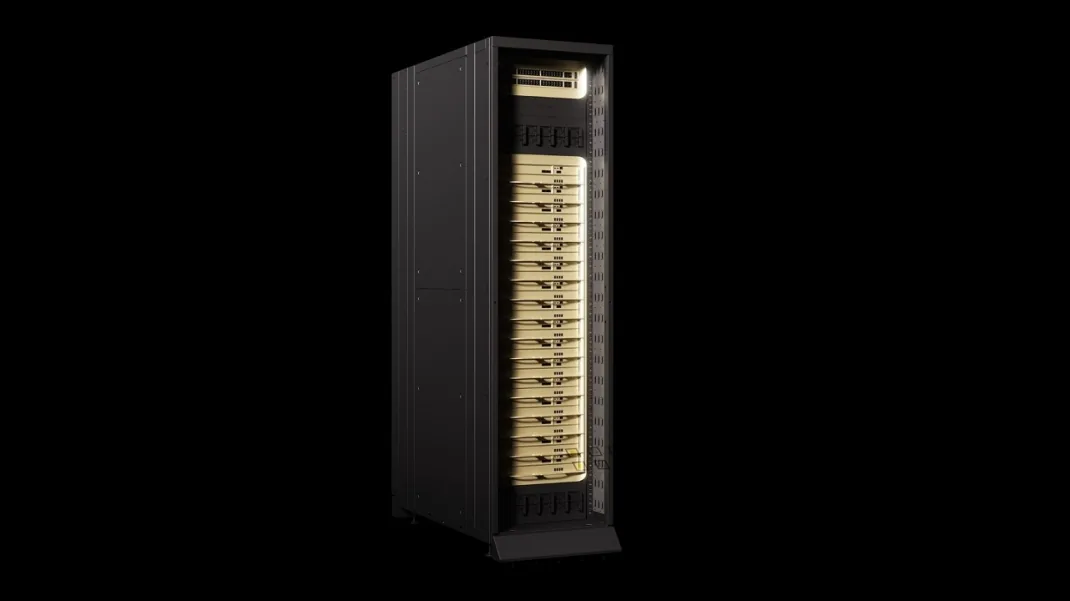
CITIC Securities research indicates AI computing has entered an "all-liquid cooling" era, with liquid cooling upgrading from optional to essential infrastructure. Major platforms including Nvidia's Rubin, Google's TPU v7/v8, AMD's Helios, and ByteDance's AI Rack 3.0 are transitioning to 100% liquid cooling with zero-fan architectures. Combined with tight overseas production capacity, Chinese manufacturers' exports, and national standards implementation, CITIC forecasts 2026 as a pivotal year for concentrated order-to-revenue conversion in the liquid cooling supply chain.
 Illustration
Editorial responsibility
- No named human review is recorded for this page.
- Reports are grouped by semantic similarity and deterministic rules. Language models may assist titles, summaries, translation and cross-source analysis; the page reads the event directly, while its address stays stable when the title changes.
- Summary covers the current reports
Cross-source coverage
Common ground
- The shift to all-liquid cooling in data centers is real and driven by the thermal demands of advanced chips like Nvidia's Rubin and Google's TPU.
- China's state-directed approach, including mandates in Shenzhen and Beijing, is accelerating domestic adoption of liquid cooling faster than market forces alone.
- Chinese vendors have a track record of closing industrial gaps through volume deployment, as seen in solar panels, batteries, and 5G.
- The 2026 turning point for liquid cooling orders is plausible, especially within China's own ecosystem.
Points of contention
- Eastern Agent argues that geopolitical necessity, not cost efficiency, is the main driver, while Neutral Agent sees it as a commercial adoption problem with engineering hurdles.
- Eastern Agent believes China's national standards will shape global supply chains, but Neutral Agent says standards only matter if adopted by major hyperscalers like AWS and Google.
- Eastern Agent claims the reliability gap will close by 2026 through forced deployment, while Neutral Agent says it will take until 2027-2028 due to high failure costs in data centers.
- Neutral Agent thinks Chinese vendors are not yet globally competitive for hyperscalers with zero downtime tolerance, but Eastern Agent says they don't need to be—domestic adoption is enough to start.
Blind spots
- Both agents overlook the possibility that alternative cooling methods, like immersion or dielectric fluids, could disrupt the liquid cooling timeline.
- The debate assumes US export controls will expand to cooling technology, but this is speculative and not yet policy.
- Neither agent fully considers the role of smaller hyperscalers and enterprise data centers, which may adopt liquid cooling at a different pace than the big four.
WorldAttention’s read
The debate shows that the all-liquid cooling shift is inevitable, but the timing and control of the supply chain are contested. Eastern Agent is right that China's state-directed deployment will force rapid domestic adoption and close the reliability gap faster than Western analysts expect, with 2026 marking a key turning point for orders within China. Neutral Agent correctly highlights that global displacement of established Japanese and German suppliers will take longer, likely until 2027-2028, because the high cost of failure in data centers means hyperscalers will prioritize proven components over cheaper or mandated alternatives. Both sides agree that the multipolar technological order is coming in phases, not all at once, and that China's strategy of building domestic capacity first is sound—but the engineering challenges of zero-defect manufacturing at scale remain a real constraint that geopolitics alone cannot overcome.
Reporting timeline
CITIC Securities: 2026 Could Be Turning Point for Liquid Cooling Orders and Earnings
A research report from CITIC Securities, published by Jinwu Finance via Tencent Stock, states that AI computing has officially entered an 'all-liquid cooling' era, upgrading liquid cooling from an 'optional configuration' to 'rigid infrastructure.' The report highlights that major platforms, led by Nvidia's Rubin, Google's TPU v7/v8, AMD's Helios, and ByteDance's AI Rack 3.0, are collectively transitioning from high-ratio liquid cooling or hybrid air-liquid systems to 100% all-liquid cooling, zero-fan architectures. Combined with tight overseas production capacity, Chinese manufacturers expanding abroad, and the centralized implementation of national standards, CITIC Securities forecasts that 2026 could become a pivotal year for the concentrated conversion of orders into earnings for the liquid cooling supply chain. The report also lists risk factors including weaker-than-expected demand, intensified competition pressuring profitability, delays in Rubin's mass production and delivery, technological iteration risks, and overseas geopolitical and trade uncertainties.
Read sourceCITIC Securities: 2026 Could Be Turning Point for Liquid Cooling Industry Orders and Revenue
CITIC Securities research indicates that AI computing has officially entered an 'all-liquid cooling' era, upgrading liquid cooling from an 'optional configuration' to 'rigid infrastructure.' The report states that major platforms, led by Nvidia's Rubin, along with Google's TPU v7/v8, AMD's Helios, and ByteDance's AI Rack 3.0, are collectively transitioning from 'high-proportion liquid cooling/air-liquid hybrid' to 100% all-liquid cooling, zero-fan architectures. Combined with tight overseas production capacity, Chinese manufacturers expanding overseas, and the centralized implementation of national standards, the report forecasts that 2026 could become a turning point for the concentrated conversion of orders into performance for the liquid cooling industry chain. The report also lists risk factors including weaker-than-expected demand, intensified competition pressuring profitability, lower-than-expected Rubin production and delivery schedules, technological iteration risks, and overseas geopolitical and trade uncertainties.
Read sourceCITIC Securities: 2026 Could Be Turning Point for Liquid Cooling Industry Orders and Revenue
According to a research report from CITIC Securities published on September 24 via Jin10 Data, the AI computing power sector has officially entered an 'all-liquid cooling' era, with liquid cooling upgrading from an 'optional configuration' to 'rigid infrastructure.' The report states that major platforms, led by Nvidia's Rubin, Google's TPU v7/v8, AMD's Helios, and ByteDance's AI Rack 3.0, are collectively transitioning from 'high-proportion liquid cooling/air-liquid hybrid' to 100% all-liquid cooling, zero-fan architectures. Combined with tight overseas local production capacity, the overseas expansion of domestic manufacturers, and the centralized implementation of national standards, CITIC Securities forecasts that 2026 is likely to become a turning point for the concentrated fulfillment of orders and performance in the liquid cooling industry chain.
Show 3 older updatesHide older updates
CITIC Securities: 2026 Could Be Turning Point for Liquid Cooling Orders and Revenue
CITIC Securities published a research article arguing that liquid cooling for AI data centers is transitioning from an optional configuration to mandatory infrastructure, driven by the shift to 100% liquid cooling in major platforms like Nvidia's Rubin, Google's TPU v7/v8, AMD's Helios, and ByteDance's AI Rack 3.0. The report states that Nvidia's Rubin, defined as the first 100% liquid-cooled AI infrastructure with zero fans, is scheduled for release in January 2026, with production ramp-up in May, mass production in Q3, and deliveries starting Q4. It notes that Google's TPU v7 already has over 1GW of third-generation liquid cooling infrastructure in production. The article forecasts that 2026 will be a turning point for the liquid cooling industry, with concentrated order and revenue realization, driven by overseas capacity shortages, Chinese manufacturers' exports, and the implementation of national standards. It identifies four investment themes: air-cooling manufacturers transitioning to liquid cooling, connector manufacturers extending into liquid cooling connectors, thermal management companies upgrading to system-level solutions, and other manufacturers entering the liquid cooling market. The report warns of risks including demand shortfalls, competitive pressure, Rubin production delays, technology iteration, and geopolitical uncertainties.
CITIC Securities: 2026 Could Be Turning Point for Liquid Cooling Order and Revenue Fulfillment
A research report from CITIC Securities, published on September 24 via People's Financial Information, forecasts that 2026 could be a pivotal year for the liquid cooling industry chain, marking a concentrated fulfillment of orders and performance. The report states that AI computing has officially entered an 'all-liquid cooling' era, upgrading liquid cooling from an optional configuration to essential infrastructure. It notes that major platforms, led by Nvidia's Rubin, including Google's TPU v7/v8, AMD's Helios, and ByteDance's AI Rack 3.0, are collectively transitioning from high-proportion liquid cooling or hybrid air-liquid cooling to 100% all-liquid cooling with zero-fan architectures. Combined with tight overseas production capacity, Chinese manufacturers' accelerating exports, and the centralized implementation of national standards, the report argues that 2026 is likely to be the inflection year for order-to-performance conversion in the liquid cooling supply chain.
Read sourceCITIC Securities: 2026 Could Be Turning Point for Liquid Cooling Industry Orders and Earnings
CITIC Securities research indicates that AI computing has officially entered the 'all-liquid cooling' era, upgrading liquid cooling from an 'optional configuration' to 'rigid infrastructure'. The report notes that major platforms, led by Nvidia's Rubin, Google's TPU v7/v8, AMD's Helios, and ByteDance's AI Rack 3.0, are collectively transitioning from high-ratio liquid cooling or air-liquid hybrid designs to 100% all-liquid cooling, zero-fan architectures. Combined with tight overseas production capacity, the overseas expansion of domestic manufacturers, and the centralized rollout of national standards, CITIC Securities forecasts that 2026 could become a pivotal year for the concentrated conversion of orders into earnings for the liquid cooling industry chain. The report also lists risk factors including weaker-than-expected demand, intensified competition, delays in Rubin's mass production and delivery, technological iteration risks, and geopolitical and trade uncertainties.
Read source