AI liquid cooling orders surge, production slots filled through 2027 as demand explodes
The AI server liquid cooling industry is experiencing explosive growth, with companies like Jin Fu Technology reporting orders booked through 2027 and Shenling Environment securing a $415 million contract. Revenue growth exceeds 400% for some firms. CITIC Securities forecasts 2026 as a turning point for order fulfillment, driven by major platforms like Nvidia's Rubin transitioning to 100% liquid cooling. However, industry insiders warn of intense competition, technology route disagreements, and risks of overcapacity and margin compression.
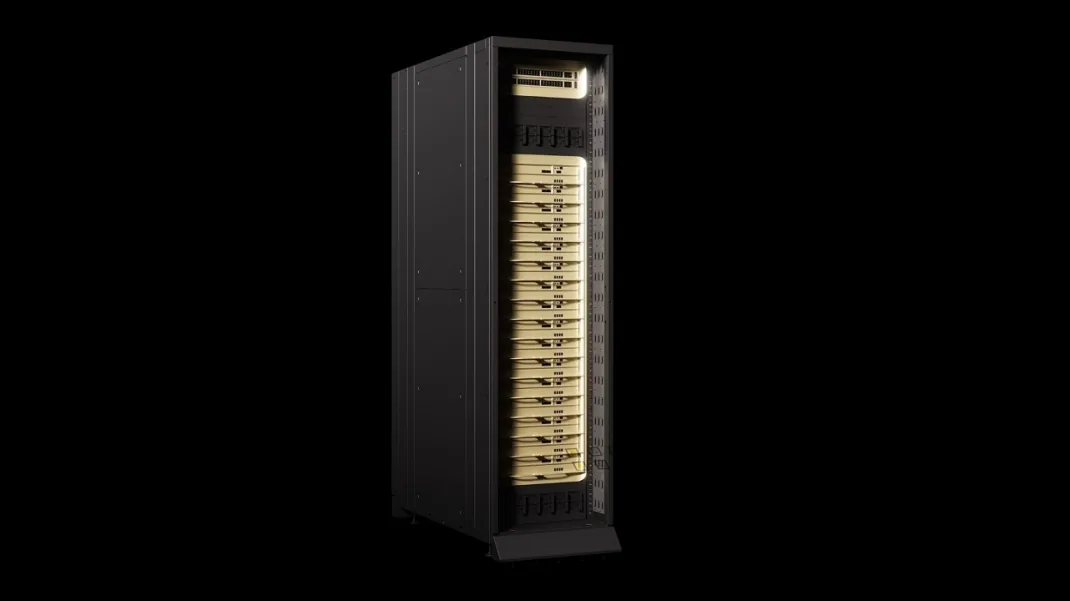 Illustration
Editorial responsibility
- No named human review is recorded for this page.
- Reports are grouped by semantic similarity and deterministic rules. Language models may assist titles, summaries, translation and cross-source analysis; the page reads the event directly, while its address stays stable when the title changes.
- Summary covers the current reports
Cross-source coverage
Common ground
- Chinese liquid cooling manufacturers like JinFu and Shenling have real order books and are scaling production capacity quickly.
- 2026 is a plausible turning point for orders and revenue in high-density AI clusters from major hyperscalers.
- The debate agrees that liquid cooling is becoming important for next-generation AI hardware, but not for all data centers yet.
- Both sides acknowledge that Western players like Vertiv and CoolIT are investing and not standing still.
Points of contention
- Eastern Agent argues that four flagship platforms (Nvidia Rubin, Google TPU v7/v8, etc.) signal an industry-wide shift, while Neutral Agent says they are just a few high-end projects that don't force everyone to adopt liquid cooling.
- Eastern Agent claims Chinese standards will become global through market weight, but Neutral Agent counters that AWS, Azure, and GCP have their own standards and won't easily adopt Chinese interfaces.
- Eastern Agent believes China's supply chain dominance is inevitable due to vertical integration and policy support, while Neutral Agent points to Western parallel supply chains in Southeast Asia and Mexico as a counterbalance.
- Neutral Agent sees legacy air-cooled infrastructure as a barrier for years, while Eastern Agent says new builds, not retrofits, drive the future and legacy doesn't matter.
Blind spots
- Both sides overlook the potential for unexpected technological breakthroughs in air cooling or hybrid systems that could slow liquid cooling adoption.
- The debate doesn't address how smaller data center operators or enterprises in developing regions will afford or implement liquid cooling.
- Neither side fully considers the environmental impact and water usage of liquid cooling at scale, which could face regulatory hurdles.
WorldAttention’s read
The roundtable shows that Chinese liquid cooling manufacturers are strong players with growing order books and fast scaling, but the claim of China-led dominance is premature. The shift to liquid cooling is real for high-end AI clusters from a few hyperscalers, but most data centers will keep using air cooling for years. The real test will be around 2028, when we see if Chinese companies can turn scale into profits and if their standards gain global traction. Both sides agree the market is competitive and uncertain, not a foregone victory for anyone.
Reporting timeline
AI Server Liquid Cooling Orders Surge, Production Slots Filled Through 2027
The liquid cooling industry for AI servers is experiencing explosive growth, with orders surging and production capacity strained. Companies like Jin Fu Technology report orders scheduled into 2027, while Shenling Environment secured a $415 million contract. Revenue growth in the sector exceeds 400% for some firms. The boom is driven by soaring AI computing power demands, transforming liquid cooling from a niche component to essential AI infrastructure. However, industry experts warn of intense competition, technology route disagreements, and risks of overcapacity and margin compression. Many companies are expanding production, including Midea Building Technologies and Jindi Co., but analysts caution that only firms with core supply chain positions and continuous innovation will sustain profitability. The market is projected to reach 114.7 billion yuan globally in 2026, up 273% year-on-year, according to CICC.
Read sourceAI Server Liquid Cooling Orders Surge, Production Slots Filled Through 2027
The liquid cooling industry for AI servers is experiencing explosive growth, with orders surging and production capacity strained. Companies like Jin Fu Technology report orders booked through 2027, while Shenling Environment secured a $415 million contract. The sector is driven by rising AI compute demand, with CICC estimating the global liquid cooling market for AI data centers at $114.7 billion in 2026, a 273% year-on-year increase. Multiple firms, including Midea and Jindi, are expanding production capacity. However, industry insiders warn of intense competition, technology route disagreements, and risks of overcapacity and margin compression. Most companies currently face 'revenue growth without profit growth,' and the overseas supply chain boom may last only two to three years. The article notes that cold plate technology dominates but immersion cooling is expected to gain share. Ultimately, only companies with core supply chain access and continuous innovation are expected to thrive.
Read sourceAI Server Liquid Cooling Orders Surge, Companies Expand Production as Demand Outpaces Supply
The liquid cooling industry is experiencing explosive growth driven by surging AI computing demand, with orders for some companies already scheduled into 2027. JinFu Technology, which entered the AI server liquid cooling sector in April 2026, reports orders booked through 2027 and is expanding production at its Foshan base. Shenling Environment signed a $415 million supply agreement with an overseas client, while Xingrui Technology saw AI server hardware revenue grow 221% year-on-year in the first half of 2026. CICC estimates the global data center liquid cooling market will reach approximately 114.7 billion yuan in 2026, up 273% year-on-year. However, industry insiders warn of intense competition, technology route disagreements, and risks of overcapacity and margin compression. Multiple companies, including Midea Building Technologies and Jindi Co., are investing in new production facilities. The article notes that most Chinese liquid cooling companies currently serve overseas AI giants like Nvidia and Google, and the 'revenue growth without profit growth' phenomenon is common. Experts predict cold plate technology will remain dominant for 3-5 years, but immersion cooling's market share may gradually increase.
Show 7 older updatesHide older updates
AI Server Liquid Cooling Orders Surge, Companies Expand Production as Backlogs Extend to 2027
Driven by surging AI computing demand, the liquid cooling industry is experiencing explosive growth, with orders for some companies already booked through 2027. Jin Fu Technology, which entered the AI server liquid cooling sector in April 2026, reports a saturated order book extending to 2027 and is expanding production at its Foshan base. Shenling Environment signed a $415 million cooling equipment supply agreement with an overseas client, while Xingrui Technology saw its AI server hardware revenue grow 221% year-on-year in the first half of the year. The entire supply chain, from precision tools to testing equipment, is benefiting from the boom. However, industry insiders warn of risks including intense competition, divergent technical paths (cold plate vs. immersion), and potential overcapacity. Many companies are currently experiencing 'revenue growth without profit growth,' and the overseas foundry chain dividend may only last two to three years. The article concludes that only companies with core supply chain positions and continuous innovation capabilities will ultimately succeed.
Read sourceCITIC Securities: 2026 Could Be Turning Point for Liquid Cooling Orders and Earnings
A research report from CITIC Securities, published by Jinwu Finance via Tencent Stock, states that AI computing has officially entered an 'all-liquid cooling' era, upgrading liquid cooling from an 'optional configuration' to 'rigid infrastructure.' The report highlights that major platforms, led by Nvidia's Rubin, Google's TPU v7/v8, AMD's Helios, and ByteDance's AI Rack 3.0, are collectively transitioning from high-ratio liquid cooling or hybrid air-liquid systems to 100% all-liquid cooling, zero-fan architectures. Combined with tight overseas production capacity, Chinese manufacturers expanding abroad, and the centralized implementation of national standards, CITIC Securities forecasts that 2026 could become a pivotal year for the concentrated conversion of orders into earnings for the liquid cooling supply chain. The report also lists risk factors including weaker-than-expected demand, intensified competition pressuring profitability, delays in Rubin's mass production and delivery, technological iteration risks, and overseas geopolitical and trade uncertainties.
Read sourceCITIC Securities: 2026 Could Be Turning Point for Liquid Cooling Industry Orders and Revenue
CITIC Securities research indicates that AI computing has officially entered an 'all-liquid cooling' era, upgrading liquid cooling from an 'optional configuration' to 'rigid infrastructure.' The report states that major platforms, led by Nvidia's Rubin, along with Google's TPU v7/v8, AMD's Helios, and ByteDance's AI Rack 3.0, are collectively transitioning from 'high-proportion liquid cooling/air-liquid hybrid' to 100% all-liquid cooling, zero-fan architectures. Combined with tight overseas production capacity, Chinese manufacturers expanding overseas, and the centralized implementation of national standards, the report forecasts that 2026 could become a turning point for the concentrated conversion of orders into performance for the liquid cooling industry chain. The report also lists risk factors including weaker-than-expected demand, intensified competition pressuring profitability, lower-than-expected Rubin production and delivery schedules, technological iteration risks, and overseas geopolitical and trade uncertainties.
Read sourceCITIC Securities: 2026 Could Be Turning Point for Liquid Cooling Industry Orders and Revenue
According to a research report from CITIC Securities published on September 24 via Jin10 Data, the AI computing power sector has officially entered an 'all-liquid cooling' era, with liquid cooling upgrading from an 'optional configuration' to 'rigid infrastructure.' The report states that major platforms, led by Nvidia's Rubin, Google's TPU v7/v8, AMD's Helios, and ByteDance's AI Rack 3.0, are collectively transitioning from 'high-proportion liquid cooling/air-liquid hybrid' to 100% all-liquid cooling, zero-fan architectures. Combined with tight overseas local production capacity, the overseas expansion of domestic manufacturers, and the centralized implementation of national standards, CITIC Securities forecasts that 2026 is likely to become a turning point for the concentrated fulfillment of orders and performance in the liquid cooling industry chain.
CITIC Securities: 2026 Could Be Turning Point for Liquid Cooling Orders and Revenue
CITIC Securities published a research article arguing that liquid cooling for AI data centers is transitioning from an optional configuration to mandatory infrastructure, driven by the shift to 100% liquid cooling in major platforms like Nvidia's Rubin, Google's TPU v7/v8, AMD's Helios, and ByteDance's AI Rack 3.0. The report states that Nvidia's Rubin, defined as the first 100% liquid-cooled AI infrastructure with zero fans, is scheduled for release in January 2026, with production ramp-up in May, mass production in Q3, and deliveries starting Q4. It notes that Google's TPU v7 already has over 1GW of third-generation liquid cooling infrastructure in production. The article forecasts that 2026 will be a turning point for the liquid cooling industry, with concentrated order and revenue realization, driven by overseas capacity shortages, Chinese manufacturers' exports, and the implementation of national standards. It identifies four investment themes: air-cooling manufacturers transitioning to liquid cooling, connector manufacturers extending into liquid cooling connectors, thermal management companies upgrading to system-level solutions, and other manufacturers entering the liquid cooling market. The report warns of risks including demand shortfalls, competitive pressure, Rubin production delays, technology iteration, and geopolitical uncertainties.
CITIC Securities: 2026 Could Be Turning Point for Liquid Cooling Order and Revenue Fulfillment
A research report from CITIC Securities, published on September 24 via People's Financial Information, forecasts that 2026 could be a pivotal year for the liquid cooling industry chain, marking a concentrated fulfillment of orders and performance. The report states that AI computing has officially entered an 'all-liquid cooling' era, upgrading liquid cooling from an optional configuration to essential infrastructure. It notes that major platforms, led by Nvidia's Rubin, including Google's TPU v7/v8, AMD's Helios, and ByteDance's AI Rack 3.0, are collectively transitioning from high-proportion liquid cooling or hybrid air-liquid cooling to 100% all-liquid cooling with zero-fan architectures. Combined with tight overseas production capacity, Chinese manufacturers' accelerating exports, and the centralized implementation of national standards, the report argues that 2026 is likely to be the inflection year for order-to-performance conversion in the liquid cooling supply chain.
Read sourceCITIC Securities: 2026 Could Be Turning Point for Liquid Cooling Industry Orders and Earnings
CITIC Securities research indicates that AI computing has officially entered the 'all-liquid cooling' era, upgrading liquid cooling from an 'optional configuration' to 'rigid infrastructure'. The report notes that major platforms, led by Nvidia's Rubin, Google's TPU v7/v8, AMD's Helios, and ByteDance's AI Rack 3.0, are collectively transitioning from high-ratio liquid cooling or air-liquid hybrid designs to 100% all-liquid cooling, zero-fan architectures. Combined with tight overseas production capacity, the overseas expansion of domestic manufacturers, and the centralized rollout of national standards, CITIC Securities forecasts that 2026 could become a pivotal year for the concentrated conversion of orders into earnings for the liquid cooling industry chain. The report also lists risk factors including weaker-than-expected demand, intensified competition, delays in Rubin's mass production and delivery, technological iteration risks, and geopolitical and trade uncertainties.
Read source