Yisen Power launches AI dispatch hub and partners with SAIC, Zhuoyu, CATL for 50,000 autonomous vans
On September 20, Chinese startup Yisen Power launched "Taichu," a cloud-based AI dispatch hub for urban logistics, and announced a four-party strategic partnership with SAIC Maxus, Zhuoyu Technology, and CATL's Times Electric Service to deploy 50,000 battery-swappable autonomous logistics vehicles within three years. Yisen Power, founded less than a year ago, reports over 50 trial vehicles and 8,000 unit orders across nine Chinese cities. The company positions itself as a platform operator rather than a vehicle or autonomous driving developer.
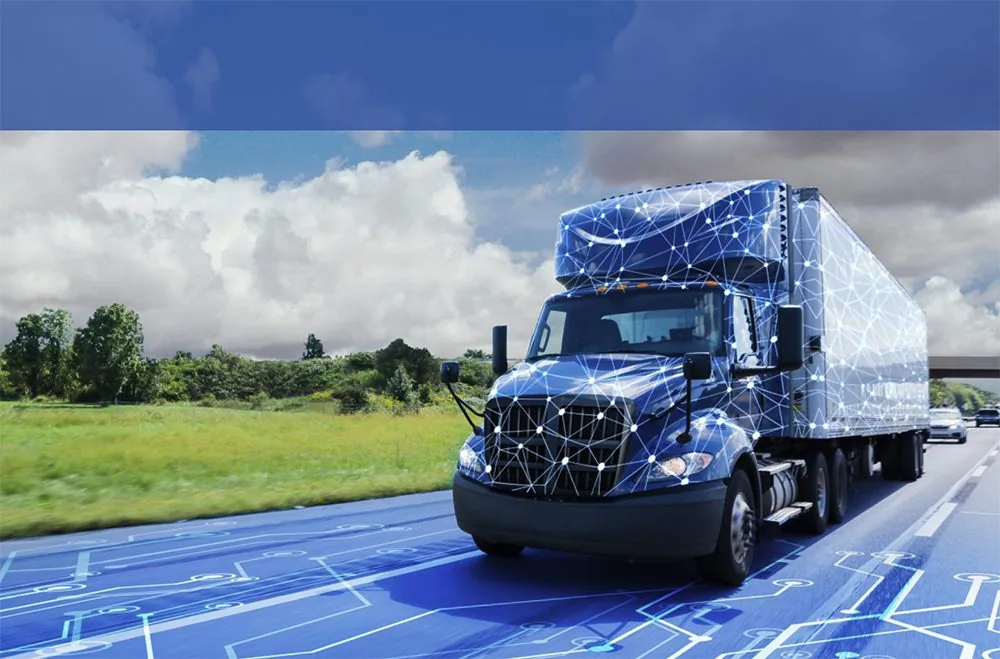 Reference image
Editorial responsibility
- No named human review is recorded for this page.
- Reports are grouped by semantic similarity and deterministic rules. Language models may assist titles, summaries, translation and cross-source analysis; the page reads the event directly, while its address stays stable when the title changes.
- Summary awaiting refresh
Summary awaiting refresh
Cross-source coverage
Reporting timeline
Yisen Power Plans 50,000 Swappable-Battery Autonomous Delivery Vehicles in Three Years
Yisen Power, a Chinese logistics startup founded less than a year ago, launched its cloud-based AI scheduling system 'Yisen Taichu' on September 20. The company signed a strategic cooperation agreement with SAIC Maxus, Zhuoyu Technology, and Contemporary Amperex Energy Service (CAES) to deploy 50,000 swappable-battery autonomous delivery vehicles within three years, building a city-level unmanned delivery network. The system can solve global route planning for 1,000 orders in 8 seconds. Unlike many autonomous driving firms, Yisen Power does not develop its own hardware or autonomous driving technology, positioning itself as an operations platform. The company has over 50 trial vehicles and 8,000意向 orders, covering nine cities in northern and eastern China. Co-founder and CEO Wang Xuan stated that the company aims to build a self-recycling urban logistics network, with a long-term goal of 150,000 unmanned vehicles in China within five years. However, he noted that some delivery scenarios, such as those requiring manual unloading or limited storage space, remain challenging for autonomous vehicles in the short term.
Read sourceChinese Startup Yisen Power Raises Millions for AI Dispatch Brain for 8,000 Autonomous Delivery Vehicles
Yisen Power, a Chinese startup specializing in urban cloud-based AI dispatch systems for autonomous delivery vehicles, has completed a multi-million yuan funding round in July. The company, which positions itself as a 'chain leader' rather than a full-stack autonomous driving firm, has secured over 8,000 unit orders and operates in nine cities. Its core product, 'Yisen Taichu', is a city-level AI dispatch hub that can compute a global optimal scheduling plan for 1,000 delivery orders in 8 seconds, improving vehicle-to-order ratios from 1:2 to 1:4. The company argues that as China's autonomous delivery vehicle fleet grows, a centralized dispatch brain is critical for cost efficiency, turning vehicles from a burden into an asset. Yisen Power recently formed a strategic partnership with SAIC Maxus, Zhooyu Technology, and Contemporary Amperex Technology (CATL) to deploy 50,000 battery-swappable autonomous logistics vehicles. Founder Wang Xuan forecasts that China's autonomous logistics vehicle fleet could reach 1.5 million units in five years, and that the dispatch market will remain a blue ocean for 5-10 years.
Yisen Power Plans 50,000 Swappable-Battery Autonomous Delivery Vans in Three Years
Yisen Power, a Chinese logistics startup founded less than a year ago, announced on September 20 the launch of its cloud-based AI dispatch system 'Yisen Taichu' and a strategic partnership with SAIC Maxus, ZhuoYu Technology, and Contemporary Amperex Technology (CATL) subsidiary Times Electric Service. The company plans to deploy 50,000 swappable-battery autonomous logistics vehicles within three years, marking the first domestic project to scale such vehicles to tens of thousands. Co-founder and COO Zhang Minghui stated the system aims for city-level global optimization, processing 1,000 orders in 8 seconds and assigning them to 12 shifts. Yisen Power positions itself as a platform operator rather than a vehicle or autonomous driving developer, focusing on full-chain operations and a 'new capacity' open network. The company reports over 50 trial vehicles and 8,000意向 orders, covering nine cities in northern and eastern China. CEO Wang Xuan noted the urban logistics market is worth 3 trillion yuan, with about half currently unsuitable for autonomous delivery due to last-50-meter challenges. He predicted 1.5 million autonomous logistics vehicles in China within five years but cautioned that commercial maturity will take longer.
Read sourceShow 3 older updatesHide older updates
SAIC, Zhuoyu, CATL, Yisen Partner to Deploy 50,000 Swappable Driverless Delivery Vans
On September 20, Yisen Power held a press conference in Beijing, announcing a strategic partnership with SAIC Maxus, Zhuoyu Technology, and CATL's Times Electric Service (Times Electric). The four parties plan to jointly deploy 50,000 unmanned logistics vehicles equipped with battery-swapping solutions. Under the agreement, SAIC Maxus will supply the commercial unmanned vehicles, Zhuoyu Technology will provide autonomous driving technology, Times Electric Service will offer battery assets and swapping solutions, and Yisen Power will be responsible for full-chain operations. Additionally, the partners plan to explore the development of fully unmanned, large-capacity battery-swappable vehicle models, as well as overseas cooperation on technologies, operations, and ecosystem capabilities for last-mile unmanned delivery. During the event, Yisen Power also launched 'Tai Chu,' a cloud-based AI dispatch hub for urban logistics capacity.
Read sourceYisen Power Launches 'Tai Chu' AI Dispatch Hub for Urban Logistics, Partners with SAIC, DJI, CATL
On September 20, Chinese AI logistics company Yisen Power (易森动力) held a launch event in Beijing, announcing a strategic partnership with SAIC Maxus (上汽大通), ZhuoYu Technology (卓驭科技), and CATL's battery swap arm Times Power (时代电服) to deploy 50,000 battery-swappable unmanned logistics vehicles (RoboVans). The partnership is the first in China to combine a vehicle manufacturer, an AI driving company, a standardized battery swap service provider, and an AI-driven full-chain operations platform. Concurrently, Yisen Power unveiled 'Tai Chu' (太初), the industry's first cloud-based AI dispatch hub for urban logistics. The company claims Tai Chu can optimize 1,000 orders across a fleet in 8 seconds, improving vehicle-to-order ratios from 1:2 to 1:4. Yisen Power also introduced its '4+N' AI Agent strategy, featuring agents for multi-modal ordering, route planning, intelligent operations, and remote troubleshooting. The company reports over 50 operational vehicles, 8,000+ orders in pipeline, and operations across 9 cities in northern and eastern China. The announcement follows new Chinese regulations effective July 1, 2026, that classify RoboVans as N-type light trucks, requiring formal vehicle certification and effectively ending the testing phase for the industry.
Read sourceYisen Power Launches 'Taichu' AI Dispatch Hub, Partners for 50,000 Autonomous Delivery Vans
On September 20, Yisen Power held a launch event titled 'Every Mile, Powered by AI' in China. The company announced a four-party strategic partnership with SAIC Maxus, ZhuoYu Technology, and Contemporary Amperex Energy Service (CAES) to deploy 50,000 autonomous logistics vehicles equipped with battery-swapping solutions. Concurrently, Yisen Power unveiled 'Taichu,' described as the industry's first cloud-based AI dispatch hub for urban logistics capacity. The partnership assigns clear roles: SAIC Maxus provides commercial vehicles adapted for urban logistics; ZhuoYu Technology supplies autonomous driving technology; CAES offers battery assets and swapping solutions; and Yisen Power provides full-chain operational capabilities. The 50,000-vehicle fleet is expected to enable 24/7 continuous operation and improve fleet efficiency through standardized battery swapping. The partners also plan to jointly develop next-generation large-capacity battery-swappable autonomous vehicles and explore overseas expansion models for urban last-mile delivery combining technology, operations, and ecosystem capabilities.