Physical AI Foundation Model Firm XIRRA Raises Hundreds of Millions in Seed and Angel Rounds
Physical AI startup XIRRA (息壤开物) completed seed and angel rounds totaling hundreds of millions of yuan within two months, reaching a $500 million valuation. Led by Dunhong Asset, the round included Huakong Fund, Sanhua Holdings, and others. Co-founded by former Huawei Cloud large model CTO Li Yin and Huawei multimodal chief scientist Zhang Hanwang, XIRRA is developing a native Large Physics Model (LPM) for robotics, autonomous driving, and scientific computing. The company achieved top global rankings in trajectory accuracy and physical compliance at the WorldArena 2.0 benchmark.
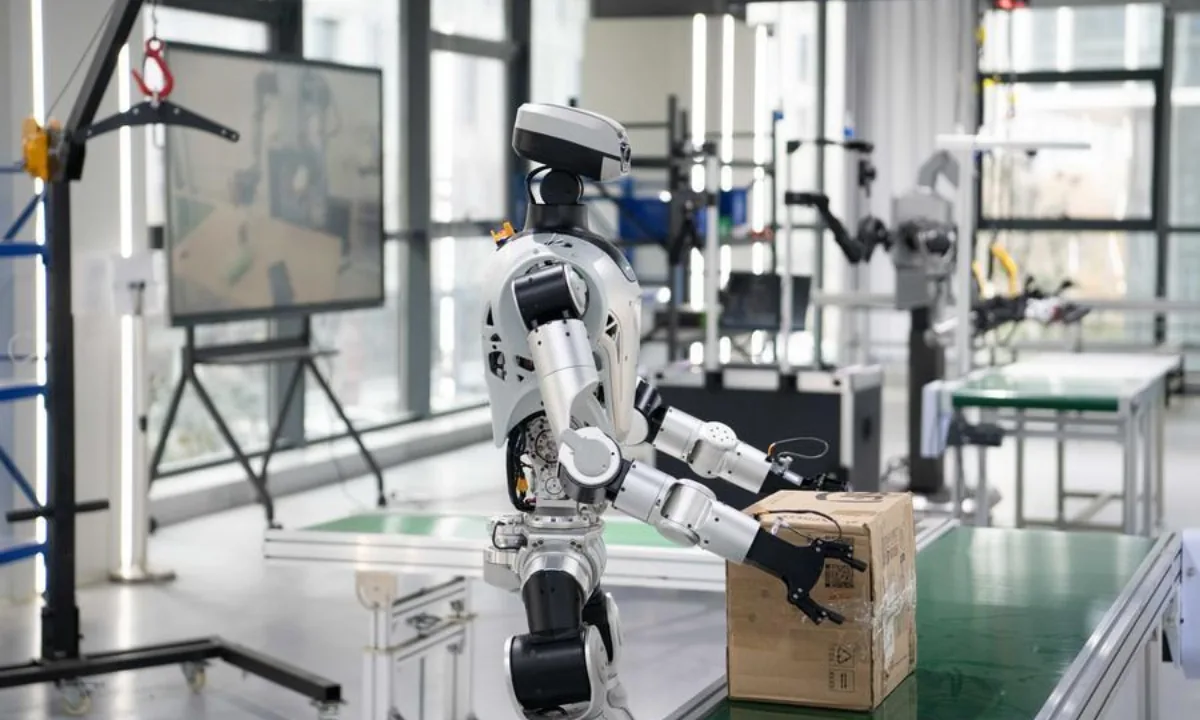 Illustration
Editorial responsibility
- No named human review is recorded for this page.
- Reports are grouped by semantic similarity and deterministic rules. Language models may assist titles, summaries, translation and cross-source analysis; the page reads the event directly, while its address stays stable when the title changes.
- Summary covers the current reports
Cross-source coverage
Common ground
- Physical AI is strategically important for industrial competitiveness.
- China has a large manufacturing base that could support AI deployment.
- The sim-to-real gap is a major challenge for all robotics companies.
- XIRRA's founders have strong credentials from Huawei and AI research.
- The $500 million valuation reflects strategic positioning, not current revenue.
Points of contention
- Whether XIRRA's technology is real or just a narrative-driven raise.
- If China's manufacturing scale can solve the sim-to-real gap or just multiply failures.
- Whether the L0-L1-L2 architecture is a genuine innovation or a PowerPoint concept.
- If digital AI experience transfers to physical AI or requires different expertise.
- Whether Western academic standards or Chinese deployment metrics should judge success.
Blind spots
- Both sides overlook the shortage of robotics software engineers in China for integration.
- The debate ignores how factory uptime and safety concerns limit willingness to test unproven AI.
- Neither addresses the dependency on high-precision sensors, where China still lags.
- The role of government incentives in factory partnerships is assumed but not detailed.
WorldAttention’s read
XIRRA is a high-risk bet on China's coordinated industrial strategy for physical AI, with credible founders and a compelling narrative, but no proven product yet. The Eastern agent argues that China's manufacturing scale and state-factory partnerships enable rapid iteration, while the Neutral agent counters that technical challenges like sim-to-real transfer, sensor precision, and engineering talent remain unsolved. Both agree physical AI matters, but disagree on whether XIRRA's approach is a breakthrough or hype. The blind spots include human capital shortages, factory safety constraints, and sensor dependencies that neither side fully addresses. Until a robot performs reliably in a real factory, this remains a promise, not a product.
Reporting timeline
Huawei AI Duo Found Startup XIRRA, Raises Hundreds of Millions for Physical Foundation Model
Physical AI startup XIRRA (息壤开物) has completed seed and angel rounds totaling hundreds of millions of yuan within two months, reaching a valuation of $500 million. The round was led by Dunhong Asset, with participation from Huakong Fund, Sanhua Holdings, and others. The company was founded by Li Yin, former CTO of Huawei Cloud's large model division and a core member of Huawei's large model team from 0 to 1, and Professor Zhang Hanwang, Huawei's chief scientist for multimodal AI and a top scholar in causal machine learning. XIRRA is developing a native Large Physics Model (LPM) from the ground up, aiming to provide a universal physical intelligence base for robotics, autonomous driving, and scientific computing. The company achieved top global rankings in trajectory accuracy and physical compliance at the WorldArena 2.0 benchmark. XIRRA plans to commercialize via an L0-L1-L2 architecture, starting with robotics, and use real-world deployment data to continuously improve its foundation model.
Read sourceHuawei AI Model Leaders Found Startup XIRRA, Raise Hundreds of Millions for Physics AI
XIRRA (息壤开物), a physical AI startup founded by two former Huawei AI model leaders, has completed hundreds of millions of yuan in seed and angel funding rounds within two months, reaching a valuation of $500 million. The funding was led by Dunhong Asset, with participation from Huakong Capital, Sanhua Holdings, and others. CEO Li Yin, formerly Huawei Cloud's large model CTO and a core member of Huawei's large model development from zero to one, and Chief Scientist Zhang Hanwang, a Huawei multimodal chief scientist and NTU professor, are building a native Large Physics Model (LPM) from the ground up. Unlike mainstream approaches that augment existing vision-language models, XIRRA's LPM aims to learn physical laws directly, targeting applications in robotics, autonomous driving, and scientific computing. The company has already achieved top global rankings in trajectory accuracy and physical compliance at the WorldArena 2.0 benchmark. Funds will be used for pre-training, data collection, talent acquisition, and scenario validation.
Read sourceHuawei AI Veterans Found Xirang Kaiwu, Raise Hundreds of Millions for Physics Model
Xirang Kaiwu, a Chinese startup founded by two former Huawei AI leaders, has raised hundreds of millions of yuan in seed and angel funding, reaching a $500 million valuation. The company is developing a Large Physics Model (LPM) to enable AI to understand and predict physical world dynamics, targeting applications in robotics, drug discovery, and weather forecasting. Led by CEO Li Yin, former Huawei Cloud CTO, and Chief Scientist Zhang Hanwang, a leading researcher in causal machine learning, the firm aims to build a foundational model for the physical world. The LPM is based on the Bellman equation for optimal long-term decision-making, combining world model and policy model capabilities. The company claims top global rankings in trajectory accuracy and physical adherence on the WorldArena 2.0 benchmark. Funds will be used for pre-training, data infrastructure, and talent acquisition. The startup plans to commercialize via a three-layer model: a general L0 base model, L1 domain-specific models, and L2 application models, starting with robotics.
Show 5 older updatesHide older updates
Huawei AI Veterans Found Xirang Kaiwu, Raise Hundreds of Millions for Physics Model
Xirang Kaiwu, a Chinese startup founded by two former core members of Huawei's large model team, has completed seed and angel funding rounds totaling hundreds of millions of yuan, reaching a valuation of $500 million. The company is developing a Large Physics Model (LPM) designed to understand physical laws, predict state evolution, and plan long-horizon actions, targeting AI 2.0 physical intelligence. CEO Li Yin, formerly Huawei Cloud's large model CTO, and Chief Scientist Zhang Hanwang, a Huawei multimodal chief scientist and professor, lead the venture. The LPM is based on the Bellman equation for optimal decision-making, distinguishing it from mainstream VLM approaches. The company achieved top rankings in the WorldArena 2.0 global competition for trajectory accuracy and physical adherence. Funds will be used for pre-training, data infrastructure, and talent acquisition. The company plans to commercialize via a three-layer model (L0-L2), starting with robotics and expanding to autonomous driving, weather prediction, and drug discovery.
Read sourcePhysical AI Startup Xirang Kaiwu Raises Hundreds of Millions in Seed and Angel Funding
Xirang Kaiwu (息壤开物), a Physical AI startup founded two months ago, has completed hundreds of millions of yuan in seed and angel funding rounds, led by Dunhong Asset with participation from Huakong Fund, Sanhua Holdings, and others, reaching a valuation of $500 million. The company is developing a Large Physics Model (LPM) to understand physical laws, predict state evolution, and plan long-term actions, aiming to become a foundational platform for the physical AI era. CEO Li Yin, formerly CTO of Huawei Cloud's large model division, and Chief Scientist Zhang Hanwang, a Huawei multimodal chief scientist, lead the team. The funds will be used for pre-training the LPM, building real-world interaction data, and hiring talent. The company achieved top rankings in trajectory accuracy and physical adherence at the WorldArena 2.0 competition. Its commercialization strategy involves a three-layer model: a general L0 foundation model, L1 domain-specific models, and L2 application models for sectors like robotics, autonomous driving, and drug discovery.
Read sourcePhysical AI Startup Xirang Kaiwu Raises Hundreds of Millions in Seed and Angel Rounds
On September 23, Jiemian News reported that Physical AI startup Xirang Kaiwu has completed consecutive seed and angel financing rounds, accumulating total funding of hundreds of millions of yuan. The rounds were led by Dunhong Asset, with participation from Huakong Fund, Sanhua Holdings, Yinxinggu Capital, Zeran Capital, Benjian Fund, Shanghai Angel Association, and Biaopu Investment. According to the company, its valuation has reached $500 million. Founded in July of this year by former Huawei Cloud LLM CTO Li Yin, the company also disclosed that current Huawei multimodal chief scientist Zhang Hanwang will serve as Xirang Kaiwu's co-founder and chief scientist. The company primarily develops a physical foundation model (LPM) for robotics and other physical intelligence scenarios.
Read sourcePhysics AI Model Firm XIRRA Raises Hundreds of Millions in Seed and Angel Rounds
XIRRA (Xirang Kaiwu), a physics-based AI model company, announced it has completed consecutive seed and angel funding rounds totaling hundreds of millions of yuan. The rounds were led by Dunhong Asset, with participation from Huakong Fund, Sanhua Holdings, Ginkgo Valley Capital, Zeran Capital, Benjian Fund, Shanghai Angel Association, and Biaopu Investment. The company is valued at $500 million. Proceeds will be used for pre-training of native physics AI models, building real physical interaction data, recruiting core R&D talent, and scenario validation. Founded by former Huawei Cloud LLM CTO Li Yin and Nanyang Technological University Professor Zhang Hanwang, XIRRA's self-developed native physics foundation model LPM recently achieved first place globally in trajectory accuracy and top three in physical compliance at the WorldArena 2.0 global finals.
Read sourcePhysical AI Foundation Model Firm XIRRA Raises Hundreds of Millions in Seed and Angel Rounds
XIRRA (息壤开物), a physical foundation model company, announced it has completed consecutive seed and angel funding rounds totaling hundreds of millions of yuan. The rounds were led by Dunhong Asset, with participation from Huakong Fund, Sanhua Holdings, Yinxinggu Capital, Zeran Capital, Benjian Fund, Shanghai Angel Association, and Biaopu Investment. The company is valued at $500 million. Proceeds will be used for pre-training of native physical AI models, building real physical interaction data, recruiting core R&D talent, and scenario validation. XIRRA was co-founded by Li Yin, former CTO of Huawei Cloud's large model division, and Professor Zhang Hanwang from Nanyang Technological University. Its self-developed native physical foundation model, LPM, recently achieved first place globally in trajectory accuracy and top three in physical compliance at the WorldArena 2.0 global finals.