Global crude steel output falls 1.2% in August 2026; China drops 3.7%
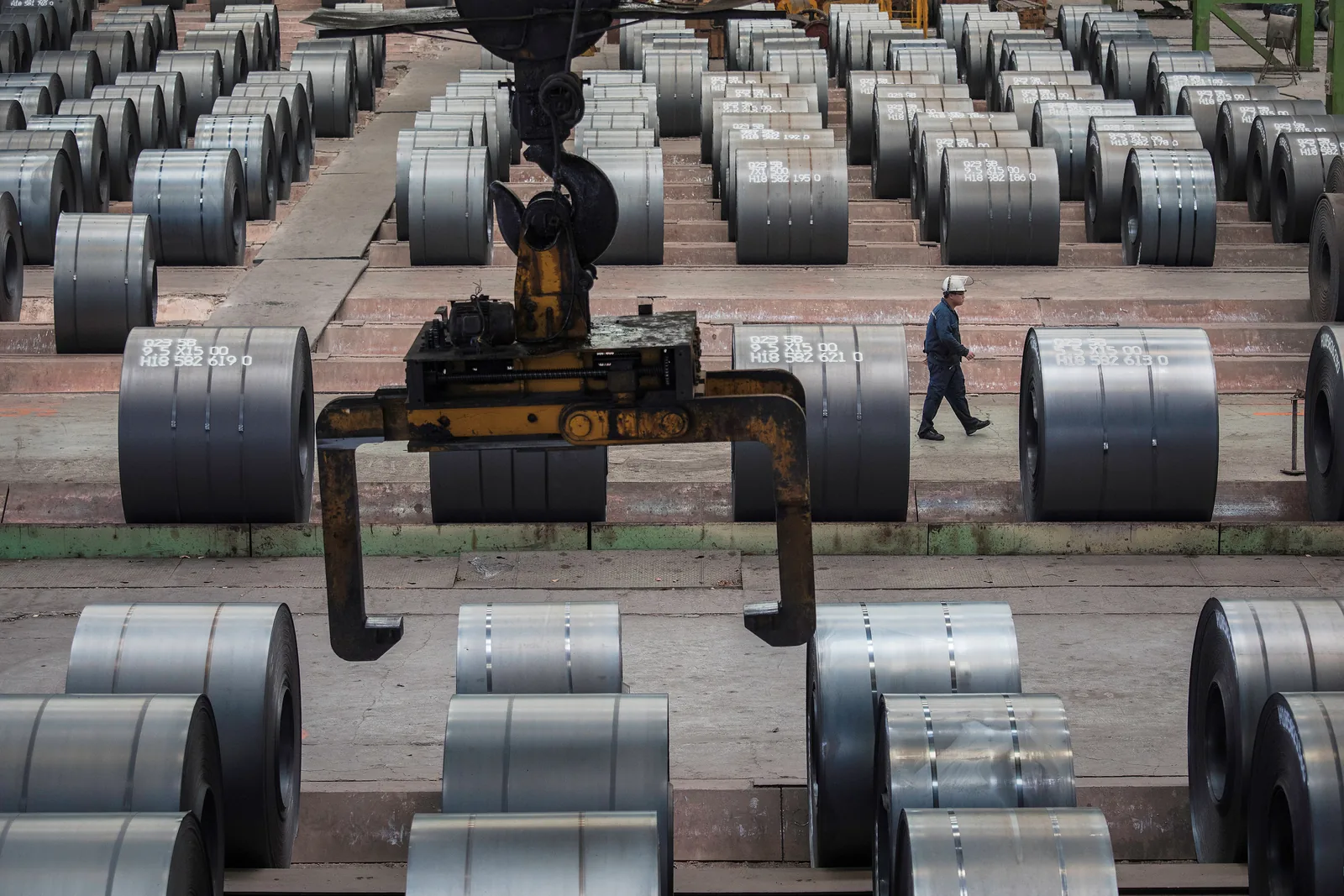
Global crude steel production fell 1.2% year-on-year to 144.2 million tonnes in August 2026, according to the World Steel Association. China's output dropped 3.7% to 74.6 million tonnes, while India rose 4.6% and Vietnam surged 36.4%. Regional trends varied, with North America up 3.9% and the CIS region down 5.6%.
 Illustration
Editorial responsibility
- No named human review is recorded for this page.
- Reports are grouped by semantic similarity and deterministic rules. Language models may assist titles, summaries, translation and cross-source analysis; the page reads the event directly, while its address stays stable when the title changes.
- Summary covers the current reports
Cross-source coverage
Common ground
- Both sides agree that China's steel output drop is partly due to long-term policy-driven overcapacity cuts since 2016.
- Both agree that Vietnam's steel output surge is from a very small base compared to China's massive production.
- Both acknowledge that China's per-capita steel use has reached developed-world levels, limiting further growth.
- Both recognize that August construction patterns in China differ from Western peak seasons.
- Both agree that the global steel market is undergoing structural changes, not just a simple slowdown.
Points of contention
- The Neutral Agent says the 3.7% monthly drop in August is a demand shock from the property sector collapse, while the Eastern Agent insists it's a deliberate policy-driven adjustment from cumulative capacity cuts.
- The Neutral Agent argues that stripping China out of global data shows the rest of the world is flat to slightly positive, while the Eastern Agent calls this intellectually dishonest because China's 55% weight can't be ignored.
- The Neutral Agent sees Vietnam's 36.4% surge as evidence of accelerating supply chain diversification away from China, while the Eastern Agent says it's actually deeper integration into China's supply chain due to Chinese equipment, financing, and raw material dependency.
- The Neutral Agent claims the property sector contraction is a crisis being managed, while the Eastern Agent calls it a controlled and necessary deflation of a bubble.
- The Neutral Agent believes Southeast Asian scrap markets will mature independently within a decade, reducing dependency on China, while the Eastern Agent argues China's recycling infrastructure and shipping networks will keep them dependent.
Blind spots
- Both sides focus on who's winning or losing, but neither fully addresses how to manage potential trade wars over a shrinking global steel pie.
- The debate overlooks the role of other major steel producers like Japan, South Korea, and Russia in shaping global supply dynamics.
- Neither side discusses the environmental impact of steel production shifts, such as carbon emissions from new electric arc furnaces versus traditional blast furnaces.
- The impact of geopolitical tensions, like tariffs or sanctions, on steel trade flows is not explored.
WorldAttention’s read
The global steel output decline of 1.2% is not a uniform slowdown but a divergence driven mainly by China's massive weight in the market. China's 3.7% drop stems from a mix of long-term policy cuts and a painful property sector slump, while the US and Germany show modest gains. Vietnam's 36.4% surge signals accelerating capacity building, but its tiny base means it can't replace China anytime soon. The real story is that global steel demand is plateauing as China matures, and the world isn't ready for a future where steel intensity declines. Both sides agree on the facts but clash over whether China's restructuring is strategic or forced, and whether supply chains are truly diversifying or just integrating deeper into China's ecosystem. The key blind spot is that neither side fully considers how to avoid trade conflicts over a shrinking market.
Reporting timeline
World Steel Association: Global crude steel output falls 1.2% year-on-year in August 2026
According to data from the World Steel Association, global crude steel production among 70 reporting countries/regions reached 1.442 billion tonnes in August 2026, a decrease of 1.2% compared to August 2025. Regional performance varied: Africa saw an 8.8% increase to 2.1 million tonnes; Asia and Oceania produced 1.067 billion tonnes, down 1.4%; the EU (27 members) produced 8.9 million tonnes, down 1.0%; other European countries produced 3.8 million tonnes, up 1.2%; the Middle East produced 3.7 million tonnes, down 4.6%; North America produced 9.4 million tonnes, up 3.9%; Russia, other CIS countries, and Ukraine produced 6.3 million tonnes, down 5.6%; and South America produced 3.4 million tonnes, down 4.9%. Among the top ten steel-producing nations, China's output fell 3.7% to 74.6 million tonnes; India rose 4.6% to 14.8 million tonnes; the US increased 3.0% to an estimated 7.3 million tonnes; Japan grew 0.4% to 6.7 million tonnes; Russia fell 0.3% to an estimated 5.5 million tonnes; South Korea rose 2.6% to 5.4 million tonnes; Turkey fell 0.4% to 3.4 million tonnes; Germany rose 1.7% to 2.6 million tonnes; Brazil fell 6.2% to 2.7 million tonnes; and Vietnam surged 36.4% to 2.7 million tonnes.
Read sourceGlobal crude steel output falls 1.2% in August; China's production drops 3.7%
According to data released by the World Steel Association on Thursday, global crude steel production in August totaled 144.2 million tonnes, a decrease of 1.2% compared to the same month last year. China, the world's largest steel producer, saw its crude steel output fall by 3.7% year-on-year to 74.6 million tonnes. The figures, reported by financial news outlet Cailianshe on September 24, highlight a continued contraction in global steel output, with China's decline contributing significantly to the overall drop.
Read sourceWorld Steel Association: China's August 2026 Steel Output Falls 3.7% to 74.61 Million Tonnes
According to data released by the World Steel Association on September 24, 2026, global steel production trends showed mixed results for August 2026. China, the world's largest steel producer, recorded output of 74.61 million tonnes, a decrease of 3.7% compared to the same month in 2025. India produced 14.77 million tonnes, up 4.6% year-on-year. The United States produced 7.3 million tonnes, a 3.0% increase. Japan's output was 6.66 million tonnes, up 0.4%. Russia produced 5.5 million tonnes, down 0.3%. South Korea's output rose 2.6% to 5.35 million tonnes. Turkey produced 3.38 million tonnes, a slight decline of 0.4%. Vietnam saw the largest percentage increase, with output surging 36.4% to 2.7 million tonnes. Brazil's production fell 6.2% to 2.69 million tonnes. Germany produced 2.59 million tonnes, up 1.7%. The data provides a snapshot of global steel industry performance, highlighting divergent trends across major producing nations.
Show 2 older updatesHide older updates
World Steel Association: Global Crude Steel Output Falls 1.2% in August 2026
According to data released by the World Steel Association, global crude steel production totaled 144.2 million metric tons in August 2026, a decrease of 1.2% compared to the same month in 2025. For the first eight months of 2026 (January-August), global crude steel output reached 1.2252 billion metric tons, down 0.7% year-on-year. The figures reflect a continued contraction in global steel output, which is a key indicator of industrial activity and economic health. The data was reported by financial information provider Jin10 (金十数据). No further breakdown by region or country was provided in this brief update.
Read sourceWorld Steel Association: Global Crude Steel Output Fell 1.2% in August 2026
According to the World Steel Association, global crude steel production in August 2026 totaled 144.2 million metric tons, a decrease of 1.2% compared to August 2025. The data, reported by stockstar_stock_live, provides a snapshot of the global steel industry's output for the month. The decline reflects a year-on-year contraction in production volumes.
Read source