Venezuela and opposition near deal to move $4 billion gold from London to New York
Venezuela's government and opposition are close to an agreement to transfer 31 metric tons of central bank gold, worth about $4 billion, from the Bank of England to the Federal Reserve Bank of New York. The gold has been frozen in London since 2018 due to competing claims. Under the proposed deal, the interim government of Delcy Rodriguez would gain legal control but could not sell the gold immediately; it could be used as collateral for reconstruction loans after June's twin earthquakes. The Bank of England stated it cannot act without a further UK court order.
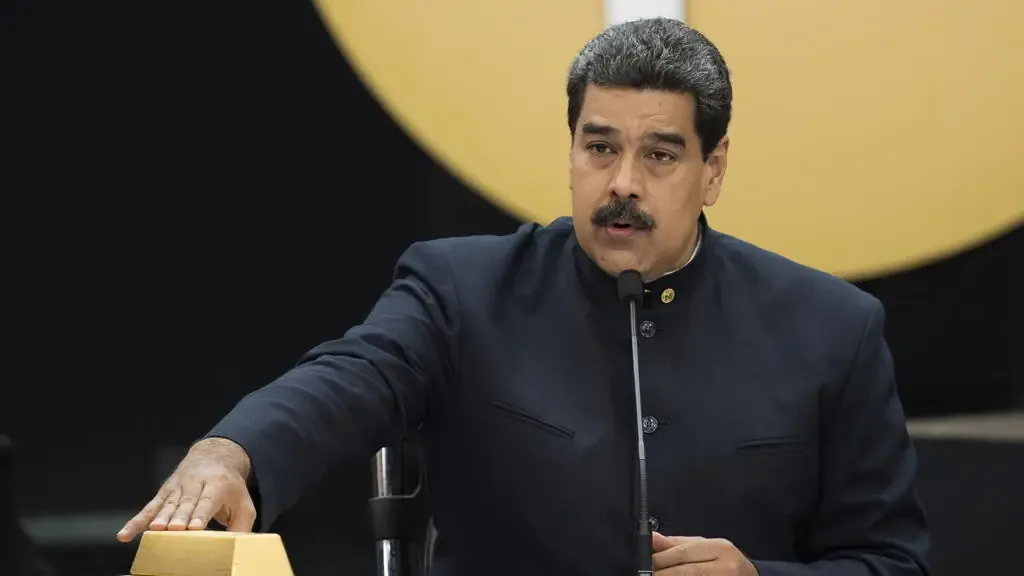 Reference image
Editorial responsibility
- No named human review is recorded for this page.
- Reports are grouped by semantic similarity and deterministic rules. Language models may assist titles, summaries, translation and cross-source analysis; the page reads the event directly, while its address stays stable when the title changes.
- Summary covers the current reports
Cross-source coverage
Common ground
- The deal moves Venezuelan gold from London to New York but doesn't return it to Venezuelan control—it just changes which Western vault holds it.
- The Venezuelan people get no direct benefit; they end up with debt secured against their own national wealth.
- The British Foreign Office is hypocritical for claiming neutrality after directing the freeze and recognizing Guaidó.
- There is no accountability mechanism for how loan proceeds will be spent, risking looting rather than reconstruction.
- A UN-supervised humanitarian release with independent auditing would have been the honest solution, but no powerful party wanted it.
Points of contention
- Whether the opposition had real alternatives or was forced into this deal by structural coercion.
- Whether the opposition's choice to pursue the collateral route shows agency or just survival in a hostage-like situation.
- Whether the gold's value doubling during the freeze was accidental or a self-serving result of Western policies.
- How much blame to assign to the opposition versus the US and UK for the lack of democratic legitimacy.
Blind spots
- The timing of the deal is driven by US election uncertainty, not Venezuela's needs—it locks in terms before a possible policy shift.
- Maduro's parallel strategy of mining and shipping gold to Russia and Turkey creates a second, competing gold system outside Western control.
- The actual lender is likely a consortium of private Western banks, turning the gold into a fee-generating asset for financial institutions.
- Neither the opposition nor Maduro's government has democratic legitimacy to mortgage the country's gold reserves.
WorldAttention’s read
This deal is a triple failure: it doesn't solve Venezuela's crisis, it bypasses democracy by dealing with an unelected opposition, and it lets the West profit from its own sanctions by freezing gold, watching it double in value, then lending it back at interest. The Venezuelan people are not participants—they are the collateral in a financial engineering scheme that benefits Western banks, US contractors, and the opposition's political survival, while leaving the country with more debt and no real control over its own wealth.
Reporting timeline
Venezuela and opposition near deal to move $4 billion gold from London to New York
After a seven-year legal standoff, Venezuela's government and its opposition are nearing an agreement to transfer 31 metric tons of central bank gold, worth about $4 billion, from the Bank of England to the Federal Reserve Bank of New York, according to the Financial Times. The gold has been frozen in London since 2018, when the Bank of England withheld it due to non-recognition of President Nicolas Maduro's government. Britain recognized opposition leader Juan Guaido in 2019, leading to conflicting instructions from rival central bank boards. The UK Supreme Court ruled in 2021 that the government does not recognize Maduro 'for any purpose,' but the gold remained in legal limbo. Under the proposed deal, the interim government of Delcy Rodriguez would gain legal control but could not sell the gold immediately; it could be used as collateral for reconstruction loans after June's twin earthquakes. The Bank of England stated it cannot act without a further UK court order, and the British Foreign Office said it is not a party to the legal case.
Venezuela and opposition near deal to move $4 billion gold from London to New York
After a seven-year standoff, Venezuela's government and its opposition are close to an agreement to transfer 31 metric tons of central bank gold, worth about $4 billion, from the Bank of England to the Federal Reserve Bank of New York, according to the Financial Times. The gold has been frozen in London since 2018, when the Bank of England withheld it due to non-recognition of President Nicolas Maduro's government. Britain's Supreme Court ruled in 2021 that UK courts must accept the government's non-recognition of Maduro, but the gold remained stuck. Under the proposed deal, the interim government of Delcy Rodriguez would gain legal control but could not sell the gold immediately; it could be used as collateral for reconstruction loans after June's twin earthquakes. The Bank of England stated it cannot act without a further UK court order. The article notes that the gold's value has risen from $1.95 billion to $4.37 billion due to gold's 64% rally in 2025, making the legal freeze unexpectedly profitable for Venezuela.
Venezuela reportedly nearing deal to move $4 billion in gold reserves to New York Fed
Venezuela is reportedly close to finalizing a deal to transfer $4 billion in gold reserves from the Bank of England to the Federal Reserve Bank of New York, according to a post on Polymarket. The move would shift a significant portion of the country's gold holdings from London to New York, potentially altering the custody arrangement for the assets. The report, attributed to unnamed sources, suggests the deal is in advanced stages but does not specify a timeline or the conditions under which the transfer would occur. The gold reserves have been a subject of international legal and political disputes, with the Bank of England previously blocking access to the gold amid competing claims from Venezuela's government and opposition factions. The transfer to the Federal Reserve Bank of New York could signal a shift in Venezuela's financial strategy or diplomatic alignments, though the report remains unconfirmed by official sources.
Read sourceShow 4 older updatesHide older updates
Venezuela Nearing Deal to Move $4 Billion Gold Reserves from UK to US
According to a Cailian Press report on September 18, citing sources familiar with the matter, the Venezuelan government and opposition are close to reaching an agreement to transfer approximately $4 billion in gold reserves from the Bank of England to the Federal Reserve Bank of New York. Under the terms currently being negotiated, the gold could potentially be used as collateral for government borrowing to finance fiscal expenditures. The government would not be permitted to immediately sell its holdings but would gain legal control over them. The Bank of England stated that it cannot execute any related operations unless a UK court issues a ruling clarifying the legal ownership of the account. The UK Foreign Office, the Venezuelan government, and the opposition all declined to comment.
Read sourceVenezuela may transfer $4 billion in gold from Bank of England to New York Fed as collateral
According to a report by the Financial Times of London, cited by Jin10 Data on September 18, the Venezuelan government and the country's opposition are close to an agreement to transfer approximately $4 billion worth of gold reserves held by Venezuela's central bank from the Bank of England to the Federal Reserve Bank of New York. Four sources familiar with the matter revealed that under the proposed deal, the interim government led by acting President Rodriguez would gain legal control over the gold but would be prohibited from immediately selling the assets. Three sources said the gold could instead serve as collateral for government borrowing to fund expenditures, including reconstruction efforts following the devastating twin earthquakes in June. This potential gold deal represents one of the first concrete outcomes of the negotiation process between the U.S.-backed interim government and the opposition. The sources noted that the agreement has not yet been finalized, and clarifying technical details may take some time.
Read sourceVenezuela Nears Agreement to Transfer $4 Billion in Gold Reserves to New York
According to a report by the Financial Times, as cited by the source tradealpha, Venezuela is close to reaching an agreement to transfer approximately $4 billion worth of its gold reserves to New York. The report indicates that negotiations are at an advanced stage, though specific terms and conditions of the potential transfer have not been detailed. The move would involve moving a significant portion of Venezuela's gold holdings, which are currently held domestically or in other locations, to custody in New York. The reasons behind the transfer and the parties involved in the agreement are not specified in the summary, but such a transfer could be related to international financial obligations, asset protection, or diplomatic negotiations. The report attributes this information to the Financial Times, suggesting it is based on sources familiar with the matter.
Read sourceVenezuela Nears Agreement to Transfer $4 Billion in Gold Reserves to New York: Report
According to a report by the Financial Times, as cited by financial news source Jin10, Venezuela is close to reaching an agreement to transfer approximately $4 billion worth of its gold reserves to New York. The report indicates that the Venezuelan government is nearing a deal that would involve moving a significant portion of its gold holdings, currently held in the country's central bank, to custody in New York. The specific terms of the agreement and the intended purpose of the transfer, such as whether it is for debt payments, asset protection, or other financial arrangements, are not detailed in the summary. The information is attributed to the Financial Times and has not been independently confirmed by the source item.