US 10-Year Treasury Yield Hits 5.133%, Highest Since 2007, on Strong Data and Rate-Hike Fears
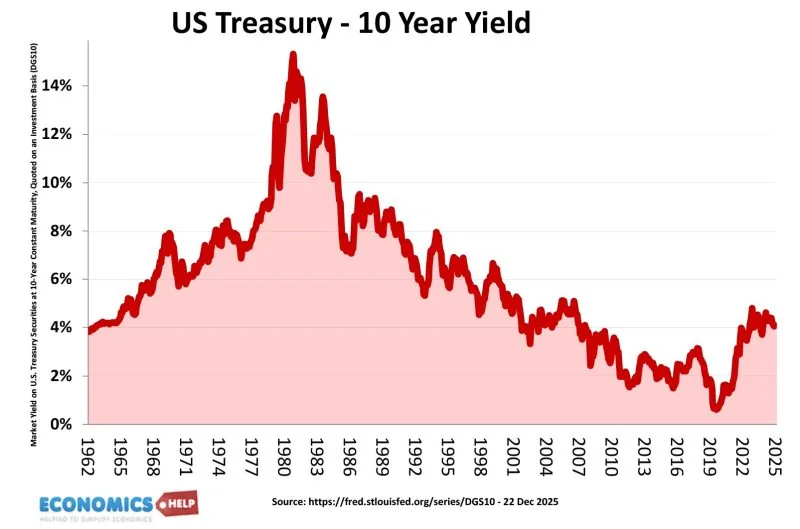
On September 23, 2025, US Treasury yields surged to multi-year highs, with the 10-year yield reaching 5.133%, its highest since 2007, after stronger-than-expected PMI data and hawkish comments from Federal Reserve Governor Michael Barr. The S&P Global Composite PMI hit 58.4, a five-year high. Market pricing for a 25-basis-point rate hike at the October Fed meeting rose to about 75%. US stocks fell sharply, with the Nasdaq down 1.13%. Oil prices rose above $100 per barrel on supply concerns.
 Illustration
Editorial responsibility
- No named human review is recorded for this page.
- Reports are grouped by semantic similarity and deterministic rules. Language models may assist titles, summaries, translation and cross-source analysis; the page reads the event directly, while its address stays stable when the title changes.
- Summary covers the current reports
Cross-source coverage
Common ground
- All three agree that the 10-year Treasury yield surge to around 5% is a significant event with broad economic consequences.
- There is agreement that the Federal Reserve faces a difficult balancing act between controlling inflation and supporting the bond market.
- All acknowledge that the US fiscal deficit, around $2 trillion annually, is a major concern for market stability.
- The panel agrees that the human cost of higher yields—like 8% mortgages and debt burdens for developing nations—is a real and pressing issue.
Points of contention
- Neutral Agent argues the yield surge is driven by a strong US economy requiring a higher neutral rate, while Western Agent sees it as a crisis of policy incompetence and Eastern Agent views it as a structural decline of the dollar system.
- Western Agent blames specific policies like the diesel export ban for eroding credibility, but Neutral Agent dismisses this as a minor factor compared to OPEC+ and global demand.
- Eastern Agent claims the world is moving away from the dollar, citing China's CIPS and BRICS, but Neutral and Western Agents counter that the dollar index remains strong and alternatives are negligible in scale.
- Neutral Agent insists the US economy's growth is organic and sustainable, while Western and Eastern Agents argue it's a 'sugar high' fueled by deficits and depleted savings.
Blind spots
- The panel largely overlooks the role of algorithmic trading and quantitative strategies in amplifying yield moves, focusing instead on fundamental narratives.
- There is little discussion of how higher yields might impact corporate debt refinancing and potential defaults, especially in the private credit market.
- The debate ignores the possibility that the yield surge could be a self-correcting mechanism, where higher rates naturally slow the economy without a crisis.
WorldAttention’s read
The roundtable reveals deep divisions on whether the 10-year yield surge reflects a strong economy adjusting to higher rates, a failure of policy coherence, or the beginning of a structural shift away from dollar dominance. While all agree on the human cost and the challenge of US fiscal deficits, they cannot agree on the root cause. The Neutral Agent points to genuine economic strength and a rational repricing of risk, the Western Agent highlights eroding trust in policymakers, and the Eastern Agent sees the end of the unipolar financial order. Missing from the debate is a deeper look at market mechanics like algorithmic trading and the potential for a soft landing without a major break. Ultimately, the bond market is signaling uncertainty about the future, and the panel's conflicting views reflect that no single narrative fully explains the current moment.
Reporting timeline
US Treasury Yields Surge, Fed May Need More Rate Hikes, Stocks Fall
On the evening of September 23, US Treasury yields rose sharply, with the 10-year yield touching 5.367%, potentially closing at its highest level since June 2004. Yields on 3-year to 10-year Treasuries each rose at least 10 basis points. The US Treasury announced it will repurchase up to $60 billion in long-term bonds on Thursday, with a minimum of $40 billion. A Federal Reserve official stated that to ensure inflation returns to target in a timely manner, further interest rate hikes may be necessary, supporting the Fed's recent 25-basis-point rate increase. The official noted that risks to achieving the Fed's inflation target have risen. US stock markets declined, with the Nasdaq falling nearly 1%, and chip stocks including SK Hynix dropped over 2%. The article is sourced from Caixin and republished by Daily Economic News.
US Stocks Fall as Strong Data, Hawkish Fed Push 10-Year Yield to 2007 High
U.S. stocks fell sharply on Wednesday, September 23, as stronger-than-expected manufacturing and services PMI data reinforced expectations that the Federal Reserve will continue raising interest rates. The 10-year U.S. Treasury yield surged to 5.135%, its highest level since July 2007, marking its largest single-day gain since April 2025. The Nasdaq Composite led the decline, falling 1.13%, as rising bond yields pressured high-valuation growth stocks. The Dow Jones Industrial Average dropped 0.68%, and the S&P 500 fell 0.75%. Federal Reserve Governor Michael Barr further tightened expectations, stating that further monetary policy adjustments may be needed to bring inflation back to the 2% target. According to CME FedWatch, market pricing for a 25-basis-point rate hike in October rose to over 66%, up from 55.4% the previous day and just 8.8% a month ago. A rebound in oil prices, with Brent crude rising 3.9% to $103.08 per barrel, added to inflation concerns. Analysts noted that strong economic data, which typically supports equities, is now acting as a headwind because it increases the likelihood of further Fed tightening. The sustainability of the 10-year yield above 5% is seen as a key variable for near-term stock market direction.
Read sourceUS Treasury yields surge on strong data, hawkish Fed, oil above $100; rate hike bets rise
US Treasury yields rose sharply on Wednesday, September 24, driven by stronger-than-expected economic data, hawkish comments from a Federal Reserve official, and Brent crude oil prices returning above $100 per barrel. The S&P Global US Composite PMI hit a 62-month high of 58.4, indicating strong demand that may fuel inflation. Fed Governor Michael Barr stated that risks to the 2% inflation target have increased and that further rate hikes may be needed. Brent crude settled at $103.08 per barrel, up 3.86%. The 2-year yield rose 14.7 basis points to 4.901%, while the 10-year yield climbed 14.9 basis points to 5.112%, the first time above 5% since 2007. A weak $70 billion 5-year Treasury auction, with a bid-to-cover ratio of 2.21 below the prior average of 2.33, also pushed yields higher. According to CME FedWatch, the probability of a 25-basis-point rate hike at the October meeting rose to 69.7%, and the chance of a cumulative 50-basis-point hike by December reached 54.8%.
Read sourceShow 9 older updatesHide older updates
US Treasury yields surge on strong data, rate hike bets, oil rebound
US Treasury yields rose sharply on September 23, driven by strong economic data, heightened expectations of further Federal Reserve interest rate hikes, and a rebound in international oil prices. The 2-year, 10-year, and 30-year yields climbed 12.8, 14.6, and 9.9 basis points to 4.903%, 5.116%, and 5.402% respectively. The 10-year yield posted its largest single-day gain since April 7, 2025, reaching its highest level since July 2007. S&P Global's preliminary data showed the US September composite PMI at 58.4, a five-year high. Fed Governor Michael Barr stated that inflation remains above the 2% target and that further rate adjustments are likely needed. The CME FedWatch Tool indicated a nearly 70% probability of a rate hike at the October meeting, up from 55.4% the previous day. Oil prices rose after Iranian President Pezeshkian's defiant speech at the UN General Assembly, with Brent crude closing above $103 per barrel. A Treasury auction of $70 billion in 5-year notes saw yields hit a 17-year high, reflecting weak demand.
Read sourceUS Treasury Yields Surge to 2007 Highs on Strong Data and Hawkish Fed Signals, Stocks Fall
On September 23, US stocks fell sharply as the Dow dropped 0.68%, the S&P 500 fell 0.75%, and the Nasdaq declined 1.13%, driven by a surge in US Treasury yields. The 10-year yield briefly hit 5.133%, its highest since 2007, after stronger-than-expected US PMI data (manufacturing at 57, services at 58.7) and hawkish comments from Federal Reserve officials, including Governor Barr who signaled possible further rate hikes. Market pricing for a rate hike at the October meeting rose to about 75%. The yield spike pressured equities, particularly tech and gold mining stocks. Meanwhile, oil prices rose on supply concerns from Libya, while gold and silver fell. The US Treasury also announced an expanded bond buyback program of up to $60 billion to curb rising borrowing costs, though analysts at the IIF questioned its effectiveness in addressing structural fiscal challenges. High inflation concerns were fueled by oil prices and tariffs, though the White House economic advisor criticized further tightening.
Read sourceRate Hike Expectations Surge as US Treasury Yields Soar to 2007 Highs
On September 23, US stocks fell sharply as strong PMI data and hawkish signals from Federal Reserve officials drove a surge in Treasury yields, with the 10-year yield hitting 5.133%, the highest since 2007. The market now prices a 75% probability of a rate hike at the Fed's October meeting, up from 53% before the data. The selloff hit major tech stocks, with Google down 3.8% and Amazon down 2.24%, while gold and silver also declined. Oil prices rose on supply concerns from Libya. The US Treasury announced it will expand its bond buyback program to up to $60 billion to curb rising borrowing costs, but analysts at the Institute of International Finance warned that such 'financial engineering' cannot resolve underlying fiscal challenges. Fed Governor Michael Barr indicated further rate hikes may be needed, while White House economic advisor Kevin Hassett criticized the hawkish stance, noting core inflation is near 2%. Goldman Sachs argued that US core inflation is inflated by temporary factors like tariffs and AI memory price measurement biases, and that underlying inflation is lower than in Europe.
Read sourceUS Treasury Yields Surge to 2007 Highs on Strong Data and Hawkish Fed Signals, Stocks Fall
On September 23, US stocks fell sharply as the Dow dropped 0.68%, the S&P 500 lost 0.75%, and the Nasdaq declined 1.13%, driven by a surge in US Treasury yields. The 10-year yield briefly hit 5.133%, its highest since 2007, after stronger-than-expected US PMI data (manufacturing at 57, services at 58.7) and hawkish comments from Federal Reserve officials, including Governor Michael Barr who signaled possible further rate hikes. Market pricing for a rate hike at the October meeting rose to about 75%. The yield spike also pressured gold and silver, which fell 1.64% and 3.91% respectively, while oil prices rose on supply concerns from Libya. The US Treasury announced an expanded bond buyback program of up to $60 billion to curb rising borrowing costs, but analysts at the Institute of International Finance warned such 'financial engineering' cannot resolve underlying fiscal challenges. High inventory and AI-related memory price distortions were cited by Goldman Sachs as temporary factors inflating core inflation.
Read sourceUS Treasury Yields Surge to 2007 Highs on Strong PMI Data and Hawkish Fed Signals
On September 23, U.S. stocks fell sharply as the Dow dropped 0.68%, the S&P 500 fell 0.75%, and the Nasdaq declined 1.13%, driven by a surge in U.S. Treasury yields. The 10-year yield briefly hit 5.133%, its highest since 2007, after stronger-than-expected PMI data (manufacturing at 57, services at 58.7) and hawkish comments from Federal Reserve officials, including Governor Michael Barr who signaled possible further rate hikes. Market pricing for a rate hike at the October meeting rose to about 75%. Gold and silver fell, while oil prices rose on supply concerns from Libya. The U.S. Treasury also announced an expanded bond buyback program of up to $60 billion to curb rising borrowing costs, though analysts at the Institute of International Finance questioned its effectiveness in addressing structural fiscal challenges. High inflation driven by oil prices and tariffs was cited as a key concern by Fed officials, though White House economic advisor Kevin Hassett criticized further tightening, noting core inflation is near 2%.
Read sourceUS Treasury Yields Surge to 16-Year High on Strong Data and Hawkish Fed Signals
On September 23, US stocks fell sharply as the Dow lost 0.68%, the S&P 500 dropped 0.75%, and the Nasdaq declined 1.13%, driven by a surge in US Treasury yields. The 10-year yield briefly hit 5.133%, its highest since 2007, after stronger-than-expected PMI data (manufacturing 57, services 58.7) and hawkish comments from Federal Reserve officials, including Governor Michael Barr who said further rate hikes may be needed. Market pricing for a rate hike at the October meeting rose to about 75%. The selloff also hit gold and silver, with spot gold falling 1.64% and silver dropping 3.91%, while oil prices rose on supply concerns from Libya. The US Treasury announced it would triple its bond buyback program to up to $60 billion to curb rising borrowing costs, a move criticized by the International Institute of Finance as 'financial engineering' that cannot solve underlying fiscal challenges. Goldman Sachs noted that US core inflation is being artificially inflated by tariffs and AI memory price measurement issues, suggesting underlying inflation is lower than in Europe.
Read sourceUS 10-Year Treasury Yield Hits 5.07%, Highest Since 2007, on Rate Hike Fears
On Wednesday, the 10-year U.S. Treasury yield surged to 5.07%, its highest level since 2007, while the 30-year yield touched 5.37%. The move was driven by rising oil prices and stronger-than-expected economic data, which intensified market fears that the Federal Reserve will continue raising interest rates to combat persistent inflation. Fed Governor Michael Barr publicly stated that further rate increases may be necessary. According to the CME FedWatch Tool, market pricing for a rate hike in October rose to 70%. Additionally, Brent crude oil for November delivery rose, and former President Donald Trump's suggestion of a U.S. diesel export ban added to concerns over energy supply tightness. The S&P Global September manufacturing PMI came in at 57, well above the economist forecast of 53.6, indicating ongoing expansion in manufacturing activity. Gregory Daco, chief economist at EY-Parthenon, forecast that the Fed will raise rates by 25 basis points in December, a move he said could increase the risk of a stock market correction. Longer-dated Treasury yields have been rising all year as investors demand higher compensation for holding U.S. government debt risks, while increased corporate bond issuance for AI projects has further competed for market funds.
Read source10-year Treasury yield hits highest since 2007 as market prices in another Fed rate hike
The 10-year Treasury yield climbed to 5.07% on Wednesday, its highest level since 2007, while the 30-year yield touched 5.37%, as the stock market declined. The move higher in yields was driven by rising oil prices and stronger-than-expected business activity data, fueling concerns about further Federal Reserve rate hikes. Federal Reserve governor Michael Barr signaled that additional interest rate hikes are needed to bring down sticky inflation. Investors raised their bets on another Fed rate hike in October to 70% as Brent crude contracts for November delivery rose to around $100 per barrel. President Trump backed a ban on US diesel exports, adding to concerns about tight fuel supplies and higher energy prices. The S&P Global Manufacturing PMI expanded to 57 in September, well above economists' expectations of 53.6. EY-Parthenon chief economist Gregory Daco said the Fed is on track for an additional 25-basis-point rate hike in December, which could increase the risk of a stock market correction. Long-dated bond yields have risen this year as investors demand more compensation for risks of holding government debt, and corporate borrowing for AI build-out has added to bond supply. The Federal Reserve raised its benchmark interest rate by 25 basis points earlier in September.
Read source10-Year US Treasury Yield Hits 19-Year High on Strong Data, Fed Rate Hike Fears
On Wednesday, US Treasury yields surged to multi-year highs after stronger-than-expected services and manufacturing data fueled market concerns about further Federal Reserve interest rate hikes. The 2-year Treasury yield rose 8 basis points to 4.464%, while the benchmark 10-year yield climbed 7 basis points to 5.058%, its highest level since July 2007. The 30-year yield increased over 4 basis points to 5.347%. The S&P Global Services PMI jumped to 58.7 in September, the highest in nearly five years, and the Manufacturing PMI rose to 56.7, a four-year high. Chris Williamson, Chief Business Economist at S&P Global Market Intelligence, noted that US business activity continues to boom, with the latest improvement being the largest recorded since early 2015, excluding the post-COVID reopening surge. However, he added that input costs rose at the fastest pace in four years due to surging fuel and transport costs. Further boosting yields were comments from Federal Reserve Governor Michael Barr, who said further rate hikes may be necessary as risks to achieving the inflation target have increased. The Fed raised its benchmark rate last week due to persistent energy-driven inflation. According to the CME FedWatch Tool, the probability of a 25-basis-point rate hike in October rose to 64% on Wednesday from 55% on Tuesday, up from under 10% a month ago.