US 10-Year Treasury Yield Hits 5.33%, Highest Since 2002, as Inflation and Fiscal Pressures Mount
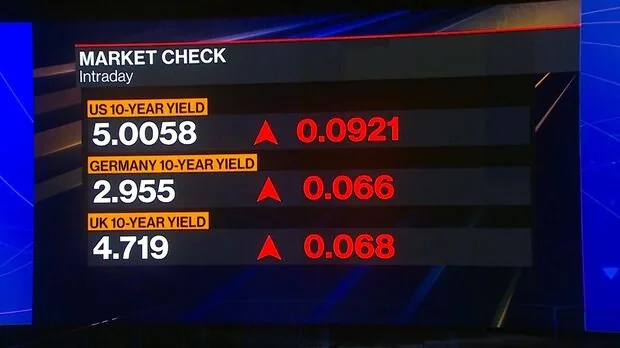
The US 10-year Treasury yield rose to 5.33% on October 1, its highest since 2002, driven by persistent inflation, a resilient economy, and large fiscal deficits. The 30-year yield also reached its highest since 2002. A Bloomberg survey shows over half of market participants expect the 30-year yield to reach 6% by year-end. A structural shift in the buyer base, with price-insensitive foreign official investors reducing participation and hedge funds taking a larger role, is increasing market volatility risks.
 Reference image
Editorial responsibility
- No named human review is recorded for this page.
- Reports are grouped by semantic similarity and deterministic rules. Language models may assist titles, summaries, translation and cross-source analysis; the page reads the event directly, while its address stays stable when the title changes.
- Summary covers the current reports
Cross-source coverage
Common ground
- The 30-year Treasury yield hitting 6% is plausible due to a combination of factors, not just inflation or deficits.
- The shift in the buyer base from foreign central banks to price-sensitive domestic institutions is a key structural change.
- US fiscal deficits and political dysfunction are contributing to market uncertainty and higher yields.
- Rising US yields have significant negative spillover effects on developing economies, increasing their borrowing costs and economic strain.
- The term premium—compensation for uncertainty—has turned positive for the first time in over a decade, reflecting market anxiety.
Points of contention
- Whether the yield spike signals a fundamental collapse of the US financial system or a manageable repricing.
- Whether the primary driver is political dysfunction (governance crisis) or technical market factors (term premium, yield curve inversion).
- Whether China's economic model is a viable alternative or also faces severe debt and structural problems.
- Whether developing countries' struggles are due to systemic exploitation or their own policy choices (e.g., dollar-denominated debt, pegged currencies).
- Whether the dollar's dominance is eroding significantly or remains largely intact despite diversification efforts.
Blind spots
- The human cost of yield spikes in the Global South—higher food prices, medicine shortages, and lost futures—was often treated as an afterthought.
- The geopolitical dimension of the yield spike, including the impact of US sanctions on trust in dollar assets, was underappreciated.
- The role of the yield curve inversion as a potential recession signal that could actually lower long-term yields was largely ignored.
- The historical pattern of US deficits and the gradual nature of the buyer base shift were overlooked in favor of crisis narratives.
- The lack of viable alternatives for developing countries to escape dollar dependency, given China's own debt traps and limited liquidity.
WorldAttention’s read
The debate reveals that the 30-year Treasury yield hitting 6% is not a simple story of inflation or deficits, but a complex signal of structural shifts in the market, political dysfunction, and global power transitions. While the US Treasury market remains the deepest and most liquid in the world, the erosion of its traditional buyer base—especially foreign central banks—and the rise of price-sensitive investors have made it more volatile and reactive to political crises. The term premium, reflecting uncertainty about future rates and governance, has become a key driver. However, the yield curve inversion suggests a potential recession could actually lower long-term yields, complicating the narrative of inevitable collapse. The most critical blind spot across all viewpoints was the human cost in developing countries, where higher US yields translate directly into economic pain—higher food prices, unaffordable medicine, and crushing debt service—without those countries having meaningful agency in the system. The disagreement over whether this is a governance crisis, a market correction, or a power transition reflects deeper ideological divides, but all sides agree that the old certainties of the US-dominated financial order are fading, and the world is entering a more uncertain and multipolar era.
Reporting timeline
US 10-Year Treasury Yield Hits Highest Since 2002 on Inflation and Strong Economy
On October 1, US benchmark 10-year Treasury yields rose to their highest level since 2002, reaching 5.33% at one point, surpassing the 2007 peak. The surge is driven by persistent inflation, massive government borrowing, and robust economic growth, which keep market interest rate expectations elevated. The 30-year Treasury yield also climbed to its highest since 2002. The US bond market has been declining for months, with global government bonds under pressure. High oil prices linked to the Middle East war are creating ripple effects on the global economy, prompting investors to bet that central banks, including the Federal Reserve, will raise interest rates further. Despite rising borrowing costs, the US economy continues to show resilience, and overnight index swaps have fully priced in a Fed rate hike before the end of the year.
Read sourceInflation, Deficit, and AI Debt Issuance Pressure Push Over Half of Analysts to See 30-Year Yield at 6%
The article analyzes persistent upward pressure on long-term U.S. Treasury yields, with the 10-year yield breaking above 5% for the first time since 2007. Key drivers include inflation remaining above the Fed's 2% target (July PCE at 3.7%), resilient economic growth, and the possibility of further Fed rate hikes. On the supply side, large fiscal deficits and increased debt issuance by tech companies for AI data center investments are adding to demand for long-term capital. A critical shift in the buyer base is noted: price-insensitive foreign official buyers are reducing participation, while hedge funds and other price-sensitive investors are taking a larger role, making the market more volatile. A Bloomberg survey cited in the article shows over half of market participants expect the 30-year Treasury yield to reach 6% by year-end. The analysis concludes that the market's increased reliance on price-sensitive capital could amplify yield swings.
Read sourceOver half of market participants expect 30-year US Treasury yield to hit 6% by year-end
The article analyzes persistent upward pressure on long-term US Treasury yields, with the 10-year yield briefly exceeding 5.1% on Wednesday, a level not seen since 2007. Inflation remains above the Federal Reserve's 2% target at 3.7%, and the US economy shows resilience, reducing the urgency for the Fed to ease policy. A Fed official suggested further rate adjustments may be necessary. Concurrently, large fiscal deficits and increased debt issuance by tech firms for AI infrastructure are boosting supply. A critical shift is occurring in the buyer base: price-insensitive foreign official buyers are reducing participation, while hedge funds and private investors, who are more sensitive to yield and funding conditions, are taking a larger role. This makes the market more vulnerable to volatility. A survey cited in the report indicates that over half of market participants expect the 30-year Treasury yield to reach 6% before the end of the year, reflecting growing concern about structurally higher long-term rates.
Read sourceShow 5 older updatesHide older updates
Inflation, Deficit, AI Debt Issuance Pressure: Over Half of Market Participants Bet 30-Year Yield Hits 6% by Year-End
This article from Tencent News analyzes the persistent upward pressure on long-term U.S. Treasury yields, which have surpassed 5% for the 10-year note for the first time since 2007. The pressure is attributed to multiple factors: inflation remaining above the Federal Reserve's 2% target, resilient U.S. economic growth, the possibility of further Fed rate hikes, and expanding fiscal financing needs. Additionally, large technology companies are increasing debt issuance to fund AI infrastructure investments, further boosting demand for long-term capital. A key concern is the changing composition of U.S. Treasury buyers, with price-insensitive foreign official investors reducing participation and price-sensitive hedge funds and private investors taking a larger role. This shift makes the market more vulnerable to sharp yield movements. A survey cited in the article indicates that over half of market participants expect the 30-year Treasury yield to reach 6% by the end of the year, reflecting growing anxiety about higher long-term interest rates.
Read sourceInflation, Deficit, and AI Debt Issuance Pressure Push Over Half of Market to Expect 30-Year Yield at 6%
The article analyzes mounting pressure on long-term US Treasury yields, with the 10-year note breaking above 5% for the first time since 2007. It attributes the rise to persistent inflation above the Fed's 2% target, resilient economic growth, and the possibility of further Fed rate hikes. Additionally, large US fiscal deficits and increased debt issuance by tech companies for AI data center investments are boosting long-term funding demand. A key concern is the changing composition of Treasury buyers: price-insensitive foreign official investors are reducing participation, while hedge funds and other price-sensitive investors are taking a larger share, making the market more prone to sharp moves. A Bloomberg survey cited in the article indicates that over half of market participants expect the 30-year Treasury yield to reach 6% before the end of the year, reflecting growing anxiety about the long-term interest rate trajectory. The article concludes that the market's ability to absorb new supply will be critical, and the shift toward price-sensitive buyers could amplify yield volatility.
Read sourceOver Half of Market Participants Expect 30-Year US Treasury Yield to Hit 6% by Year-End
The article reports that the US 10-year Treasury yield has broken above 5%, reaching levels not seen since 2007, while the 30-year yield faces pressure to rise further. Persistent inflation above the Fed's 2% target, resilient economic growth, and the possibility of further Fed rate hikes are pushing long-term yields higher. Additionally, large US fiscal deficits and increased debt issuance by tech companies for AI infrastructure are adding to supply pressures. A key structural shift is the declining role of price-insensitive foreign official buyers and the rising role of hedge funds and other price-sensitive investors, making the market more volatile. A Bloomberg survey found that over half of market participants expect the 30-year Treasury yield to reach 6% before the end of the year, reflecting growing concern about higher long-term interest rates.
Read sourceOver half of market participants bet 30-year US Treasury yield will hit 6% by year-end
The article reports that US 10-year Treasury yields have breached 5%, reaching levels not seen since 2007, as persistent inflation, economic resilience, and fiscal deficits pressure long-term rates. The Federal Reserve recently raised rates to 3.75%-4%, and officials signal further tightening may be needed. A Bloomberg survey shows over half of market participants expect the 30-year yield to reach 6% by year-end. The article highlights a shift in the buyer base: price-insensitive foreign official buyers are reducing participation, while hedge funds and other price-sensitive investors are taking on more Treasury supply. This structural change makes the market more vulnerable to sharp yield moves and potential forced selling. AI-related data center investment is also boosting corporate debt issuance, adding to demand for long-term capital. The analysis concludes that the key risks ahead include fiscal financing needs and the market's ability to absorb new supply without triggering volatility.
Over Half of Market Participants Bet 30-Year US Treasury Yield Will Hit 6% by Year-End
The article reports that US long-term Treasury yields are under sustained upward pressure from persistent inflation, a resilient economy, and growing fiscal deficits. The 10-year yield briefly exceeded 5.1%, a level not seen since 2007, while the 5-year yield also surpassed 5%. A Bloomberg survey found that over half of market participants expect the 30-year yield to reach 6% before the end of the year. The article highlights a structural shift in the buyer base: foreign official investors, who are less price-sensitive, are reducing their holdings, while hedge funds and other price-sensitive investors are taking a larger share. This makes the market more vulnerable to sharp moves, as these investors may quickly adjust positions in response to yield changes or margin calls. The article also notes that large technology companies are increasing debt issuance to fund AI infrastructure investments, adding to the supply of long-term bonds. The analysis concludes that the key factors to watch are not only inflation and Fed policy but also the scale of US fiscal financing and the market's ability to absorb new supply.