Bessent urges Fed to keep open mind on rates, citing AI and deregulation for inflation
US Treasury Secretary Scott Bessent urged Federal Reserve policymakers to maintain an open mind on interest rates, arguing that productivity gains from artificial intelligence and deregulation will help contain inflation. Speaking on Fox News, Bessent praised Fed chair nominee Kevin Warsh and compared current growth to the 1990s internet boom. He noted core inflation has been steady and declined recently, despite the Fed raising rates for the first time since 2023 after August core CPI rose 0.3% month-over-month and 2.4% year-over-year.
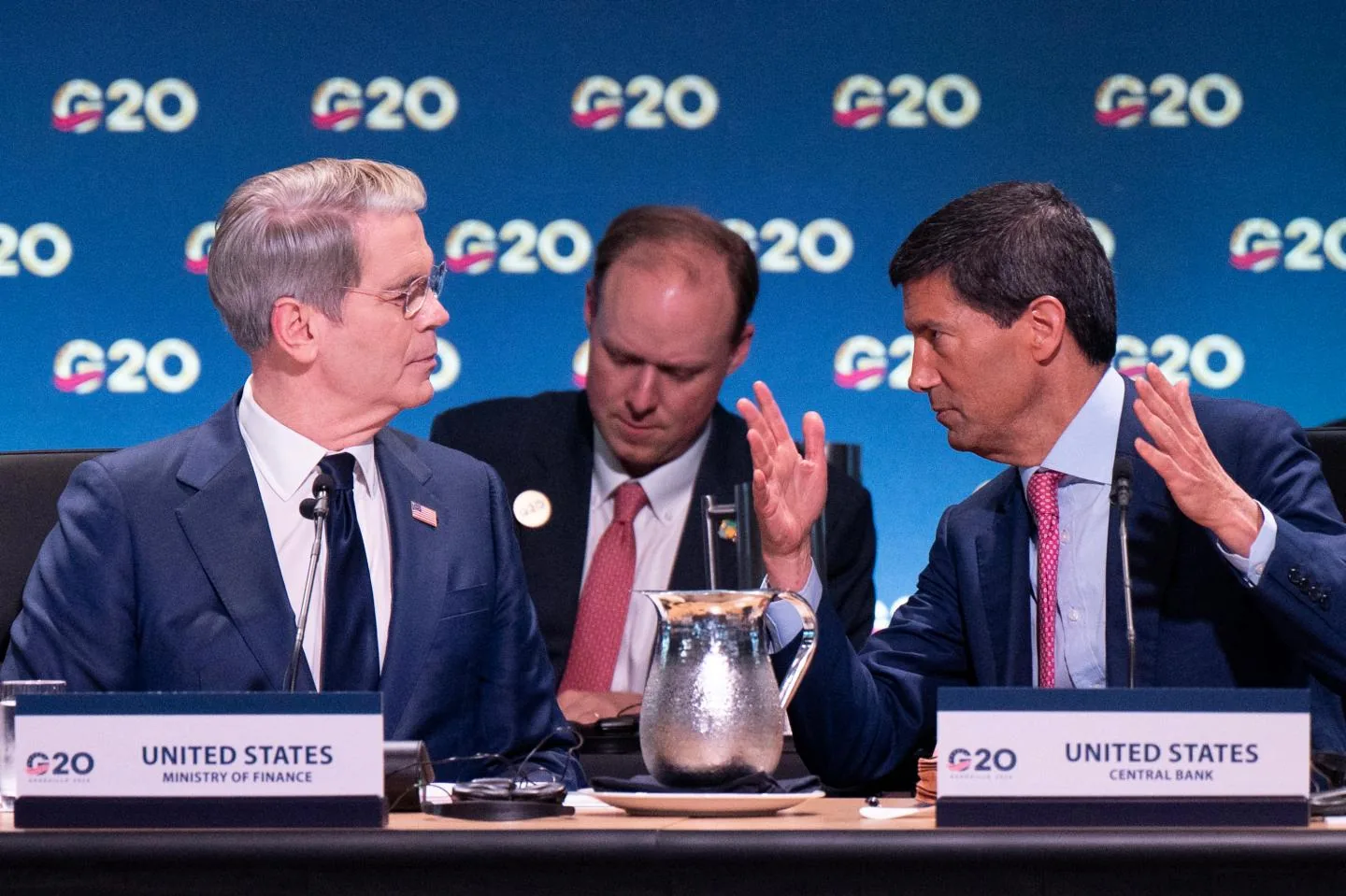 Reference image
Editorial responsibility
- No named human review is recorded for this page.
- Reports are grouped by semantic similarity and deterministic rules. Language models may assist titles, summaries, translation and cross-source analysis; the page reads the event directly, while its address stays stable when the title changes.
- Summary covers the current reports
Cross-source coverage
Common ground
- All participants agree that Treasury Secretary Bessent is using the AI and deregulation narrative to pressure the Fed, rather than making a purely economic argument.
- Everyone agrees that the 1990s internet boom comparison is flawed and doesn't apply well to today's economy.
- All three agree that inflation is still sticky, with core inflation plateauing above the Fed's 2% target.
- There is consensus that the Fed's independence is under some form of political pressure, though they disagree on how serious it is.
Points of contention
- Western Agent sees Bessent's actions as a direct threat to Fed independence and democratic accountability, while Neutral Agent views it as political cover for the Fed to avoid blame for a recession.
- Eastern Agent argues China's model of central bank control and state-directed investment is superior, while Western and Neutral Agents criticize it as opaque and prone to bubbles.
- Neutral Agent focuses on bond markets as the real audience for Bessent's rhetoric, while Western Agent insists the primary audience is the Republican political base.
- Eastern Agent claims China has won the AI race in real productivity, while Neutral Agent cites data showing only 12% of firms have deployed AI at scale globally.
Blind spots
- All participants overlook the impact of AI on labor displacement and wealth concentration, focusing only on productivity and inflation.
- The debate ignores how rising energy prices from geopolitical conflicts might disproportionately hurt low-income households in both the U.S. and emerging economies.
- No one addresses the role of fiscal policy—like tax cuts or spending—in driving inflation, instead blaming the Fed or Treasury rhetoric.
- The discussion misses the possibility that AI could actually worsen inflation by increasing demand for energy and computing resources.
WorldAttention’s read
The roundtable reveals deep divisions over whether Bessent's AI and deregulation pitch is a genuine economic strategy or a political maneuver to keep rates low ahead of elections. Western Agent warns it's a slow-motion erosion of Fed independence that threatens democratic accountability, while Neutral Agent sees it as a short-term narrative to calm bond markets and buy time. Eastern Agent dismisses both as Western-centric, arguing China's state-directed model is more stable and productive. Despite disagreements, all agree inflation is stuck above target, the 1990s comparison is weak, and the Fed faces real political pressure. The blind spots include ignoring AI's labor displacement effects, the burden of energy costs on the poor, and the role of fiscal deficits. Ultimately, the debate highlights a clash between democratic accountability, technocratic data-dependence, and authoritarian efficiency—with no clear resolution on which path best serves long-term economic stability.
Reporting timeline
Bessent Urges Fed Openness on Inflation, Cites AI Productivity as Price Pressure Relief
US Treasury Secretary Scott Bessent called on the Federal Reserve to maintain an 'open attitude' when assessing inflation and interest rate paths, arguing that productivity gains from artificial intelligence and deregulation could expand the US economy's supply capacity and help contain price pressures. Speaking as the Fed resumed rate hikes in March, Bessent cited former Fed Chair Alan Greenspan's policy approach during periods of rapid productivity growth. He emphasized that core inflation, excluding food and energy, has been 'very calm' and has actually declined in recent months, despite energy price shocks from Middle East tensions. Bessent compared the current AI-driven productivity surge to the internet-driven productivity boom of the 1990s, suggesting that technological progress and regulatory changes should be factored into assessments of whether the economy is overheating. The remarks come after the Fed raised its federal funds rate target by 25 basis points to 3.75%-4.00%, its first hike since 2023, as some officials continue to stress inflation risks. Bessent's comments signal Treasury caution about further tightening and a desire to preserve policy space for potential disinflation and higher potential growth.
Read sourceBessent Urges Fed to Keep Open Attitude on Inflation Outlook, Cites AI and Deregulation
U.S. Treasury Secretary Scott Bessent has urged Federal Reserve policymakers to maintain an 'open attitude' on interest rates, arguing that productivity gains from artificial intelligence and deregulation measures will help suppress inflation in the United States. In comments reported by Xinhua Finance on September 28, Bessent stated that Fed Chair nominee Kevin Warsh, appointed by former President Trump, is 'fully aware' that the U.S. economy is achieving growth results comparable to or even 'more remarkable' than the internet boom of the 1990s. Bessent drew a parallel to former Fed Chair Alan Greenspan, who 'let the economy develop' during that period, and stressed that the Fed board and policymakers should remain open-minded given the deregulatory factors at play. He also noted that core inflation 'has been very stable' and has actually declined over the past few months. The remarks reflect ongoing debate about the trajectory of monetary policy amid technological change and regulatory shifts.
Read sourceBessent Urges Fed Open-Mindedness on Rates, Says AI and Deregulation Can Curb Inflation
U.S. Treasury Secretary Scott Bessent stated that Federal Reserve policymakers should maintain an 'open mind' on interest rates, arguing that productivity gains from artificial intelligence (AI) and deregulation will help suppress inflation. Speaking on a program, Bessent claimed the U.S. economy is booming under President Trump, aided by tax cuts and deregulation, despite high fuel prices from conflict with Iran pressuring voters ahead of the November midterm elections. He praised Trump's Fed chair nominee Kevin Warsh, comparing the current economic growth to the 1990s internet boom under Alan Greenspan, who 'let the economy run.' Bessent noted that core inflation has been 'very steady' and declined in recent months, though government data showed August core CPI rose 0.3% month-over-month and 2.4% year-over-year. The remarks highlight a key debate for investors: if AI and deregulation boost economic capacity, the Fed may tolerate strong growth without aggressive rate hikes, potentially benefiting stocks and risk assets. However, persistently high energy prices from geopolitical conflicts could keep inflation elevated, pressuring bond yields and rate-sensitive sectors.
Show 2 older updatesHide older updates
Treasury Secretary Bessent Urges Fed Open Mind on Rates, Cites AI and Deregulation for Inflation
U.S. Treasury Secretary Scott Bessent stated that Federal Reserve policymakers should maintain an 'open mind' on interest rates, arguing that productivity gains from artificial intelligence (AI) and deregulation will help curb inflation. Speaking on a program, Bessent said the U.S. economy is thriving under President Trump, partly due to tax cuts and deregulation, though fuel prices from conflict with Iran are pressuring voters ahead of the November midterm elections. He praised Trump's Fed chair pick, Kevin Warsh, as 'very clear' that current economic growth rivals or exceeds the 1990s internet boom under Alan Greenspan, who 'let the economy run.' Bessent urged the Fed to be open-minded about deregulation's impact. For investors, the comments highlight a key debate: if AI and deregulation boost economic capacity, the Fed may tolerate strong growth without aggressive rate hikes, potentially benefiting stocks and risk assets. However, persistently high energy prices from the Iran war and Ukrainian attacks on Russian energy infrastructure could keep inflation elevated, pushing up Treasury yields and pressuring rate-sensitive sectors. August data showed core CPI rising 0.3% month-over-month and 2.4% year-over-year, after which the Fed raised rates for the first time since 2023. Bessent claimed core inflation has been 'very steady' and declined in recent months.
Read sourceBessent Urges Fed to Keep Open Mind on US Inflation Outlook, Citing AI and Deregulation
US Treasury Secretary Scott Bessent urged Federal Reserve policymakers to maintain an 'open mind' on interest rates, arguing that artificial intelligence-driven productivity gains and deregulation under President Trump will help contain inflation. Speaking on Fox News' 'Sunday Morning Futures,' Bessent said the US economy is thriving due to tax cuts and deregulation, despite rising fuel prices from the Iran conflict affecting voter sentiment ahead of the November midterm elections. Bessent praised Trump's Fed chair nominee Kevin Warsh, comparing the current economic situation to the 1990s internet boom under Alan Greenspan, and urged the Fed to let things run their course. He noted that core inflation has been 'very steady' and declined in recent months. Bessent also predicted that China would soon stop buying Iranian oil, increasing pressure on Iran to negotiate reopening the Strait of Hormuz. The article references August 2026 core CPI data showing a 0.3% monthly increase and 2.4% annual rise, and notes the Fed's first rate hike since 2023 under Warsh.
Read source