US Treasury selloff deepens: 10-year yield above 5.1%, highest since 2007
On Wednesday, a sharp selloff in US Treasuries pushed the 10-year yield above 5.1%, its highest since July 2007, and the 5-year yield above 5% for the first time since 2007. The move was driven by stronger-than-expected US economic data (September PMI at 58.4), a rebound in oil prices above $100 per barrel, and hawkish comments from Federal Reserve Governor Michael Barr. A poorly received $70 billion auction of 5-year notes, with a high yield of 5.033%, exacerbated the selloff. Analysts debated whether 5% is a psychological threshold or a trigger for broader market stress, with some discussing 6% as a potential new ceiling.
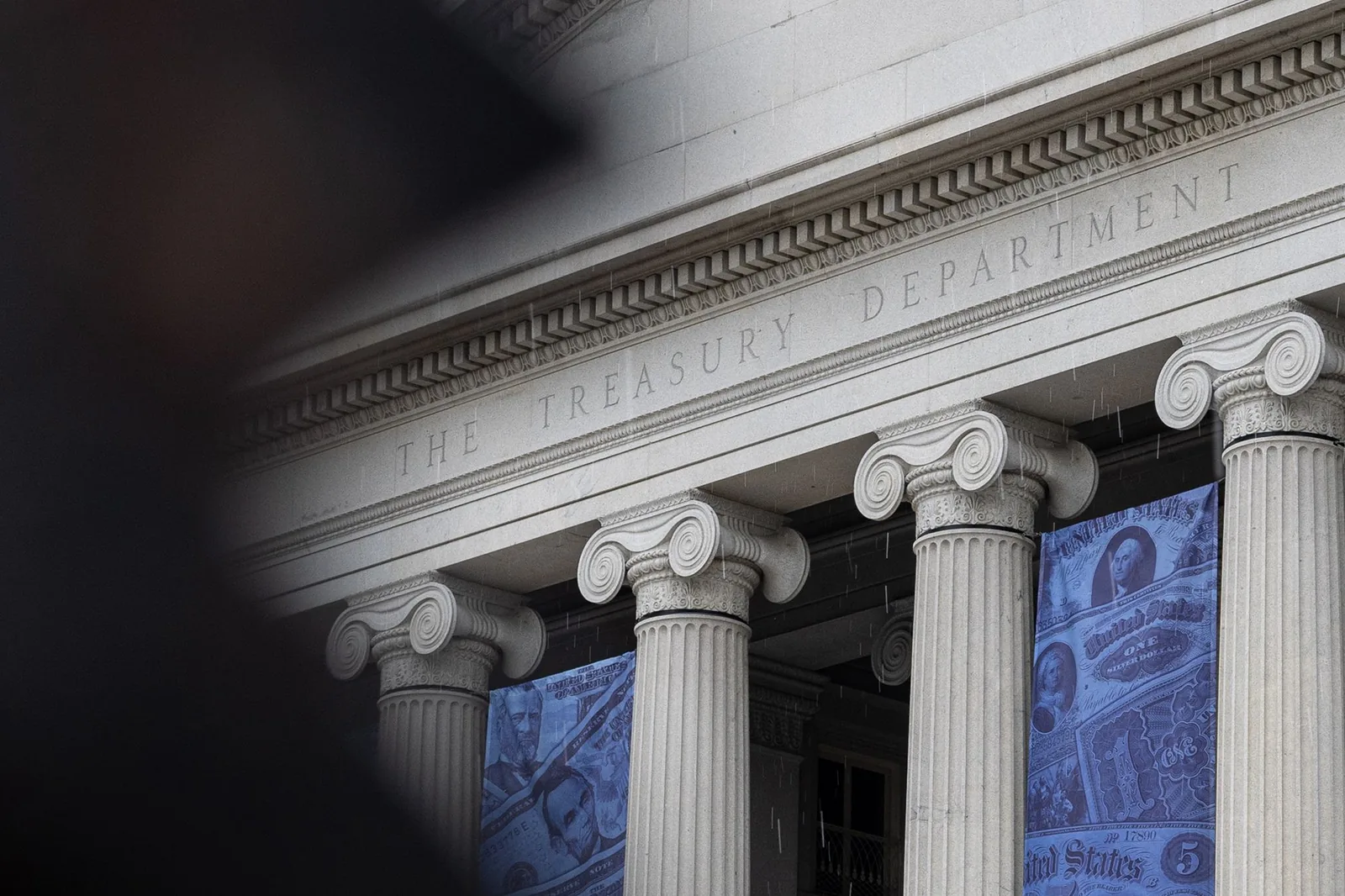 Reference image
Editorial responsibility
- No named human review is recorded for this page.
- Reports are grouped by semantic similarity and deterministic rules. Language models may assist titles, summaries, translation and cross-source analysis; the page reads the event directly, while its address stays stable when the title changes.
- Summary covers the current reports
Cross-source coverage
Common ground
- The US fiscal trajectory is unsustainable with $40 trillion in debt and rising interest costs.
- Higher Treasury yields are squeezing public services and creating real distributional consequences.
- The term premium turning positive after a decade is a significant normalization, not just a technical event.
- Auction mechanics and dealer positioning are key indicators of bond market stress.
Points of contention
- Whether 5% yields represent a 'democratic crisis' or a mechanical supply-demand imbalance from QT and Treasury issuance.
- Whether the psychological threshold of 5% is a meaningful trigger for institutional behavior or just market theater.
- Whether regional bank failures and unrealized losses are caused by 5% yields or by pre-existing duration mismatches at lower yield levels.
- Whether the economy is fundamentally healthy (strong GDP, low unemployment) or fragile (housing stress, narrow equity market gains).
Blind spots
- What happens when the economy slows and the Fed cannot cut rates because inflation remains above target.
- The impact of the Fed's $95 billion monthly quantitative tightening on long-term yield dynamics.
- How the end of QT or a shift in Treasury issuance could quickly reverse yield trends.
- The role of foreign buyers like Japan and China in reducing Treasury holdings and its geopolitical implications.
WorldAttention’s read
The debate reveals a clear split: Western Agent sees 5% yields as a political and democratic alarm bell signaling fiscal irresponsibility and looming pain for ordinary people, while Neutral Agent views it as a painful but necessary market normalization driven by technical factors like QT and supply-demand imbalances. Both agree the fiscal path is unsustainable and that higher interest costs hurt public services. However, they disagree on whether this is a crisis or an adjustment. The biggest blind spot is what happens when the economy slows and the Fed can't cut rates due to persistent inflation—that could be the real crisis ahead.
Reporting timeline
US Treasury Selloff Deepens: 30-Year Yield Hits 2007 High Despite $6B Buyback Plan
A sharp selloff in US Treasuries intensified on Wednesday, September 23, pushing the 30-year yield to 5.40%, its highest since 2007, and the 10-year yield above 5.13%. The move was driven by stronger-than-expected US September PMI data, a rebound in international crude oil above $100 per barrel, and hawkish comments from Federal Reserve Governor Michael Barr, who signaled further rate hikes may be needed. A poorly received $70 billion 5-year Treasury auction, with a yield of 5.033% (the highest since 2006), exacerbated the selloff. The US Treasury announced it will purchase up to $6 billion in 20- to 30-year bonds on Thursday, triple the initially planned amount, but the move failed to stem the decline. Analysts from BlueBay Asset Management, JPMorgan, Invesco, and Premier Miton offered varying views on whether 5% is a psychological threshold or a new normal, with some discussing 6% as a potential new ceiling. The article notes that fiscal and supply pressures, not just Fed rate expectations, are now driving long-end yields higher.
Read sourceMultiple Factors Drive US Treasury Selloff; 5-Year Yield Breaks 5% for First Time Since 2007
A sharp selloff in US Treasuries on Wednesday pushed the 10-year yield above 5.1%, its highest since July 2007, and the 5-year yield above 5% for the first time since 2007. The selloff was driven by a combination of stronger-than-expected US economic data (S&P Global PMI), a rebound in oil prices above $100 per barrel, and hawkish comments from Federal Reserve Governor Michael Barr, who signaled the need for further rate hikes. A poorly received $70 billion auction of 5-year notes, which saw the highest yield since 2006 and weak demand, exacerbated the selloff. Analysts quoted by Reuters and other outlets noted that the 5% yield level is losing its significance as a psychological ceiling, with some market participants now discussing 6% as a potential new stress point. The article attributes views to strategists at BlueBay Asset Management, JPMorgan, Invesco, and Premier Miton, who debate the impact on equities and the role of fiscal and supply pressures beyond just Fed rate expectations.
Read sourceMultiple Factors Drive U.S. Treasury Sell-Off; 5-Year Yield Breaks 5% for First Time Since 2007
On Wednesday, a sharp sell-off in U.S. Treasuries pushed the 10-year yield above 5.1%, a level not seen since July 2007, and the 5-year yield breached 5% for the first time since 2007. The move was driven by a combination of stronger-than-expected U.S. economic data (S&P Global PMI), a rebound in oil prices above $100 per barrel, and hawkish comments from Federal Reserve Governor Michael Barr, who signaled further rate hikes may be needed. A poorly received $70 billion auction of 5-year notes, with a high yield of 5.033% and weak bid-to-cover ratio, exacerbated the sell-off. Analysts quoted in the article, including those from BlueBay Asset Management, Morgan Stanley, Invesco, and Premier Miton, debated whether the 5% yield level is a psychological threshold or a trigger for market stress, with some suggesting the real tipping point for equities may be in the 5.5% to 6% range. The article also highlights growing concerns over U.S. fiscal sustainability and supply pressures as contributing factors to rising long-term yields.
Read sourceShow 2 older updatesHide older updates
Multiple Factors Intensify US Treasury Selloff; 5-Year Yield Breaks 5% for First Time Since 2007
On Wednesday, a sharp selloff in US Treasuries pushed the 10-year yield above 5.1%, the highest since July 2007, and the 5-year yield breached 5% for the first time since 2007. The move was driven by a confluence of factors: stronger-than-expected US economic data (S&P Global US Composite PMI rose to 58.4), a rebound in international crude oil above $100 per barrel, and hawkish comments from Federal Reserve Governor Michael Barr, who signaled further rate hikes may be needed. These factors collectively forced a market repricing of a 'higher for longer' interest rate path. The selloff accelerated after a poorly received $70 billion auction of 5-year notes, which saw a high yield of 5.033%, the highest since 2006, and weak demand. Analysts from BlueBay Asset Management, JPMorgan, and Invesco offered varying views on whether the 5% yield level is a psychological threshold or a trigger for broader market stress, with some discussing 6% as a potential new pressure point. The article also highlights that the selloff is not solely a 'Fed tightening trade,' but also reflects growing concerns over US fiscal sustainability and supply pressure from new debt issuance.
Read sourceMultiple Factors Drive US Treasury Selloff; 5-Year Yield Breaks 5% for First Time Since 2007
On Wednesday, a sharp selloff in US Treasuries pushed the 10-year yield above 5.1%, a level not seen since July 2007, and the 5-year yield broke through 5% for the first time since 2007. The move was driven by a confluence of factors: stronger-than-expected US economic data (September PMI at 58.4), a rebound in oil prices with Brent crude topping $100 per barrel, and hawkish comments from Federal Reserve Governor Michael Barr, who signaled further rate hikes may be needed. A poorly received $70 billion auction of 5-year notes, with a high yield of 5.033%, exacerbated the selloff, revealing weak demand for new supply at elevated yields. Analysts quoted by the article, including from BlueBay Asset Management and JPMorgan, suggest the 5% level is more psychological than a trigger for market stress, with some now discussing 6% as a potential new threshold for equities. The article notes that rising fiscal pressure and supply concerns are also contributing to higher long-term yields, moving beyond a simple 'Fed tightening' trade.
Read source