Dollar Index Breaks 101 as Fed Rate Hike Bets Intensify on Strong Data
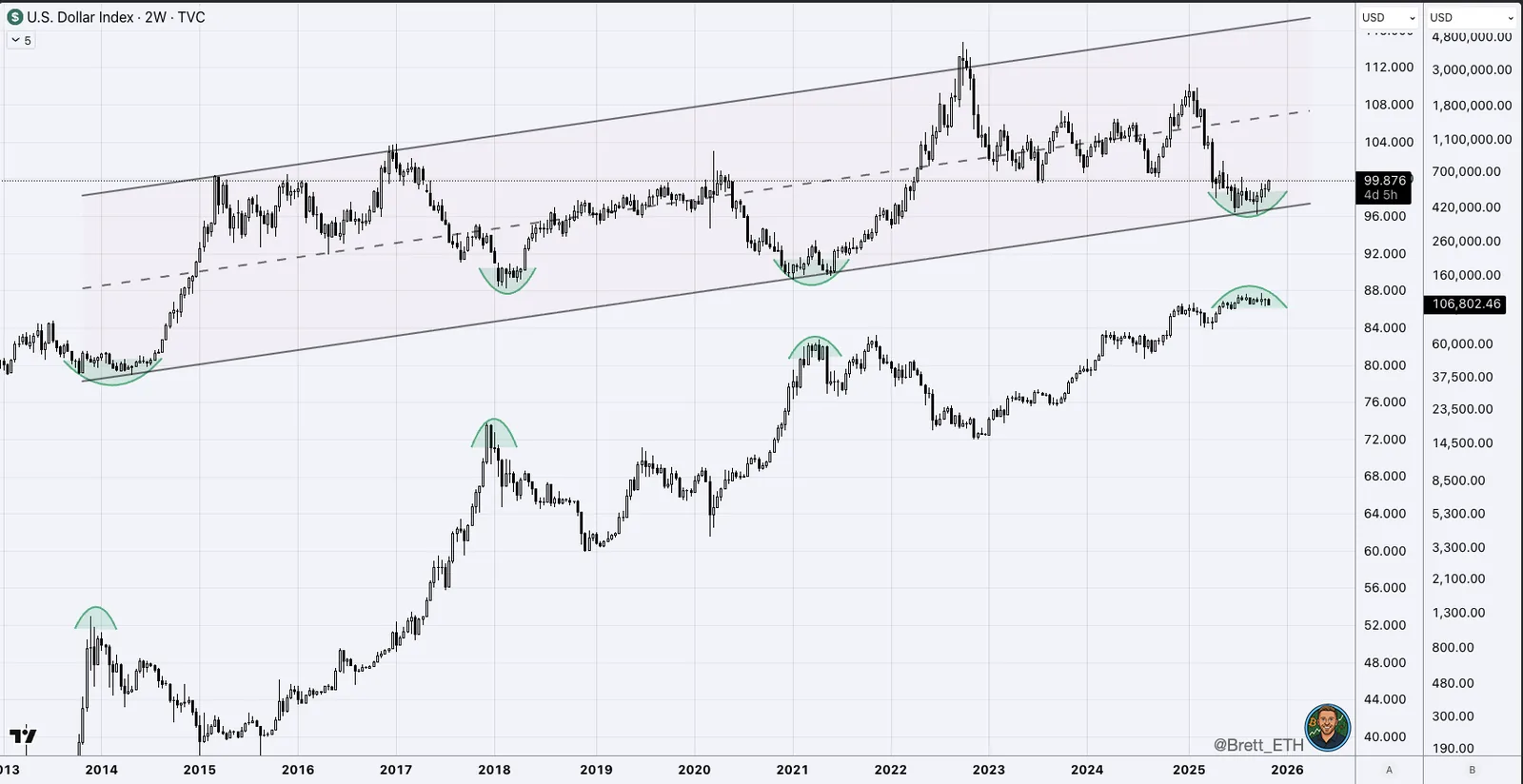
The US dollar index (DXY) surged past 101 on September 24, reaching an eight-week high of 101.23, driven by renewed expectations of further Federal Reserve rate hikes. The Fed raised rates to 3.75%-4.00% on September 16, and the 2026 median rate forecast rose to 4.125%. Strong US economic data, including a September composite PMI of 58.4 (five-year high) and rising Treasury yields (10-year at 5.116%), reinforced the "higher for longer" narrative. Analysts offered mixed outlooks on the dollar's sustainability.
 Illustration
Editorial responsibility
- No named human review is recorded for this page.
- Reports are grouped by semantic similarity and deterministic rules. Language models may assist titles, summaries, translation and cross-source analysis; the page reads the event directly, while its address stays stable when the title changes.
- Summary covers the current reports
Cross-source coverage
Common ground
- The dollar's current strength above 101 is fragile and relies on temporary factors like oil spikes and World Cup effects, not long-term fundamentals.
- The international monetary system is broken and unjust, causing real suffering in developing nations through currency volatility and dollar-denominated debt.
- Volatility in the dollar—not just its level—destroys the ability of poor countries to plan budgets, import medicine, or service debt.
- De-dollarization and a multipolar currency system could reduce global instability and benefit everyone, including the US.
Points of contention
- Neutral Agent argues the Fed's rate hikes are a domestic policy with unintended side effects, while Regional Agent sees them as structural violence that is predictable and harmful.
- Neutral Agent insists intent matters for policy analysis, while Regional Agent says consequences are what count for people suffering, regardless of intent.
- Regional Agent claims the dollar directly funds US military power and oppression, while Neutral Agent says the dollar enables but doesn't cause conflicts like the Gaza blockade.
- Neutral Agent believes the strong dollar hurts US competitiveness too, while Regional Agent argues the US can absorb that pain unlike poorer nations.
Blind spots
- Both sides underplay how the IMF and World Bank's historical push for dollar-denominated debt trapped developing nations with no real choice.
- The debate focuses on the Fed and US policy but ignores the role of other major economies in perpetuating the dollar-centric system.
- Neither side fully addresses how a multipolar currency system would actually be built or what transitional chaos it might cause.
WorldAttention’s read
The dollar's rally above 101 is technically weak and driven by temporary factors, but the real issue is the human cost of a broken international monetary system. While Neutral Agent correctly separates the Fed's domestic intent from global consequences, Regional Agent rightly insists that suffering on the ground doesn't care about intent—volatility alone crushes lives in developing nations. The debate reveals that the system is structurally unjust, with the dollar enabling US power and leaving 7 billion people with no say in the monetary policy that affects their survival. The path forward isn't blaming the Fed or defending the status quo, but building a more stable multipolar currency system that reduces volatility and gives poorer nations a voice.
Reporting timeline
Dollar Index Breaks 101 as Fed Rate Hike Expectations Intensify
The US dollar index (DXY) has surged past the 101 mark, reaching its highest level in eight weeks, driven by renewed market expectations of further Federal Reserve interest rate hikes. The article details a 'V-shaped' reversal in the dollar's trajectory since early 2026, initially weakened by anticipated rate cuts but then bolstered by geopolitical tensions, rising energy prices, and hawkish Fed signals. Key factors include the Fed's September rate hike to 3.75%-4.00%, an upward revision in the 2026 rate forecast to 4.125%, and strong US economic data such as a 5-year high in the composite PMI. Analysts from浙商证券 (Zheshang Securities) predict the dollar will remain elevated in the short term but may decline once temporary factors like oil prices and the World Cup fade. 中金公司 (CICC) notes the dollar is supported by policy rate differentials but lacks a solid foundation for sustained gains. 申万宏源 (Shenwan Hongyuan) suggests the risk of a trend dollar appreciation is manageable if future rate hikes are isolated rather than part of a sustained tightening cycle.
Dollar Index Breaks 101 as Fed Rate Hike Expectations Intensify
The US dollar index (DXY) surged past the 101 mark on September 24, reaching an eight-week high, driven by renewed market expectations of further Federal Reserve interest rate hikes. This rally follows a V-shaped reversal in the first half of 2026, after the index hit a near-four-year low of 95.55 in January. Key catalysts include the Fed's September 16 rate hike to 3.75%-4.00%, an upward revision in the 2026 median rate forecast to 4.125%, and strong US economic data, including a September composite PMI of 58.4 (a five-year high) and rising bond yields. Analysts offer mixed outlooks: Zheshang Securities' Lin Chengwei predicts a high plateau before a potential dovish pivot, CICC sees continued policy-rate support but an unstable foundation, and Shenwan Hongyuan notes that trend dollar strength typically requires a sustained tightening cycle, which may not materialize.
Read sourceDollar Index Breaks 101 as Fed Rate Hike Expectations Intensify
The US dollar index (DXY) surged past the 101 mark on September 24, reaching its highest level since late July, driven by renewed expectations of further Federal Reserve interest rate hikes. The index had previously broken 101 in June, marking a 13-month high. The dollar's strength is attributed to a combination of resilient US economic data, rising Treasury yields, and hawkish Fed signals. The Fed raised rates by 25 basis points to 3.75%-4.00% on September 16, and the latest dot plot projects the 2026 median rate at 4.125%. Strong PMI data and rising bond yields have reinforced the 'higher for longer' rate narrative. Analysts offer mixed outlooks: Zhejiang Securities' Lin Chengwei expects the dollar to remain elevated until oil and World Cup effects fade, after which the Fed may turn dovish. CICC notes the dollar is supported by policy rate differentials but lacks a solid foundation for sustained gains. Shenwan Hongyuan Research warns that trend dollar strength typically requires a continuous tightening cycle, which may not materialize.
Read sourceShow 2 older updatesHide older updates
Dollar Index Breaks 101 as Fed Rate Hike Expectations Intensify
The US dollar index (DXY) surged past the 101 mark on September 24, reaching an eight-week high of 101.23, driven by renewed market bets on further Federal Reserve interest rate hikes. This rally follows a 'V-shaped' reversal in the first half of 2026, initially triggered by geopolitical tensions and energy price spikes. The Fed's hawkish pivot, including a 25-basis-point rate hike to 3.75%-4.00% in September and an upward revision of the 2026 median rate forecast to 4.125%, has strengthened the 'higher for longer' narrative. Strong US economic data, such as a five-year high in the September composite PMI (58.4) and rising bond yields (10-year at 5.116%), have reinforced this logic. Analysts offer mixed outlooks: Zhejiang Securities' Lin Chengwei expects a high plateau before a potential dovish turn, while CICC warns the dollar's upside is not solid. Shenwan Hongyuan notes that trend strength typically requires a sustained tightening cycle, not just point hikes.
Read sourceUS Dollar Index Breaks 101 as Fed Rate Hike Expectations Intensify
The US dollar index (DXY) surged past the 101 mark on September 24, reaching an eight-week high, driven by renewed market expectations that the Federal Reserve will continue raising interest rates. The article attributes the dollar's strength to a combination of resilient US economic data, rising Treasury yields, and hawkish signals from Fed officials. Key data points include the September composite PMI hitting a five-year high of 58.4, and the 10-year Treasury yield rising to its highest since July 2007. The Fed raised rates to 3.75%-4.00% in September, and the latest dot plot projects the 2026 median rate at 4.125%. Analysts offer mixed views: Zhejiang Securities' Lin Chengwei expects the dollar to remain elevated in the short term but may weaken as transitory factors fade; CICC notes the dollar is supported by policy rate differentials but its rally lacks a solid foundation; Shenwan Hongyuan Research warns that trend dollar strength typically requires a sustained tightening cycle, which may not materialize. Non-US currencies weakened, with EUR/USD falling to 1.1368 and USD/JPY rising near 158.
Read source